
1. Background
In December 2019, cases of pneumonia with an unknown cause were reported in Wuhan, China (1). Examination of samples taken from the lower respiratory tract indicated the presence of a novel coronavirus (2). The novel coronavirus (SARS-CoV-2) has spread worldwide, affecting numerous countries (3). In Iran, the numbers indicate that more than 7 million people have contracted the coronavirus, and over 131 thousand have lost their lives due to this disease (4).
In widespread infectious diseases, where highly contagious viruses are the causative agents, individuals play a crucial role in controlling and reducing transmission (5). The best approach in current circumstances is to avoid infection and prevent its spread (prevention) (6, 7). The risk of contracting this disease exists across all age groups, and the importance of prevention becomes more pronounced considering asymptomatic carriers. These individuals, by transmitting the disease to high-risk individuals, significantly contribute to the escalation of morbidity and mortality rates (8). Planning and preparedness for coping with the COVID-19 crisis stand as national and international imperatives. Embracing preventive behaviors on a societal level is crucial for controlling the COVID-19 epidemic, demanding the focused attention of policymakers and health authorities (9).
Health behaviors stand out as the most significant tools in preventing the prevalence of infectious diseases like COVID-19, especially considering the absence of an immediate vaccine and limited treatment options (9). International and local health agencies, as well as governments, emphasize that citizens should adhere to the guidelines of global health recommendations. These guidelines for non-infected individuals include thorough hand washing with soap or alcohol-based disinfectants, maintaining a minimum of three feet (six feet is preferred) of distance from others in a social setting, covering the face (with a tissue or elbow) when coughing or sneezing, and maintaining proper respiratory hygiene. Avoiding crowded places and practicing social distancing as much as possible by staying home are also recommended (10). Even a seemingly healthy individual can be a carrier responsible for disease transmission in the community. This is why social distancing is recommended as a crucial and effective means of breaking the chain of infection (11), not only for infected individuals but for the entire community (or country).
One of the factors encouraging individuals to adopt preventive measures and exhibit the necessary preparedness to protect against the COVID-19 virus is health literacy (9). Improving health literacy leads to outcomes such as making informed decisions, reducing health-threatening risks, increasing disease prevention, enhancing safety, improving quality of life, and elevating the quality of care (12-14). Studies have shown that limited health literacy has adverse consequences in different healthcare domains. These include inadequate access to proper healthcare services, reduced willingness to seek treatment, low medication adherence, increased emergency room visits, prolonged hospitalization periods, and increased mortality rates, significantly affecting the utilization of healthcare services (15-17). These instances underscore the need for attention to individuals' health literacy. In a comprehensive meta-analysis summarizing the results of 85 different studies, insufficient health literacy was estimated at 25% in the United States, and marginal health literacy was estimated at 20% (18).
The study demonstrated that 26.4% of medical students had insufficient health literacy, while only 31% had adequate health literacy (19). Furthermore, in a study by Ghanbari et al., more than half of the participants had marginal or insufficient health literacy (20). The European Centre for Disease Prevention and Control has described the role that health literacy can play in relation to infectious diseases, and some documents have highlighted the prominent role of health literacy and its impact on infectious diseases (21). In this pandemic, health literacy has become an important issue (22). Individuals with low health literacy often lack sufficient health awareness (18), and inadequate health literacy can be a significant barrier to adopting self-care behaviors (19) and preventive behaviors (23).
In a study reflecting a 32% health literacy level among participants, individuals with higher health literacy assessed their general health status more favorably. Moreover, they exhibited greater initiative in engaging in preventive behaviors compared to their counterparts (24). Furthermore, Boudaghi and Arabi concluded in their study that health literacy and attitudes toward COVID-19 play a pivotal role in enhancing health-oriented behaviors among citizens (25). In Gautam et al. research, it was revealed that 65.8% of respondents lacked sufficient health literacy. According to the findings, health literacy significantly influences awareness of COVID-19 and preventive behaviors (26).
In light of various domestic and international research findings, the role of the individual as a central agent in managing one's health is emphasized today. Individuals are expected to actively participate as informed decision-makers in their healthcare choices. Health literacy is closely linked to general literacy. It encompasses individuals' knowledge, motivation, and capacity to access, comprehend, evaluate, and apply health information for everyday judgment and decision-making regarding medical care, disease prevention, and health promotion (27). It also influences disease screening and health behaviors (21, 22, 28, 29). Additionally, studies have shown that, regarding preventive behaviors, factors such as age, gender, and education play important roles alongside health literacy in shaping individual behaviors (29). Students, especially those in various fields of medical sciences, serve as suitable models for a healthy and hygienic lifestyle in society. Given the novelty of the COVID-19 virus and the imperative for preventive measures against its spread, studying and emphasizing the role of health literacy in preventive behaviors against COVID-19 are of paramount importance.
2. Objectives
The present study was conducted to determine the correlation between health literacy and the adoption of preventive behaviors against COVID-19.
3. Methods
3.1. Study Design and Population
In this cross-sectional study, the target population comprised newly enrolled students at different academic levels, including undergraduate, master's, and professional doctoral programs. The study participants were drawn from seven main faculties (Medicine, Dentistry, Pharmacy, Midwifery, Rehabilitation, Para-medicine, and Public Health) of Jundishapur Ahvaz University of Medical Sciences in 2023, employing a stratified random sampling method. The allocation within each faculty was further adjusted to match the distribution of students. Samples were randomly selected through simple random sampling, facilitated by a lottery, and the questionnaire was administered online to the chosen students. The sample size was determined based on the findings of a previous study titled "Effective Health Literacy Skills in Predicting Preventive Behaviors for Breast Cancer among Students" (30). Utilizing statistical software (Med Calc) with a power of 90% and a 5% margin of error, a sample size of 223 was determined. This study has been approved and is under the supervision of the Research Committee of Ahvaz Jundishapur University of Medical Sciences, with the ethical approval code (IR.AJUMS.REC.1399.799).
Inclusion criteria for the study involved willingness and readiness to participate, being a newly enrolled student in the first academic year (first or second semester) of bachelor's, master's, or professional doctoral programs at Ahvaz University of Medical Sciences. The exclusion criterion was non-response to more than 5% of the questions.
3.2. Questionnaire Development and Data Collection Procedure
Data collection was conducted using a questionnaire comprising three sections:
Section 1: The first section covered demographic information.
Section 2: The second section used the Health Literacy of Iranian Adults (HELIA) questionnaire. This questionnaire included population characteristics of respondents and the main items, comprising five dimensions with 33 questions: Access (6 items), reading skills (4 items), comprehension (7 items), evaluation (4 items), and decision-making and health information utilization (12 items). The questionnaire used a 5-point Likert scale for scoring, where, for reading skills, a score of 5 indicated "very easy," a score of 4 "easy," a score of 3 "neither easy nor difficult," a score of 2 "difficult," and a score of 1 "very difficult." For the other four dimensions of health literacy, a score of 5 represented "always," a score of 4 "most of the time," a score of 3 "sometimes," a score of 2 "rarely," and a score of 1 "never (or seldom)."
To calculate the total score, raw scores in each dimension were first obtained as the sum of all the scores within that dimension. Then, to convert this score into a range from 0 to 100, the formula used was the difference between the raw score and the minimum possible raw score, divided by the difference between the maximum possible raw score and the minimum possible raw score. Finally, the scores from all dimensions (on a scale from 0 to 100) were summed and divided by the number of dimensions (5 dimensions). Scores ranging from 0 to 50 were considered insufficient health literacy, from 50.01 to 66 as somewhat sufficient, from 66.01 to 84 as sufficient, and from 84.01 to 100 as excellent health literacy.
In a study by Montazeri et al., the validity of the Health Literacy questionnaire was assessed using content and exploratory factor analysis, and its reliability was confirmed by calculating the Cronbach's alpha coefficient for the identified dimensions, ranging from 0.72 to 0.89 (31).
Section 3: The third section included a questionnaire on preventive behaviors against COVID-19, designed as an initial version of the COVID-19 Preventive Behavior Assessment Checklist by the present study's researcher. The initial questionnaire consisted of 50 questions, each offering five options and assigned a score from 0 to 5 (Always = 0, Most of the time = 1, Sometimes = 2, Rarely = 4, Never = 5). Scores from this questionnaire ranged from 5 to 100 points. This questionnaire was developed based on global and national guidelines regarding COVID-19 preventive behaviors and was completed following those instructions. To ascertain content validity (content validity ratio and content validity index), the opinions of ten experts and individuals knowledgeable about tool development and familiar with the subject of COVID-19 (outside the research team) were sought. This group included specialists in health education and promotion, and infectious diseases experts. After receiving their feedback on the questionnaire and calculating the structural validity, 21 questions were ultimately retained out of the initial 50. For all the items in the constructed questionnaire, the Content Validity Ratio (CVR) was calculated to be higher than 74.5, and the Content Validity Index (CVI) values exceeded 0.8. Reliability assessment was conducted using the test-retest method, and a pilot study was carried out on 30 students. The overall reliability of the tool, assessed by Cronbach's alpha, was 89%, indicating good reliability of the instrument.
The data was collected between September 2022 and February 2023. Following the acquisition of necessary approvals from the Research Deputy of Ahvaz University of Medical Sciences, a channel was created on a multi-platform messaging system by the primary researcher (designated as the admin). Subsequently, students randomly selected through a simple random sampling method were added to the channel. A link to the questionnaire set, generated online by a questionnaire design software, was then dispatched to them for self-reporting. On the first page of the online questionnaire, a brief introduction was provided. This introduction encompassed the presentation of the research team, the study's objectives, the name of the ethics committee that approved the study, the ethical approval number, and a sincere request for the participation of students. Participants were also requested to confirm their willingness to participate in the study by endorsing a consent form before entering the questionnaire. Ensuring the potential conflicts of interest, confidentiality of data, and the research consent form were all explicitly communicated.
3.3. Data Analysis
The data were entered into SPSS version 22 for analysis. Various statistical methods were employed to analyze the data obtained from the questionnaires. Descriptive measures such as mean and standard deviation were used for quantitative variables, while percentages were utilized for qualitative variables. The statistical tests included tests for variable involvement and examination of statistical assumptions such as normal distribution and equality of variance between groups. Pearson correlation test, logistic and stepwise regression analysis, and t-test were conducted at a statistically significant level of 0.05.
4. Results
4.1. Sample Characteristics
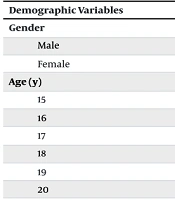
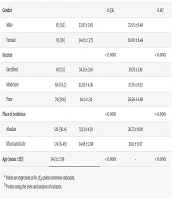
Table 1 presents general information for the 223 study participants regarding gender, age, education, job, marital status, and previous illness. The average age of the respondents was 25.99 years old, and 70.9% were female.
| Variables | Values |
|---|---|
| Age | 25.99 ± 6.00 |
| Gender | |
| Male | 65 (29.1) |
| Female | 158 (70.9) |
| Education | |
| Bachelor's degree | 160 (70.9) |
| Master's degree | 48 (21.5) |
| Doctorate | 15 (6.7) |
| Job | |
| Employed | 123 (55.2) |
| Unemployed | 100 (44.8) |
| Marital status | |
| Single | 151 (67.7) |
| Married | 72 (32.3) |
| Previous illness | |
| Yes | 30 (13.5) |
| No | 193 (86.5) |
a N = 223.
b Values are expressed as No. (%) or Mean ± SD.
4.2. Health Literacy Dimensions, Total Health Literacy and Preventive Behaviors Against COVID-19 Scores
Table 2 presents the mean and standard deviation scores for all dimensions of health literacy, total health literacy, and preventive behaviors against COVID-19 among the study's students. The results from this table indicate that among the five dimensions of health literacy, the highest mean score was observed in the comprehension dimension, while the lowest mean score was observed in the decision-making dimension. The mean and standard deviation of total health literacy and preventive behaviors against COVID-19 among the study's students were 87.21 ± 14.30 out of 100 (excellent health literacy) and 51.89 ± 14.38, respectively.
Table 2.
Mean and Standard Deviation of Health Literacy Dimensions, Total Health Literacy and Preventive Behaviors Against COVID-19 Scores in the Studied Students
| Health Literacy | Mean ± Standard Deviation |
|---|---|
| Reading | 88.36 ± 18.98 |
| Access | 89.74 ± 15.89 |
| Understanding and comprehension | 91.31 ± 15.22 |
| Evaluation | 88.84 ± 16.37 |
| Decision-making and behavior | 77.7 ± 23.05 |
| Total health literacy | 87.21 ± 14.30 |
| Preventive behaviors against COVID-19 | 51.89 ± 14.38 |
Based on Table 3, which illustrates the differences in the mean and standard deviation of scores for preventive behaviors against COVID-19 across demographic variables, the average score for preventive behaviors against COVID-19 was higher among women (54.98), individuals with underlying medical conditions (60.63), married individuals (55.77), and students with a master's degree (55.66). Furthermore, among the study participants, women with an average score of 89.12, employed individuals (89.16), doctoral students (91.30), married individuals (90.55), and those with underlying medical conditions (91.00) achieved higher health literacy scores. From this table, it can be inferred that women, married individuals, employed individuals, and those with underlying medical conditions demonstrated better health literacy and adherence to preventive behaviors (P < 0.05).
Table 3.
Health Literacy and Preventive Behaviors Against COVID-19 Scores by Demographic Variables a
| Variables | (Health Literacy) | Test Statistics (P-Value) | (Preventive Behaviors) | Test Statistics (P-Value) |
|---|---|---|---|---|
| Gender | -3.174 (0.002) | -5.287 (0.000) | ||
| Male | 15.57 ± 82.56 | 14.28 ± 44.40 | ||
| Female | 12.84 ± 89.12 | 13.28 ± 54.98 | ||
| Education | 2.287 (0.104) | 2.561 (0.080) | ||
| Bachelor's Degree | 15.04 ± 85.94 | 14.17 ± 50.55 | ||
| Master's Degree | 11.15 ± 90.16 | 94.13 ± 66.55 | ||
| Doctorate | 80.13 ± 30 .91 | 41. 16 ± 13.54 | ||
| Job | -2.277 (0.024) | -2.168 (0.031) | ||
| Employed | 92.13 ± 16.89 | 67.14 ± 76.53 | ||
| Unemployed | 47.14 ± 81.84 | 73. 13 ± 60.49 | ||
| Marital Status | -2.431 (0.016) | -2.826 (0.005) | ||
| Single | 40.15 ± 62.85 | 12. 14 ± 04.50 | ||
| Married | 05.11 ± 55.90 | 22.14 ± 77.55 | ||
| Previous Illness | -1.565 (0.119) | -3.676 (0.000) | ||
| Yes | 55.12 ± 00.91 | 25.16 ± 63.60 | ||
| No | 50.14 ± 62.86 | 61.13 ± 53.50 |
a Values are expressed as No. (%) or Mean ± SD.
4.3. Correlation Coefficient Matrix of Health Literacy Dimensions and Preventive Behaviors against COVID-19
Table 4 demonstrates that all dimensions of the five-dimensional health literacy questionnaire and preventive behaviors against COVID-19 exhibited a significant and positive correlation (P < 0.05), with the most substantial relationship found between health literacy and behaviors in the decision-making and behavior dimension (r = 0.598).
Table 4.
Correlation Coefficient Matrix of Health Literacy Dimensions and Preventive Behaviors Against COVID-19
| Variables | Preventive Behaviors Against COVID-19 | Reading | Access | Understanding and Comprehension | Evaluation | Decision-Making and Behavior | Total Health Literacy |
|---|---|---|---|---|---|---|---|
| Preventive Behaviors Against COVID-19 | 1 | ||||||
| Reading | 0.186 a | 1 | |||||
| Access | 0.290 a | 0.609 a | 1 | ||||
| Understanding and Comprehension | 0.282 a | 0.609 a | 0.836 a | 1 | |||
| Evaluation | 0.307 a | 0.623 a | 0.794 a | 0.851 a | 1 | ||
| Decision-Making and Behavior | 0.598 a | 0.253 a | 0.378 a | 0.408 a | 0.450 a | 1 | |
| Total Health Literacy | 0.437 a | 0.754 a | 0.865 a | 0.887 a | 0.897 a | 0.663 a | 1 |
a Significant correlation at a level less than 0.05.
Table 5 illustrates the data analysis results obtained from the correlation coefficients, demonstrating a significant positive correlation (P < 0.001) among all dimensions of health literacy and COVID-19 preventive behaviors. Notably, the behavior dimension exhibits a distinctive and influential impact on COVID-19 prevention. Specifically, a one-unit increase in the behavior score corresponds to a 0.373-unit increase in COVID-19 preventive behaviors (P < 0.001).
Table 5.
Regression Coefficients for Health Literacy Dimensions and Their Influence on COVID-19 Preventive Behaviors
| Health Literacy Dimensions | Regression Coefficient | P-Value | Standard Error |
|---|---|---|---|
| Reading | 0.034 | 0.973 | 0.054 |
| Access | 1.057 | 0.292 | 0.095 |
| Understanding and Comprehension | - 0.259 | 0.720 | 0.113 |
| Evaluation | 0.042 | 0.967 | 0.099 |
| Decision-Making and Behavior | 9.452 | 0.000 | 0.038 |
5. Discussion
The current research aimed to determine the relationship between health literacy levels and the adoption of preventive behaviors against COVID-19 among students at Jundishapur Ahvaz University of Medical Sciences. The findings reveal that health literacy, across all five dimensions, is at a sufficient or higher level for the majority of respondents. Therefore, it can be asserted that the studied population generally exhibits a good level of health literacy, consistent with the findings of other studies (23, 32, 33), although it aligns less with other studies (34). Nonetheless, attention to individuals lacking sufficient health literacy in this domain remains imperative. The results of this study also indicated that health-centric behaviors in response to the coronavirus are at a moderate level, warranting further scrutiny.
Furthermore, according to the findings, women, married individuals, employed individuals, and those with underlying medical conditions achieved higher scores in preventive behaviors against COVID-19 and health literacy. This aligns with the research by Mahmoudiani et al., which also showed that health-oriented behaviors were more prevalent among women (35), and more common among employed individuals (35). The research revealed that among the five dimensions of health literacy, the highest mean score was in the comprehension dimension, while the lowest was in the decision-making dimension among students. This is consistent with the study by Panahi et al. (30). Other studies, including those by Ahmadi et al. (36), Khoshravesh et al.(37), Tavousi et al. (38), and Ansari (39), also reported the highest mean health literacy scores in the comprehension dimension and the lowest mean scores in the reading and evaluation dimensions.
Health literacy is essentially an individual, social, and cognitive capacity that enables people to access, understand, and act upon health information for their well-being. Therefore, assessing health literacy in Iran is of great importance and will be instrumental (38). Moreover, the study's results showed that the participating students had a high level of health literacy, consistent with the findings of studies by Ziapoor and Kianipoor (40), Mohammadi et al. (41), and Peyman et al. (42).
The present research demonstrated a direct relationship between health literacy and preventive behaviors against COVID-19. Specifically, individuals with higher health literacy scores exhibited a higher level of engagement in preventive behaviors against COVID-19. In other words, an increase in health literacy is associated with increased preventive behaviors against COVID-19. This finding aligns with the research conducted by Shiralinia et al. (43).
Summarizing the results of this research, it can be said that an acceptable level of health literacy enables individuals to better understand and interpret various health-related challenges, leading to improved performance and better responses to disease-related factors (44). Furthermore, during the COVID-19 pandemic, protective measures such as wearing masks, proper cough etiquette, hand hygiene, and avoiding contact with infected individuals are crucial. On the other hand, low health literacy is associated with issues like insufficient understanding of health information and medical education, reduced participation in preventive behaviors, delayed disease diagnosis, a lack of self-care skills, and non-compliance with healthy lifestyle behaviors (45). Therefore, health literacy positively correlates with preventive behaviors against COVID-19 (46). Health literacy is a vital empowerment strategy for increasing information-seeking regarding health, responsibility, and self-control of one's behavior (47). It enables individuals to make informed health decisions and engage in healthcare systems effectively (48).
Based on the findings, all dimensions of health literacy and preventive behaviors against COVID-19 were positively and significantly correlated, with the most substantial relationship in the decision-making and behavior dimension. This result aligns with Mahmoudiani et al.' study, where an increase in health literacy led to a significant rise in health-oriented behaviors during the COVID-19 pandemic, with the most significant impact on comprehension and decision-making dimensions (35). Therefore, individuals are more likely to engage in preventive behaviors against COVID-19 when their health literacy regarding this disease increases. In conclusion, the present study's results indicate that health literacy directly influences the adoption of preventive behaviors against COVID-19.
One of the limitations of this research was the spread of the coronavirus and the consequent lack of direct access to participants, necessitating the completion of questionnaires online, which can introduce a certain amount of bias. Given that this study exclusively involves students from Ahvaz Jundishapur University of Medical Sciences, its findings cannot be readily generalized to students in other regions of the country. Therefore, it is recommended that a broader-scale investigation be conducted among students nationwide, particularly comparing outcomes and extrapolating them to non-medical students. Additional limitations included overlooking cultural backgrounds and skills such as communication, exploration, and possessing domain-specific knowledge and cultural literacy. These skills are pivotal when assessing health literacy and should be scrutinized.
Among the strengths of this study, it is noteworthy that despite the prevalence of the COVID-19 pandemic in Iran, there has been a paucity of serious research on preventive behaviors during the pandemic. This research aims to address this gap through a quantitative approach.
5.1. Conclusions
The prevalence of the COVID-19 pandemic, as an infectious disease, underscores the critical importance of preventive behaviors against its contraction. Given the correlation between various dimensions of health literacy and the adoption of preventive measures against COVID-19, it is imperative to give particular attention, especially quantitatively, to the role of health literacy, decision-making dimensions, and behavioral impact in designing educational programs for the prevention of infectious diseases, including COVID-19, among students. Based on research findings, promoting health-oriented and COVID-19 preventive behaviors is recommended. Physicians, academic reference groups in the media, and social networks are advised to emphasize the necessity of social distancing, the consequences of timely medical consultation, and the responsibility towards others. Collaborative efforts with relevant organizations, such as broadcasting short films and clips, are also suggested to elevate awareness about health protocols, timely vaccination, regular hand washing, and adherence to physical distancing. Clear and informative messages can effectively contribute to the prevention of infectious diseases, enhancing the self-care capabilities of students and their families. Therefore, it is recommended to develop programs aimed at increasing health literacy, particularly among students in various medical science disciplines, who serve as role models for healthy and sanitary living in society.