
1. Background
Down syndrome is the most common chromosomal defect among children worldwide. It is the result of an aberration of chromosome 21 and may cause congenital heart disease, diabetes mellitus, and hypothyroidism, among other issues (1). As a common association, congenital heart disease occurs in almost 40% - 50% of Down syndrome patients, 30% of whom have several cardiac defects (2).
Diagnostic tests are necessary to ensure an accurate diagnosis. A comprehensive physical examination is the main means of diagnosis (3). Electrocardiography, Holter monitoring, chest imaging, echocardiography, and magnetic resonance imaging (MRI) are also used to diagnose several cardiac defects (4).
Echocardiography is the conventional non-invasive procedure used to monitor the function and structure of the heart. Tissue Doppler imaging is a new type of echocardiography that has the advantage of permitting the ventricles to be studied, both in systole and diastole. Tissue Doppler imaging is not only used in evaluating ventricular systolic and diastolic functions but is also beneficial in detecting uncoordinated ventricular movements (5). It can be performed in various formats: M mode, 2D mode, and spectral pulsed wave (6). Differentiating among the various phases of the cardiac cycle is now possible using an echocardiography tissue Doppler (7). This imaging method enhances the use of echocardiography by calculating systolic and diastolic intervals in a frequent, safe, cost-effective, and geometrically independent technique (8-12). It is especially important for analyzing the right ventricle in general and the left ventricle when it has a peculiar morphology or regional wall-motion abnormalities. However, its use in children with congenital and acquired heart diseases continues to expand (13).
Whereas structurally abnormal hearts have been greatly examined in Down syndrome patients, studies on the cardiac function of normally structured hearts in Down syndrome subjects are scarce. As Down syndrome patients have begun to expect a longer life than before in recent years, a thorough investigation is needed to examine their heart functions to find an explanation for the exercise intolerance, decrease in work capacity, and high rate of morbidity and mortality experienced in adolescence.
2. Objectives
This study aimed to evaluate the ventricular systolic and diastolic functions among Down syndrome patients with no anatomical heart defects
3. Methods
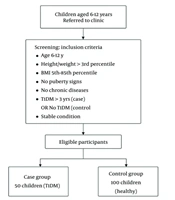
This work was a descriptive study undertaken from September 2013 to August 2014 in Mashhad, Iran. All patients were chosen because of their availability during their visit to a single pediatric cardiology clinic. Thirty-six patients under 18 years of age with no anatomical heart defects were selected. We excluded participants with Down syndrome associated with any heart or systemic diseases, pulmonary artery pressure greater than 25 mmHg, a history of cardiac surgery, and a history of hormone therapy.
Thirty-six children were selected to determine their ventricular systolic and diastolic functions using 2D echocardiography and tissue Doppler echocardiography. To ensure their complete health status and lack of systemic disorders, a pediatric cardiologist examined all patients. Further, patients underwent tissue and Doppler echocardiography to evaluate their myocardial wall motion rate parallel to the mitral and tricuspid valves. Afterwards, data were recorded and statistically analyzed for each child. Ejection fraction and heart rate were recorded using echocardiography. In addition, body surface area, which is the 2D measure of the outer layer of the body, was measured in m2.
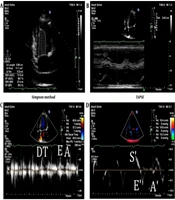
We used a GE Vivid 3 ultrasound system with a probe of 4 - 6 MHz frequency. Tissue Doppler imaging waveforms were recorded and analyzed. Early diastolic waves (E), late diastolic waves (A), systolic waves (S), tissue Doppler imaging early diastolic waves (E’), and tissue Doppler imaging late diastolic waves (A’) were used for the analysis of the two regions of the mitral valve and tricuspid valve. M-mode and 2D echocardiography were used to measure the internal dimensions, ejection fraction, and fractional shortening of the left ventricle. These measurements were conducted on the basis of recommendations from the American society of echocardiography (14). Teichholz formulas were used to calculate the ejection fraction by measuring the inner diameter short axis of the left ventricle using M-mode (15).
3.1. Tissue Doppler Echocardiography
Low gain and low filter settings were used to prevent high-frequency signals. The sample volume gate was 2 - 3 mm long, and the sweep speed was 100 mm/s. The sample volume was located in the myocardium at an equal distance from the epicardium and the endocardium. The myocardial velocity curves of the mitral septum valve annulus, the lateral mitral valve annulus, and the lateral tricuspid valve annulus were recorded using the apical four-chamber planes using the tissue Doppler imaging technique; cycle events were measured using electrocardiogram. The initiation of the QRS complex was considered the reference point. Right or left ventricular functions were shown by systolic waves. Both the E’/A’ and E/E’ ratios of the mitral and tricuspid valve annuli were considered the diastolic function of the left and right ventricles, respectively. At least 10 cardiac courses were recorded, and the images were saved and preserved electronically. Tissue Doppler imaging determined the children’s cardiac volume (16). All parents signed an informed consent form that was certified by the ethics committee before enrolling in the study.
3.2. Statistical Analysis
Data were expressed as means (SD) for parameters with a normal distribution. Quantitative data were analyzed using the single-sample Kolmogorov-Simonov test. Sample t-tests were used for normal results; otherwise, non-parametric testing was applied. Non-parametric quantitative data were analyzed using the Mann-Whitney test. A two-sided P value of 0.05 was considered statistically significant. Variances were applied to assess the effects of independent variants on wave speed. Bivariate correlations between different parameters and velocity movement waves at the mitral and tricuspid valves were performed using Pearson’s rank correlation. Stepwise multiple linear regression analysis was used to determine which of the conventional risk factors influence cardiac waves. The software used in this study was SPSS for windows™ version 11.5 package (SPSS Inc., Chicago, IL, USA).
4. Results
A total of 36 subjects were included in this study. The baseline characteristics of the total population are shown in Table 1. At the time of the examination, the mean age of the participants was 6.4 ± 5.5 years, and the majority (55%) was under 5 years old. Physical examination revealed a variety of body surface area distributions: 9 subjects between 0.0 and 0.5 m2 (25.0%), 22 subjects between 0.5 and 1 m2 (61.1%) and 5 subjects between 1 and 1.5 m2 (13.9%). The mean heart rate was 103.7 ± 16.2, and the mean ejection fraction and fractional shortening were 69.8 ± 4.8% and 38.9 ± 3.9%, respectively.
Table 1.
Patients’ Demographic Data
| Parameter | Data | Maximum | Minimum |
|---|---|---|---|
| Age, y | 6.4 ± 5.5 | 18 years | 4 months |
| Sex | 17 female, 19 male | - | - |
| Weight, Kg | 18.16 ± 10.9 | 47 | 5.6 |
| Height, cm | 98.67 ± 23.68 | 142 | 61 |
| BSA, m2 | 0.69 ± 0.28 | 1.33 | 0.33 |
| Heart rate (pulse per minute) | 103.67 ± 16.15 | 130 | 72 |
4.1. Analysis of Covariance
According to the univariate analysis, the results showed that tricuspid annulus E wave (β = 1.94, P = 0.01, CI = 0.95) was independently associated with age values. In addition, tricuspid annulus A wave was independently associated with body surface area values (β = 3.8, P = 0.03, CI = 0.95). All other waves that originated from each of the two sample sites, including the mitral annulus and tricuspid annulus, measured by Doppler tissue imaging were not statistically associated with age, heart rate, gender, or body surface area (P > 0.05). Moreover, ejection fraction had no significant association with gender, age, or body surface area.
4.2. Correlations
Pearson’s correlation test was used to evaluate the possible correlation between speed of cardiac waves with body surface area and patients’ age. Note that an inverse correlation between body surface area and tricuspid annulus A wave was observed (r = -0.35, P = 0.002).
Based on the book Moss and Adam’s heart disease in infants, children, and adolescents (7th edition) (17), wave speeds at the mitral annulus of the Down syndrome patients and normal patients of this study are shown In Table 2. The movement of wave speed at the mitral annulus of Down syndrome patients and normal children between 10 and 18 years old was considerably different. Moreover, among individuals between 4 months and 9 years of age, a notable difference was found between the two groups in the majority of mitral valve waves. However, mitral annulus E’ wave, A’ wave motion velocity, and the E/A velocity wave ratio of Down syndrome children and normal individuals did not differ as much. At the level of the tricuspid valve, wave speeds, including the velocity ratios of E’, A’, and E/A waves, were not relatively different among different age groups. However, other tricuspid valve wave speeds showed a notable difference between the two groups.
Table 2.
Comparison of Cardiac Wall Movement at the Mitral Valve Between Down Syndrome Patients and Normal Subjectsa
| Age, y | Sort of Wave | Patients | Normal Subjects |
|---|---|---|---|
| Under 1 | E' | 0.1 ± 0.02 | 0.1 ± 0.03 |
| A' | 0.06 ± 0.01 | 0.06 ±0.02 | |
| E | 1.06 ± 0.04 | 0.80 ± 0.19 | |
| A | 0.72 ± 0.14 | 0.65 ±0.13 | |
| E/A | 1.5 ± 0.25 | 1.2 ±0.3 | |
| E/E' | 11.02 ± 3.17 | 8.80 ±2.70 | |
| 01 - 05 | E' | 0.12 ± 0.02 | 0.15 ± 0.03 |
| A' | 0.07 ± 0.03 | 0.07 ± 0.02 | |
| E | 1.2 ± 0.16 | 0.9 ± 0.2 | |
| A | 0.80 ± 0.22 | 0.61 ± 0.12 | |
| E/A | 1.58 ± 0.33 | 1.60 ± 0.50 | |
| E/E' | 10.36 ± 2.29 | 6.5 ± 2.00 | |
| 06 - 09 | E' | 0.14 ± 0.02 | 0.17 ± 0.04 |
| A' | 0.06± 0.02 | 0.07 ± 0.02 | |
| E | 1.17 ± 0.09 | 0.94 ± 0.15 | |
| A | 0.74 ± 0.16 | 0.61 ± 0.13 | |
| E/A | 1.64 ± 0.35 | 2.00 ± 0.50 | |
| E/E' | 8.71 ± 1.80 | 5.80 ± 1.90 | |
| 10 - 13 | E' | 0.13 ± 0.05 | 0.20 ± 0.03 |
| A' | 0.10 ± 0.03 | 0.06 ± 0.02 | |
| E | 1.07± 0.17 | 0.95 ± 0.16 | |
| A | 0.69 ± 0.33 | 0.5 ± 0.14 | |
| E/A | 1.78± 0.68 | 2.00 ± 0.60 | |
| E/E' | 9.13 ± 4.71 | 4.90 ± 1.3 | |
| 14 - 18 | E' | 0.13 ± 0.02 | 0.21 ± 0.04 |
| A' | 0.05 ± 0.01 | 0.07 ± 0.02 | |
| E | 1.11 ± 0.21 | 0.90 ± 0.18 | |
| A | 0.66 ± 0.12 | 0.46 ± 0.13 | |
| E/A | 1.72 ± 0.39 | 2.1 ± 0.70 | |
| E/E' | 8.79 ± 2.15 | 4.7 ± 1.3 |
aValues are expressed as mean ± SD.
5. Discussion
The live birth prevalence of Down syndrome is about 0.1%, and one of the most common problems in patients suffering from Down syndrome is congenital cardiac defects (18). These patients may present with or without any anatomical or functional defects that can be visualized in imaging tests such as echocardiography. Despite advances in the diagnosis and treatment of Down syndrome patients with structural heart disease (19, 20), studies on the group of Down syndrome with apparently normally structured heart are needed. Therefore, this study investigated the cardiac systolic and diastolic functions of 36 patients with Down syndrome who had no history of congenital heart disease using the tissue echocardiography technique.
Our study revealed a relatively high heart rate of Down syndrome patients compared with that of normal subjects in other reports. Our study agreed with the results of these reports, which indicated a significantly higher heart rate in Down syndrome subjects than in normal children (21-23). This finding is considered to be due to the autonomic cardiac dysfunction occurring at the central brain stem site as a result of a genetic disorder (24). In another investigation conducted among 22 Down syndrome patients who had no congenital heart defects, the fractional shortening was 40.2% ± 6.1 (P < 0.001, in comparison with normal subjects), whereas in our study the fractional shortening was 38.9%, which is comparable with their finding (25). Their study showed a high left ventricular ejection fraction (69.8%) compared with those from other reports of normal subjects (25). They believed that this higher ejection fraction is due to the reduced afterload and not to the intrinsic abnormalities of the myocardium. Al-Biltagi et al. reported a relatively similar ejection fraction in their Down syndrome subjects (68.1%), and it was significantly higher than that of their normal group subjects (21).
According to 2D echocardiography and tissue Doppler, the E/A and E’/A’ ratios at the mitral valve were 1.61 ± 0.37 and 1.92 ± 0.78, respectively, which reflect a decreased left ventricular diastolic function compared with that of normal children in other reports (21, 22). In other studies, these ratios were reported to be lower in their Down syndrome subjects than in their control group. This finding is considered to be due to the impaired cardiac muscle relaxation. Although similar to other studies, this low ratio in Down syndrome children was not associated with a clinical manifestation.
In the echocardiographic findings for the myocardial movement of the tricuspid annulus, the ratio of E/A waves was 1.35 and the speed ratio of E’/A’ waves 1.57. In a similar study conducted by Al-Biltagi, these rates were reported to be 1.57 and 1.04, respectively (21). Both these ratios were lower than those of normal subjects in other reports that found a similar difference (21, 22). This weakened right-sided diastolic performance may be due to defective cardiac autonomic performance, cardiac hypertrophy by inhibited calcineurin signaling, or cardiac muscle fiber dysfunction (13, 26-30).
Roberson et al. reported a normal velocity of wave motion in the area of the tricuspid valve in children without any cardiac disease (12). In our study, the movement velocity of S, E’, and A’ waves varied at 0.07 - 0.19 (m/s), 0.06 - 0.32 (m/s), and 0.05 - 0.23 (m/s) respectively. Conversely, these movement velocities varied at 0.01 - 0.31 (m/s) for S waves, 0.02 - 0.32 (m/s) for E’ waves, and 0.01 - 0.29 (m/s) for A’ waves in Roberson’s study. These results suggest that the ranges of movement velocity distribution of waves originating from the tricuspid valve are comparatively shorter in Down syndrome patients than in the normal population (12).
Pulmonary hypertension is considered one of the most common complications in children with Down syndrome even without the presence of any structural heart defects (21, 31). Frequent pulmonary infections, chronic constriction of the upper airway, abnormal structure, and pulmonary vessel growth are the major causes of pulmonary arterial hypertension that may develop in Down syndrome patients (32). However, patients with high pulmonary artery pressure were excluded in our study, and thus it could not have had a confounding effect on our interpretations.
One of the limitations of this study is our small sample size. The absence of a control group from our patients to compare our results with is another important limitation of this study. Based on the results, further investigations on the ventricular systolic and diastolic functions of larger populations of patients with Down syndrome would be useful.
As patients with Down syndrome may have functional cardiac defects without any considerable structural cardiac abnormalities, the standard type of tissue echocardiography imaging may be a safe and useful method to evaluate both regional and global systolic or diastolic ventricular function. This method can also be a prognostic factor to uncover the possible cardiac events resulting in shorter life expectancy in the future. These findings may explain why children with Down syndrome have limited physical performance abilities and are susceptible to many cardiovascular defects. Further investigations are suggested to examine the predictive value of different waves from the tissue Doppler imaging in cardiac events occurring in the long term for Down syndrome children with structurally normal hearts.