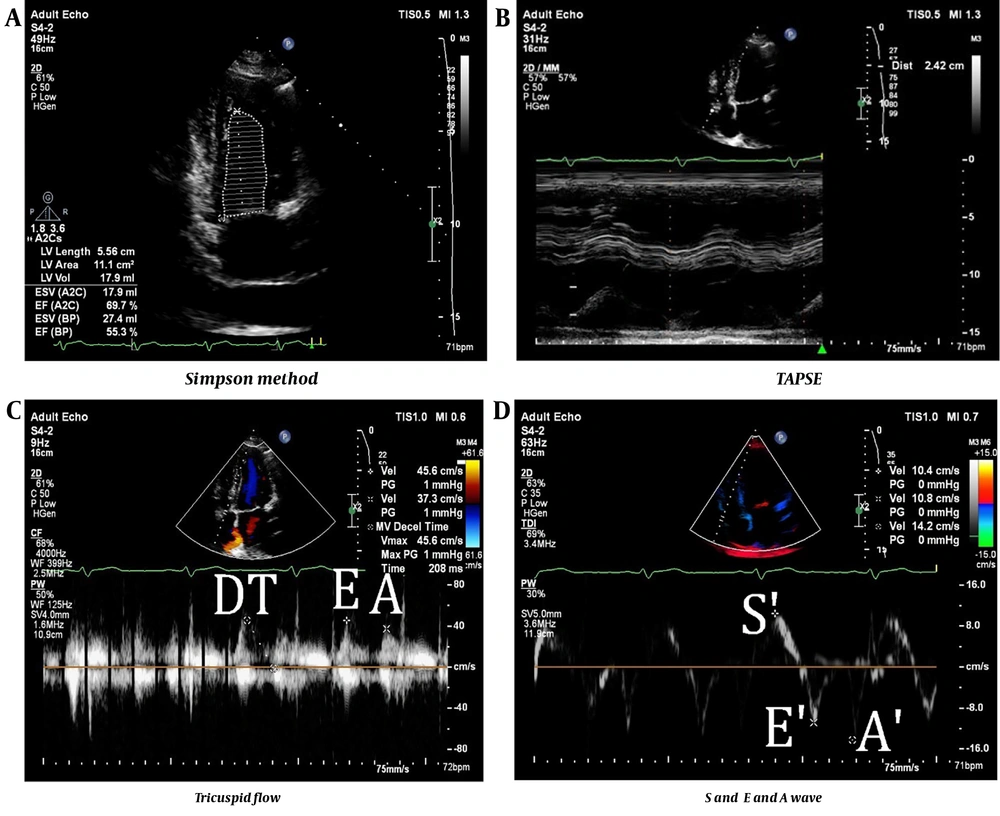
This research contributes to the growing body of evidence on the role of Vit-D in cardiovascular health. The findings of this investigation revealed that there is no significant difference in ventricular function measured by echocardiographic parameters between the groups in general. In other words, in normal coronary patients, there was no significant association between ventricular systolic dysfunction and Vit-D status.
This result is noteworthy as it challenges the commonly held belief that Vit-D status might influence heart function, particularly ventricular systolic function. Some studies have reported a potential link between Vit-D deficiency and impaired cardiac function in congestive heart failure patients. These results suggest that Vit-D deficiency may impair both systolic and diastolic functions of the left ventricle (LV), leading to increased cardiac workload, chamber dilatation, and hypertrophy. In our study, no difference was observed between the groups regarding left ventricular systolic function in normal coronary patients. Our findings are consistent with those of previous studies that have failed to establish a clear link between Vit-D levels and various echocardiographic parameters, such as LVEF, LVEDV, LVESV, LVM, LAV, E/A ratio, E/e’ ratio, and DT. For instance, Vit-D status did not significantly affect LVEF or wall velocity (S) in individuals studied by Macedo et al. (
18). The findings of Pandit et al. (
19), which also found no Vit-D status dependence of left ventricular diastolic function parameters, such as diastolic E/E' and E/A, Left Ventricular Muscle Mass Index (LVMi), Left Atrial Volume Index (LAVi), and mitral valve DT, are similar to the findings of the current study. Similarly, Akhavan-Khaleghi et al. studied patients without significant CAD and found no difference in LA function, as evaluated by 2DSTE, between subjects with and without Vit-D deficiency after adjustment for the confounding factors (
20). This aligns with the recommendations released by the U.S. Preventive Services Task Force, which cited insufficient evidence to recommend adults take Vit-D or any other supplement to prevent cardiovascular disease (
21).
These discrepancies may be due to differences in study design, sample size, population characteristics, Vit-D measurement methods, echocardiographic techniques, confounding factors, and the multifactorial nature of ventricular dysfunction, which can be influenced by various factors such as genetics, lifestyle, and comorbidities. Moreover, the causal relationship between Vit-D and cardiac function remains unclear, as observational studies cannot rule out reverse causation or residual confounding. Therefore, randomized controlled trials are needed to determine whether Vit-D supplementation can improve cardiac function and prevent cardiovascular events (
22). It is possible that Vit-D alone does not have a direct impact on ventricular function but rather interacts with other factors (such as DBP) to contribute to cardiac health (
23). The study found that patients with Vit-D deficiency had higher DBP levels compared to those with sufficient Vit-D levels. Observational data have demonstrated that poor Vit-D status is associated with an increased risk of hypertension (
21). This is important in IHD, as high blood pressure is a major risk factor for the development of the disease. This suggests a potential link between Vit-D status and blood pressure regulation.
Jorge et al. (
24) investigated individuals with suspected heart failure but normal EF and found that, while LVEF did not change, the wall velocity (S) was considerably lower in the Vit-D deficient group, indicating systolic dysfunction. Macedo et al. (
18) found no significant difference in left ventricular end-diastolic diameter and volume (LVEDD and LVEDV), but they did detect a significant difference in left atrial diameter and volume (LAD and LAV) in the Vit-D deficient group. They determined that the discrepancy could be attributed to Vit-D insufficiency, but the variances were minor, and the data should be corrected for BSA before comparing. They discovered that the difference in LADi was not statistically significant for either group, and that the difference in LAVi remained significant (
14).
Jorge et al. (
24) discovered that the E/E' ratio was much greater in the Vit-D deficient group, although E' was significantly lower. This shows that the Vit-D deficient group has more severe left ventricular diastolic dysfunction. Akin et al. (
25) found that diastolic function parameters (including LAD, IVRT, and E/E' ratio) were significantly greater in the Vit-D deficient group; however, these differences were not statistically significant. Some research has found a link between Vit-D levels and left and right ventricular systolic function; nevertheless, the claimed discrepancies across functional parameters were not clinically or pathophysiologically plausible. For example, Abdel Rahman et al. studied individuals with systolic heart failure and discovered that, while left ventricular systolic function was poorer in the Vit-D deficient group, diastolic function was better (
13).
The strengths of our study include the use of a reliable method for measuring Vit-D levels and a comprehensive echocardiographic examination. This study has limitations, such as a small sample size and other confounding variables. Another consideration is the potential impact of confounding variables. It is possible that unmeasured variables influenced the results. For example, lifestyle factors such as diet and physical activity, which are known to affect both Vit-D levels and cardiovascular health, may have influenced the findings. Future studies should aim to address these confounding variables to provide a clearer understanding of the relationship between Vit-D and ventricular function.
It is worth noting that the study sample in the current study consisted of a specific population group. Further research involving a larger and more diverse sample is warranted to validate these findings in different demographic groups. Also, the echocardiographic parameters used in this study provided only a snapshot of ventricular function and may not capture subtle changes over time. Invasive procedures can accurately quantify ventricular function parameters, but due to their inability in everyday medicine, alternative methods are required. Echocardiographic measures are currently employed to assess ventricular systolic and diastolic performance (
26). Furthermore, although invasive technologies can correctly assess ventricular function parameters, due to the inability of executing them in routine practice, echocardiography measurements are utilized to evaluate ventricular systolic and diastolic function, according to current standards. Additionally, the Vit-D status of our participants was determined at a single time point, which may not accurately reflect their long-term Vit-D status. It is suggested that in the future, multicenter studies with larger sample sizes and long-term follow-up periods should be conducted.
5.1. Conclusions
The results of this study showed that, in general, there was no significant difference between ventricular function and Vit-D deficiency as determined by echocardiographic parameters. Although this study did not show a significant relationship between Vit-D levels and ventricular function, it is important to consider the study's limitations and interpret the findings alongside other existing research on this topic. More research is needed to fully understand the potential association between Vit-D and ventricular systolic and diastolic dysfunction. It is possible that different populations or specific subgroups show stronger associations. In addition, examining other echocardiographic parameters or considering other indicators of ventricular function can provide a better understanding of the issue.