
1. Background
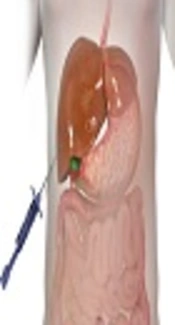
Percutaneous liver biopsy is a useful diagnostic method in pediatric hepatology (1, 2). Procedural sedation is necessary for any painful or stressful intervention including percutaneous liver biopsy for many reasons, especially in children (3, 4). There are different procedural sedation protocols for percutaneous liver biopsy in children. DPT cocktail (meperidine (Demerol®) + promethazine (Phenergan®) + chlorpromazine (Thorazine®)) is used for more than 50 years as sedation for this procedure, but new drugs including ketamine are evolved for this purpose that are safer and more effective than previous cocktails (5, 6). The current cohort aimed at comparing DPT and ketamine in procedural sedation for percutaneous liver biopsy in children. The current study was the first one to evaluate safety and effectiveness of intramuscular ketamine applied by pediatric gastroenterology fellows only for percutaneous liver biopsy in children.
2. Methods
The current cohort of 80 Iranian children aimed at evaluating the percutaneous liver biopsy in Tehran children’s Medical center from October 2010 to September 2012. In this center, some of the attending physicians used the DPT protocols for sedation (meperidine 1 mg/kg + chlorpromazine 0.5 mg/kg + promethazine 0.5 mg/kg), while the others used the ketamine protocol (ketamine 4 mg/kg, max: 200 mg + atropine 0.01 mg/kg, max: 0.5 mg + for patients older than 5 years, midazolam 0.1 mg/kg, max: 5 mg). In both protocols, 3 drugs are mixed together in a syringe and intramuscularly injected immediately before the procedure.
2.1. Inclusion Criteria
All patients above 12 months admitted to the center for PLB in the assumed time.
2.2. Exclusion Criteria
Active respiratory disease, unstable air ways, previous tracheal surgery, advanced cardiac disease, raised intracranial pressure (ICP), brain tumors, acute ophthalmic injury, glaucoma, psychosis, thyroid disease, and positive previous history for the same drugs side effects.
Each of the study groups (ketamine and DPT) included 40 patients. The patients were matched in the 2 groups.
The groups were named as follows:
K1: patients younger than 7 years old receiving ketamine,
K2: patients older than 7 years old receiving ketamine,
DPT1: patients younger than 7 years old receiving DPT,
DPT2: patients older than 7 years old receiving DPT.
The efficacy of sedation was assessed by 3 scoring systems:
For sedation A, B, C, and D scoring criteria were used (A: no patient’s motions, B: patient had minor motions, but not interfere with the procedure, C: moderate motions to be restricted physically, D: the procedure was stopped because of motions).
The patients’ pain was assessed with 2 scales: CHEOPS (children’s hospital of Eastern Ontario pain scale) for children under 7 years old (score range: 4 - 13); and VAS (visual analogue scale) for children above 7 years old (score range: 0 - 10).
Five factors were compared: induction time (the time needed to reach enough sedation), recovery time (the time needed to reach full consciousness ), the level of pain tolerated by the patient, the level of sedation, and side effects happened during the admission period and after this period until the biopsy results were reported.
To determine the sample size, the confidence level of up to 95% and the study power of 80% were assumed, based on the previous studies (7, 8).
The data were analyzed with SPSS version 20 using the statistical tests of the Mann-Whitney and Fisher Exact. Data of the patients under and above 7 years old were analyzed separately due to adding midazolam to Ketamine in the ones above 7 years old, and the pain score differences between the patients under and above 7 years old.
3. Results
There was no significant difference between the 2 groups in patients under and above 7 years old in terms of age and gender.
Out of the 80 patients, 35 were younger than 7 years (18 patients in K1 group and 17 patients in DPT1 group). On the other hand, 22 patients older than 7 years were in K2 group and the remainders (n = 23) received DPT cocktail (Tables 1 and 2).
Table 1.
Summary of Results in Patients Under 7 Years Olda
| Variable | Ketamine 1 Group | DPT 1 Group | P Value |
|---|---|---|---|
| Age, mo | 36.2 ± 18 | 44.5 ± 23 | 0.25 |
| Gender, % | 0.84 | ||
| Female | 55.6 | 58.8 | |
| Male | 44.4 | 41.2 | |
| CHEOPS score | 6.27 | 11.05 | < 0.001 |
| Induction time, min | 4.33 | 37.6 | < 0.001 |
| Recovery time, min | 91.9 | 176.4 | < 0.001 |
| Level of sedation, % | |||
| A | 83.3 | 5.9 | |
| B | 5.6 | 0 | |
| C | 11.1 | 94.1 | |
| Respiratory distress | 2 (11.1) | 0 | 0.48 |
| Stridor | 2 (11.1) | 0 | 0.48 |
| Transient hypertension | 3 (16.7) | 2 (11.8) | 1 |
| Transient hypotension | 0 | 5 (29.4) | 0.01 |
| Tachycardia | 5 (27.8) | 4 (23.5) | 1 |
| Vomiting | 3 (16.7) | 0 | 0.22 |
| Rashes | 1 (5.6) | 0 | 1 |
| Agitation | 1 (5.6) | 0 | 1 |
| Sialorrhea | 1 (5.6) | 0 | 1 |
| Tachypnea | 0 | 1 (5.9) | 0.48 |
| Hematoma of gallbladder | 0 | 1 (5.9) | 0.48 |
| Major side effects | 3 (16.7) | 1 (5.9) | 0.60 |
| Minor side effects | 11 (61) | 6 (35) | 0.18 |
aValues are expressed as No. (%).
Table 2.
Summary of Results in Patients Above 7 Years Olda
| Variable | Ketamine 2 Group | DPT 2 Group | P Value |
|---|---|---|---|
| Age, mo | 121 | 138.5 | 0.78 |
| Gender, % | 0.27 | ||
| Female | 31.8 | 47.8 | |
| Male | 68.2 | 52.2 | |
| VAS score | 1.27 | 5 | < 0.001 |
| Onset of action, min | 4.18 | 36.9 | < 0.001 |
| Recovery time, min | 78.4 | 170.4 | < 0.001 |
| Level of sedation, % | |||
| A | 100 | 8.7 | |
| B | 0 | 8.7 | |
| C | 0 | 82.6 | |
| Respiratory distress | 0 | 0 | - |
| Stridor | 0 | 0 | - |
| Transient hypertension | 3 (13.6) | 1 (4.3) | 0.36 |
| Transient hypotension | 0 | 4 (17.4) | 0.10 |
| Tachycardia | 5 (22.7) | 5 (21.7) | 1 |
| Vomiting | 8 (36.4) | 0 | 0.001 |
| Rashes | 0 | 0 | - |
| Agitation | 0 | 0 | - |
| Sialorrhea | 0 | 0 | - |
| Tachypnea | 0 | 0 | - |
| Hematoma of gallbladder | 0 | 0 | - |
| Major side effects | 0 | 0 | - |
| Minor side effects | 13 (59.1) | 9 (39.1) | 0.23 |
aValues are expressed as No. (%).
In patients receiving ketamine, the most common side effect was vomiting (27.5%), significantly higher in patients above 7 years old (P = 0.001) treated successfully with a single-dose of intramuscular ondansetron.
Other common side effects were transient tachycardia (25%), transient mild hypertension (15%), and transient respiratory distress/stridor (7.5%).
In the DPT group, 9 patients (22.5%) had transient mild hypotension resolved without any intervention. The difference was significant in patients under 7 years old (P = 0.01). Other complications were the transient mild tachycardia (22.5%), transient mild hypertension (7.5%), and transient mild bradycardia (2.5%). One patient had tachypnea and hematoma of gallbladder, but only observation was needed and no serious complication developed (Table 3).
Table 3.
Side Effects in Patients Receiving Ketamine and DPT
| Variable | Ketamine Group | DPT Group |
|---|---|---|
| Respiratory distress | 5 | 0 |
| Stridor | 5 | 0 |
| Transient hypertension | 15 | 7.5 |
| Transient hypotension | 0 | 22.5 |
| Tachycardia | 25 | 22.5 |
| Bradycardia | 2.5 | 2.5 |
| Vomiting | 27.5 | 0 |
| Rash | 2.5 | 0 |
| Chilling | 2.5 | 0 |
| Agitation | 2.5 | 0 |
| Involuntary movements | 2.5 | 0 |
| Sialorrhea | 2.5 | 0 |
| Sweating | 2.5 | 0 |
| Headache | 2.5 | 0 |
| Tachypnea | 0 | 2.5 |
| Hematoma of gallbladder | 0 | 2.5 |
| Major side effects | 7.5 | 2.5 |
| Minor side effects | 60 | 37.5 |
Most of the patients in groups K2, DPT1, and DPT2 had major thalassemia and were assessed for hemochromatosis before bone marrow transplantation; in K1 group, the most common indication was abnormal liver function tests (LFT).
Induction and recovery time were significantly shorter in K1 and K2 groups. In other words, the patients in ketamine group reach the necessary sedation level more rapidly and recovered in a shorter time after biopsy.
Totally, 83% of the patients in K1 and 100% of the ones in K2 groups reached the sedation level A, but only a few patients in DPT1 and DPT2 groups reached this level.
According to pain assessment scores, patients in K1 and K2 groups had significantly lower pain scores compared with those of the other groups (P < 0.001). In younger patients, mean CHEOPS score was about 11 in the DPT1 and 6 in the K1 groups. In patients above 7 years old, the mean VAS score in the K2 and DPT2 groups were 1.27 and 5, respectively. In summary, patients receiving ketamine for sedation experienced much less pain during biopsy.
4. Discussion
Percutaneous liver biopsy is a useful method to diagnose and follow-up children with liver disease. Effective sedation and analgesia is necessary in this procedure to make the procedure tolerable for children (1-4).
An applicable protocol for sedation in pediatric should have appropriate effectiveness, less side effects, good recovery period, and relatively low cost (3).
Ketamine is commonly used for anesthesia in non-operating room settings since 1970 due to its very low cardiovascular and respiratory side effects (5).
There is evidence supporting ketamine safety and efficacy in pediatric procedures.
The current study was the first one to evaluate ketamine administration by pediatric gastroenterologists exclusively for sedation and analgesia in pediatric percutaneous liver biopsy.
In the current study, the induction in ketamine group took about 4 minutes. In similar studies in the emergency and radiology departments for procedural sedation, this time was 5, 6, and 8 minutes, respectively (3, 9, 10).
In the current study, the time for full recovery of consciousness was about 84 minutes in the ketamine-receiving patients, while it was 76, 52, 82, and 110 minutes in other similar studies.
Ketamine-induced sedation, especially in comparison with DPT, is rapid, time-saving, and associated with lower anxiety for parents.
According to CHEOPS and VAS scores in the current study patients, ketamine was a very effective analgesic agent in percutaneous liver biopsy in children.
In the current study, most of the patients receiving ketamine had no movement during biopsy. Other studies showed that 97% - 99% of patients reached appropriate sedation (3, 10, 11). On the other hand, DPT induced appropriate sedation in about 48% of the procedures on children. In the current study, appropriate sedation was reached in all of the patients above 7 and 83% of the ones under 7 years old. This may be due to adding midazolam in older patients.
The most common side effects in ketamine group were vomiting (27.5%), tachycardia (25%), and transient hypertension(15%); frequency of vomiting in other similar studies were lower(2.95, 4%, 5%, 6.7%, 7%, 9.2%, 12%, 15%, and 17.6%) than those of the current study patients (3%, 8%, 10%, 11%, 12%, 13%, 14%, 15%, and 16%). A meta-analysis by Lisa Hurtling et al., showed that 7.5% - 12.3% of the children receiving ketamine as sedative agent had vomiting (12). The current study patients were hospitalized for about 24 hours after biopsy, but the procedure in other studies performed in emergency, radiology, and endoscopy departments and the patients were discharged in shorter intervals. Therefore, on the contrary to the current study, some of the vomiting episodes may have been missed in those studies. Adding ondansetron to ketamine may cause much lower vomiting episodes in children.
Transient tachycardia and hypertension can be due to ketamine or atropine. In one study in the oncology ward, the frequencies of these side effects were 19% and 28%, respectively (13). In another similar study, 30% - 60% of the children had transient changes in vital signs (14). None of the current study patients needed intervention and only were observed for a few minutes. In the ketamine group, 3 patients had transient respiratory signs (retraction and stridor). All of them were recovered by mask and bag ventilation for a few minutes. The frequencies were 1.3%, 2.8%, and 3.4% in 3 similar studies (3, 11, 15, 16). Gharavifard et al., showed that respiratory depression was observed in 15% of the subjects in a sample population of Iranian pediatric emergency patients (10). In another study for radiologic examinations on 38 children, no serious side effects were observed (9). Apnea was reported in 0.2% of 1022 children in the emergency department after ketamine sedation. Serious respiratory side effects were rare and usually responded well to transient respiratory support (11).
In the current study, 2.5% of the patients developed rashes after ketamine injection. This side effect was observed in 0.6% - 17.6% of the patients in other similar studies (3, 10, and 14).
In the current study, 1 patient (2.5%) developed agitation after ketamine use. Agitation was observed in 0.9%, 2.9%, 10%, and 13.6% of the patients in similar studies (3, 8, 10, 15).
Totally, minor side effects were observed in about 60% of the current study patients in the ketamine group. This rate was 40% in an Iranian study (10); the difference can be attributed to more detailed questionnaire for side effects and longer follow-up period in the current study.
In the current study, 37.5% of the patients in the DPT group developed complications. One of them had tachypnea and gallbladder hematoma. Transient insignificant hypotension was relatively frequent in the DPT group (22.5%).There was no cardiac/respiratory arrest in the current study. DPT was not a reliable protocol for procedural sedation due to much less effectiveness and relatively more complications in comparison with those of ketamine.
4.1. Conclusion
Ketamine was a good alternative for procedural sedation in pediatric percutaneous liver biopsy due to excellent efficacy and safety. It is better to be used in conjunction with atropine, midazolam (in older patients), and ondansetron. In cases of respiratory distress due to laryngospasm, only mask and bag ventilation and supportive cares were sufficient. DPT was not an appropriate protocol for this purpose due to much less efficacy and relatively serious side effects.