
1. Background
Type 2 diabetes mellitus (T2DM) is among the most prevalent chronic diseases worldwide and constitutes a major public health challenge because of its increasing incidence, long-term complications, and substantial economic burden (1). Beyond its physical consequences, T2DM imposes considerable psychological demands on affected individuals, often leading to emotional distress, reduced quality of life, and difficulties in sustaining long-term disease management (2). Women with T2DM may be particularly vulnerable to these challenges because of the multiple social, familial, and caregiving responsibilities they frequently assume, which may further complicate adaptation to chronic illness (3).
Resilience, defined as the capacity to adapt successfully to adversity and recover from stressful experiences, has emerged as an important determinant of psychological well-being and health-related outcomes among individuals with diabetes (4). Higher levels of resilience have been associated with better self-care behaviors, improved emotional adjustment, and greater treatment adherence (5). Conversely, prolonged exposure to the demands of diabetes management may contribute to diabetes burnout, a condition characterized by emotional exhaustion, detachment from diabetes-related responsibilities, and feelings of loss of control over the disease (6). Diabetes burnout has been linked to poorer self-management, lower treatment engagement, and adverse health outcomes (7). Therefore, interventions that strengthen resilience while reducing burnout may play a critical role in supporting individuals living with T2DM.
Spirituality and meaning-oriented approaches have gained recognition as potentially valuable resources for coping with chronic illness. Spirituality may provide individuals with a sense of purpose, connectedness, hope, and meaning, helping them navigate the emotional and existential challenges associated with long-term health conditions (8). Psycho-spiritual interventions combine psychological strategies with spiritual and meaning-centered components to promote adaptive coping, emotional regulation, self-awareness, and personal growth (9). Previous studies have reported beneficial effects of psycho-spiritual interventions on outcomes such as psychological distress, quality of life, spiritual well-being, self-management, and treatment adherence among individuals with chronic diseases, including diabetes (10, 11). However, evidence regarding their effects on resilience and diabetes burnout remains limited, particularly among women with T2DM.
Given the growing recognition of resilience and diabetes burnout as important psychological outcomes in diabetes care, further research is needed to evaluate interventions that target these constructs. Despite increasing interest in psychosocial and spiritual approaches to diabetes care, evidence from randomized controlled trials assessing their combined impact on hope, resilience, and diabetes burnout in women with T2DM remains limited.
2. Objectives
This study evaluated the efficacy of a structured psycho-spiritual intervention in enhancing hope as the primary outcome and, secondarily, improving resilience while alleviating diabetes burnout among adult women living with type 2 diabetes.
3. Methods
3.1. Study Design
This parallel-group randomized controlled trial (RCT) evaluated a psycho-spiritual intervention plus standard care versus standard care alone for hope, resilience, and diabetes burnout in women with type 2 diabetes. Assessments were conducted at baseline, immediately post-intervention, and at the 2-month follow-up. Reporting adhered to the CONSORT and CONSORT-NPT guidelines.
3.2. Setting and Participants
Women were recruited from 2 outpatient clinics in Iran from November 2025 to March 2026. Inclusion criteria were age ≥ 18 years, type 2 diabetes duration ≥ 1 year, Persian literacy, access to a mobile phone, and provision of informed consent. Exclusion criteria were severe psychiatric or cognitive disorders, severe diabetes complications, concurrent psychological interventions, or missing more than 2 intervention sessions.
3.3. Sample Size
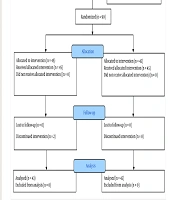
The required sample size was determined using G*Power software (version 3.1). Calculations were based on a repeated-measures design, assuming a medium effect size (f = 0.25), a significance level of 0.05, statistical power of 80%, and 3 assessment time points. The analysis indicated that at least 72 participants were needed to detect meaningful differences over time. Considering potential dropout, 90 women were enrolled and assigned equally to the intervention or control group (45 participants per group). After losses during follow-up, data from 83 participants were available for the final analysis, including 42 women in the intervention group and 41 in the control group. Seven participants were lost after randomization: 3 in the intervention group (2 withdrew consent before attending any sessions, and 1 was excluded after missing more than 2 sessions) and 4 in the control group (3 were lost to follow-up, and 1 withdrew consent). Participant recruitment, allocation, follow-up, and analysis procedures are illustrated in Figure 1.
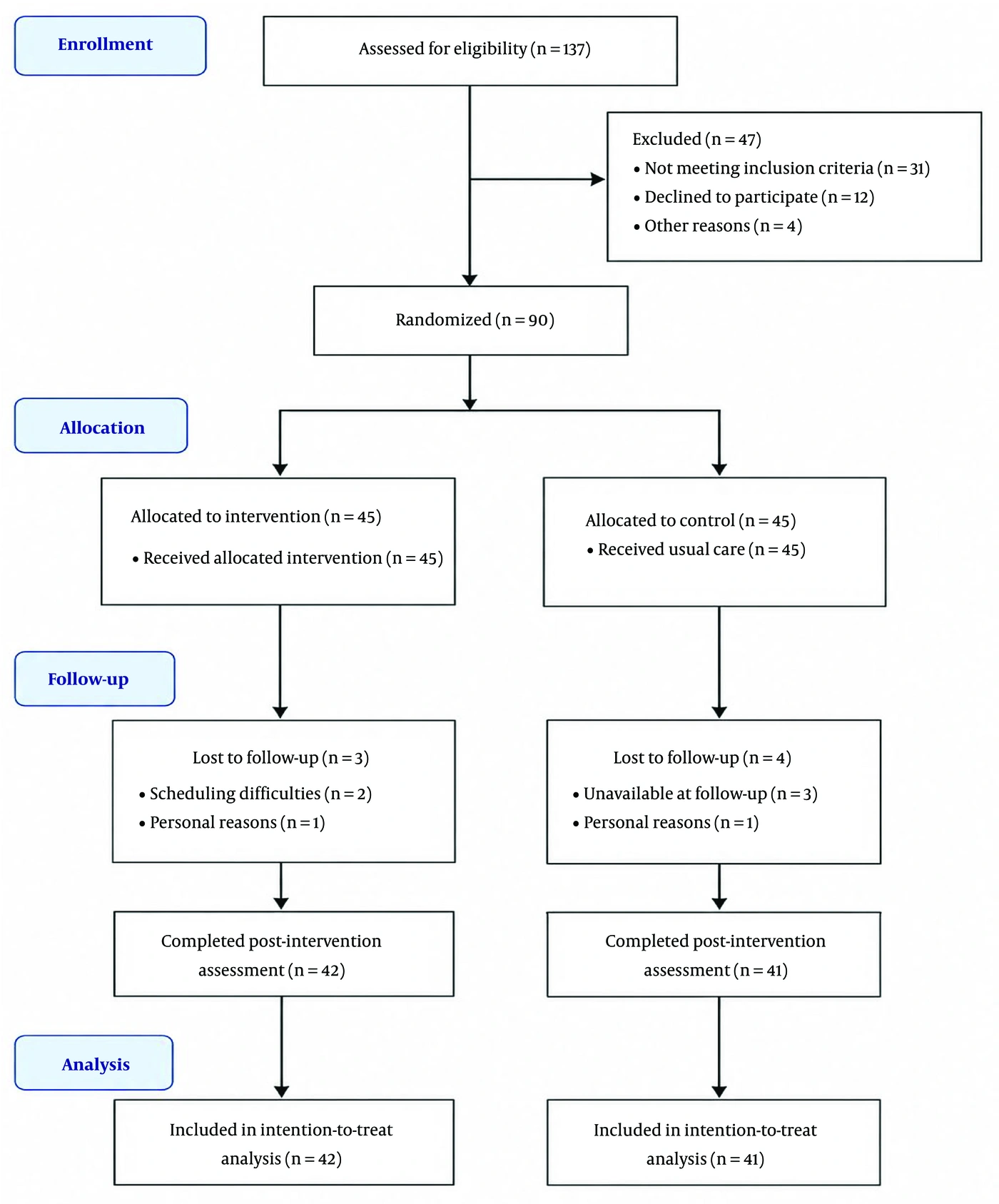
Figure 1.
CONSORT flowchart
3.4. Randomization and Allocation
Participants were randomized using computer-generated blocks of sizes 4 and 6 and sealed, opaque envelopes prepared by an independent researcher. Participants and providers were unblinded; however, data analysts and outcome assessors were blinded to group allocation.
3.5. Intervention
Participants in the intervention group received an 8-session psycho-spiritual intervention designed to strengthen adaptive coping, foster spiritual resources, enhance meaning in life, promote positive cognitive appraisal, and improve psychological adjustment to living with diabetes. The intervention was developed based on principles of positive psychology (12), spiritual care (13), meaning-centered approaches (14), and cognitive-behavioral strategies (15) and was reviewed by a panel of experts in psychiatric nursing, health psychology, and spiritual health (Table 1).
Table 1.
Overview of the Psycho-Spiritual Intervention Program
| Session | Content |
|---|---|
| 1 | Introduction, group formation, overview of diabetes-related psychological challenges, and orientation to psycho-spiritual concepts |
| 2 | Understanding stress, emotional reactions to chronic illness, and adaptive coping strategies |
| 3 | Spiritual self-awareness, personal values, and exploration of sources of meaning |
| 4 | Hope enhancement, goal setting, future orientation, and identifying personal strengths |
| 5 | Building resilience through positive reinterpretation, acceptance, and growth from adversity |
| 6 | Spiritual coping strategies, gratitude, forgiveness, and cultivating inner peace |
| 7 | Managing diabetes burnout, self-compassion, and maintaining motivation for self-care |
| 8 | Integration of learning, relapse prevention, future planning, and program summary |
Sessions were co-facilitated by a PhD nursing student and a master's-level nurse who received biweekly supervision. Detailed session-level procedures, materials, and home-practice instructions are provided in the intervention manual (Supplementary File).
The control group received routine clinic care, including quarterly physician visits, medication review, biannual HbA1c assessment, and basic education. Contamination was minimized by holding sessions in a separate building. Control participants received educational materials after the study.
3.6. Outcome Measures
The study outcomes were designated hierarchically. The primary outcome was hope, measured using the Herth Hope Index (HHI). The secondary outcomes were resilience, measured using the Connor-Davidson Resilience Scale (CD-RISC-25), and diabetes burnout, measured using the Diabetes Burnout Scale (DBS-12). This hierarchy was prespecified in the trial protocol and statistical analysis plan before data collection commenced.
3.6.1. Hope
Hope was measured using the validated Persian adaptation of the HHI. The HHI consists of 12 items scored on a 4-point Likert scale ranging from 1 (strongly disagree) to 4 (strongly agree), yielding total scores from 12 to 48, with higher scores indicating greater levels of hope (16). The Persian version has demonstrated satisfactory validity and reliability in Iranian populations, with Cronbach's alpha coefficients exceeding 0.80 (17).
3.6.2. Resilience
Resilience was measured using the Persian version of the CD-RISC-25 (18). The scale comprises 25 statements, each scored on a 5-point Likert response format ranging from 0 to 4. Total scores range from 0 to 100, with higher values indicating greater resilience (18). Previous evaluations of the Persian version have demonstrated satisfactory psychometric performance, including robust internal reliability and acceptable construct validity in samples of Iranian adults. In addition, Cronbach's alpha and composite reliability for the 4 factors were above 0.7 (19).
3.6.3. Diabetes Burnout
Diabetes burnout was assessed using the Persian version of the DBS-12 (20, 21). The scale includes 12 items measuring emotional exhaustion, detachment from diabetes management, and loss of control related to living with diabetes. Items are rated on a 5-point Likert scale, with higher scores indicating greater levels of diabetes burnout. The Persian version has demonstrated acceptable validity and reliability among individuals with type 2 diabetes in Iran (20).
3.7. Data Collection Procedure
Potentially eligible women were screened by clinic personnel and referred to the research team. After providing written informed consent, participants completed the baseline assessment. Outcome measures were repeated immediately after the intervention and at the 2-month follow-up using the same instruments. Assessments were conducted by trained research assistants who were blinded to group allocation and were not involved in intervention delivery. Blinding was supported by conducting assessments separately from intervention sessions and instructing assessors not to discuss group assignment with participants.
3.8. Statistical Analysis
Analyses followed the intention-to-treat (ITT) principle, including all randomized participants with at least 1 post-baseline assessment and retaining participants in their original groups. The ITT population comprised 83 participants (42 intervention, 41 control).
Changes in hope, resilience, and diabetes burnout across baseline, post-intervention, and the 2-month follow-up were examined using linear mixed-effects models with restricted maximum likelihood estimation. Models included group, time, and group × time as fixed effects, with participant-level random intercepts to account for repeated measurements. An unstructured covariance matrix was selected based on the lowest Akaike Information Criterion compared with compound symmetry and first-order autoregressive structures. Model assumptions were assessed using residual and Q-Q plots, and influential observations were evaluated using Cook's distance; no observation exceeded the 4/n threshold. Clinic site was included as a fixed covariate. Baseline outcome values, age, diabetes duration, and HbA1c were considered as potential covariates but were not retained because they neither materially changed treatment-effect estimates nor improved model fit. Adjusted between-group mean differences at post-intervention and follow-up were reported with 95% confidence intervals.
When significant group × time interactions were identified, within-group changes were examined using Bonferroni-adjusted pairwise comparisons. Cohen's d for between-group differences at the 2-month follow-up was calculated using the adjusted mean difference and the pooled baseline standard deviation. Hope was prespecified as the primary outcome, whereas resilience and diabetes burnout were secondary exploratory outcomes; therefore, no additional multiplicity correction across outcomes was applied beyond this prespecified hierarchy.
All tests were 2-sided with α = 0.05. Analyses were performed using IBM SPSS Statistics for Windows, Version 28.0 (IBM Corp., Armonk, NY, USA). As a sensitivity analysis for the primary outcome, missing data were addressed using multiple imputation by chained equations (MICE) with 20 imputed datasets. The observed pattern of missingness was consistent with a missing-at-random assumption based on available baseline characteristics.
4. Results
4.1. Participant Flow and Baseline Characteristics
A total of 90 women were randomized (45 per group). Seven participants were excluded from the ITT analysis because they did not complete any post-baseline assessments: 3 in the intervention group (2 withdrew consent before attending any sessions and 1 was excluded after missing more than 2 sessions) and 4 in the control group (3 were lost to follow-up and 1 withdrew consent). Consequently, 83 participants (42 intervention, 41 control) comprised the ITT analysis population (Figure 1). Session attendance in the intervention group was high, with 38 of 42 participants (90.5%) attending all 8 sessions and the remaining 4 attending 6 or 7 sessions. Home-practice adherence, assessed using weekly self-report checklists, averaged 78% completion across sessions. No protocol deviations affecting treatment delivery were identified during fidelity monitoring.
The demographic and clinical profiles of participants at study entry are presented in Table 2. The 2 groups differed somewhat in age, body mass index (BMI), educational attainment, and treatment pattern, which warrants consideration despite randomization. Participants in the intervention group were, on average, approximately 3 years older (55.7 vs 52.6 years), had a higher mean BMI (30.2 vs 28.2 kg/m2), and were less likely to hold a diploma or higher qualification (28.6% vs 41.5%). A higher proportion of participants in the intervention group were treated with insulin (40.5% vs 31.7%). Statistical comparisons revealed no significant between-group differences at baseline (all P > 0.05); however, these tests do not confirm equivalence, and the observed differences should be considered when interpreting the results.
Table 2.
Baseline Characteristics of Study Participants a
| Characteristic | Intervention (n = 42) | Control (n = 41) | P-Value |
|---|---|---|---|
| Age (y) | 55.7 ± 8.4 | 52.6 ± 9.7 | 0.12 |
| Duration of diabetes (y) | 9.1 ± 4.8 | 7.8 ± 4.4 | 0.21 |
| BMI (kg/m2) | 30.2 ± 4.3 | 28.2 ± 3.3 | 0.09 |
| HbA1c (%) | 8.6 ± 1.9 | 8.2 ± 1.1 | 0.24 |
| Marital status | 0.42 | ||
| Married | 36 (85.7) | 38 (92.7) | |
| Single/Widowed/Divorced | 6 (14.3) | 3 (7.3) | |
| Educational level | 0.36 | ||
| Primary school or less | 12 (28.6) | 8 (19.5) | |
| Secondary school | 18 (42.9) | 16 (39.0) | |
| Diploma or higher | 12 (28.6) | 17 (41.5) | |
| Employment status | 0.28 | ||
| Homemaker | 24 (57.1) | 28 (68.3) | |
| Employed | 13 (31.0) | 8 (19.5) | |
| Retired | 5 (11.9) | 5 (12.2) | |
| Treatment regimen | 0.47 | ||
| Oral medications only | 25 (59.5) | 28 (68.3) | |
| Insulin ± oral medications | 17 (40.5) | 13 (31.7) |
a Values are expressed as mean ± SD or No. (%).
4.2. Effects of the Intervention on Psychological Outcomes
4.2.1. Primary Outcome: Hope
Hope improved over time in the intervention group. However, the group × time interaction was not statistically significant (F(2, 160) = 1.92, P = 0.15). At the 2-month follow-up, the adjusted between-group difference was 1.31 points (95% CI, −0.51 to 3.13; Cohen's d = 0.23). Bonferroni-adjusted analyses showed a significant within-group increase in hope from baseline to post-intervention in the intervention group only, although significance was not maintained at follow-up. Sensitivity analyses confirmed these findings.
4.2.2. Secondary Outcome: Resilience
Resilience improved significantly in the intervention group and was sustained at follow-up (group × time interaction: F(2, 160) = 18.67, P < 0.001). At follow-up, the adjusted between-group difference was 8.21 points (95% CI, 4.91 to 11.52; Cohen's d = 0.83). Significant within-group increases were observed only in the intervention group (both P < 0.001).
4.2.3. Secondary Outcome: Diabetes Burnout
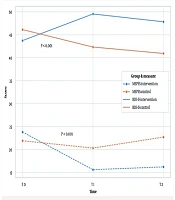
The intervention significantly reduced diabetes burnout (group × time interaction: F(2, 160) = 22.94, P < 0.001). Burnout scores in the intervention group decreased from 38.6 at baseline to 29.1 post-intervention and were sustained at 30.0 at follow-up, whereas control scores remained approximately unchanged at 38.0. The adjusted mean difference at follow-up was −7.04 points (95% CI, −10.11 to −3.96; Cohen's d = 0.91). Within-group reductions were significant only in the intervention group (P < 0.001) (Table 3). Changes in outcomes over time and between-group effects are illustrated in Figures 2 and 3.
Table 3.
Changes in Hope, Resilience, and Diabetes Burnout Scores Over Time a
| Outcomes and Groups | Baseline | Post-Intervention | 2-Month Follow-up | Group × Time Interaction | Effect Size (Cohen's d) at Follow-up |
|---|---|---|---|---|---|
| Hope (HHI) – Primary Outcome | |||||
| Intervention (n = 42) | 35.8 ± 5.6 | 38.3 ± 5.2 | 37.9 ± 5.4 | F(2, 160) = 1.92, P = 0.15 | d = 0.23 |
| Control (n = 41) | 35.5 ± 5.8 | 36.4 ± 5.6 | 36.6 ± 5.7 | ||
| Resilience (CD-RISC-25) – Secondary Outcome | |||||
| Intervention (n = 42) | 54.8 ± 9.6 | 65.7 ± 10.2 | 64.1 ± 9.8 | F(2, 160) = 18.67, P < 0.001 | d = 0.83 |
| Control (n = 41) | 55.2 ± 10.1 | 56.4 ± 9.7 | 56.0 ± 10.3 | ||
| Diabetes Burnout (DBS-12) – Secondary Outcome | |||||
| Intervention (n = 42) | 38.6 ± 7.4 | 29.1 ± 6.8 | 30.0 ± 7.1 | F(2, 160) = 22.94, P < 0.001 | d = 0.91 |
| Control (n = 41) | 38.1 ± 7.8 | 37.2 ± 7.5 | 36.9 ± 7.6 |
a Values are expressed as mean ± SD. All estimates are from linear mixed-effects models fitted to the intention-to-treat population (N = 83). Group × time interaction F statistics have numerator df = 2 and denominator df = 160. Cohen's d was calculated as the adjusted between-group mean difference at the 2-month follow-up divided by the pooled baseline standard deviation. Analyses were adjusted for clinic site. Abbreviations: HHI = Herth Hope Index; CD-RISC-25 = Connor-Davidson Resilience Scale, 25-item version; DBS-12 = Diabetes Burnout Scale, 12-item version.
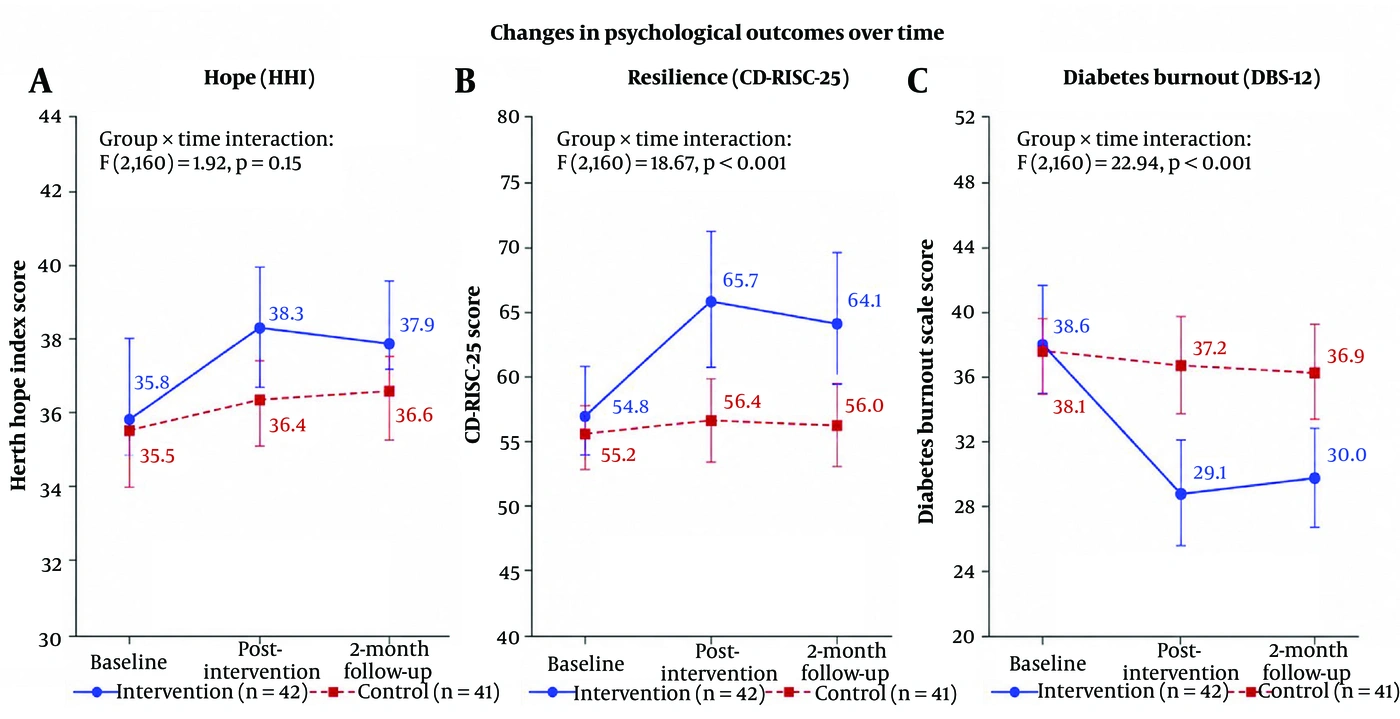
Figure 2.
Changes in psychological outcomes over time
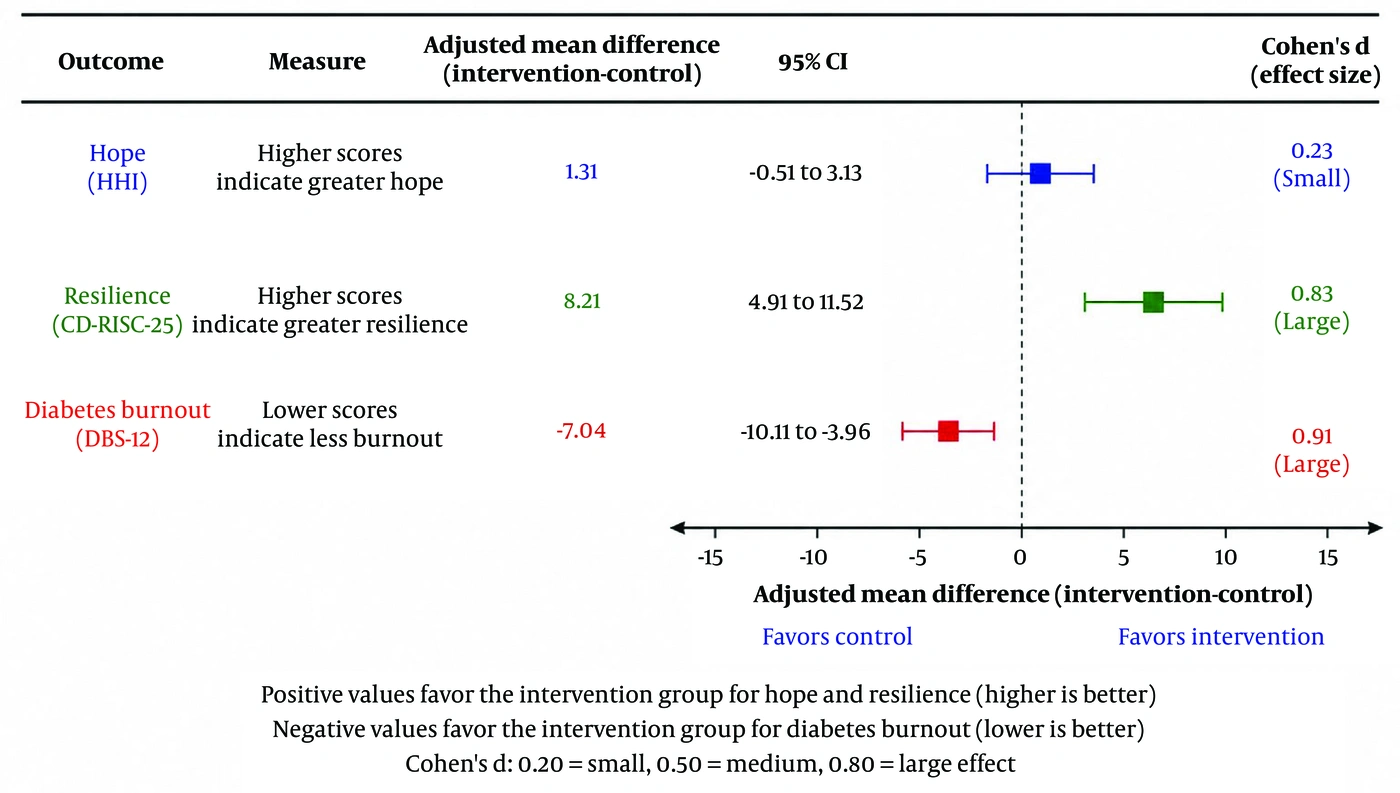
Figure 3.
Adjusted between-group effect at 2-month follow-up
5. Discussion
This study investigated the effects of a psycho-spiritual intervention on hope, resilience, and diabetes burnout in women with type 2 diabetes. The primary outcome, hope, increased modestly in the intervention group; however, the between-group difference was not statistically significant. The secondary outcomes, resilience and diabetes burnout, improved significantly, and these improvements were maintained at the 2-month follow-up. These findings suggest that psycho-spiritual interventions may support psychological adaptation and reduce diabetes-related emotional distress in this population; however, the evidence remains preliminary because the primary outcome did not show a statistically significant effect and the secondary analyses were exploratory.
One of the most notable findings was the significant increase in resilience among participants in the intervention group. Living with diabetes requires continuous self-regulation, adaptation to treatment demands, and coping with uncertainty about future complications. The psycho-spiritual intervention may have enhanced resilience by helping participants reframe challenges, identify personal strengths, develop adaptive coping strategies, and derive meaning from their experiences with chronic illness (22). The incorporation of spiritual reflection and meaning-centered exercises may have further supported participants’ ability to maintain psychological equilibrium in the face of ongoing disease-related stressors. These findings are consistent with previous studies suggesting that spirituality- and meaning-based interventions can enhance resilience by fostering optimism, acceptance, and a greater sense of purpose in individuals with chronic health conditions (23, 24).
The differential pattern of results across outcomes warrants careful interpretation. Although resilience and diabetes burnout showed large, statistically significant improvements, the primary outcome, hope, did not. This differential responsiveness may indicate that the psycho-spiritual intervention primarily influenced participants’ day-to-day coping capacities and emotional adaptation rather than broader future-oriented expectations. Resilience and burnout are often regarded as relatively proximal and modifiable responses to ongoing stressors, making them more amenable to change through short-term psychosocial interventions. In contrast, hope may represent a more stable cognitive and motivational construct that develops gradually over time and may require longer intervention exposure or sustained reinforcement to produce measurable changes. Nevertheless, the observed pattern may be clinically meaningful, as enhanced resilience and reduced burnout may represent important intermediate mechanisms through which psycho-spiritual interventions ultimately contribute to improved psychological well-being and long-term diabetes adaptation (11, 25).
An important finding of this study was that the primary outcome, hope, did not demonstrate a statistically significant improvement despite favorable trends in the intervention group. Several explanations may account for this finding. First, baseline hope scores were relatively high (mean, 35.8 of 48), potentially creating a ceiling effect that limited the magnitude of achievable improvement (26). Second, hope is often considered a relatively stable psychological disposition that may require longer intervention periods or more intensive follow-up to demonstrate substantial change (27). Third, women with long-standing diabetes may already have developed enduring expectations regarding their illness trajectory, making hope less responsive to short-term psychosocial interventions than more dynamic constructs such as resilience and burnout (28). Nevertheless, the observed increase in hope scores suggests that psycho-spiritual interventions may contribute to positive psychological adjustment, even if the effect was insufficient to reach statistical significance within the present sample (29). The small observed effect size (d = 0.23) suggests that any genuine effect of the intervention on hope is likely modest and may require a larger sample to detect.
5.1. Strengths and Limitations
Study strengths include the randomized controlled design, use of validated instruments, blinded outcome assessors, mixed-effects modeling, and the novel inclusion of diabetes burnout. However, several limitations should be noted. Generalizability is limited because the sample comprised only women from 2 Iranian clinics. In addition, reliance on self-report measures may introduce response bias. The control condition did not account for nonspecific effects, such as attention and group support; therefore, the observed benefits reflect the entire intervention package rather than solely its psycho-spiritual components. The 2-month follow-up was relatively short, and the absence of clinical or glycemic outcomes limits the assessment of tangible health benefits. Future research should incorporate extended follow-up, diverse populations, attention-matched controls, clinical measures, and investigations of mediating factors such as spiritual well-being and self-compassion.
5.2. Implications for Practice
Given the nonsignificant primary outcome, these preliminary findings should be interpreted cautiously. Psycho-spiritual interventions show promise as an adjunct to routine diabetes care by addressing the psychological and existential challenges of chronic illness and complementing traditional glycemic management. However, integration into routine practice requires replication in larger, multisite trials with attention-controlled comparators and clinical outcomes. If confirmed, structured psycho-spiritual programs could be incorporated into diabetes education and supportive care services to enhance resilience and reduce burnout. In the interim, healthcare professionals, particularly nurses and diabetes educators, may consider adopting meaning-centered and spiritually sensitive approaches when patient preferences and resources permit.
5.3. Conclusions
The findings of this randomized controlled trial indicate that a psycho-spiritual intervention was associated with enhanced resilience and reduced diabetes burnout in women with type 2 diabetes, with these improvements maintained at the 2-month follow-up. However, the intervention did not produce a statistically significant improvement in the primary outcome, hope. Overall, the results suggest that psycho-spiritual interventions warrant further investigation as a potentially useful complementary strategy for promoting psychological well-being and reducing diabetes-related emotional burden in type 2 diabetes care, although definitive conclusions await replication with larger samples, extended follow-up, and robust control conditions.