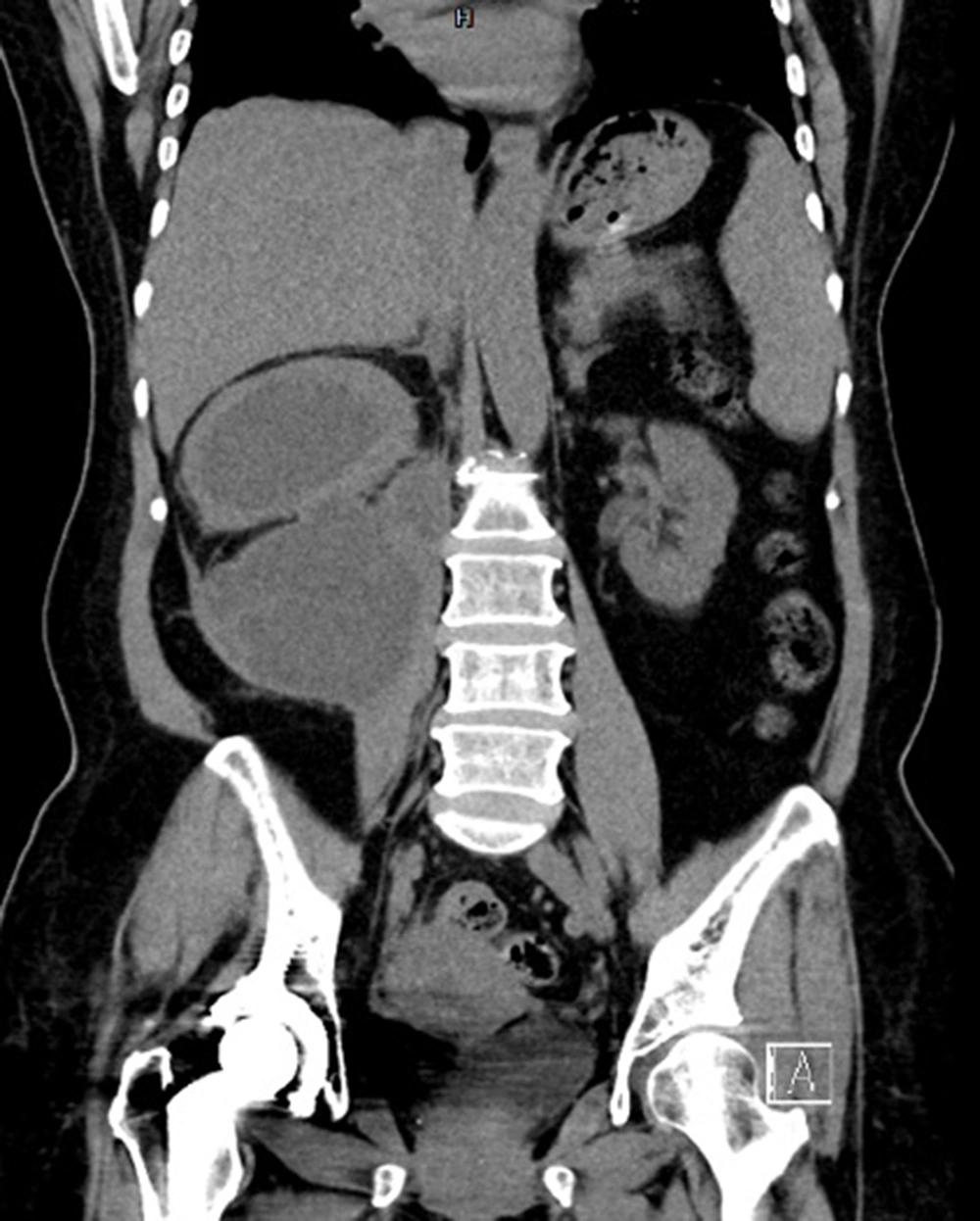
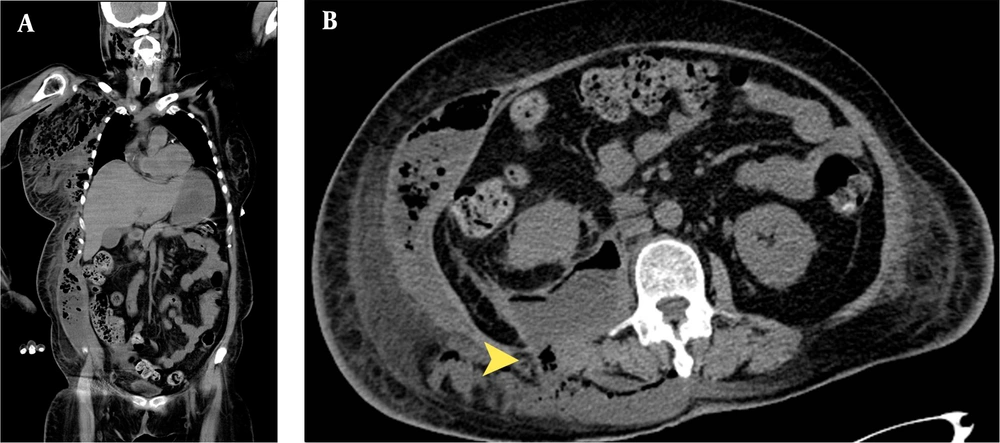
Minor complications have been reported following ESWL, including renal colic (40%), gross hematuria (32%), urinary obstruction (30.9%), and perirenal or subcapsular hematoma (4.6%). Symptomatic bacteriuria has been also reported in 9.7% of cases (
3). Moreover, some rare major complications have been reported, such as abscess formation (
4,
5), acute pancreatitis with abscess (
6), and splenic rupture (
7). However, to the best of our knowledge, this is the first case of necrotizing fasciitis with abscess formation after ESWL.
Cavitation is thought to be the most important force in ESWL. Nonetheless, tear and shear stress and cavitation activity generated by shock waves can cause damage to thin-walled vessels in the kidneys and adjacent tissues. The most common clinical presentations of renal trauma after cavitation include gross hematuria and hematoma (
2). Treatment of ESWL-related hematoma is conservative in most cases, and it often spontaneously resolves within two years (
8). Clinicians should closely monitor the patients’ blood pressure, renal function, and signs of infection or abscess formation. Our patient had perirenal and pararenal hematoma after ESWL, which rapidly progressed to abscess formation. The abscess invaded the posterior to paraspinal regions and then migrated upward to the chest wall, axillary, supra-clavicular, and infra-clavicular regions, arm, breast (Right side), and neck, with downward damage to the abdominal wall, causing necrotizing fasciitis.
Generally, necrotizing fasciitis is an uncommon and potentially fatal infection, which can involve the fascia and subcutaneous tissues (
9). It is associated with a high mortality rate (20.5%), a long hospital stay, and multiple surgical interventions (
10). The primary goal of the first surgical debridement is delineating the extent of infection and complete surgical excision of necrotizing soft tissue. Extensive surgical debridement may result in large raw wounds, and intensive post-excision wound care plays an important role in minimizing sepsis and hemorrhage (
11). Overall, the development of necrotizing fasciitis after ESWL is rare. Abscess extension may occur rapidly and invade the adjacent structures. It is important to consider this fatal complication and perform a surgical intervention immediately.