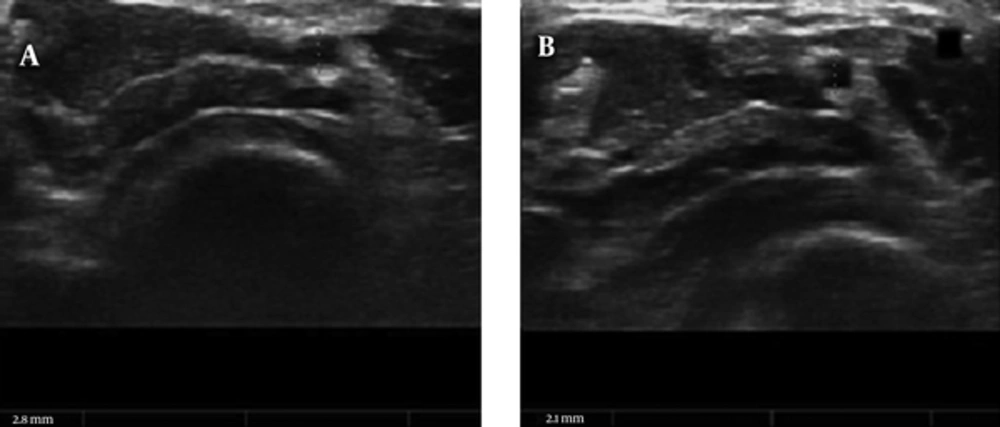
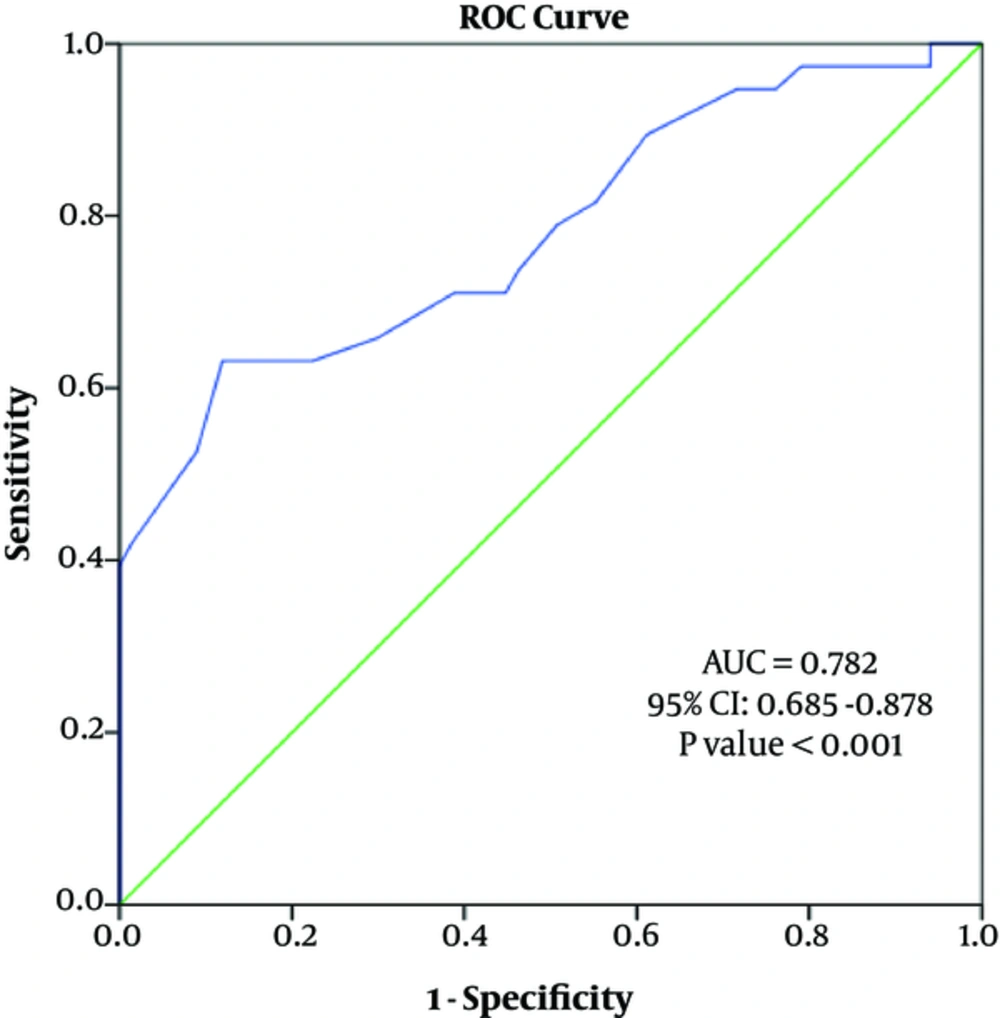
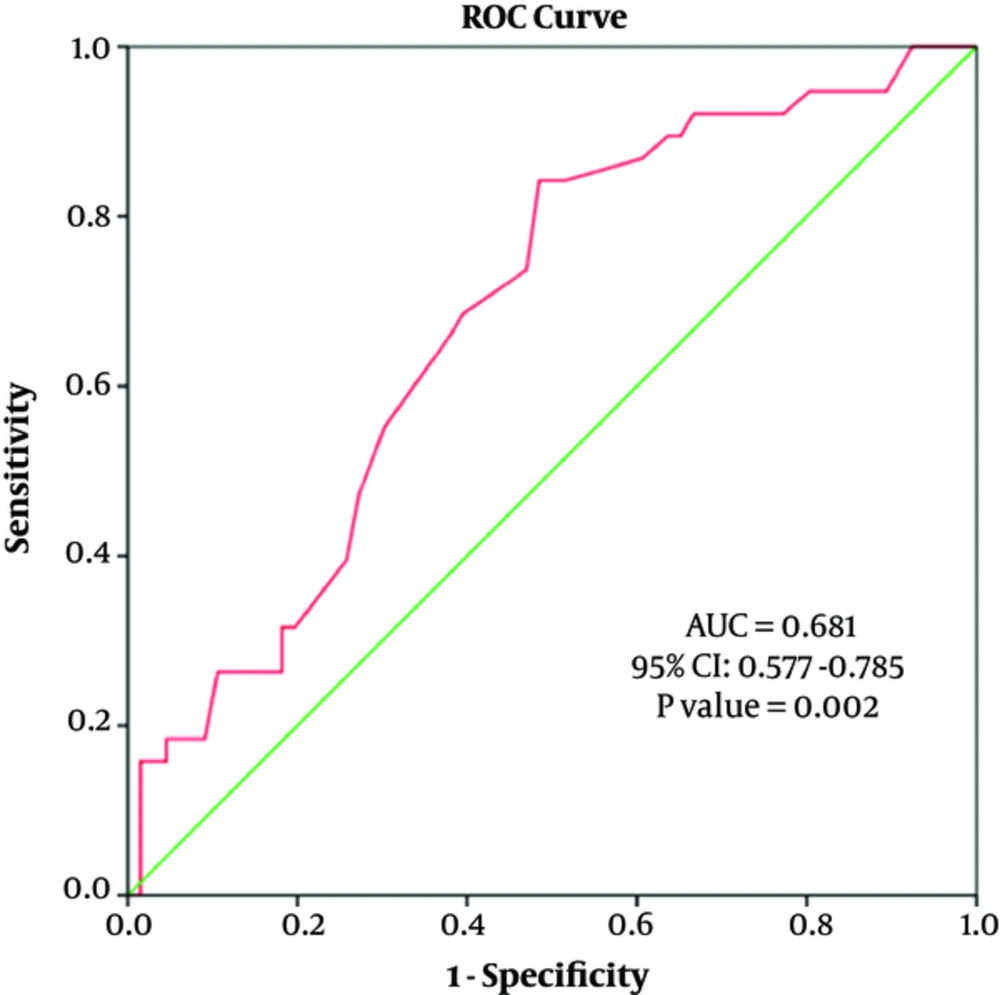
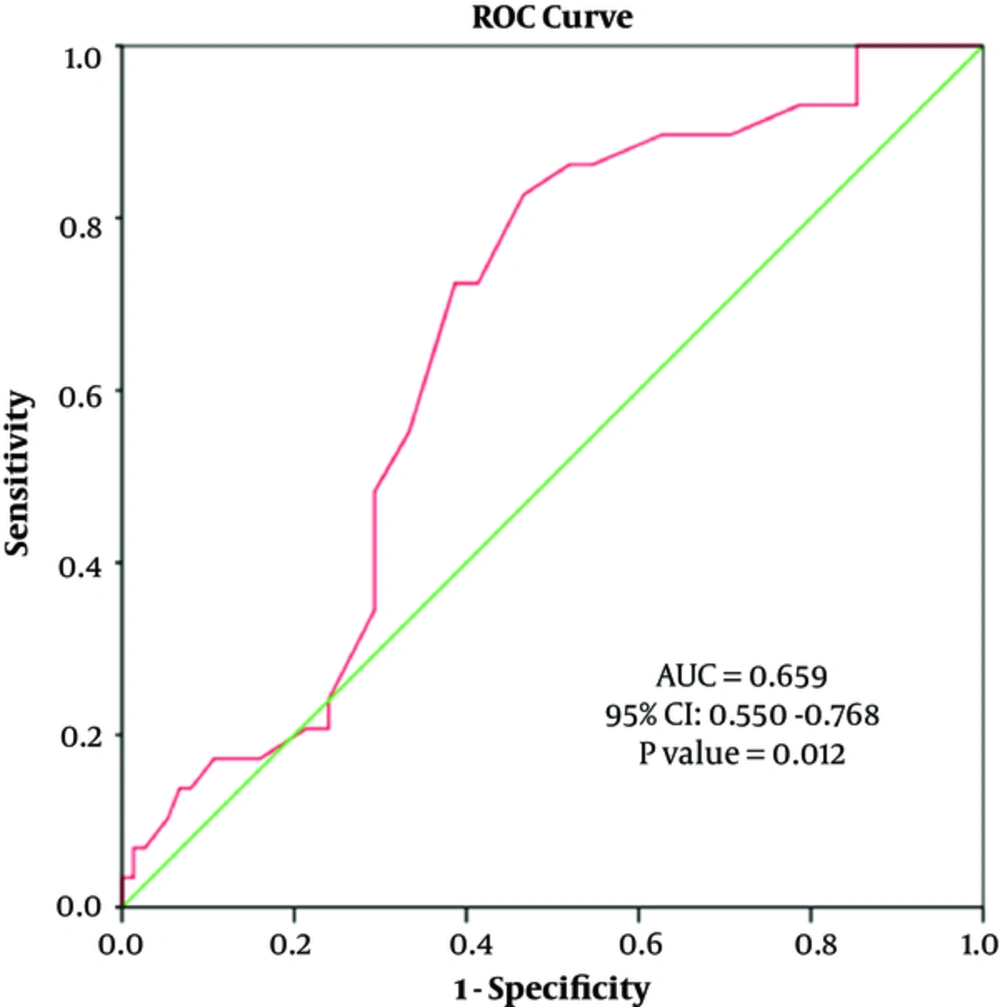
The present study found that the diameters, PSV, and VF values of both RA and UA increased during reciprocal compression, compared to baseline values. In addition, the increases in the diameter, PSV and VF of the UA were more prominent compared to the RA-related parameters.
The studies on RA and UA diameters in the literature reported different results. One study using DUS reported no difference between the diameters of the RA and UA in the measurements through the distal wrist (
12). In a study, which evaluated 327 patients using DUS, the RA diameter at the wrist level was found to be significantly greater than UA diameter (
13). In another study, RA diameter remains unaffected by hand dominance; however, UA diameter was greater in the dominant hand (
14). In the present study, RA diameter at the wrist level was greater than UA diameter. In addition diameters of the two arteries were greater in the dominant upper extremity. Therefore, we suggest that UA in the dominant hand can be used as an alternative access site during percutaneous coronary intervention (PCI) in patients with RA occlusion or in those in whom an intervention through the RA fails.
Several studies examined the relationship between sex, race, height, weight, BMI, and RA and UA diameters (
6,
14-
18). The RA diameter in males was found to be higher than in females. This finding was attributed to the lower height of females (
14). Male sex and high BMI were also associated with a greater RA diameter (
15). In the good radial artery size predictor (GRASP) study, male sex, wrist circumference, and non-South Asian race were found to be associated with and independent predictors of the greater RA diameter (
17). In the present study, RA and UA diameters in males were greater than in females. Thus, PCIs are safer and easier in males than in females. Several studies have shown that the incidence of RAO following PCI is higher in females with low BMI due to presence of a low-caliber RA (
15,
18). Although the present study found no effect of BMI on RA diameter, the diameter of UA was greater in subjects with a BMI of ≥ 25 kg/m
2.
The use of TRA in cardiac catheterization and interventional procedures has gained wide acceptance in the past decade (
19). However, TRA has some limitations such as low caliber of the RA limiting device selection, higher incidence of arterial spasm (10%), and presence of anatomic variations in approximately 5% of the patient population (
19). The development of post-procedural occlusion following TRA limits the repetitive use of same artery in the future (
9,
20). Moreover, collateral circulation from the UA is insufficient in certain patients. The UA in the opposite hand can be used as an alternative access site in patients developing RAO, particularly in those with insufficient collateral circulation in the UA (
20).
A study in the literature reported no ischemic events, despite the occurrence of partial or complete occlusion in more than 25% of patients following TRA (
21). Thus, most patients with RAO are asymptomatic (
21,
22). Increases in the diameter and flow rates of the other arteries in patients developing RAO or ulnar artery occlusion (UAO) ensure sufficient blood supply to the hand and protect the hand against ischemic events (
4). Significant increases in the diameter, velocity and volume flow of the arteries during reciprocal compression of the two arteries in the present study support this assumption. Thus, the use of TUA as an alternative in patients developing RAO, particularly in those with peripheral vascular disease, would avoid transfemoral puncture and difficulties of re-intervention to the already occluded RA.
Blood supply to the forearm completely relies on UA upon removal of the RA for CABG; the studies have observed a steady increase in the flow velocity of UA for 5 to 10 years starting in the early postoperative period (
23). If collateral circulation is lack of sufficient reserves to maintain blood supply to the hand at rest after removal of RA, acute hand ischemia develops in the early period, and if collateral circulation is sufficient at rest but lacking sufficient reserves to maintain blood supply to the hand during exercise, then subclinical ischemia and associated exercise intolerance will develop in the same arm in later periods (
23). In a series of 3,977 patients reported by Meharwal et al. (
24), 5% of the patients developed paresthesia and pulselessness in the early postoperative period after removal of RA and they found weakness in the same hand for four weeks. The decision to perform surgery in this case series was based on AT performed in the preoperative period. In another study, Agrifoglio et al. (
10) evaluated hand circulation using DUS during RA compression and the removal of the RA was deemed unsuitable for use in CABG surgery. Therefore, avoiding in 5.3% of the patients, other patients undergoing operation had no hand or wrist ischemia in the postoperative period (
25). Abu-Omar used DUS in the presence of abnormal AT to evaluate patients undergoing total arterial revascularization. In preoperative assessment, 38 out of 43 patients with abnormal AT were found to be normal on DUS and no ischemic sequel was observed after removal of the RA (
26).
Selection of appropriate arterial conduit for CABG surgery should take into consideration long-life expectancy, particularly in young patients. Hence, we consider that measurement of flow characteristics of RA and UA during reciprocal compression in the preoperative period would be beneficial. The VF calculated by the area under the spectral curve and measurement of diameter would provide sufficient information about circulatory reserves. Therefore, we believe that evaluation of blood supply to the forearm and hand using DUS before PCIs and procedures during which RA is to be used in CABG and assessment of volume flow in addition to flow velocity would provide more reliable and useful data.
Nonetheless, the present study has some limitations. It is a single-center study with a small sample size. Sex and BMI have low specificity and sensitivity in predicting appropriate arterial diameter. Further studies are therefore, required to identify whether changes in the UA volume flow and velocity parameters on DUS in preoperative assessment correlate with postoperative changes in patients undergoing coronary artery bypass graft (CABG) surgery using RA conduit. Such study design would ensure the safety of VF parameter.
In conclusion, our study results showed that an ultrasonographic measurement of diameter, PSV and VF would still be necessary in the preoperative period. The increases in the diameter, PSV, and VF of the RA and UA during reciprocal compression were higher, compared to the increases in the RA. We therefore, suggest that assessment of forearm and wrist arteries in the preoperative period using DUS at rest and during reciprocal compression is a safe and effective method in predicting postoperative hand ischemia, and the use of VF parameter, in addition to PSV would give more accurate data.