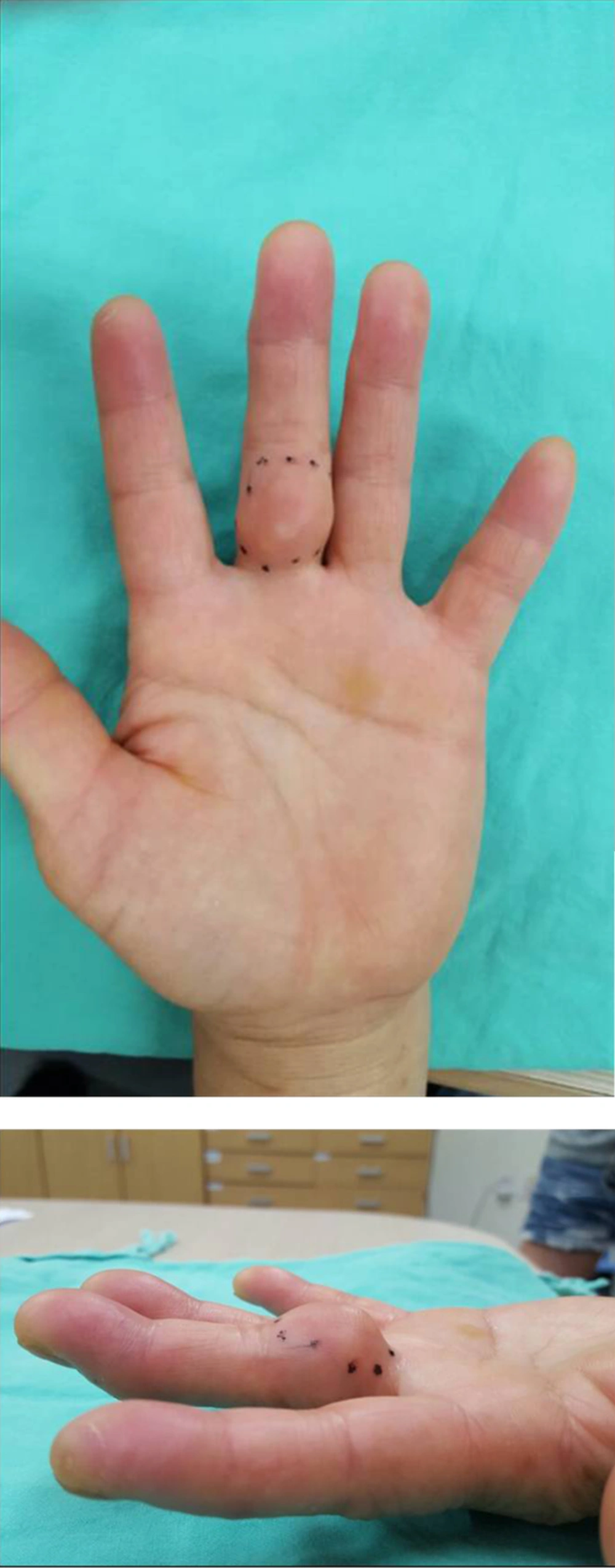
A 57-year-old female patient presented with a 2-year history of a palpable mass on her left proximal third finger. She did not have any underlying disease, such as tuberculosis and immunodeficiency. The patient had no history of trauma to her left hand and did not mention any significant medical history, such as a venous puncture. The palpable mass was firm, and had gradually increased in size over the past 2 years; the patient also did not complain of any pain due to the mass or its surrounding area. Physical examination revealed a 3 × 3 cm swollen mass without any abnormal findings such as erythema, ulcer, and discharge on the overlying skin at the ventral surface of her left third finger (
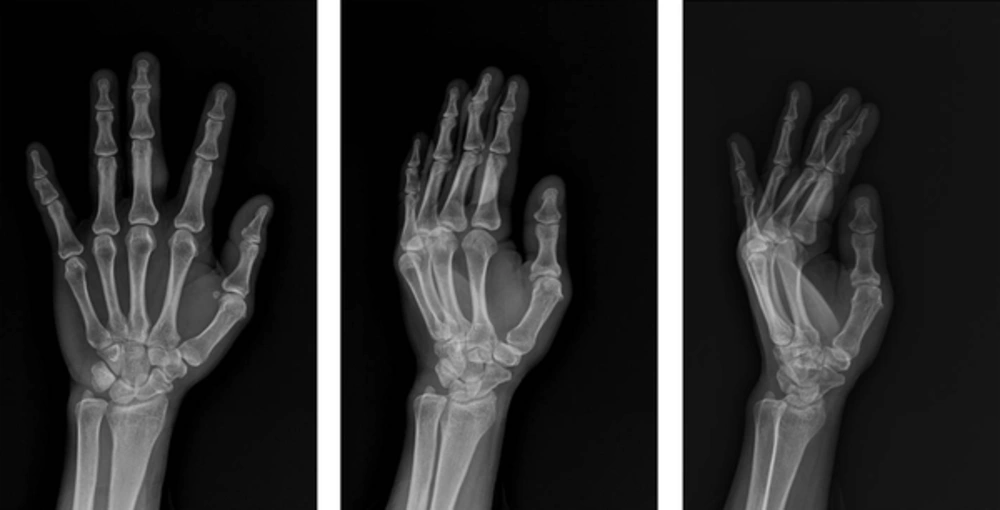
Figure 1). Her body temperature was within normal range, and a chest radiograph showed no evidence of pulmonary tuberculosis. A sputum and urine culture were negative, laboratory testing showed a normal blood cell count, and a human immunodeficiency virus test result was negative. Hand radiographs showed a large soft tissue mass with a broad base at the ventral side of the left proximal third finger, but no evidence of abnormal bony findings such as a periosteal reaction was shown (
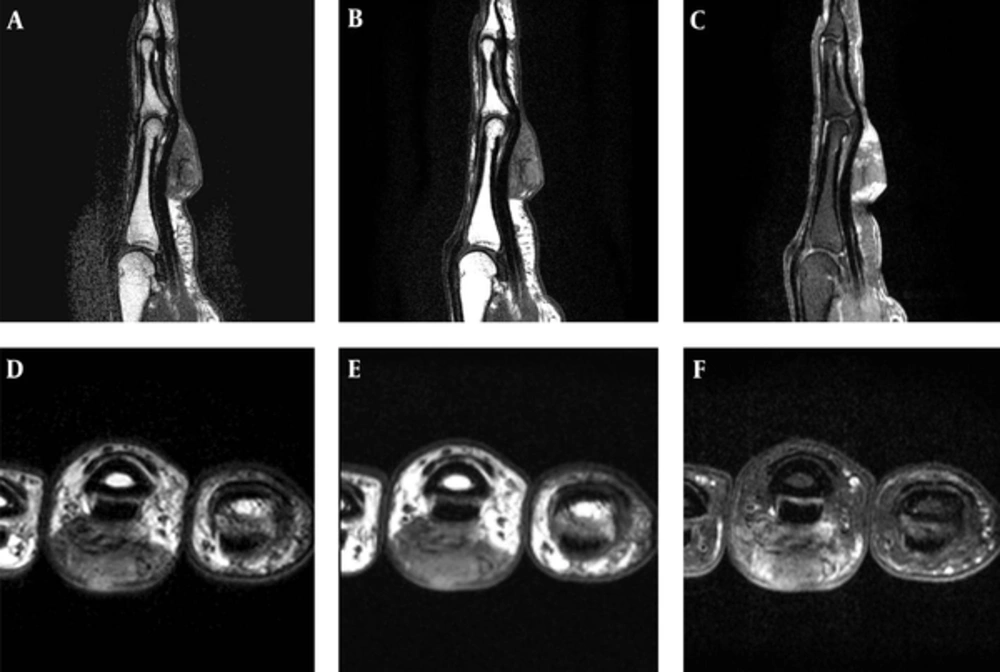
Figure 2). MR imaging revealed a well-defined soft tissue mass on the ventral side of the left third proximal phalanx, which was broadly abutted to the flexor tendon but did not involve the bone or adjacent joint. The mass showed heterogeneous signal intensity and contained multifocal dark signal intensity portion on the T1 and T2 weighted images (
Figure 3). On enhanced T1 weighted images, the mass showed a peripheral rim enhancement, but the central portion of the mass was not distinctly enhanced. The mass was completely removed by an orthopedic surgeon and operative findings reported that a well-demarcated 2 × 2 cm mass with central necrosis abutted the 3rd flexor tendon. Histopathology of the mass showed chronic granulomatous inflammation with caseous necrosis, giant cells and granulomas (
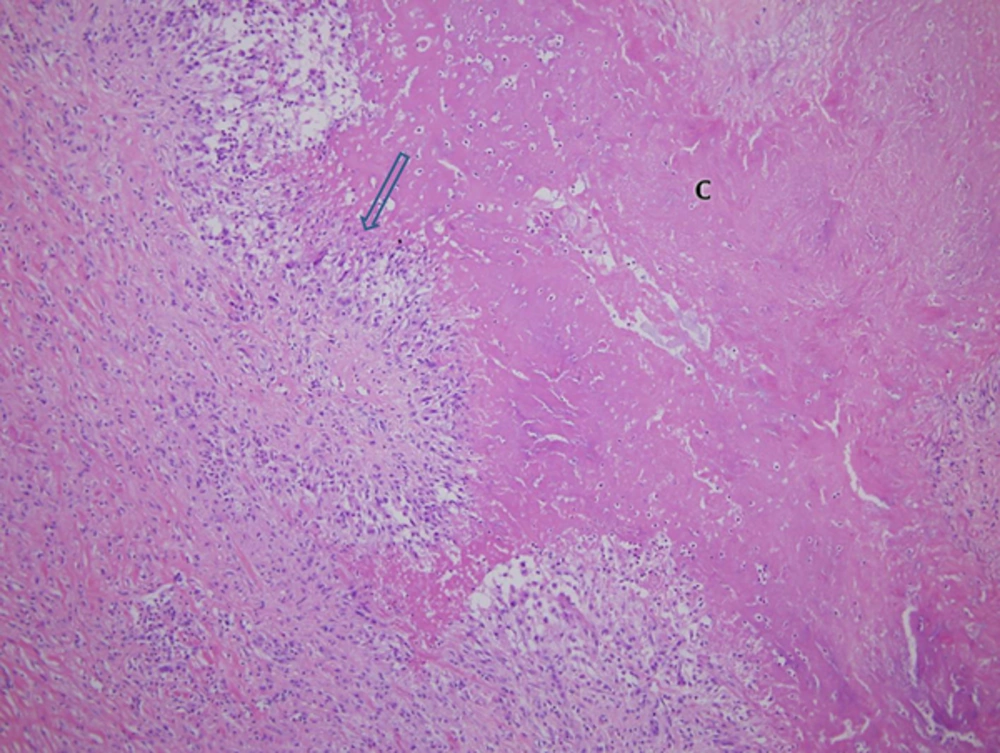
Figure 4). Acid fast bacillus and periodic acid-Schiff stains did not demonstrate acid-fast bacilli or fungi but a polymerase chain reaction (Real-Q MTB and nontuberculous mycobacteria kit, Biosewoon, Seoul, Korea and CFX96
TM Real-Time System, BioRad, California, USA) for Mycobacterium tuberculosis was positive. The patient was treated with quadruple therapy consisting of isoniazid 75 mg, rifampicin 150 mg, pyrazinamide 400 mg, and ethambutol 275 mg daily for 3 months and authors have not found any problems in 9 months of follow up.