
1. Background
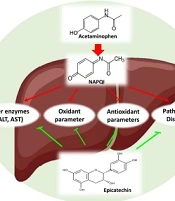
Acetaminophen (APAP) is considered safe for reducing fever and alleviating pain at therapeutic doses. However, APAP toxicity is the most common cause of acute hepatic injury and can cause liver damage in humans (1). The cytochrome P450 system metabolizes APAP to N-acetyl-p-benzoquinone imine (NAPQI), which is inactivated through glutathione-S-transferase-mediated binding to glutathione (GSH) at therapeutic APAP doses. However, at toxic APAP doses, this metabolite can bind to hepatocellular proteins and consequently damage hepatic cells (2).
Glutathione is the primary cytosolic antioxidant that protects cells against reactive oxygen species (ROS) (3). Moreover, ROS production can induce oxidative stress, mitochondrial dysfunction, injury to vital tissues, and ultimately hepatocellular necrosis. Therefore, antioxidant mediators may increase GSH levels in liver cells and consequently reduce liver toxicity induced by toxic agents. Several natural compounds with hepatoprotective effects have been evaluated in animal models of liver toxicity (4). In this regard, studies have shown that antioxidant compounds, such as protocatechuic acid, ellagic acid, and Iranian green tea, may ameliorate APAP-induced liver toxicity and other disorders (5).
Protocatechuic acid is a polyphenolic compound and a flavonoid. The structure of PCA is similar to that of gallic acid, caffeic acid, vanillic acid, and several other antioxidant compounds. It is found as an active component in many nuts and vegetables, including the dried flowers of Hibiscus sabdariffa L., carrots (Daucus carota), and berries, such as raspberry, blueberry, mulberry, and strawberry (6). Several studies have reported that PCA has antioxidant, anti-inflammatory, antiproliferative, hepatoprotective, and cardioprotective properties (7).
2. Objectives
Although the protective effect of PCA against APAP toxicity remains unclear, its antioxidant and hepatoprotective properties may attenuate APAP-induced hepatic injury in mice. Therefore, this study aimed to evaluate the protective effects of PCA against APAP-induced liver damage in mice.
3. Methods
3.1. Chemicals and Drugs
Protocatechuic acid and APAP were purchased from Sigma-Aldrich Chemical Company (St. Louis, MO, USA). Other commercial kits were purchased from Navand Salamat Company (Urmia, Iran).
3.2. Animals
Forty-eight male ICR mice (20 - 30 g, aged 8 - 10 weeks) were allocated to six groups, with eight mice per group. The mice were obtained from the Animal Center of Ahvaz Jundishapur University of Medical Sciences, Iran. The animals were housed under standard conditions and acclimated for 1 week before the study. All procedures were conducted in accordance with the guidelines of the Animal Ethics Committee of Dezful University of Medical Sciences (ethics code: IR.DUMS.REC.1397.042).
3.3. Experimental Design
The mice were randomly divided into six groups, with eight mice in each group.
Group I (normal control) received an equal volume of the PCA vehicle orally for 7 days and a single dose of the APAP vehicle intraperitoneally on day 7.
Group II (APAP) received the APAP vehicle intraperitoneally for 6 days and then a single dose of APAP (300 mg/kg, intraperitoneally) on day 7.
Groups III, IV, and V (APAP + PCA) were treated with PCA (40, 80, and 160 mg/kg/day) orally for 7 days and received a single dose of APAP (300 mg/kg/day, intraperitoneally) on day 7, 1 hour after the last PCA dose.
Group VI (PCA control) received PCA (160 mg/kg/day) orally for 7 days and a single dose of the APAP vehicle intraperitoneally on day 7, 1 hour after the last PCA dose.
All animals were anesthetized with ketamine/xylazine and sacrificed after 24 hours of fasting. Blood samples were collected to assess serum aspartate aminotransferase (AST), alanine aminotransferase (ALT), and alkaline phosphatase (ALP) activities. Liver samples were rapidly dissected, weighed, and divided into two parts. One part was fixed in 10% formaldehyde saline for histopathological evaluation, and the second part was stored at -80°C for biochemical assays, including malondialdehyde (MDA), glutathione, catalase (CAT) activity, and superoxide dismutase (SOD) activity. All toxicity tests were performed according to OECD guideline No. 408.
3.4. Biochemical Assays
3.4.1. Serum Assessments
Liver function test activities (AST and ALT) were measured in serum samples using the Reitman-Frankel and King methods with an automated analyzer (Hitachi 911, Roche Diagnostics, Basel, Switzerland).
3.4.2. Tissue Antioxidant Assay
Malondialdehyde levels and antioxidant enzyme activities (GPX, CAT, and SOD) were evaluated in tissue homogenates by spectrophotometry using Navand Salamat kits (Urmia, Iran).
3.5. Histological Evaluations
To assess microscopic changes, the collected livers were fixed in 10% paraformaldehyde. The tissues were then dehydrated through graded alcohols and xylene and embedded in paraffin. Subsequently, 5-μm tissue sections were cut and stained with hematoxylin and eosin. Finally, an expert pathologist evaluated histopathological changes in the liver tissue, including apoptotic cells, lymphocytic infiltration, degeneration, and necrosis.
3.6. Statistical Analysis
Data were expressed as mean ± SEM. Before one-way analysis of variance (ANOVA), the Shapiro-Wilk and Levene tests confirmed normality and homogeneity of variance, and no data transformations were required. One-way ANOVA followed by the Tukey post hoc test was performed using GraphPad Prism version 5.04, with statistical significance set at P ≤ 0.05.
4. Results
4.1. Effects of PCA on the Liver-to-Body Weight Ratio in APAP-Intoxicated Mice
The variation in the liver-to-body weight ratio in animals treated with PCA is shown in Figure 1. The liver-to-body weight ratio in the APAP group was slightly increased compared with that in the control group; however, this difference was not significant (P > 0.05). In addition, no significant differences were observed in the relative liver-to-body weight ratio between PCA-treated mice and the control group (P > 0.05).
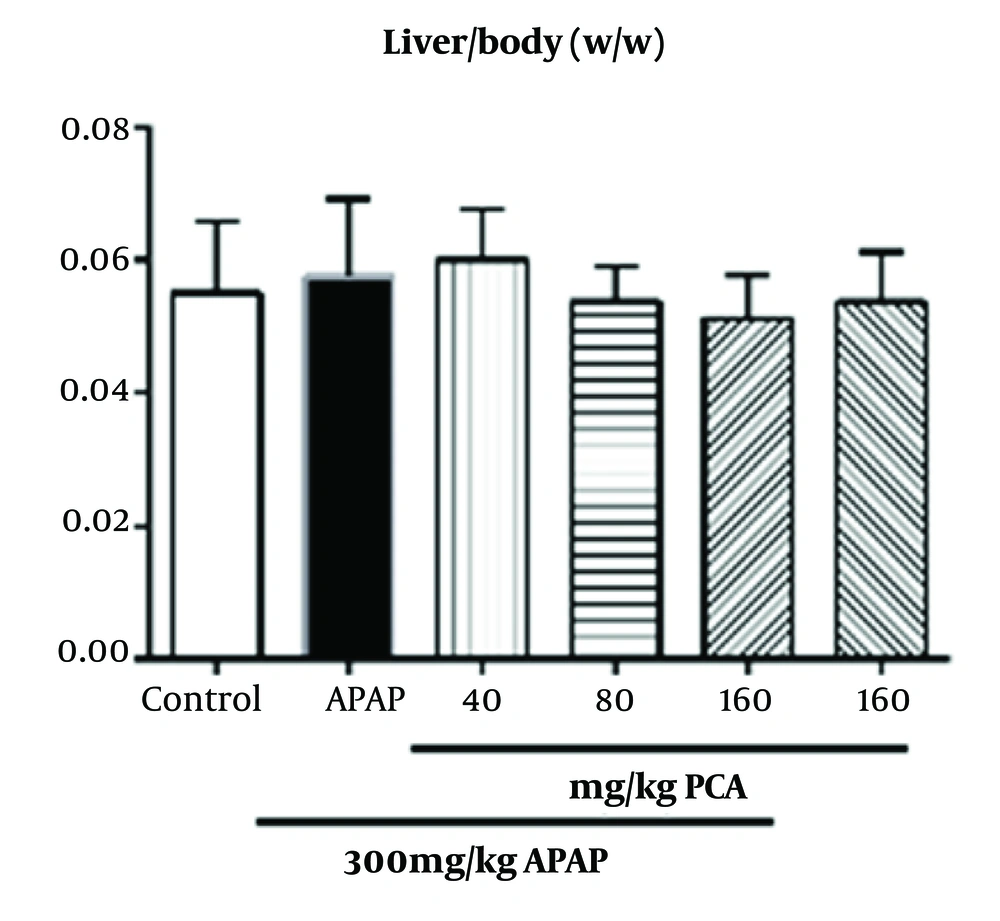
Figure 1.
Effects of PCA on the liver-to-body weight ratio in APAP-intoxicated mice.
4.2. Effects of PCA on Liver Function Test Elevation in APAP-Intoxicated Mice
AST and ALT were evaluated to assess liver injury. The results shown in Figure 2 indicate that serum AST and ALT levels were increased in mice exposed to APAP compared with those in the control group (P < 0.0001). In contrast, pretreatment with PCA at doses of 40, 80, and 160 mg/kg significantly ameliorated serum AST and ALT levels compared with those in the APAP group (P < 0.0001).
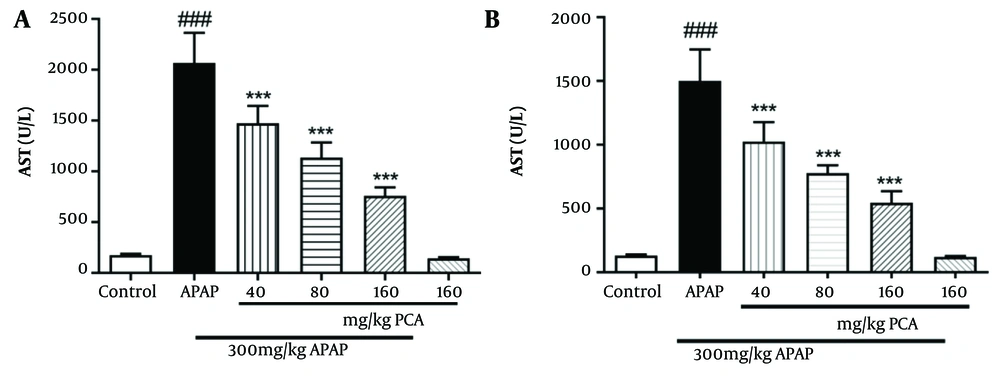
Figure 2.
Effects of pretreatment with PCA on serum enzyme activities of AST and ALT. Each value is expressed as mean ± SEM (n = 8). Significantly different from the control group (***P < 0.001) and APAP-treated group (###P < 0.001).
4.3. Effects of PCA on Oxidative Stress in APAP-Intoxicated Mice
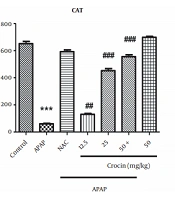
Superoxide dismutase, CAT, and GPX activities, as antioxidant enzymes, and MDA formation were determined, as shown in Figure 3. Data analysis indicated that APAP treatment caused a significant increase in MDA levels and a decrease in hepatic GPX, CAT, and SOD activities compared with the control group (P < 0.001 for all). In contrast, mice treated with PCA at doses of 40, 80, and 160 mg/kg showed significantly ameliorated MDA levels and significantly increased GPX activity. In addition, CAT and SOD activities increased in a dose-dependent manner compared with those in the APAP group.
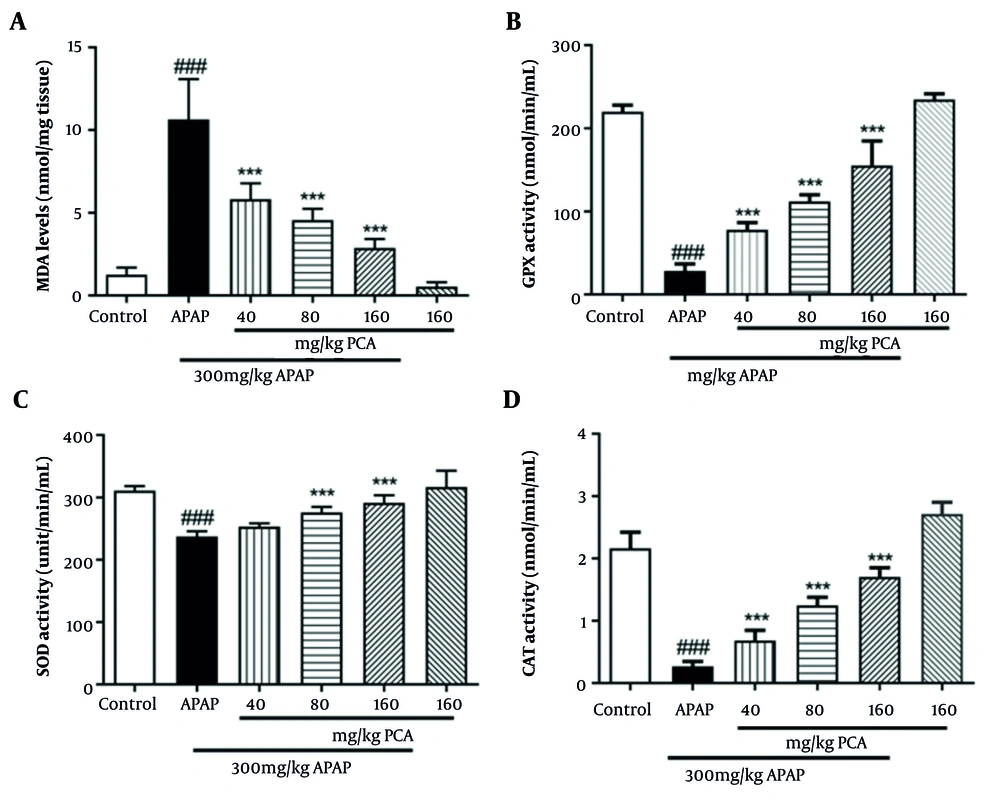
Figure 3.
Effects of pretreatment with PCA on liver CAT, SOD, MDA, and GPX content. Each value is expressed as mean ± SEM (n = 8). Significantly different from the control group (***P < 0.001) and APAP-treated group (###P < 0.001).
4.4. Histopathological Findings
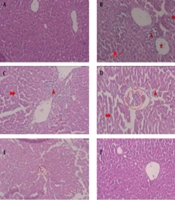
Microscopic examination showed that the normal control group exhibited well-preserved hepatocytes with intact cytoplasm and prominent nuclei, as well as clearly visible portal tracts and central veins (Figure 4A). In the APAP treatment group, severe liver damage, including central zone necrosis, hepatocyte degeneration, and apoptotic bodies, was observed (Figure 4B). These lesions were partly recovered in the group receiving APAP + 40 mg/kg PCA (Figure 4C). However, pretreatment with 80 and 160 mg/kg PCA attenuated liver tissue damage to mild to moderate levels, including mild central zone necrosis, hepatocyte degeneration, and congestion of hepatic vessels (Figure 4D and E). In addition, treatment with 160 mg/kg PCA for seven consecutive days did not produce substantial pathological changes compared with those in the normal group (Figure 4F).
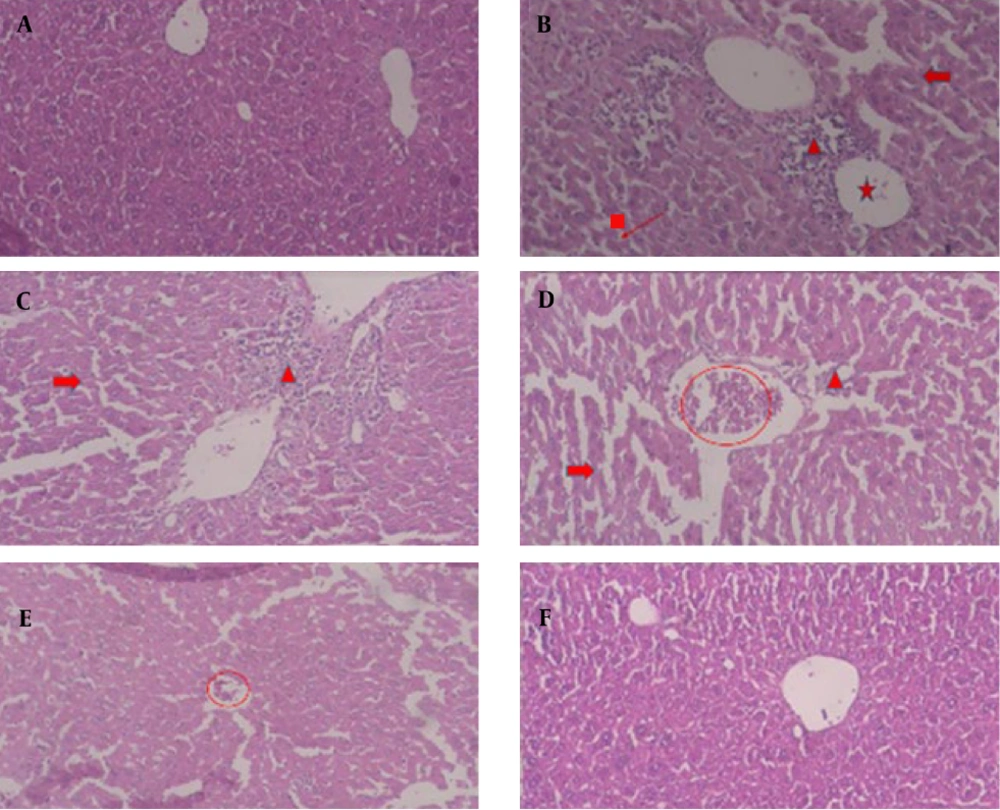
Figure 4.
A, Control group: normal liver tissue; B, acetaminophen group: severe liver tissue damage, including central vein (☆), central zone necrosis (▲), hepatocyte degeneration (➜), and apoptotic body (■); C, APAP + 40 mg/kg PCA group: moderate to severe liver tissue damage, including central zone necrosis (▲) and hepatocyte degeneration (➜); D, APAP + 80 mg/kg PCA group: mild to moderate liver tissue damage, including mild central zone necrosis (▲), hepatocyte degeneration (➜), and congestion of hepatic vessels (○); E, APAP + 160 mg/kg PCA group: mild liver tissue damage, including mild hepatocyte degeneration and congestion of hepatic vessels (○); F, 160 mg/kg PCA group: near-normal liver tissue.
5. Discussion
The main aim of this study was to evaluate the protective effect of PCA against APAP-induced liver damage in mice. The liver is an essential organ for detoxifying harmful substances in the body. In this regard, APAP is safe at therapeutic doses. Administration of various drugs, such as acetaminophen and cisplatin, can induce acute inflammation in the kidney, liver, and other vital organs. Recent studies have shown sinusoidal dilatation and inflammatory cell infiltration into the portal space (8). However, APAP overdose can damage hepatocytes and elevate serum liver function markers, such as ALT and AST. Therefore, analysis of serum liver biomarkers can be used to identify liver damage (9).
This study showed that APAP overdose (300 mg/kg, intraperitoneally) caused acute liver injury in mice, characterized by increased serum liver function tests (AST and ALT). In addition, severe pathological changes, such as centrilobular vein congestion and apoptotic cells, were observed. Moreover, liver MDA levels increased, whereas GPX, SOD, and CAT activities decreased in mice. These findings are consistent with the results of previous studies (10-12).
Pretreatment with PCA (40, 80, and 160 mg/kg/day orally) for seven consecutive days decreased MDA, ALT, and AST levels and clearly reduced histological liver toxic damage in the APAP group. Furthermore, hepatic function tests and pathological findings were normal in mice treated with 160 mg/kg PCA for seven consecutive days. The results of this study showed that administration of 40, 80, and 160 mg/kg/day PCA orally for seven consecutive days exerted protective effects against APAP-induced hepatic damage in animals.
Acetaminophen overdose has been shown to deplete cellular GSH and produce a large amount of the toxic metabolite NAPQI through cytochrome P450 activation and ROS generation. Overall, in drug-induced liver or lung injury and some inflammatory processes, such as cerebral ischemia, ROS are destructive agents (13-15). Early treatment may allow time for liver recovery. Previous studies have also shown that natural antioxidant compounds can reduce APAP-induced hepatic damage in mice and rats (16, 17). Accordingly, these agents prevent and treat liver damage related to oxidative stress, especially ROS. In line with previous studies, the present study found that the antioxidant properties of PCA can mitigate hepatic damage.
Malondialdehyde levels and GPX, SOD, and CAT activities in the liver were also examined to assess the antioxidant capacity of PCA. Malondialdehyde is a lipid peroxidation product that increased in the liver cells of mice treated with APAP. Enzymatic antioxidants, including SOD, CAT, and GPX, can remove toxic oxygen metabolite products. Therefore, the antioxidant defense system was evaluated based on CAT, GPX, and SOD activities (18, 19). These results strongly indicate the presence of oxidative stress in APAP-induced hepatic damage (20, 21). However, the groups that received PCA showed increased CAT, GPX, and SOD activities and decreased MDA levels.
Malondialdehyde overproduction can cause cellular membrane injury. In this study, MDA levels increased in the APAP groups, whereas PCA treatment decreased these levels. The liver contains GPX, CAT, and SOD enzymes, which can protect cells from oxidative stress by converting free radicals into nontoxic products. The results of this study showed that a toxic dose of acetaminophen clearly decreased GPX, CAT, and SOD activities, whereas acetaminophen and PCA coadministration ameliorated GPX, CAT, and SOD activities. These effects were supported by previous studies that verified APAP-induced liver toxicity. These results also showed that 40, 80, and 160 mg/kg/day PCA orally for seven consecutive days could significantly reduce hepatic damage by decreasing oxidative stress and increasing antioxidant defense systems.
Histopathological assessments supported these findings by revealing pronounced liver damage in the APAP group, including interface necrosis (hepatitis), apoptotic cells, lymphocytic infiltration in the central zone, and ballooning degeneration. Protocatechuic acid significantly ameliorated histopathological liver damage. Therefore, PCA may be useful for preventing and ameliorating liver damage.
The findings of the present study demonstrated that APAP overdose leads to significant depletion of cellular GSH, which is consistent with the well-established mechanism of APAP toxicity through the production of the toxic metabolite NAPQI by cytochrome P450 activation and subsequent ROS generation. In this context, redox regulation of the immune response, as widely reviewed by Gostner et al. (22), provides a valuable framework for understanding the broader implications of our observations. Gostner et al. reported that GSH is quantitatively the major intracellular redox buffer in mammalian cells and that the GSH/GSSG couple is present in the cytoplasm, nucleus, mitochondria, and other organelles, with different redox potentials. Importantly, these authors emphasized that antioxidant molecules not only provide redox buffer capacity but also play a crucial role in regulating immune responses, because thiol/disulfide buffers are important elements of signal transduction networks, particularly in the activation of T cells and their differentiation into effector T-cell subsets (22).
The depletion of GSH following APAP overdose, as observed in our study, may therefore have consequences that extend beyond direct hepatocyte injury (22). When a response to an antigen is induced, GSH synthesis is stimulated, which serves as an important proliferative signal for T cells and activates redox-sensitive signaling cascades that promote activation and proliferation, including AP1 and cell cycle proteins (23, 24). Consequently, profound GSH depletion induced by APAP overdose could impair the proliferative capacity of immune cells and disrupt normal T-cell-mediated immune responses. Furthermore, lymphocytes require a reducing environment for optimal activation, and naive T cells are metabolically dependent on antigen-presenting cells because they do not express the cystine transporter xc-, thus requiring exogenous thiols for activation and function (25).
The present results showed that treatment with PCA at doses of 40, 80, and 160 mg/kg significantly restored the activities of antioxidant enzymes, including GPX, SOD, and CAT, while reducing MDA levels and ameliorating histological liver damage. These protective effects are particularly relevant when viewed through redox-immune regulation (22). Previous research demonstrated that redox balance is critically involved in the regulation of T-cell activation, proliferation, and shifting of the T-cell phenotype. Specifically, oxidative conditions support Th1 development, whereas antioxidative stress preferentially activates Th2-type responses, which may result in ineffective pathogen defense and the development of allergies. Glutathione levels in antigen-presenting cells modulate Th1 versus Th2 response patterns (26). Therefore, by restoring GSH levels and the overall antioxidant defense system, PCA may not only protect hepatocytes from oxidative damage but also help maintain appropriate redox-dependent immune signaling and prevent shifts toward dysregulated immune responses that could exacerbate liver injury.
Gostner et al. (22) also provided an important caution regarding the consumption of exogenous antioxidants. They stated that the consumption of large amounts of health-promoting exogenous antioxidants that reach relatively high concentrations in the gastrointestinal tract should be considered with caution, because an exaggerated increase in antioxidant potential might cause adverse effects due to antioxidative stress. This caution is particularly relevant to the present study, as PCA at the highest dose (160 mg/kg) normalized liver function tests and showed the most pronounced protective effects. However, the dose-dependent nature of the effects of PCA in this study suggests that there is an optimal therapeutic window, and excessive antioxidant supplementation may potentially disrupt the delicate redox balance required for proper immune function.
5.1. Conclusions
PCA attenuated APAP-induced hepatotoxicity in mice by suppressing oxidative stress, suggesting its dual potential as a preventive and therapeutic agent. The protective effects were mediated through restoration of GSH and antioxidant enzymes, which may help maintain the reducing microenvironment required for proper T-cell activation and prevent immune dysregulation. Thus, PCA offers multifaceted hepatoprotection through both direct antioxidant and indirect immunomodulatory mechanisms. Future research should examine its effects on the Th1/Th2 balance and redox-sensitive transcription factors.