
1. Background
Type 2 diabetes mellitus is one of the most prevalent chronic metabolic disorders worldwide and is characterized by insulin resistance and impaired glucose metabolism. The global prevalence of T2DM continues to rise markedly, driven by population aging, sedentary lifestyles, and unhealthy dietary patterns (1, 2). Chronic hyperglycemia in patients with T2DM causes long-term damage to vital organs, including the heart, kidneys, and eyes, primarily through oxidative stress and systemic inflammation (3). Therefore, controlling blood glucose levels and modulating inflammatory processes are essential components of diabetes management.
Dietary modification remains a cornerstone of T2DM prevention and treatment. In addition to pharmacological interventions, lifestyle and nutritional strategies can significantly improve glycemic control and reduce the risk of diabetes-related complications (4, 5). One of the most common dietary sources of added sugars is refined white sugar (sucrose), which has a high glycemic index and limited nutritional value. Excessive consumption of refined white sugar contributes to postprandial hyperglycemia, increased insulin demand, and activation of inflammatory pathways (6). Therefore, identifying healthier alternatives to refined sugars is an important public health priority.
Brown sugar, a less refined form of sucrose, retains some of the natural molasses content present in sugarcane. This confers a distinctive flavor and a higher concentration of micronutrients, such as potassium, calcium, iron, magnesium, and trace antioxidants, compared with white sugar (7). In addition, brown sugar contains certain phytochemicals and polyphenolic compounds with antioxidant and anti-inflammatory properties. These components may mitigate some of the adverse metabolic effects associated with high sugar consumption, potentially improving insulin sensitivity and reducing oxidative stress and inflammation (8).
Recent studies have highlighted the role of chronic low-grade inflammation in the pathogenesis of T2DM and its complications (9). Inflammatory cytokines, such as IL-6, TNF-α, and hs-CRP, are key mediators linking obesity, insulin resistance, and beta-cell dysfunction (10, 11). Elevated levels of these markers correlate with poor glycemic control and increased risk of cardiovascular and microvascular complications (12). Therefore, dietary components capable of modulating these inflammatory mediators may offer novel adjunctive approaches to improving diabetes outcomes.
Although several natural sweeteners and sugar substitutes, such as honey, stevia, and agave syrup, have been studied for their metabolic effects, clinical data on the potential benefits of brown sugar in patients with diabetes are limited. Despite its widespread consumption, brown sugar has rarely been evaluated in controlled clinical trials for its effects on glycemic parameters or inflammatory biomarkers. Furthermore, most available reports are observational or focus on physicochemical properties rather than physiological or clinical outcomes. This represents a clear gap in current nutritional research.
Given that brown sugar contains bioactive components retained from molasses, it may exert beneficial effects beyond its caloric content. The trace minerals and antioxidants present in brown sugar could influence glucose metabolism and attenuate inflammation in T2DM. In addition, replacing refined white sugar with brown sugar may reduce patients’ exposure to highly processed carbohydrates while improving the intake of naturally occurring nutrients (13). However, scientific evidence supporting this hypothesis remains limited and inconclusive.
2. Objectives
The present randomized controlled trial was designed to evaluate the effects of replacing white sugar with brown sugar on glycemic control and inflammatory cytokines in patients with T2DM. Specifically, this study assessed changes in FBS, HbA1c, and inflammatory markers, including IL-6, TNF-α, and hs-CRP, after 3 months of brown sugar consumption compared with white sugar. We hypothesized that substituting white sugar with either DBS or LBS would lead to significant reductions in these parameters, reflecting improved glycemic regulation and reduced systemic inflammation.
By addressing this underexplored aspect of nutritional intervention, this study provides new clinical evidence regarding the potential role of brown sugar as a healthier alternative to refined sugar in T2DM management. Understanding such dietary modifications may contribute to more sustainable and accessible strategies for glycemic control and inflammation reduction among populations with diabetes, particularly in regions where sugar consumption remains high.
3. Methods
3.1. Participants
This double-blind randomized clinical trial was conducted at Dr. Ganjavian Hospital in Dezful, Iran. As shown in Figure 1, the records of more than 4000 individuals were initially evaluated at the diabetes clinic of Ganjavian Hospital in Dezful. Of these, 200 individuals met the eligibility criteria for this clinical trial. Among these 200 individuals, 100 agreed to participate, met the inclusion criteria, and, after signing the relevant informed consent form, were randomly assigned to three groups: 1) DBS, 2) LBS, and 3) WS.
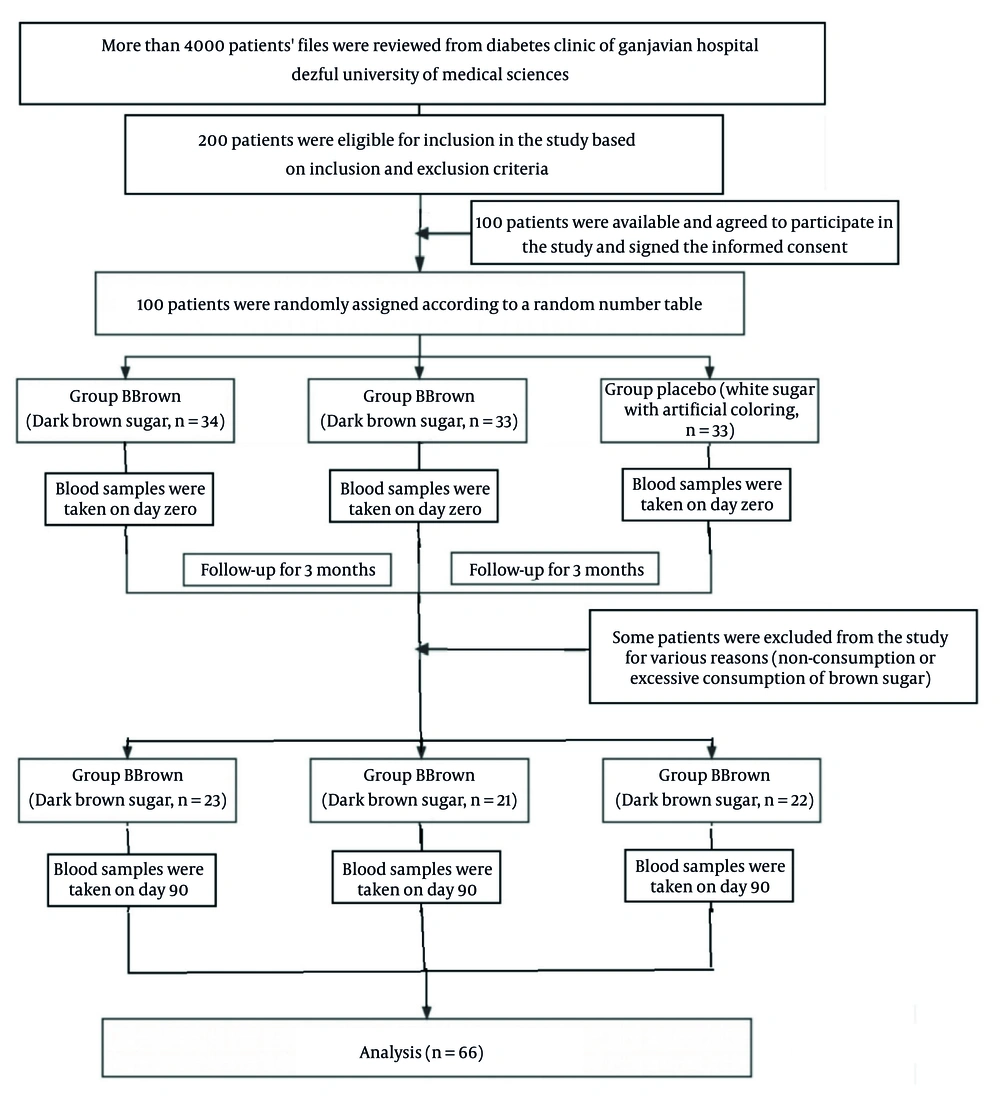
Figure 1.
Flowchart of the study
Before initiation of the clinical trial, blood samples were collected from all participants on day 0. Participants then received 15 g of DBS, LBS, or placebo daily for 3 months as a substitute for their permitted daily sugar intake, replacing their recommended dietary allowance of polysaccharides under nutritionist supervision. During the 3 months, participants’ diets were monitored weekly under the supervision of a nutritionist and maintained under control. Nevertheless, some participants were withdrawn because of underconsumption or overconsumption of the assigned sugar. Ultimately, 23 participants remained in the DBS group, 21 in the LBS group, and 22 in the placebo group. On day 90, blood samples were collected from all 66 remaining participants, and the serum was transferred to the research laboratory and stored at -70°C until analysis.
3.2. Measurement of Biochemical and Inflammatory Factors
Venous blood samples were collected from all participants after 12 hours of fasting. Serum FBS levels were measured using the glucose oxidase enzymatic method, and HbA1c levels were determined by ion-exchange chromatography. To assess inflammatory factors, serum concentrations of IL-6, TNF-α, and hs-CRP were measured using an enzyme-linked immunosorbent assay (ELISA) with validated commercial kits. All measurements were performed according to the manufacturer’s instructions under standard conditions.
3.3. Statistical Analysis
Statistical analyses were performed using SPSS software version 25.0. The normality of data distribution was assessed using the Shapiro-Wilk test. Normally distributed variables were expressed as mean ± standard deviation (SD), whereas non-normally distributed variables were presented as median (interquartile range).
To compare baseline characteristics among the three groups (DBS, LBS, and WS), one-way analysis of variance (ANOVA) or the Kruskal-Wallis test was used, depending on data normality. Within-group changes from baseline to 3 months were analyzed using paired t-tests for normally distributed variables or Wilcoxon signed-rank tests for non-normal variables. Between-group differences in changes in outcome variables (FBS, HbA1c, IL-6, TNF-α, and hs-CRP) were evaluated using one-way ANOVA followed by a Tukey post hoc test or the Kruskal-Wallis test with Dunn post hoc adjustment for non-parametric data. A P value of less than 0.05 was considered statistically significant.
4. Results
As shown in Table 1, 66 adults aged 44 to 69 years participated in the study, with a mean age of 57.4 ± 6.0 years. Among the participants, 54.5% were male and 45.5% were female.
Table 1.
Demographic Characteristics of Patients with Type 2 Diabetes Mellitus a
| Characteristic | Total (n = 66) | DBS (n = 23) | LBS (n = 21) | WS (Placebo) (n = 22) |
|---|---|---|---|---|
| Age (y) | ||||
| Mean ± SD | 57.4 ± 6.0 | 56.9 ± 6.5 | 58.9 ± 6.0 | 56.4 ± 5.3 |
| Range (min-max) | 44 - 69 | 44 - 66 | 47 - 69 | 47 - 66 |
| Gender | ||||
| Male | 36 (54.5) | 12 (52.2) | 11 (52.4) | 13 (59.1) |
| Female | 30 (45.5) | 11 (47.8) | 10 (47.6) | 9 (40.9) |
a Values are expressed as No. (%) unless indicated. Abbreviations: DBS, dark brown sugar; LBS, light brown sugar; WS, white sugar.
Baseline Body Mass Index (BMI) and HbA1c on day 0 before treatment did not differ significantly among the three groups, indicating successful randomization and baseline comparability (Figure 2).
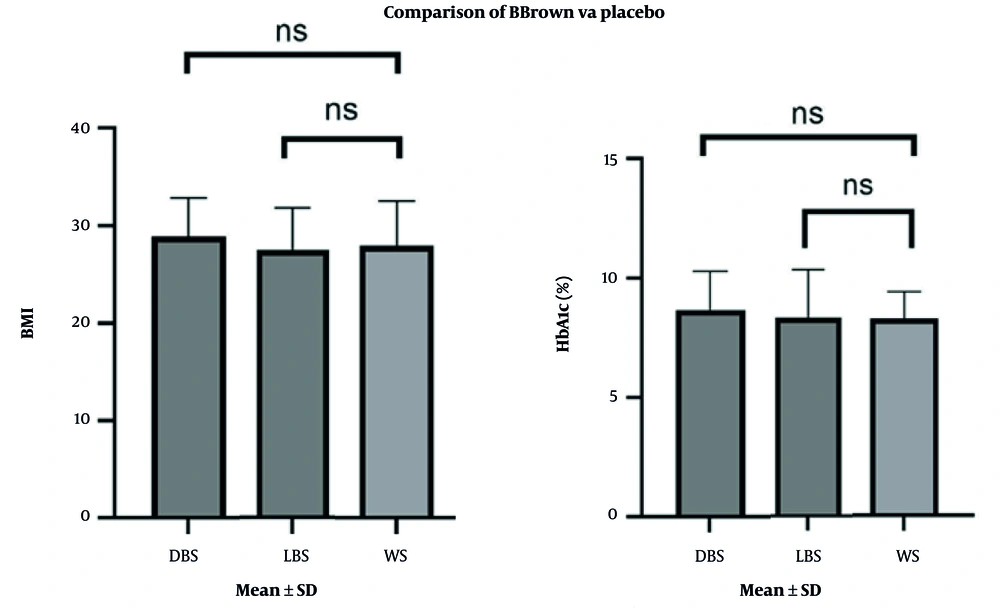
Figure 2.
Comparison of BMI and HbA1c in the three patient groups (DBS, LBS, and WS) on day 0 before treatment. The chart shows no significant difference in BMI or HbA1c between patients selected to consume dark brown sugar or light brown sugar and those selected to consume placebo. Abbreviations: DBS, dark brown sugar; HbA1c, hemoglobin A1c; LBS, light brown sugar; ns, non-significant; WS, white sugar.
A significant reduction in FBS was observed in the DBS group (Figure 3; Table 2), decreasing from 170.06 ± 46.53 to 144.31 ± 45.12 mg/dL (P = 0.001). In the LBS group, FBS decreased from 152.06 ± 40.38 to 136.88 ± 33.90 mg/dL; however, this change did not reach statistical significance (P = 0.069). In contrast, the WS group showed a slight, non-significant increase from 170.21 ± 61.53 to 178.57 ± 71.70 mg/dL (P = 0.222).
Table 2.
Comparison of the Effects of 90-Day Consumption of Dark Brown Sugar, Light Brown Sugar, and White Sugar on Metabolic and Inflammatory Markers a
| Indicator and Sugar Type | Before | After | Change | P-Value |
|---|---|---|---|---|
| FBS | ||||
| DBS | 170.06 ± 46.53 | 144.31 ± 45.12 | -25.75 ± 64.81 | 0.001 |
| LBS | 152.06 ± N/A | 136.88 ± N/A | -15.18 b | 0.069 |
| WS | 170.21 ± N/A | 178.57 ± N/A | +8.36 b | 0.222 |
| HbA1c | ||||
| DBS | 8.6 ± 1.54 | 7.66 ± 1.46 | -0.94 ± 2.12 | 0.014 |
| LBS | 8.56 ± N/A | 7.66 ± N/A | -0.90 b | 0.003 |
| WS | 8.19 ± N/A | 8.34 ± N/A | +0.15 b | 0.326 |
| IL-6 | ||||
| DBS | 155.81 ± 59.22 | 128.75 ± 55.38 | -27.06 ± 81.08 | 0.000 |
| LBS | 149.88 ± N/A | 129.06 ± N/A | -20.82 b | 0.011 |
| WS | 137.07 ± N/A | 141.43 ± N/A | +4.36 b | 0.206 |
| TNF-α | ||||
| DBS | 35.06 ± 15.28 | 28.06 ± 15.37 | -7.00 ± 21.67 | 0.003 |
| LBS | 36.94 ± N/A | 27.88 ± N/A | -9.06 b | 0.002 |
| WS | 37.07 ± N/A | 39.36 ± N/A | +2.29 b | 0.143 |
| hs-CRP | ||||
| DBS | 1885.06 ± 631.73 | 1664.31 ± 466.67 | -220.75 ± 785.41 | 0.022 |
| LBS | 1962.06 ± N/A | 1734.88 ± N/A | -227.18 b | 0.016 |
| WS | 2352.21 ± N/A | 2399.29 ± N/A | +47.08 b | 0.482 |
a Values are expressed as mean ± SD. Abbreviations: DBS, dark brown sugar; FBS, fasting blood sugar; HbA1c, hemoglobin A1c; hs-CRP, high-sensitivity C-reactive protein; IL-6, interleukin-6; LBS, light brown sugar; N/A, not available in the original source; TNF-α, tumor necrosis factor-alpha; WS, white sugar.
b Change was calculated as the difference between the reported group means before and after the intervention. The standard deviation of change was not reported in the original source for LBS and WS.
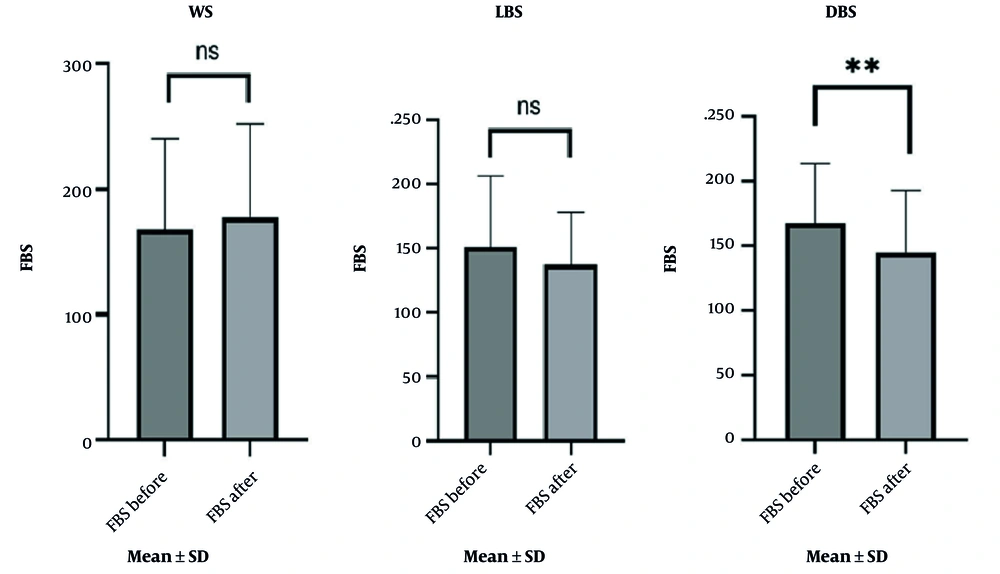
Figure 3.
Comparison of patients' FBS before and 3 months after daily intake of dark brown sugar, light brown sugar, white sugar, and placebo. The figure shows no significant difference in patients' FBS before versus after 3 months of placebo or light brown sugar intake. However, a significant reduction in FBS was observed after 3 months of dark brown sugar intake compared with baseline. Abbreviation: FBS, fasting blood sugar. ** P < 0.1.
Both brown sugar groups showed meaningful improvements in long-term glycemic control (Figure 4; Table 2). HbA1c decreased significantly in the DBS group (from 8.60 ± 1.54% to 7.66 ± 1.46%; P = 0.014) and in the LBS group (from 8.56 ± 1.39% to 7.66 ± 1.36%; P = 0.003). No significant change was observed in the WS group (from 8.19 ± 1.80% to 8.34 ± 1.77%; P = 0.326).
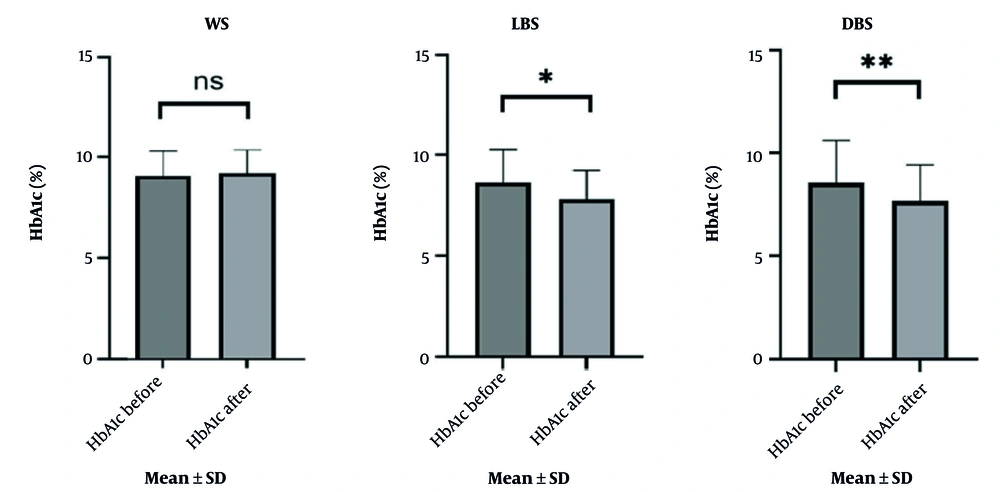
Figure 4.
Comparison of patients' HbA1c before and 3 months after daily intake of dark brown sugar, light brown sugar, white sugar, and placebo. The figure shows no significant difference in patients' HbA1c before versus after 3 months of placebo intake. However, significant reductions in HbA1c were observed after 3 months of dark brown sugar and light brown sugar intake compared with baseline. Abbreviation: HbA1c, hemoglobin A1c. * P < 0.5 and** P < 0.1.
There was a significant reduction in IL-6 levels in both intervention groups (Figure 5; Table 2): DBS decreased from 155.81 ± 59.22 to 128.75 ± 55.38 pg/mL (P < 0.001), and LBS decreased from 149.88 ± 56.74 to 129.06 ± 51.63 pg/mL (P = 0.011). The WS group showed no significant change (from 137.07 ± 50.79 to 141.43 ± 47.10 pg/mL; P = 0.206).
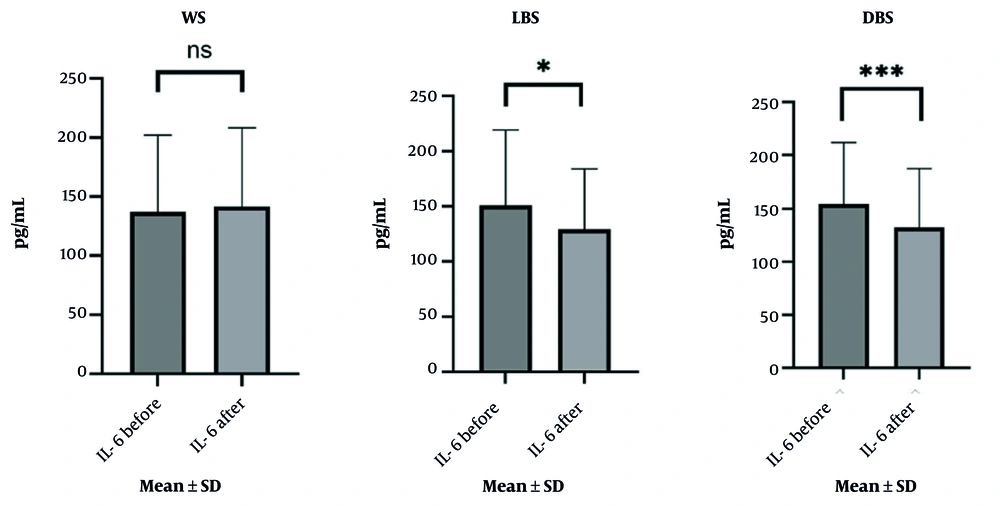
Figure 5.
Comparison of patients' IL-6 before and 3 months after daily intake of dark brown sugar, light brown sugar, white sugar, and placebo. The figure shows no significant difference in patients' IL-6 before versus after 3 months of placebo intake. However, significant reductions in IL-6 were observed after 3 months of dark brown sugar and light brown sugar intake compared with baseline. Abbreviation: IL-6, interleukin-6. * P < 0.5 and *** P < 0.01.
Similarly, TNF-α levels decreased significantly in both brown sugar groups (Figure 6; Table 2): DBS decreased from 35.06 ± 15.28 to 28.06 ± 15.37 pg/mL (P = 0.003), and LBS decreased from 36.94 ± 16.42 to 27.88 ± 13.70 pg/mL (P = 0.002). No significant change occurred in the WS group (P = 0.143).
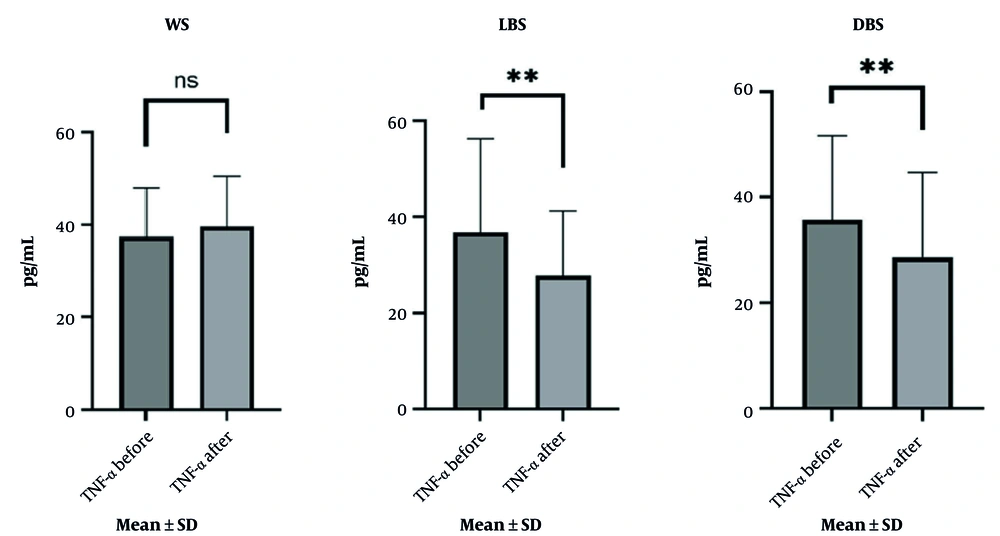
Figure 6.
Comparison of patients' TNF-α before and 3 months after daily intake of dark brown sugar, light brown sugar, white sugar, and placebo. The figure shows no significant difference in patients' TNF-α before versus after 3 months of placebo intake. However, significant reductions in TNF-α were observed after 3 months of dark brown sugar and light brown sugar intake compared with baseline. Abbreviation: TNF-α, tumor necrosis factor-alpha. ** P < 0.1.
As shown in Figure 7 and Table 2, hs-CRP levels decreased significantly in the DBS group (from 1885.06 ± 631.73 to 1664.31 ± 466.67 ng/mL; P = 0.022) and in the LBS group (from 1962.06 ± 742.52 to 1734.88 ± 580.16 ng/mL; P = 0.016). The WS group again showed no meaningful reduction (from 2352.21 ± 936.43 to 2399.29 ± 1010.14 ng/mL; P = 0.482).
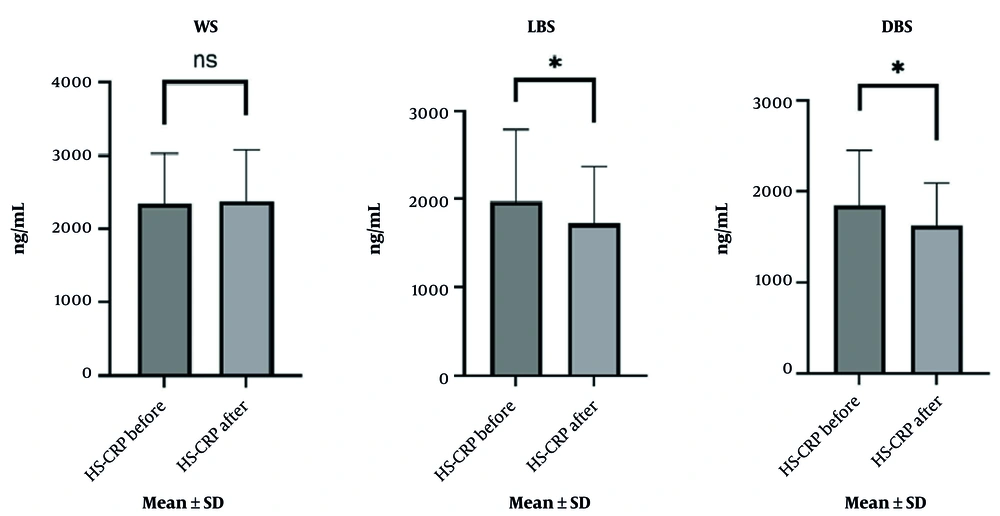
Figure 7.
Comparison of patients' hs-CRP before and 3 months after daily intake of dark brown sugar, light brown sugar, white sugar, and placebo. The figure shows no significant difference in patients' hs-CRP before versus after 3 months of placebo intake. However, significant reductions in hs-CRP were observed after 3 months of dark brown sugar and light brown sugar intake compared with baseline. Abbreviation: hs-CRP, high-sensitivity C-reactive protein. * P < 0.5.
Overall, both DBS and LBS produced significant anti-inflammatory effects and improved long-term glycemic control, whereas WS had no beneficial impact on any measured parameter. The DBS group generally showed greater improvements, likely due to its higher molasses and phytochemical content.
5. Discussion
This randomized, double-blind clinical trial demonstrates that replacing refined white sugar with brown sugar, either dark or light, can meaningfully improve glycemic control and reduce systemic inflammation in patients with T2DM over a 90-day period. These results provide novel clinical evidence supporting the metabolic advantages of brown sugar compared with the widely used refined white sugar.
The significant reductions in HbA1c in both brown sugar groups indicate that substituting refined sugar with a phytochemical-rich sweetener contributes to improved long-term glycemic management. A reduction of approximately 0.9% in HbA1c is clinically relevant and comparable to the effects of some oral antidiabetic agents (14). The significant decline in FBS in the DBS group suggests stronger short-term metabolic benefits, potentially linked to higher concentrations of molasses-derived polyphenols, minerals, and antioxidants (7, 15, 16). Although the reduction in FBS in the LBS group did not reach statistical significance, the downward trend supports a favorable effect, which may have become significant with a larger sample size or a longer intervention. The lack of improvement, and slight deterioration, in the WS group aligns with well-established evidence that refined sugars contribute to postprandial hyperglycemia, insulin resistance, and metabolic dysregulation (6, 17).
Low-grade chronic inflammation is central to the pathogenesis of T2DM. Elevated IL-6, TNF-α, and CRP contribute to insulin resistance, beta-cell dysfunction, endothelial injury, and accelerated cardiovascular disease (9-11, 18). The significant decreases in cytokines observed in both brown sugar groups highlight the anti-inflammatory potential of sugarcane-derived phytochemicals. Polyphenols, flavonoids (eg, apigenin and luteolin), phenolic acids, and trace minerals present in molasses likely attenuate inflammatory pathways through multiple mechanisms, including inhibition of NF-κB and JNK signaling, reduction of oxidative stress and reactive oxygen species formation, improvements in insulin sensitivity, modulation of monocyte/macrophage cytokine secretion, and prevention of beta-cell glucotoxicity (19-23). These mechanisms are consistent with previous in vitro and in vivo studies showing that sugarcane extracts, molasses, and kokuto have antioxidant, anti-inflammatory, and metabolic-protective effects (19, 24, 25). The lack of improvement in inflammatory markers in the WS group underscores that these benefits derive not from sucrose itself but from bioactive components preserved in brown sugar.
Although both types of brown sugar improved metabolic and inflammatory parameters, the DBS group consistently showed stronger effects. This difference likely reflects the higher molasses concentration in DBS, resulting in greater amounts of phenolic compounds, antioxidants, and minerals (7, 15, 16). Thus, among natural sucrose-based sweeteners, DBS appears to be the most metabolically advantageous option.
Given the widespread consumption of sugar in Iran and many other countries, even small dietary modifications can have meaningful health impacts. Brown sugar, particularly the dark variant, may serve as an accessible and culturally acceptable strategy to reduce glycemic burden and inflammatory stress in populations with diabetes (4, 5). Replacing white sugar with brown sugar may reduce reliance on medications, improve metabolic stability, and potentially reduce the risk of microvascular and macrovascular complications (14, 26).
5.1. Strengths and Limitations
This study has several notable strengths that enhance the validity of its findings. The randomized, double-blind, placebo-controlled design is a major methodological strength, effectively minimizing selection and information bias and allowing the observed metabolic and inflammatory changes to be attributed to the type of sugar consumed. Direct biochemical measurement of multiple inflammatory and metabolic biomarkers, including IL-6, TNF-α, hs-CRP, HbA1c, and FBS, using standardized laboratory methods rather than indirect or self-reported outcomes, substantially increases the objectivity and accuracy of the results. The 3-month intervention period is another strength because it provides an adequate timeframe to detect clinically meaningful and sustained changes in HbA1c, which reflects long-term glycemic control, while minimizing the influence of short-term fluctuations. Furthermore, the use of a simple, accessible dietary intervention, namely replacing white sugar with brown sugar, confers high real-world applicability. In addition, weekly nutritionist-supervised monitoring of daily sugar intake likely enhanced adherence and reduced dietary confounding.
Nevertheless, several limitations should be considered when interpreting these results. The relatively modest sample size of 66 patients distributed across three groups reduces the statistical power to detect significant between-group differences, particularly in subgroups, and it is plausible that the downward trend in FBS observed in the LBS group would have reached statistical significance with a larger cohort. The absence of oxidative stress biomarkers, such as malondialdehyde or total antioxidant capacity, limits the ability to directly investigate the hypothesized antioxidant mechanisms through which brown sugar phytochemicals might exert their anti-inflammatory effects. Additionally, the study relied on patient self-reporting and weekly dietary monitoring of sugar consumption, which cannot fully exclude protocol deviations. The lack of a post-intervention follow-up period precludes assessment of whether the beneficial effects on glycemic control and inflammatory markers are sustained after discontinuation of brown sugar substitution. Finally, the inflammatory analysis focused exclusively on pro-inflammatory cytokines (IL-6 and TNF-α) and hs-CRP without measuring anti-inflammatory mediators, such as IL-10, or other immune regulators, such as IFN-γ, thereby providing an incomplete picture of the overall immune-inflammatory balance. Future trials with larger sample sizes, an expanded panel of biomarkers, and longer follow-up periods are recommended to confirm and extend these findings.
5.2. Conclusions
Overall, the findings strongly suggest that brown sugar, especially DBS, is a healthier alternative to refined white sugar for patients with T2DM. Its beneficial effects on glycemic control and inflammation are likely mediated by its rich molasses content and associated phytochemicals (7, 16). Substituting brown sugar for white sugar could offer a simple, practical dietary intervention to support improved metabolic health in populations with diabetes.