


1. Background
Severe fear, known psychologically as phobia, refers to a type of fear that significantly impairs an individual’s daily life. Unlike ordinary fear, which arises from a transient natural reaction to an external threat, phobia involves being placed in a perceived dangerous situation, such as acrophobia (1). In the global classification of diseases, acrophobia is categorized as a mental disorder under a specific subdivision of phobias (2). Symptoms of acrophobia vary among individuals. In mild cases, individuals may experience tension and worry at heights, while in severe cases, even imagining being at heights can trigger symptoms like anxiety and vertigo. Vertigo is often the first symptom of acrophobia, causing dizziness when at heights. Other symptoms include extreme irrational anxiety at heights, physical and mental symptoms such as increased heart rate and intense apprehension immediately after exposure to heights, and efforts to avoid high places. These symptoms can persist for six months, negatively affecting social performance, interpersonal relationships, and occupational activities (3).
Phobia treatment typically involves stress control consultation sessions using various therapeutic methods, with cognitive therapy, systematic desensitization, and exposure therapy being among the most effective. Cognitive therapy helps alter the individual’s perception of heights, while systematic desensitization involves three stages: Listing anxiety-inducing situations, learning relaxation techniques, and imagining these situations while relaxed (3). Exposure therapy is similar but involves experiencing anxiety at each stage to become accustomed to it. Effective treatment requires the individual to be aware of their problem and its causes (3).
The concepts of overt and covert anxiety were introduced by Kettle and further developed by Berger. Overt anxiety is situational, occurring in stressful situations, while covert anxiety reflects individual differences in reactions to stress (4). Historically, phobia treatment focused on the unconscious ego and long-term exploratory psychological treatment (5). Medications can also help calm the mind and ease anxious thoughts. Systematic desensitization remains a common treatment for specific phobias (6).
Studies estimate that 15 - 20% of the global population experiences specific phobias during their lifetime, with common phobias related to heights and animals (7). An international study found that specific phobias are more prevalent in women and in high-income countries (8). Behavioral therapy can be challenging for individuals who struggle to imagine anxiety-inducing scenes or fear real situations. Virtual reality exposure therapy was first applied by a human-computer interaction team at Clark University in 1992 (9). Subsequent studies, including those by Professor Friedman at Oxford University, demonstrated the effectiveness of virtual reality technologies in reducing acrophobia (10). Virtual reality exposure therapy is often preferred by patients and yields comparable results to conventional behavioral therapy (9).
Additional studies by Levsky and others have explored virtual reality solutions for acrophobia and other phobias (11). Schafer et al. used virtual reality with 3D scenes to treat phobias, allowing participants to interact physically with the system (12). The Virtual Reality Medical Center has applied simulation technologies to reduce anxiety and phobia. Soleymani et al. used support vector machines (SVM) and Bayesian frameworks to classify emotional states (13). Koelstra et al. employed Fisher linear differentiation and Bayesian classifiers to analyze EEG signals and environmental physiological signals (14).
2. Objectives
Our approach introduces innovation by using a deep-trained neural network to predict the difficulty level of the next game automatically. The main goal of this study was to develop a device, termed the "acrophobiameter" to measure acrophobia levels and minimize them through immediate feedback during height exposure. Using skin galvanic response (SGR) signals induced by the central nervous system (CNS), we aimed to estimate the current phobia level and potentially prevent further fear escalation. To validate our method, we conducted experiments with acrophobic individuals, achieving a high correlation between the device’s predictions and subjective anxiety scores.
3. Methods
This developmental-applied study consisted of three stages. In the first stage, the procedures for fabricating the device and the components used in its design were explained. In the second stage, the method of testing the device, its processes, and data extraction were elucidated. In the third stage, the data collected by the device were used to classify the rate of acrophobia or its absence by analyzing changes in skin galvanic resistance. This section introduces the recommended method, including the data used, familiarity with the acrophobiameter, the method of performing the test, and the classification of individuals.
3.1. Acrophobiameter
This section describes the fabrication of a device for quantifying acrophobia based on SGR. The hardware of the device is divided into several parts: A, a digital sensor slot for recording galvanic skin responses (GSR); B, an LM324 condenser (amplifier, booster) composed of four internal regulators and bilateral active condensers. The first surface consists of subtraction output parts with input buffer transistors and subtraction relative to a one-way converter (adaptor). This surface not only displays increased performance but also shows changes in surface performance with reduced transconductance, allowing for a smaller neutralizing capacitor to protect the chip; C, seven segments that digitally display the device output on a monitor as digits related to GSR; D, a feeding input socket that powers the device; and E, the body of the device, which houses the assembled components.
In terms of software, an SVM algorithm was used to discriminate the model and classify data into specific categories. Skin electrical activity and heart rate values were recorded using a SGR unit condenser attached to the subject’s left hand. The LM324 condenser, with 16 bases and 4 internal condensers, measured skin resistance accurately using an analog scale. This data was then converted to digital form and sent to a microcontroller, where program-writing was done and displayed on a monitor. The device is shown in Figure 1.
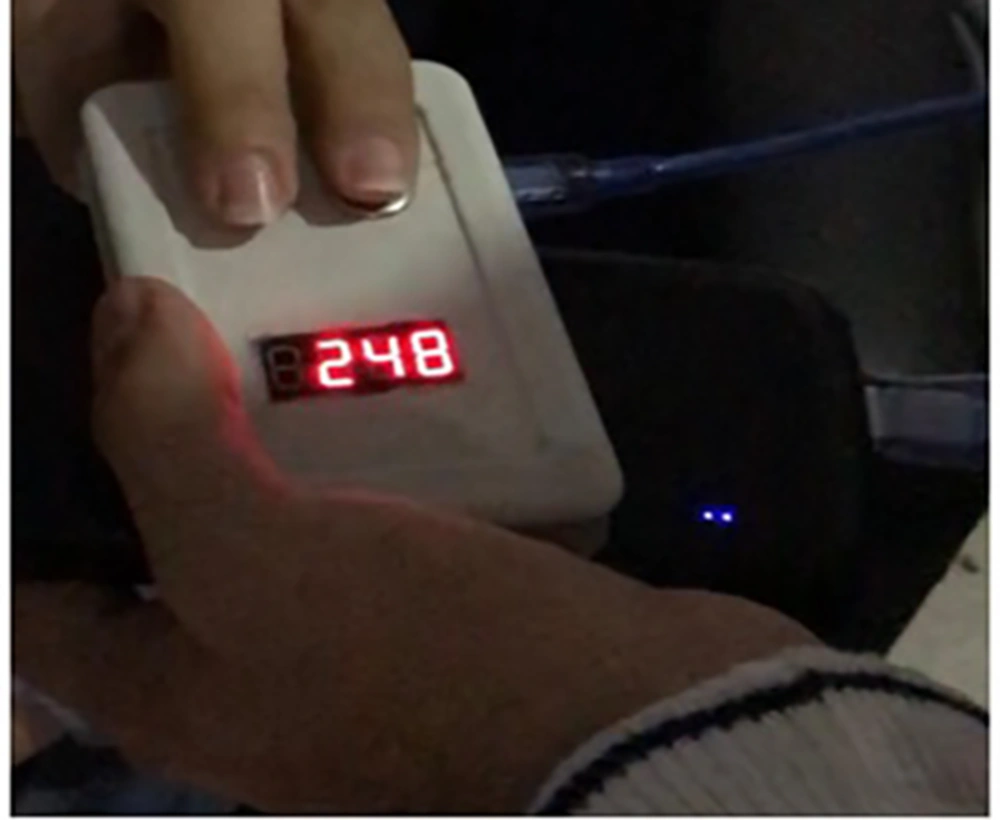
Figure 1.
Device for measuring skin resistance
3.2. Data Extraction
For this study, a population of 16 healthy males and females, aged 20 - 30 years and weighing 70 - 85 kg, were selected. Participants were capable of being exposed to heights and voluntarily participated in height jumping operations.
The test was conducted in a gaming room, a quiet and peaceful environment free from external stressors such as crowds, bright lights, stimulating posters, and with controlled temperature. Participants rested on an armchair for 20 minutes before the test to minimize external stress and completed a demographic questionnaire (Table 1), which included demographic information and self-reported data on acrophobia and previous virtual reality game experiences.
Table 1.Demographics of the Participants
| Age | Gender | Height | Weight | Specific Disease | Consumption of Specific Medicine | Taking of Stimulants Before Test | History of Participating in VR | Athletic Field |
|---|---|---|---|---|---|---|---|---|
| 29 | Male | 175 | 75 | No | No | No | Yes | Physical fitness |
| 20 | Male | 178 | 54 | No | No | No | No | No |
| 29 | Male | 175 | 81 | No | No | No | Yes | Swimming |
| 27 | Female | 156 | 70 | No | No | No | Yes | Regular jogging |
| 28 | Male | 175 | 86 | No | No | No | No | No |
| 23 | Female | 168 | 57 | No | No | No | Yes | Regular jogging |
| 28 | Male | 173 | 80 | No | No | No | No | Volleyball |
| 22 | Male | 170 | 62 | No | No | No | No | Football |
| 23 | Male | 178 | 74 | No | No | No | Yes | Regular jogging |
| 24 | Female | 167 | 52 | No | No | No | Yes | No |
| 29 | Male | 181 | 89 | No | No | No | Yes | Volleyball |
| 29 | Male | 175 | 78 | No | No | No | No | Swimming |
| 28 | Male | 173 | 83 | No | No | No | Yes | No |
| 24 | Female | 170 | 74 | No | No | No | No | Football |
| 19 | Female | 173 | 79 | No | No | No | No | Basketball |
| 25 | Male | 180 | 81 | No | No | No | Yes | Regular jogging |
Participants wore a cotton glove to dry finger sweat before placing their fingers on the sensor slot. After removing the glove, the primary number before the test was recorded (Figure 1). Participants then entered the test location, placed their fingers on the sensor slot, and wore virtual reality glasses and a headset to simulate the environment (Figure 2). In the simulation, participants entered an elevator, pressed a button, and were taken to a high location. When the elevator door opened, they moved forward on a bar, realizing they were at a high location, and the jumping operation began (Figure 3). Sensor digits increased sharply, reaching a threshold called the secondary number. Afterward, participants sat on the armchair again, placed their fingers on the sensor slot, and the obtained number was compared to the primary number to ensure measurement accuracy.
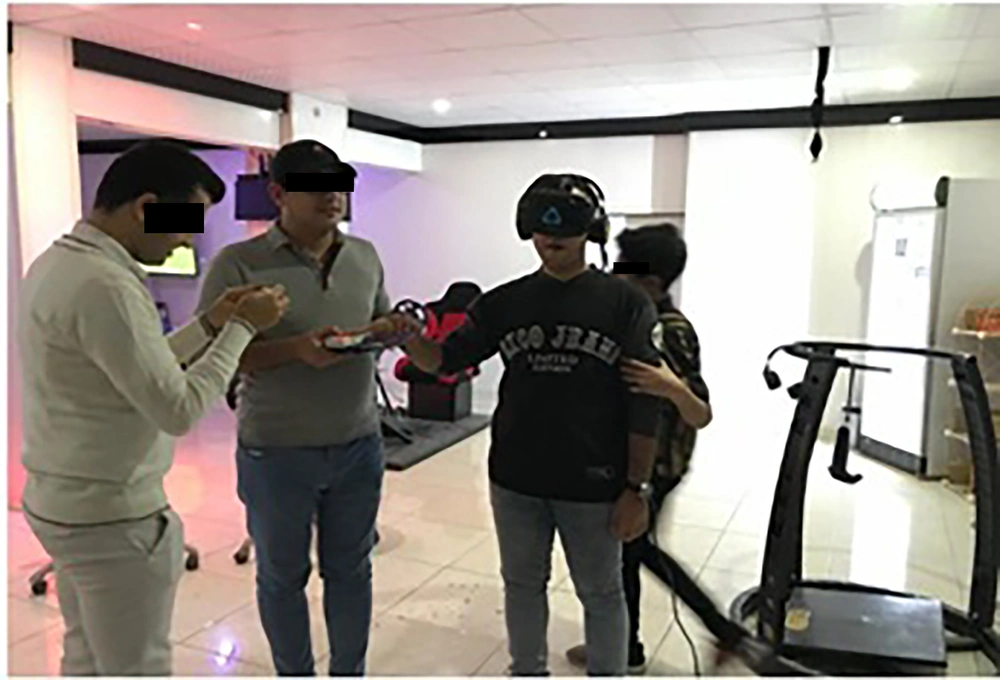
Figure 2.
Picture showing a participant being tested
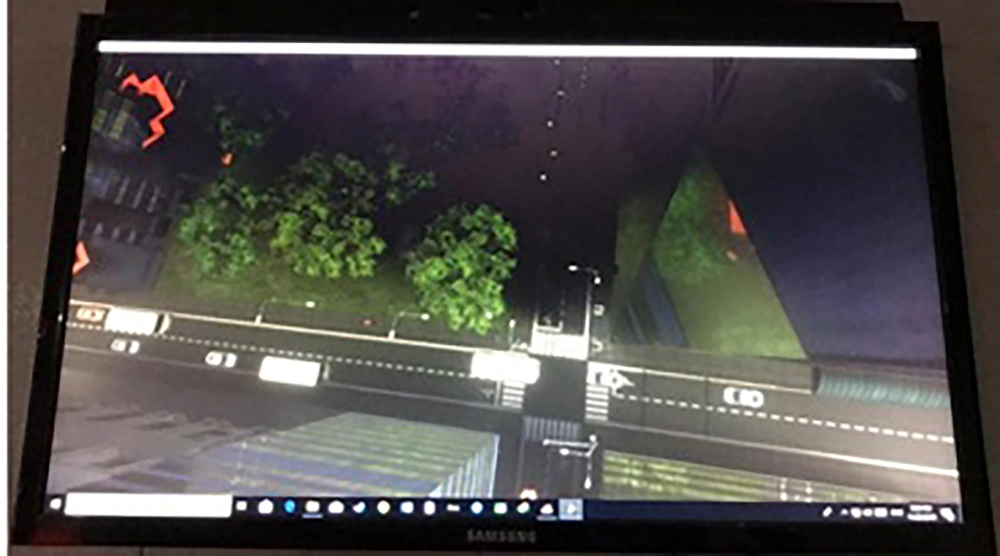
Figure 3.
Picture showing the simulated environment of height
Inclusion criteria were: Absence of any physical or mental disorder approved by a physician, no drug or substance addiction, not taking drugs affecting test results, no history of cardiovascular disease, and no sleep disorders. Exclusion criteria were: Unwillingness to participate, disorders or diseases such as foot or lumbar trauma, cardiovascular diseases, psychological disorders, deep vein thrombosis, peripheral nervous system disease, alcohol addiction, and substance abuse during the intervention and trial.
3.3. Ethical Considerations
Informed written consent was obtained from each participant to ensure ethical participation in the study. Additionally, the research proposal was approved by the Ethics Committee in Human Research at Baqiyatallah University of Medical Sciences.
3.4. Classification of the Samples
A SVM classifier with a linear kernel function was used to classify participants into two categories: Acrophobic and non-acrophobic. To prevent accidental data sorting, the data were shuffled before being imported into the classifier. Subsequently, equal numbers of participants from each group were selected using the "hold out" method, with 80% of the subjects used for training and 20% for testing. The data obtained before and after the acrophobia test, including information on GSR, were categorized using the SVM.
The SVM is a supervised learning method used for classification and regression, introduced in 1992 by Vapnik and Chevonenkis based on statistical learning theory. Essentially, the SVM is an algorithm designed to maximize a mathematical function based on a given set of data. Its popularity stems from its success in discriminating cursive letters, comparable to complex neural networks. This method is among the innovative procedures that have demonstrated appropriate efficiency and efficacy in recent years compared to more conventional classification methods, such as perceptron neural networks.
4. Results
The demographic information of the participants is displayed in Table 1. Additionally, the values of skin resistance for each individual before and after the acrophobia test are presented in Table 2. The mean changes observed before and after exposure to height are shown in Table 3. The values of accuracy, sensitivity, and specificity indices obtained from the mean of 16 training sessions using the SVM classifier are presented in Table 4.
Table 2.Values of Skin Resistance of the Samples Before and After Acrophobia Tests
| Participant’s Self-Report of Acrophobia | Skin Resistance Before Exposure to Height | Skin Resistance After Exposure to Height | Mean Skin Resistance Before and After Exposure to Height |
|---|---|---|---|
| Yes | 95 | 202 | 148.5 |
| Yes | 140 | 211 | 175.5 |
| Yes | 150 | 385 | 267.5 |
| No | 105 | 180 | 142.5 |
| Yes | 75 | 112 | 93.5 |
| Yes | 50 | 197 | 123.5 |
| No | 55 | 133 | 94 |
| Yes | 39 | 225 | 132 |
| Yes | 75 | 240 | 157.5 |
| Yes | 60 | 210 | 135 |
| Yes | 75 | 384 | 229.5 |
| Yes | 40 | 180 | 110 |
| No | 150 | 178 | 164 |
| No | 260 | 322 | 291 |
| Yes | 70 | 305 | 187.5 |
| Yes | 205 | 395 | 300 |
Table 3.The Mean of Changes Created Before and After Exposure to Height
| Variable | Before Exposure to Height ± SD | After Exposure to Height ± SD | Mean ± SD | P-Value |
|---|---|---|---|---|
| Height | 102.7 ± 62.9 | 241.1 ± 89.7 | -138.4 ± 79.6 | < 0.05 |
Table 4.Assessment of the Results of Support Vector Machine Classifier for Classifying Acrophobia a
| Classifier | Accuracy | Sensitivity | Specificity Index |
|---|---|---|---|
| SVM | 95 | 93 | 98 |
Abbreviation: SVM, support vector machine.
a Values are expressed as percent.
5. Discussion
The present study aimed to quantify the rate of acrophobia in individuals exposed to heights during various athletic and military activities. Quantifying phobia can significantly aid in therapeutic interventions and decision-making in critical situations, such as risky missions. If an individual’s acrophobia is not diagnosed and they participate in these activities, the phobia and its related psychological issues may cause harm to vital physiological organs, potentially leading to fainting, tachycardia, or sudden increases in blood pressure. Moreover, this factor may impact mission outcomes in critical situations.
The study involved developing, fabricating, and testing a device to measure fear of heights, or acrophobia, using immediate feedback from height exposure, and recommended a method to minimize acrophobia. The study consisted of three phases. In the first phase, the procedures for fabricating the device and its accessories were explained. In the second phase, the method of testing the device, its processes, and data extraction were thoroughly elucidated. In the third phase, the rate of acrophobia or its absence was classified using data from the acrophobiameter by analyzing changes in skin resistance.
Our approach differs from previous studies by incorporating innovation and originality, including the automatic prediction of the next game’s difficulty level using a trained deep neural network. Overall, the accuracy of classification depends on the field of experiment, goals, methodology, method of recording biophysical data, number of users, structure and purity of the educational package, methods of specificity extraction, reciprocal validation approach, statistical power of the classifier, and parameter adjustment.
Using physiological signals of SGR induced by the CNS, we attempted to estimate the individual’s current phobia level using specific criteria and potentially prevent further escalation. To validate the methodology, an experiment was conducted on several acrophobic users, aiming to achieve a strong correlation between the fear level predicted by the acrophobiameter and the subjectively estimated anxiety scores. Our findings suggest that the method has very high power, accuracy, and sensitivity in classifying acrophobic and non-acrophobic individuals.
One constraint in treating acrophobics is the lack of a quantitative criterion or standard for identifying the severity of acrophobia to improve treatment outcomes and prognosis regarding the type and duration of treatment. It is expected that quantifying the severity of acrophobia with this device will reduce treatment limitations, leading to faster and higher-quality treatment. It is recommended to remove any external or internal stressors from the individual and the testing location to enhance the device’s accuracy and efficiency before conducting any tests.
5.1. Conclusions
The present study aimed to quantify the level of acrophobia among military personnel during missions. The findings demonstrated that the developed device has strong potential for accurately measuring acrophobia levels. Based on the results, it was confirmed that acrophobia can be quantified effectively. Consequently, this device can be utilized in both military and sports settings to assess the degree of acrophobia.

