
1. Context
Extubation is a critical step in the management of critically ill children. Failure of extubation, defined as the need for reintubation within 48 - 72 hours, is associated with an increased risk of ventilator-associated pneumonia, prolonged ICU stay, and higher mortality. Reliable predictors of extubation success are therefore essential to optimize patient outcomes and reduce complications (1).
The diaphragm is the principal inspiratory muscle, contributing to 70 - 80% of tidal volume during spontaneous breathing. Its contraction increases thoracic volume by downward displacement (excursion) and thickening of muscle fibers. Adequate diaphragmatic function is indispensable for maintaining effective ventilation, especially during the transition from mechanical support to spontaneous breathing (2). Ge et al. (2024) reported that the extubation failure rate in pediatric intensive care units (PICUs) is approximately 14.6%, but it appears to be higher in clinical practice (3).
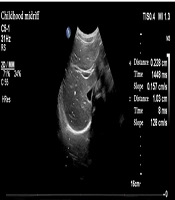
Ventilator-induced diaphragm dysfunction (VIDD) due to prolonged mechanical ventilation can rapidly induce diaphragm weakness. The VIDD is characterized by muscle fiber atrophy due to disuse, oxidative stress and proteolysis, reduced contractility, impaired excursion, and thinning of the diaphragm muscle. These changes compromise the ability of the diaphragm to sustain spontaneous breathing, thereby increasing the risk of extubation failure (1). Moreover, bedside ultrasound has become a valuable tool for evaluating diaphragm function in both adults and children (4). The two most widely used parameters are:
1. Diaphragm excursion: Diaphragm excursion refers to the measurable craniocaudal movement of the diaphragm during the respiratory cycle, typically assessed using M-mode ultrasound. It quantifies the amplitude of diaphragmatic displacement from the resting position during inspiration and expiration, serving as an indicator of diaphragmatic contractile function and respiratory mechanics. Reduced excursion is associated with poor weaning outcomes (< 10 mm).
2. Diaphragm thickening fraction (TF): Diaphragm TF is a dynamic ultrasound parameter that reflects the relative change in diaphragm muscle thickness between end-expiration and end-inspiration. It is calculated using the formula: TF = (Tins - Texp)/Texp × 100, where TF > 20 - 30% is generally considered indicative of preserved contractility (2). These indices are non-invasive, reproducible, and feasible in pediatric patients, making them promising predictors of extubation success (3).
The aim of this narrative review is to synthesize current evidence on the effects of diaphragm electrical stimulation on diaphragmatic excursion and thickening, as assessed by ultrasound, and to evaluate its potential role in predicting and improving extubation success in children admitted to PICUs. By highlighting existing evidence and research gaps, this review seeks to provide a foundation for future clinical studies and inform strategies to optimize weaning practices in pediatric critical care.
2. Evidence Acquisition
2.1. Search Strategy
A comprehensive literature search was conducted to identify relevant studies on diaphragm electrical stimulation, ultrasound assessment of diaphragmatic excursion and thickening, and predictors of extubation success in PICUs. The databases of PubMed/MEDLINE, Scopus, Web of Science, and Cochrane Library were searched from January 2018 to November 2025 to ensure inclusion of the most recent evidence.
2.2. Keywords and Search Terms
The search strategy combined Medical Subject Headings and free-text terms. The main keywords included: “Diaphragm electrical stimulation”, “diaphragm ultrasound”, “diaphragmatic excursion”, “diaphragm thickening fraction”, “extubation success” OR “weaning outcome”, “pediatric intensive care” OR “pediatric intensive care unit”. Boolean operators were used to refine the search (e.g., AND, OR). Example search string: ("Diaphragm ultrasound" OR "diaphragmatic excursion" OR "thickening fraction") AND ("electrical stimulation" OR "neuromuscular stimulation") AND ("extubation success" OR "weaning") AND ("children" OR "pediatric intensive care unit").
2.3. Inclusion Criteria
- Original research articles (clinical trials, observational studies, case series).
- Studies involving children admitted to PICUs and undergoing mechanical ventilation.
- Articles assessing diaphragm function using ultrasound (excursion and TF).
- Studies evaluating the role of diaphragm electrical stimulation in mechanically ventilated patients.
- Publications in English.
2.4. Exclusion Criteria
- Studies limited to adult populations without pediatric data.
- Case reports with insufficient methodological detail.
- Non-English publications.
- Reviews, editorials, or conference abstracts without full data.
2.5. Selection Process
Two independent reviewers screened titles and abstracts for relevance. Full texts of potentially eligible articles were retrieved and assessed against inclusion criteria. Discrepancies were resolved by consensus. Reference lists of included studies were also hand-searched to identify additional relevant articles.
2.6. Data Extraction
For each included study, the following information was extracted:
- Author, year, country.
- Study design and population.
- Method of diaphragm assessment (ultrasound parameters).
- Intervention (electrical stimulation, if applicable).
- Outcomes related to extubation success or weaning.
- Key findings and limitations.
3. Results
3.1. Evidence from Diaphragm Ultrasound Studies
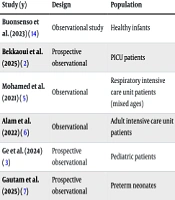
Diaphragm ultrasound studies collectively highlight the value of excursion and TF as reliable predictors of extubation success, especially in pediatric intensive care settings. Another study (2025) conducted a prospective study evaluating diaphragmatic excursion and TF as predictors of weaning success in intensive care unit patients and provide important prospective evidence including pediatric patients, confirming the association of these ultrasound parameters with weaning outcomes; however, their findings are limited by a small sample size and single-center design, which restricts generalizability (3). Mohamed et al. (2021) investigated the role of diaphragmatic ultrasound compared to traditional indices such as the Rapid Shallow Breathing Index (RSBI) and demonstrated the superiority of ultrasound indices over the RSBI, yet their heterogeneous cohort of adults and children and lack of assessment of operator variability reduce the specificity and reproducibility of their conclusions for pediatric practice (5). Alam et al. (2022) performed a comparative study between ultrasound indices and the RSBI, concluding that diaphragm ultrasound was a better predictor of extubation success and reinforced the predictive advantage of ultrasound but focused mainly on adults, underscoring a significant gap in pediatric-specific data (6). Addressing this gap, Ge et al. (2024) specifically targeted pediatric patients, evaluating the combined predictive value of multiple ultrasound indicators and showed that combining multiple ultrasound indicators improves predictive accuracy in children, providing more tailored insights for PICU practice, though their single-center study and absence of long-term follow-up limit broader applicability (3). Gautam et al. (2025) focused on preterm neonates, assessing sonographic evaluation of diaphragm and lungs as predictors of extubation failure. The neonatal focus is unique and provides valuable insights into a vulnerable population, revealing that reduced excursion and TF correlate with extubation failure (7); however, the relevance of these findings to older pediatric populations remains uncertain.
Despite consistent evidence supporting ultrasound as a non-invasive, reproducible tool for extubation prediction, challenges remain due to variability in cut-off values, operator dependency, and limited pediatric data. The strongest evidence arises from pediatric-focused studies, yet their limited scale and scope highlight the urgent need for larger, multicenter pediatric trials to establish standardized protocols and validate findings across diverse PICU settings.
3.2. Evidence from Diaphragm Electrical Stimulation Studies
Studies on diaphragm electrical stimulation consistently demonstrate its potential to preserve diaphragm thickness and improve weaning outcomes, primarily in adult mechanically ventilated patients. Medrinal et al. (2023) provide high-quality evidence through a randomized design, showing that transcutaneous electrical stimulation effectively maintains diaphragm thickness and enhances weaning success (8). However, the absence of pediatric participants limits the direct applicability of these findings to PICU settings. Similarly, Afifi et al. (2024) report improved diaphragm strength and higher rates of successful weaning with electrical stimulation, offering practical insights into clinical feasibility. Yet, methodological heterogeneity and lack of standardized stimulation protocols reduce the reliability and generalizability of their results, compounded by the exclusion of pediatric populations (9). Tong et al. (2025) (10) further consolidate the evidence through a systematic review and meta-analysis, concluding that diaphragm stimulation mitigates the adverse effects of prolonged mechanical ventilation, such as diaphragm atrophy and dysfunction. Despite the comprehensive synthesis, the predominance of adult-based studies and scarcity of pediatric data, alongside variability in stimulation techniques and outcome measures, complicate the interpretation and application of these findings in children.
Although Mooney and Rose (2019) focus on neuromuscular electrical stimulation (NMES) to improve gait in cerebral palsy patients rather than diaphragm stimulation, their scoping review highlights the potential benefits of NMES in enhancing muscle strength, motor control, and functional outcomes. They also emphasize significant variability in study designs, small sample sizes, and limited long-term follow-up, underscoring the need for standardized protocols and larger controlled trials (11). Given that children with cerebral palsy experience neuromuscular impairments and muscle atrophy, these findings may indirectly support the potential effectiveness of diaphragm electrical stimulation in improving respiratory muscle function in this population.
Panelli et al. (2024) conducted a systematic review examining the effects of diaphragmatic stimulation on ventilator-induced diaphragmatic dysfunction in critically ill patients. Their synthesis indicates that electrical stimulation can preserve diaphragm muscle thickness, reduce atrophy, and improve respiratory function, thereby facilitating weaning from mechanical ventilation (12). While the review highlights positive outcomes, it also reveals considerable variability in study designs, stimulation protocols, and patient populations, with a predominant focus on adults and a notable absence of pediatric data. Dean et al. (2018) provide valuable pediatric-specific insights, demonstrating that diaphragm pacing — a form of electrical stimulation — is generally well tolerated in children, with minimal adverse effects such as rare skin irritation and device-related complications (13). They emphasize the necessity for careful monitoring and advocate for further pediatric trials to confirm safety and efficacy.
3.3. Synthesis of Findings
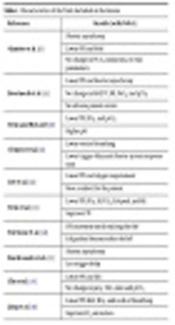
The evidence suggests that diaphragm ultrasound is a validated predictor of extubation success, particularly through excursion and TF in adults and pediatrics. Electrical stimulation shows promise in preserving diaphragm function and increasing extubation success rate but requires further validation in children (Table 1).
Table 1.
Summary and Comparison of Relevant Studies
| Study (y) | Design | Population | Intervention | Outcomes | Main Findings |
|---|---|---|---|---|---|
| Buonsenso et al. (2023) (14) | Observational study | Healthy infants | Diaphragm ultrasound imaging | Diaphragm thickness and motion | Established baseline diaphragm ultrasound parameters in healthy infants |
| Bekkaoui et al. (2025) (2) | Prospective observational | PICU patients | Diaphragmatic ultrasound (excursion and TF) | Weaning success prediction | Excursion and TF strongly predicted weaning success; Small sample size |
| Mohamed et al. (2021) (5) | Observational | Respiratory intensive care unit patients (mixed ages) | Diaphragmatic ultrasound indices vs. RSBI | Extubation success prediction | Ultrasound indices superior to RSBI; Few children included |
| Alam et al. (2022) (6) | Observational | Adult intensive care unit patients | Diaphragm ultrasound vs. RSBI | Extubation success prediction | Ultrasound better predictor than RSBI; Mainly adults |
| Ge et al. (2024) (3) | Prospective observational | Pediatric patients | Combined ultrasound indicators | Extubation prediction | Combining indicators improved accuracy; Single-center study |
| Gautam et al. (2025) (7) | Prospective observational | Preterm neonates | Lung and diaphragm sonography | Prediction of extubation failure | Sonography predicted failure; Neonatal focus limits generalizability |
| Medrinal et al. (2023) (8) | Randomized controlled trial | Mechanically ventilated adults | Transcutaneous electrical diaphragmatic stimulation | Diaphragm thickness preservation, weaning outcomes | Stimulation preserved thickness and improved weaning; No pediatric data |
| Afifi et al. (2024) (9) | Quasi-experimental | Mechanically ventilated adults | Electrical stimulation on diaphragm muscle | Diaphragm strength, weaning success | Improved strength and success; Methodological heterogeneity |
| Tong et al. (2025) (10) | Systematic review and meta-analysis | Critically ill adults | Diaphragm stimulation techniques | Outcomes of prolonged ventilation | Stimulation reduced ventilation consequences; Mostly adults |
| Mooney and Rose (2019) (11) | Scoping review | Children with cerebral palsy | NMES for gait | Muscle atrophy prevention, safety | NMES improved muscle function, prevented atrophy; Supports safety in children |
| Panelli et al. (2024) (12) | Systematic review | Critically ill adults | Diaphragmatic stimulation | Outcomes in ventilator-induced diaphragmatic dysfunction | Positive effects on diaphragm function; No pediatric data |
| Dean et al. (2018) (13) | Review article | Pediatric patients with cervical spinal cord injury | Diaphragm pacing (functional electrical stimulation) | Reduction in positive pressure ventilation, safety | Diaphragm pacing reduces positive pressure ventilation need, is well tolerated, need further pediatric studies |
Abbreviations: PICU, pediatric intensive care unit; TF, thickening fraction; RSBI, Rapid Shallow Breathing Index; NMES, neuromuscular electrical stimulation.
This body of evidence, while methodologically rigorous and comprehensive in its inclusion of randomized controlled trials, reveals a critical gap: The paucity of pediatric-specific data limits the direct applicability of findings to children in PICUs. Electrical stimulation shows promise in mitigating VIDD by preserving muscle thickness and enhancing contractility, which may improve extubation outcomes. However, the wide variability in stimulation protocols and the lack of integration with ultrasound monitoring — an objective measure of diaphragmatic function — highlight areas requiring further research. Overall, the evidence base is promising but incomplete, particularly concerning PICU populations, underscoring the urgent need for dedicated pediatric studies to establish standardized protocols and validate therapeutic efficacy in this vulnerable group.
4. Discussion
The evidence reviewed highlights the central role of diaphragm function in determining extubation success among critically ill children. Ultrasound assessment of diaphragmatic excursion and TF consistently demonstrates predictive value, suggesting that these parameters can serve as reliable bedside markers of respiratory muscle performance. Electrical stimulation of the diaphragm, although less studied in pediatric populations, shows promise in mitigating VIDD and preserving muscle strength. Together, these approaches represent complementary strategies: Ultrasound provides diagnostic insight, while electrical stimulation offers therapeutic intervention. Dean et al. demonstrated that electrical stimulation of the diaphragm (pacing) is generally well tolerated in pediatrics and safe, with minimal adverse effects.
Buonsenso et al. (2023) noted that children differ significantly from adults in anatomical, physiological, and developmental aspects, particularly regarding respiratory mechanics and diaphragm function. For example, the pediatric diaphragm contains a higher proportion of fatigue-prone muscle fibers and exhibits different contraction patterns, which influence its response to interventions like electrical stimulation. Additionally, the smaller size and ongoing maturation of organs in children necessitate specific safety and efficacy evaluations. Therefore, extrapolating adult data to children risks inaccurate conclusions and potential harm, underscoring the need for dedicated pediatric studies to validate electrical stimulation protocols and ultrasound cut-offs to ensure safety and effectiveness in pediatric intensive care settings (14).
Studies focusing on ultrasound emphasize its practicality, reproducibility, and non-invasive nature. Investigators such as Ge et al. and Gautam et al. argue that ultrasound indices outperform traditional measures like the RSBI, particularly in children and neonates. In contrast, research on electrical stimulation, exemplified by Medrinal et al. and Afifi et al. (8, 9), underscores its potential to actively prevent diaphragm atrophy and enhance contractility. While ultrasound is primarily observational, stimulation is interventional, and the integration of both modalities could yield synergistic benefits.
4.1. Strengths of Current Evidence
1. Ultrasound studies: Provide direct, real-time visualization of diaphragm mechanics; feasible in PICUs; increasingly validated in pediatric cohorts.
2. Electrical stimulation studies: Offer randomized and controlled evidence in adults; demonstrate measurable improvements in diaphragm thickness and weaning outcomes.
3. Combined perspective: Both approaches align with the goal of improving extubation success and reducing complications associated with prolonged ventilation.
4.2. Weaknesses and Challenges
1. Limited pediatric data: Most stimulation studies are adult-focused, leaving uncertainty about applicability in children.
2. Variability in methodology: Ultrasound cut-off values for excursion and TF differ across studies, complicating standardization.
3. Operator dependency: Ultrasound accuracy relies heavily on training and expertise, which may limit reproducibility across centers.
4. Heterogeneity of stimulation protocols: Differences in electrode placement, intensity, and duration hinder comparison and consensus.
5. Short-term focus: Few studies assess long-term outcomes such as sustained diaphragm function or reintubation rates beyond 72 hours.
4.3. Knowledge Gaps
1. Pediatric-specific trials: There is a pressing need for multicenter randomized studies evaluating both ultrasound and electrical stimulation in PICU populations.
2. Standardization of ultrasound criteria: Consensus on cut-off values for excursion and TF is lacking, limiting clinical utility.
3. Integration of modalities: No studies have systematically combined ultrasound monitoring with electrical stimulation to assess efficacy in children.
4. Long-term outcomes: Research should extend beyond immediate extubation success to evaluate sustained respiratory function and quality of life.
5. Protocol optimization: Electrical stimulation parameters require refinement and validation to ensure safety and effectiveness in pediatric patients.
Overall, the current body of evidence suggests that diaphragm ultrasound is a validated diagnostic tool for predicting success of extubation, while electrical stimulation holds therapeutic potential to prevent VIDD. However, the lack of pediatric-specific interventional studies represents a major gap. Bridging this gap through well-designed trials could establish a comprehensive strategy combining ultrasound monitoring with electrical stimulation, ultimately improving weaning outcomes in PICUs.
4.4. Conclusions
This narrative review highlights the pivotal role of diaphragm function in determining extubation success among critically ill children admitted to PICUs. Evidence consistently demonstrates that ultrasound assessment of diaphragmatic excursion and TF provides reliable, non-invasive, and reproducible markers of respiratory muscle performance. These indices outperform traditional predictors such as the RSBI and are particularly valuable in pediatric populations where clinical assessment may be challenging.
In parallel, diaphragm electrical stimulation has emerged as a promising therapeutic strategy to counteract VIDD. By preserving muscle thickness and enhancing contractility, stimulation may improve weaning outcomes. However, current evidence is largely derived from adult studies, and pediatric data remains scarce.
4.5. Practical Implications
Ultrasound monitoring of diaphragm excursion and TF can be integrated into routine PICU practice to guide extubation decisions. Electrical stimulation, although not yet standardized in pediatrics, may serve as an adjunctive therapy to preserve diaphragm function during prolonged mechanical ventilation. Moreover, combining diagnostic ultrasound with therapeutic stimulation could represent a novel, synergistic approach to improving extubation success rates.
4.6. Future Directions
Multicenter randomized controlled trials in pediatric populations are urgently needed to validate the efficacy of electrical stimulation and establish standardized ultrasound cut-offs of the diaphragm, including thickening and excursion, through rigorous studies. Research should explore long-term outcomes, including sustained respiratory function, reintubation rates, and quality of life after PICU discharge. Additionally, development of standardized protocols for both ultrasound assessment and stimulation parameters will be essential to ensure reproducibility and clinical adoption.