
1. Background
Pulmonary alveolar proteinosis is a rare and heterogeneous pulmonary disorder first described by Rosen et al. in 1958. It is characterized by the accumulation of surfactant-derived lipoproteinaceous material within the alveolar spaces, resulting in impaired gas exchange and reduced pulmonary function (1, 2). Although several therapeutic approaches, including granulocyte-macrophage colony-stimulating factor (GM-CSF) therapy, rituximab, plasmapheresis, hematopoietic stem cell transplantation, and lung transplantation, have been investigated, WLL remains the established standard treatment for patients with clinically significant disease (3). Whole-lung lavage is performed under general anesthesia and involves the sequential instillation and drainage of warmed saline combined with chest percussion, facilitating removal of accumulated surfactant material and improving pulmonary function (4).
Assessment of disease severity and response to treatment after WLL commonly relies on pulmonary function tests, arterial blood gas analysis, imaging findings, and functional exercise evaluation. Among the available functional assessments, the six-minute walk test (6MWT) is a simple, safe, reproducible, and clinically meaningful measure of integrated cardiopulmonary and musculoskeletal performance. The distance achieved during the 6MWT reflects overall functional capacity, correlates with disease severity in chronic respiratory disorders, and provides valuable clinical information without requiring sophisticated equipment or specialized laboratory facilities (5).
The expansion of telemedicine during and after the COVID-19 pandemic has created new opportunities for remote monitoring of patients with chronic and rare diseases by reducing barriers to health care access and minimizing unnecessary hospital visits. This approach may be particularly valuable for PAP, given its low prevalence and the need for long-term follow-up at specialized referral centers. In this context, our center implemented a telemedicine-based monitoring program in which patients were trained to perform a home-based 6MWT. Such remote functional monitoring may facilitate the longitudinal evaluation of disease status, early identification of clinical deterioration, and timely consideration of additional interventions, including repeat WLL.
The clinical relevance of the 6MWT has been extensively demonstrated in chronic respiratory diseases, including chronic obstructive pulmonary disease, pulmonary hypertension, and interstitial lung diseases, in which baseline performance and longitudinal changes in walking capacity have been associated with disease progression, morbidity, and mortality (5). Previous studies have shown that exercise capacity, oxygen desaturation during exertion, and changes in walking performance provide meaningful prognostic information in populations with chronic lung disease (6-8). These findings support the potential applicability of functional monitoring strategies in PAP, for which objective assessment of disease trajectory remains challenging because of its rarity and heterogeneous clinical course.
2. Objectives
This exploratory observational study aimed to evaluate the association between home-based 6MWT parameters and the need for repeat WLL in patients with PAP undergoing telemedicine-based follow-up. By integrating remote functional assessment into routine monitoring, we explored the potential role of a tele-supervised 6MWT as a practical tool for longitudinal disease assessment and clinical decision support in patients with this rare pulmonary disorder.
3. Methods
3.1. Study Design and Setting
This exploratory observational study was conducted at a tertiary pulmonary referral center specializing in PAP management. The study aimed to evaluate the feasibility and clinical utility of telemedicine-based functional monitoring after WLL and to explore the association between home-based 6MWT parameters and subsequent repeat WLL requirements. The study was conducted at a single center between March 2022 and March 2023. The study protocol was approved by the institutional ethics committee, and verbal informed consent was obtained from all participants.
3.2. Outcome Definition and Clinical Decision Criteria
The primary outcome was repeat WLL performed during follow-up. The decision to perform repeat WLL was made by the treating pulmonologists based on a comprehensive clinical assessment, including worsening respiratory symptoms, clinical deterioration, oxygenation status, radiological findings, and overall clinical judgment.
Home-based 6MWT assessments included in the analysis were performed before the clinical decision regarding repeat WLL. Although the treating physicians were aware of routine clinical follow-up findings, decisions regarding repeat WLL were not based solely on home-based 6MWT results. The 6MWT was considered a functional assessment measure and was evaluated for its association with subsequent repeat WLL requirements.
3.3. Study Population
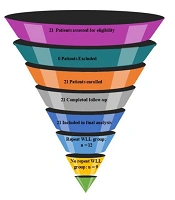
All patients suspected of having PAP underwent a thorough clinical and laboratory evaluation. Examinations included spirometry, diffusing capacity of the lungs for carbon monoxide (DLCO), arterial blood gas (ABG) analysis, and the 6MWT, with results suggestive of PAP. All patients underwent computed tomography (CT) of the lungs, which demonstrated ground-glass opacities with superimposed interlobular and intralobular septal thickening, known as a "crazy-paving" pattern. Subsequently, fiberoptic bronchoscopy and bronchoalveolar lavage were performed, and the resulting samples were examined pathologically. Intra-alveolar accumulation of surfactant components and lipoproteinaceous material confirmed the diagnosis. In cases of diagnostic uncertainty, open lung biopsy and pathological examination confirmed the disease. All patients with confirmed PAP who underwent at least one WLL procedure between March 2022 and March 2023 were screened for eligibility. Patients who met the inclusion criteria were enrolled consecutively. The number of screened, excluded, and included participants and the reasons for exclusion are presented in the participant flow diagram (Figure 1).
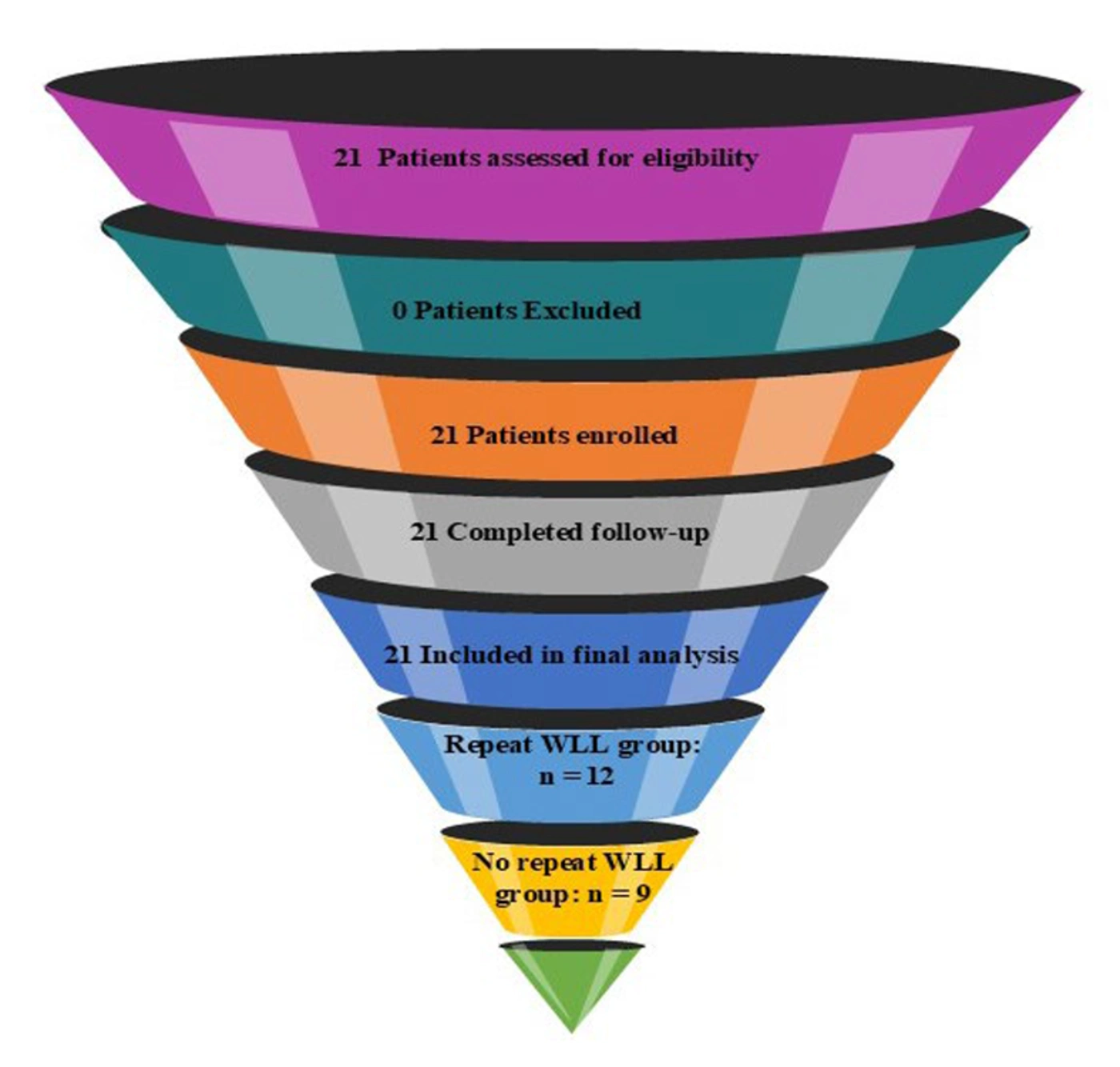
Figure 1.
Participant flow diagram of the study population
3.4. Eligibility Criteria
Patients were included if they had confirmed PAP, a history of at least one WLL procedure, access to a pulse oximeter and a communication device at home, and the ability to participate in remote follow-up assessments. Verbal informed consent was obtained from all participants before enrollment, in accordance with the Ethics Committee-approved procedure.
Patients were excluded if they had other chronic lung diseases, significant cardiac conditions limiting WLL eligibility, coagulation disorders, or other contraindications to the procedure. Patients with severe musculoskeletal, neuromuscular, or lower-limb impairments or other physical limitations preventing reliable performance of the 6MWT were also excluded.
3.5. Remote Monitoring Protocol
After hospital discharge, baseline demographic and clinical characteristics were recorded. Patients received standardized verbal and written instructions for performing the home-adapted 6MWT protocol.
The assessment was performed on a predefined straight walking path available at each patient's residence. The length of the walking path was measured before testing, and patients were instructed to use the same route for subsequent assessments whenever possible. Total walking distance was calculated based on the measured path length and the number of completed laps during the 6-minute period.
Patients were instructed to perform the test under similar environmental conditions whenever possible. Standardized instructions regarding pacing, continuing to walk, and stopping the test in the event of significant symptoms were provided before the assessment. No direct encouragement from health care personnel was provided during the test because the assessments were performed remotely.
Patients recorded pre- and post-test oxygen saturation (SpO2), heart rate (HR), and walking distance using a home pulse oximeter and standardized recording forms. The use of supplemental oxygen and walking aids was not restricted and was documented when necessary.
Remote monitoring was conducted weekly during the first month and monthly thereafter through telephone or text-based communication. Because this protocol was performed in a home environment without direct supervision, potential variability related to environmental conditions, self-administration, and measurement procedures was considered when interpreting the findings. This home-based protocol was adapted from the principles of the standard supervised 6MWT but was not intended to replace laboratory-based assessment.
3.6. Criteria for Clinical Referral
Changes identified during home-based monitoring, including worsening exercise tolerance, increased dyspnea, fatigue, productive cough, or clinically relevant deterioration in oxygenation status, prompted referral for in-person evaluation.
The final decision regarding repeat WLL was subsequently made by the treating pulmonologists based on a comprehensive clinical assessment, including symptoms, oxygenation status, radiological findings, and overall physician judgment.
3.7. Symptom and Functional Assessment
At each follow-up assessment, symptoms including cough, dyspnea, sputum production, and fatigue were evaluated using a Likert-based scoring system. Dyspnea severity was assessed using the modified Medical Research Council (mMRC) dyspnea scale, and daily supplemental oxygen use was recorded. All patients underwent a scheduled in-person evaluation 1 month after WLL, including spirometry, to complement the remote monitoring data.
3.8. Data Collection and Statistical Analysis
For each patient, the 6MWT assessment closest to and preceding the clinical decision regarding repeat WLL was selected for analysis. Therefore, only one observation per patient was included in the final comparative and regression analyses. The recorded values corresponded to the home-based 6MWT assessment performed immediately before the clinical decision regarding repeat WLL. For patients who did not undergo repeat WLL, the last available assessment during follow-up was used for analysis.
Repeated measurements obtained during longitudinal monitoring were not included as independent observations to avoid violating within-patient independence assumptions.
Because of the rarity of PAP and the limited sample size, multivariable analysis was considered exploratory. Binary logistic regression was used to evaluate factors associated with repeat WLL. To minimize the risk of overfitting, the final logistic regression model was restricted to three clinically prespecified variables: 6MWT distance, mMRC dyspnea score, and oxygen dependence. Other variables were not included because of the limited number of repeat-WLL events and the potential for model instability.
The results were interpreted as exploratory associations rather than definitive predictive estimates. Functional parameters, including walking distance, oxygen saturation changes, heart rate response, and dyspnea score, were recorded for exploratory analysis.
Data were collected through structured interviews and standardized questionnaires and analyzed using SPSS software. Continuous variables are presented as mean ± standard deviation, and categorical variables are presented as frequencies and percentages. Binary logistic regression was performed, and the results are reported as odds ratios (ORs) with 95% confidence intervals (CIs). Model performance was assessed using appropriate measures for logistic regression.
Missing data were evaluated for all variables included in the analysis. No missing values were identified for the primary outcome or predictors included in the final model; therefore, a complete-case analysis was performed without imputation.
The distribution of continuous variables was assessed using the Shapiro-Wilk test. Normally distributed variables were summarized as mean ± standard deviation, whereas non-normally distributed variables were presented as median and interquartile range. Comparisons between patients with and without repeat WLL were performed using the independent-samples t-test for normally distributed continuous variables and the Mann-Whitney U test for non-normally distributed variables. Categorical variables were compared using Fisher exact test or the chi-square test, as appropriate.
4. Results
4.1. Demographic and Clinical Characteristics
A total of 21 patients with confirmed PAP were included in the final analysis. During follow-up, 12 (57.1%) patients underwent repeat WLL, whereas 9 (42.9%) did not require repeat intervention. No patients were lost to follow-up. The participant selection process is illustrated in Figure 1.
The demographic and clinical characteristics of the study population are presented in Table 1. Among the included patients, 12 (57.1%) were female, and the mean age was 36.7 ± 14.9 years. A history of COVID-19 infection was reported in 10 patients (47.6%). No significant differences were observed between patients with and without repeat WLL with respect to age, sex, or COVID-19 history. Given the rarity of PAP and the limited sample size, these findings should be interpreted with caution.
Table 1.
Demographic and Clinical Characteristics of the Study Population a
| Characteristic | Values |
|---|---|
| Total Patients | 21 (100.0) |
| Gender | |
| Female | 12 (57.1) |
| Male | 9 (42.9) |
| Age (y) | 36.71 ± 14.9 |
| COVID-19 History | |
| Positive | 10 (47.6) |
| Negative | 11 (52.4) |
a Values are expressed as No. (%) or mean ± SD.
4.2. Descriptive Comparison of Quantitative Variables
Functional and clinical parameters obtained before the clinical decision regarding repeat WLL were compared between patients who underwent repeat WLL and those who did not. Patients requiring repeat WLL demonstrated significantly shorter home-based 6MWT distances than those who did not require repeat intervention (297.58 ± 109.47 m vs. 429.12 ± 97.36 m, P = 0.009).
In addition, higher mMRC dyspnea scores and a greater frequency of oxygen dependence were observed among patients requiring repeat WLL (P = 0.002 and P = 0.023, respectively). No significant differences were observed in exertional oxygen desaturation, heart rate response, age, cough severity, or fatigue scores.
These findings indicate that reduced functional capacity and greater symptom burden were associated with the requirement for repeat WLL. However, given the exploratory design, small sample size, and potential clinical factors influencing the decision to perform repeat WLL, these associations require confirmation in larger prospective studies (Table 2).
Table 2.
Clinical and Functional Characteristics According to Repeat WLL Status a
| Variables | No Repeat WLL (n = 9) | Repeat WLL (n = 12) | Mean Difference / Effect Estimate (95% CI) | P-Value |
|---|---|---|---|---|
| 6MWT distance (m) | 429.12 ± 97.36 | 297.58 ± 109.47 | −131.54 (−226.57 to −36.51) | 0.009 |
| mMRC dyspnea score | 0.72 ± 0.89 | 1.91 ± 0.94 | 1.19 (0.34 to 2.04) | 0.002 |
| Oxygen dependence | 1 (11.1) | 7 (58.3) | OR: 11.20 (1.04 to 120.37) | 0.023 |
| SpO2 difference (%) | −5.54 ± 5.83 | −9.32 ± 9.01 | −3.78 (−10.58 to 3.02) | 0.213 |
| HR difference (bpm) | 26.28 ± 12.45 | 28.50 ± 14.12 | 2.22 (−9.98 to 14.42) | 0.658 |
| Age (y) | 36.45 ± 14.32 | 38.17 ± 14.81 | 1.72 (−11.76 to 15.20) | 0.753 |
| Cough severity score | 0.78 ± 0.88 | 1.35 ± 1.06 | 0.57 (−0.32 to 1.46) | 0.163 |
| Fatigue score | 0.72 ± 0.73 | 1.35 ± 0.93 | 0.63 (−0.13 to 1.39) | 0.087 |
a Values are expressed as mean ± SD or No. (%) unless otherwise indicated. Comparisons were performed using the independent-samples t-test or Mann-Whitney U test according to data distribution. Categorical variables were compared using Fisher exact test. Oxygen dependence was defined as the requirement for supplemental oxygen (0 = no, 1 = yes). Abbreviations: WLL, whole-lung lavage; 6MWT, six-minute walk test; mMRC, modified Medical Research Council dyspnea scale; SpO2, peripheral oxygen saturation; HR, heart rate.
4.3. Multivariable Logistic Regression Analysis
During follow-up, 12 patients underwent repeat WLL and 9 did not require repeat intervention. Given the limited number of outcome events, an exploratory binary logistic regression analysis was performed using a restricted set of clinically relevant, prespecified variables, including 6MWT distance, mMRC dyspnea score, and oxygen dependence. The model was intended to evaluate factors associated with repeat WLL rather than to develop a definitive predictive model.
In the multivariable logistic regression analysis, none of the evaluated variables demonstrated a statistically significant independent association with repeat WLL requirement. Lower 6MWT distance showed a directionally consistent association with increased odds of repeat WLL; however, this association did not reach statistical significance after adjustment for mMRC score and oxygen dependence (OR = 1.009 per meter decrease, 95% CI, 0.991 - 1.028; P = 0.316).
The overall model demonstrated improved fit compared with the null model (likelihood ratio test, P = 0.021). However, given the limited sample size and number of outcome events, regression estimates should be interpreted with caution. These findings suggest that reduced functional capacity may represent a clinically relevant marker associated with repeat WLL requirement, although larger multicenter prospective studies are needed to validate these observations (Table 3).
Table 3.
Exploratory Multivariable Logistic Regression Analysis of Factors Associated with Repeat WLL (N = 21; Repeat WLL: 12, No Repeat WLL: 9) a
| Predictors | OR | 95% CI | P-Value |
|---|---|---|---|
| 6MWT distance (m) | 1.009 | 0.991 - 1.028 | 0.316 |
| mMRC score | 15.990 | 0.584 - 437.737 | 0.101 |
| Oxygen dependence | 0.758 | 0.018 - 32.780 | 0.885 |
a Oxygen dependence was coded as 0 = no supplemental oxygen requirement and 1 = supplemental oxygen requirement. Because of the limited sample size and number of outcome events, this model was considered exploratory. Abbreviations: WLL, whole-lung lavage; 6MWT, six-minute walk test; mMRC, modified Medical Research Council dyspnea scale. Repeat WLL was coded as 1 and no repeat WLL as 0.
4.4. Clinical Interpretation
The home-based 6MWT provided a practical measure of functional capacity and was associated with repeat WLL requirements in this cohort. Patients requiring repeat WLL generally demonstrated reduced walking capacity, greater dyspnea severity, and a higher frequency of oxygen dependence, suggesting that functional limitations reflect clinically meaningful disease burden in PAP.
These findings support the potential role of remote functional monitoring as an adjunctive tool for longitudinal assessment of patients with PAP undergoing follow-up after WLL. However, decisions regarding repeat WLL were based on comprehensive clinical evaluation, including respiratory symptoms, oxygenation status, radiological findings, and physician judgment; therefore, functional parameters should be interpreted as supportive markers rather than independent determinants of treatment decisions. Further prospective multicenter studies are required to determine the clinical utility of telemedicine-based 6MWT monitoring in guiding PAP management.
5. Discussion
In this study, we evaluated whether home-based functional monitoring parameters were associated with the need for repeat WLL in patients with PAP. A lower 6MWT distance was associated with repeat WLL in the unadjusted analysis; however, this association was attenuated and was no longer statistically significant after adjustment for other clinical variables. Therefore, a lower 6MWT distance should not be interpreted as an independent predictor of repeat WLL, as functional capacity may be influenced by other factors. Serial 6MWT assessments may provide greater insight into longitudinal functional changes, although repeated measurements alone would not eliminate potential confounding. Further prospective studies are warranted to clarify its role in telemedicine-based monitoring.
Subjective dyspnea, assessed using the mMRC dyspnea scale, demonstrated a similar pattern, with higher scores among patients requiring repeat WLL; however, this association was not maintained after adjustment. This finding highlights the complex relationship between perceived dyspnea and physiological impairment, as symptoms may be influenced by multiple factors, including disease severity, individual perception, physical conditioning, and adaptive mechanisms. In contrast, the 6MWT provides an integrated assessment of functional capacity by reflecting cardiopulmonary reserve, gas exchange efficiency, and peripheral muscle endurance. Therefore, although no single functional parameter demonstrated an independent association with repeat WLL in the adjusted model, the 6MWT may provide complementary clinical information during PAP follow-up.
Similarly, oxygen dependence and exertional oxygen saturation changes were not independently associated with repeat WLL in the multivariable analysis. This finding suggests that isolated physiological measurements may not fully capture the complexity of clinical decision-making in PAP. In practice, the indication for WLL is generally determined through an integrated assessment of respiratory symptoms, functional limitation, oxygenation status, radiological findings, and physician judgment rather than by a single objective parameter. Therefore, functional monitoring tools should be interpreted within the broader clinical context.
Previous studies have emphasized the importance of physiological evaluation in determining disease severity and treatment requirements in patients with PAP. Fijołek et al. (9) reported that plethysmography-derived parameters, including restrictive abnormalities and diffusing-capacity measurements, may provide useful information for assessing disease burden and functional impairment. Our findings extend these observations by highlighting the potential role of exercise-based assessment as an additional functional measure. Although resting pulmonary function tests provide important information regarding pulmonary impairment, the 6MWT evaluates the patient's response to physiological stress and may capture aspects of functional limitation that are not fully reflected by resting measurements.
Differences in study design, patient characteristics, and clinical decision-making criteria may contribute to variability among studies. In the present study, logistic regression analysis was used to evaluate factors associated with repeat WLL while accounting for clinically relevant variables. Furthermore, the absence of universally standardized criteria for determining the optimal timing of WLL may contribute to variations in clinical practice, as treatment decisions are typically based on a comprehensive evaluation rather than a single physiological threshold (10).
From a clinical perspective, our findings support the incorporation of functional assessment into comprehensive monitoring strategies for patients with PAP. The 6MWT is inexpensive, reproducible, and feasible to perform outside specialized laboratory settings. When integrated into structured follow-up protocols, including telemedicine-based monitoring, it may facilitate early identification of functional decline and support timely clinical reassessment.
Importantly, the telemedicine-based 6MWT should not be considered a substitute for comprehensive clinical evaluation. Instead, it may serve as an additional objective monitoring approach that provides information on changes in functional status between clinical visits. In this study, telemedicine-based follow-up demonstrated the feasibility of remote collection of functional measurements in patients with PAP. However, the study was not designed to determine whether telemedicine improves clinical outcomes, accelerates treatment decisions, or reduces health care utilization. Future prospective multicenter studies with larger cohorts, standardized WLL decision criteria, and comparative follow-up strategies are required to define the clinical role of remote functional monitoring in PAP management.
5.1. Study Limitations
This study has several limitations. First, the small sample size, related to the rarity of PAP, limited statistical power and restricted the number of variables that could be reliably included in multivariable modeling. Although the predictor set was reduced to three prespecified variables, only 12 outcome events were available, resulting in a limited events-per-variable ratio of approximately 4. This constraint may have contributed to model instability, overfitting, and wide confidence intervals and cannot be fully resolved given the limited sample size. Therefore, the multivariable estimates should be interpreted cautiously as exploratory associations rather than definitive predictive effects. Second, the home-based 6MWT may not fully replicate supervised laboratory conditions, and environmental factors may have influenced patient performance. Third, the observational single-center design limits causal inference and generalizability. In addition, repeat WLL decisions were based on a comprehensive clinical assessment, including symptoms, oxygenation status, radiological findings, and physician judgment. Although these decisions were not based solely on home-based 6MWT results, treating physicians were aware of the available clinical follow-up information, and the potential influence of 6MWT findings on clinical judgment cannot be completely excluded. Therefore, residual confounding and partial incorporation bias remain possible. Because the analysis was based on a selected assessment per patient, the longitudinal evolution of repeated functional measurements was not fully captured. Future studies with larger cohorts should apply longitudinal analytical approaches to better characterize changes in functional parameters over time. Finally, although the telemedicine approach provided a feasible framework for remote monitoring, the absence of a conventional follow-up control group prevented evaluation of its comparative effectiveness regarding clinical outcomes, referral timing, or treatment adherence.
5.2. Conclusions
Functional exercise capacity assessed by the 6MWT was associated with repeat WLL requirements in patients with PAP, suggesting its potential value as a functional marker of clinical deterioration. Although dyspnea severity showed a consistent relationship with functional impairment, isolated parameters, such as oxygen desaturation, heart rate response, baseline oxygen requirement, and demographic characteristics, provided limited additional information when considered individually. These findings support a multidimensional assessment approach that integrates functional performance with clinical and physiological parameters rather than relying on isolated resting measurements.
Given its simplicity, feasibility, and scalability, the home-based 6MWT incorporated into telemedicine-based monitoring frameworks may provide a practical approach to longitudinal assessment of patients with PAP, particularly those with limited access to specialized centers. Remote identification of declining functional capacity may facilitate timely clinical reassessment and referral for WLL evaluation. However, the home-based 6MWT should be considered a supportive monitoring tool rather than a standalone criterion for treatment decisions, and validated thresholds for guiding WLL referral require confirmation in larger prospective multicenter studies.