
1. Background
About 90% of children with nephrotic syndrome are in the idiopathic nephrotic syndrome group. The idiopathic nephrotic syndrome is accompanied by primary glomerular disease (1, 2). These children show 3+ or 4+ proteinuria, and hematuria in microscopic level is shown in 20% of children. Protein excretion in urine exceeds 40 mg/m2/h (3). The creatinine value in serum is not significantly different between those with the steroid-sensitive nephrotic syndrome and those with nephrotic syndromes other than steroid-sensitive nephrotic syndrome (4). The level of albumin in serum is < 2.5 g/dL, cholesterol and triglyceride levels in serum are increased, and levels of serum complement are normal (5, 6). Approximately 80-90% of children respond to steroid therapy in three weeks. It has been documented that both an elevated steroids dose and a long time therapy are important factors in reducing relapse risk (7). Children with nephrotic syndrome should go to school and take part in physical activities (8).
Few foods contain vitamin D; the major natural source of vitamin D is synthesis in the skin. Vitamin D is built in the skin from cholesterol and its production depends on sun exposure (9).
Vitamin D, whether built in the skin or found in the diet, is inactive biologically; activation of vitamin D needs enzymatic conversion in the kidneys and liver (10).
Vitamin D has an important role in the metabolism and homeostasis of calcium. It is used to inhibit osteomalacia or rickets. In the general population, vitamin D supplementation is used for other health effects (11). Cholecalciferol is converted to calcidiol in the liver, and a part of calcidiol is converted to calcitriol in the kidneys (1).
2. Methods
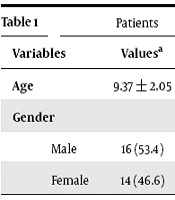
This study was a prospective study conducted on children with the first visit of NS before treatment with prednisolone. Duration of this study was 2 years and 218 children were enrolled in the study. The glomerular filtration rate (GFR) was calculated using Schwartz formula, and only sick people with normal GFR were included in the study. Analysis of 218 children aged 1 - 13 years, the median of 9.5 [108 with SSNS, 64 with SDNS, and 46 with SRNS] was performed. Serum concentrations of 1,25(OH)2 D3, calcium, phosphorus, and creatinine were measured. The correlation of 25OHD3 with the type of nephrotic syndrome, seasons, gender, and age was investigated.
3. Results
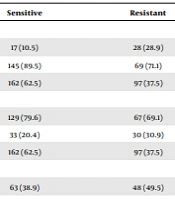
A total of 218 children were examined. Vitamin D level was deficient (< 10 ng/mL) in 79% of SRNS, 83% of SDNS, and 17% of SSNS group (P value = 0.0001), insufficient (10 - 30 ng/mL) in 81% of SRNS, 73% of SDNS, and 9% of SSNS group (P value = 0.0003), and sufficient (30 - 150 ng/mL) in 91% of SSNS, 17% of SDNS, and 7% of SRNS group (P value = 0.002). Potential intoxication (> 150 ng/mL) was in 0% of NS. Vitamin D was observed in the study children with INS. There were no significant differences in serum calcium, phosphorus, and calcium x phosphorus product depending on the type of INS and gender. We compared vitamin D level in patients with normal ranges so we did not need any control group.
4. Discussion
In our study, vitamin D level was lower in patients with SDNS and SRNS than in patients with SSNS; therefore, vitamin D level can be used as an indicator in the prognosis of NS in patients. Nielsen found that vitamin D in 93% of children with nephrotic syndrome was insufficient. They suggested that routine measurement of vitamin D status in children with Nephrotic syndrome at the diagnosis time could be a strategy for treating individuals if suffering from vitamin D deficiency. More studies are required to determine the role of such treatment (11). Banerjee et al. found that in sick people with Nephrotic Syndrome, store of vitamin D remained low for 12 weeks after Nephrotic Syndrome relapse while they found a rise in control levels with longer remission durations. Store of Vitamin D was not influenced by illness characteristics or therapy. More studies are needed to confirm these findings and evaluate the role of vitamin D in bones, particularly in frequent relapses (1). Further studies are important to demonstrate if treatment for vitamin D deficiency affects the bone mineral density and reduces the amount of albumin in the urine of children with NS.
4.1. Conclusions
Based on our results and the literature, we suggest that children may benefit from routine measurement of their vitamin D status at the time of diagnosis of NS for the first time or at relapse, so an individual strategy for treatment with vitamin D can be given in order to avoid the potential damages due to vitamin D deficiency.