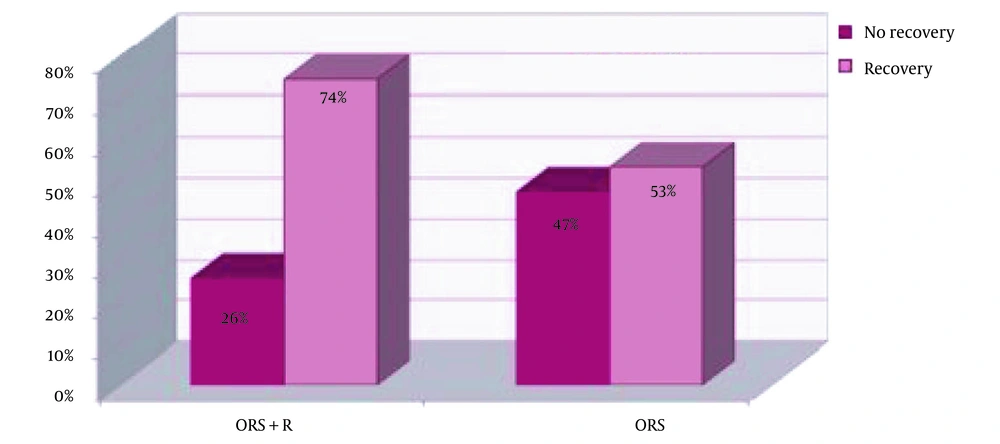
This prospective randomized clinical trial was conducted from September 2018 to May 2019 in the Gastroenterology Ward of a national referral pediatrics center at the Mofid Children’s Hospital. The participants were assigned to the control ORS and treatment (Oral Rehydration Solution + Racecadotril) groups. The zinc supplement was also prescribed for both groups.
Children aged 3 - 60 months with acute diarrhea were included in this study. The exclusion criteria were children with dysentery or mucus in stool, children with severe comorbidities such as liver or kidney diseases, and a history of specific drug ingestion or food allergies.
Children meeting the inclusion criteria were randomly assigned into two groups and received either standard treatment or racecadotril plus standard treatment. The study was approved by the Ethics Committee of the Shahid Beheshti University of Medical Sciences (Code: IR.SBMU.REC.1395.1) and registered with the Iranian Registry of Clinical Trials (IRCTID: IRCT201607131264N8).
Racecadotril (Zedott, Torrent Pharmaceuticals Ltd, Gujarat, India) was prescribed (1.5 mg/kg every eight hours). Racecadotril administration lasted until improvement of diarrhea symptoms or five days after the start of the treatment. Apart from additional therapy by racecadotril, all children received the medications according to the WHO’s recommendations.
One hundred children were included in the present study, of whom five persons were excluded: Two persons in the control group due to the loss of follow-up information, two persons in the Racecadotril group due to parental request, and one person due to eligibility violation.
The randomization was performed with a 1:1 allocation ratio. Of 100 participants, the research protocol could be conducted for 95 children. Among the participants, 52 out of 54 children were administered oral rehydration solution (ORS), and 43 out of 46 children received ORS+Racecadotril according to the recommendations of the Centers for Disease Control and Prevention (
22,
23).
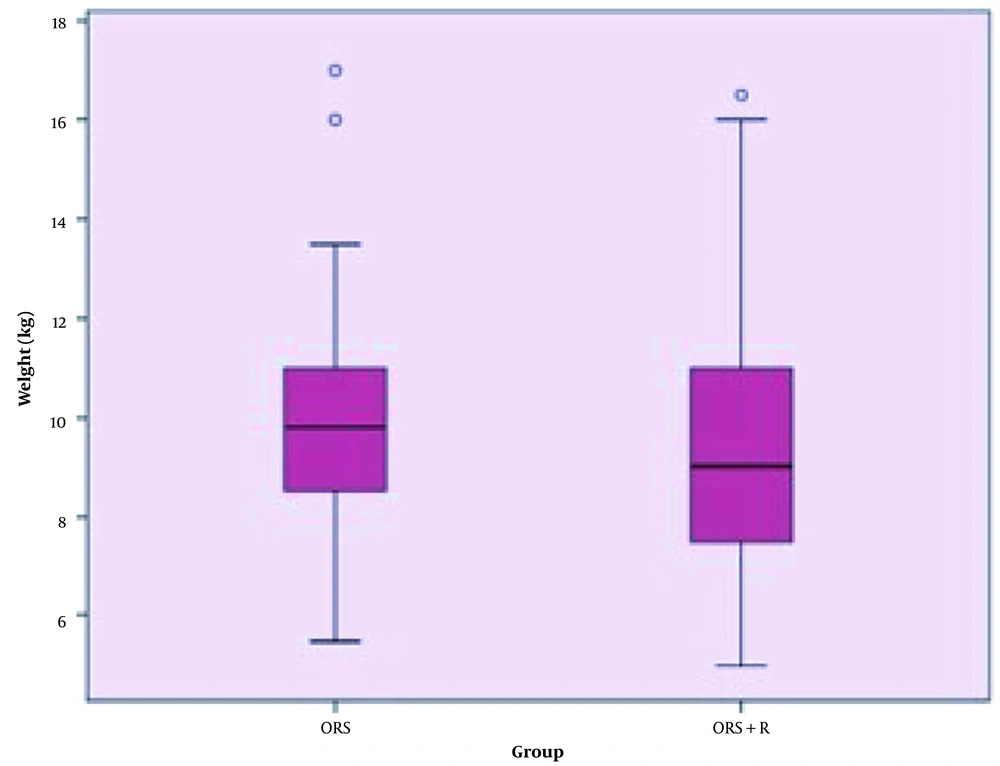
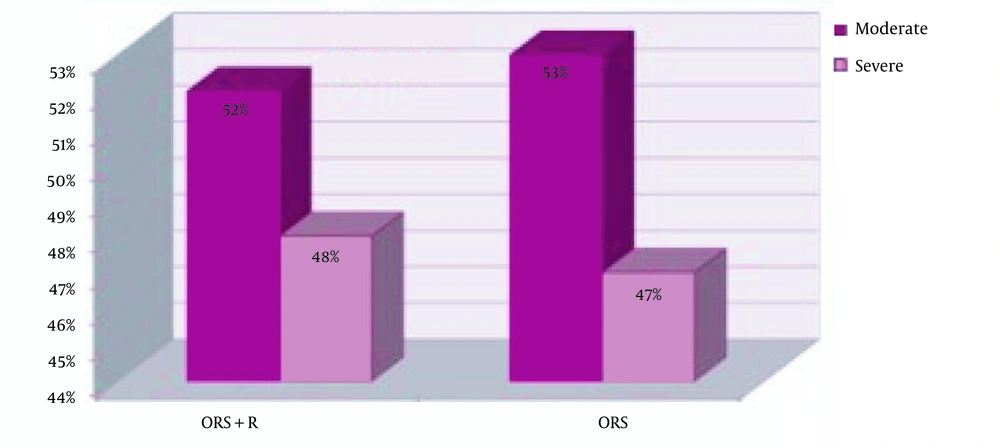
During the initial visit, the baseline demographic variables, including age, gender, and weight (kg), were collected, and the participants’ body weight, pulse rate, respiratory rate, temperature, and dehydration severity were assessed. All children hospitalized with acute non-invasive gastroenteritis were divided into two groups: a group with severe dehydration and another group with moderate dehydration.
Acute non-invasive gastroenteritis was proved by a standard stool exam and stool culture (First stool specimen was taken at the hospital and analyzed in terms of bacterial infections using standard microbiologic methods).
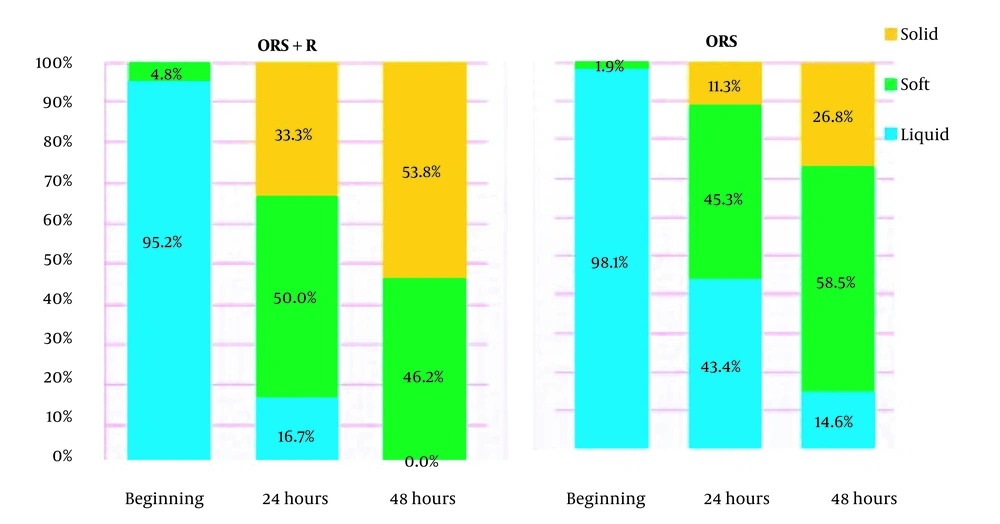
On daily follow-up visits after admission, parents or caregivers were asked about several daily bowel movements, stool consistency (based on the Bristol stool scale (
24) in
Table 1), fever, nausea, vomiting, and any new symptoms or side-effects. Children discharged before the complete resolution of symptomswere followed up by phone interviews.
| Score | Description |
|---|
| 1 | Separate hard humps |
| 2 | Sausage-shaped but lumpy |
| 3 | Sausage-shaped with cracks |
| 4 | Sausage or snake-like, smooth and soft |
| 5 | Soft blobs with clear-cut edges |
| 6 | Fluffy pieces with ragged edges, mushy stool |
| 7 | Watery, no solid pieces, entirely liquid |
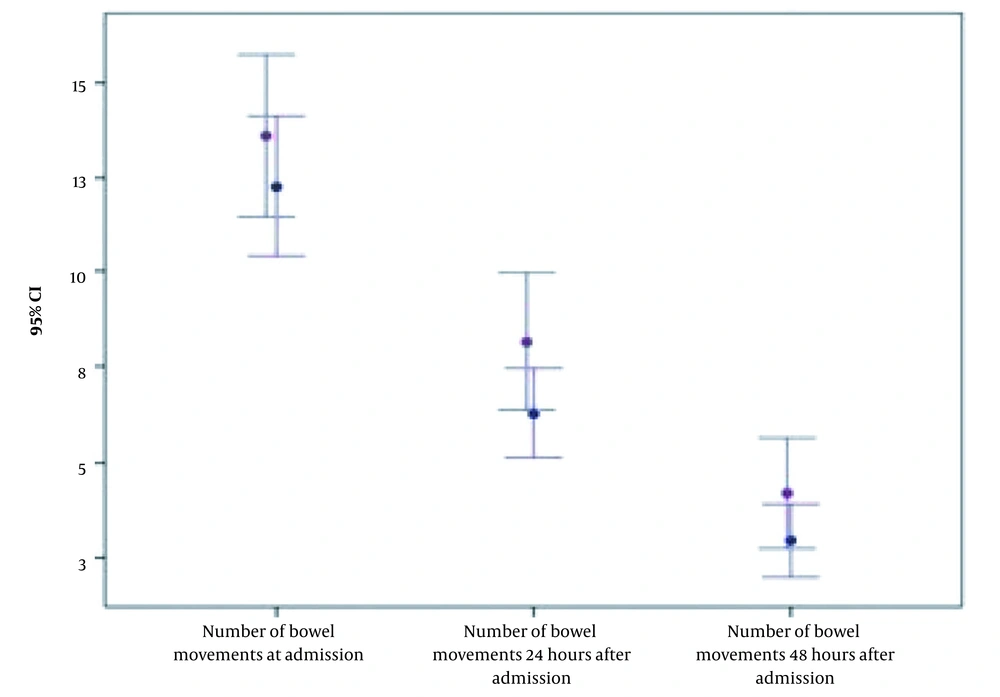
The present study mainly aimed to evaluate the effectiveness of the prescription of Racecadotril based on the count of bowel movements and the recovery rate 24 and 48 hours after the treatment initiation. The secondary objective of this study was to determine changes in the duration of diarrhea, the consistency of stool, and the safety and tolerability of Racecadotril.
All data were classified in a pre-prepared questionnaire and were divided into quantitative and qualitative variables. The collected data was then analyzed. First, the distribution normality of the studied quantitative variables was confirmed using the Kolmogorov-Smirnov test. Then, the chi-squared test was used to compare the qualitative variables between the groups. To investigate the effect of each independent variable, we calculated 95% confidence intervals. The analyses were performed using SPSS software version 25.0. In this study, P < 0.05 was set as the significance level for all tests.