
1. Background
Excessive screen time has become a significant concern in adolescent health, with studies indicating that teenagers spend an average of eight hours a day using electronic media, which far exceeds the international guidelines recommending no more than two hours of screen time per day for children and adolescents (1). This overuse of screens has been linked to various negative health outcomes, including depression, which has emerged as a potential risk associated with excessive screen time (2). These concerns highlight the need for effective interventions to mitigate the health consequences of prolonged screen exposure, particularly among vulnerable populations like children with attention deficit hyperactivity disorder (ADHD), who may be more susceptible to the addictive nature of digital media (3).
Family dynamics and parenting styles are crucial factors influencing adolescent behavior, including screen time habits (4). The way parents manage their relationships with children can significantly affect their emotional, social, and behavioral development. Family functioning, including the behaviors of parents — whether harsh, nurturing, or neglectful — can shape the child's personality and lead to behavioral problems such as internet addiction (5). It has been shown that parenting styles characterized by coercion, neglect, or lack of support can exacerbate behavioral issues in children, increasing the likelihood of problematic internet use (6). Furthermore, inconsistent parental monitoring, as well as either too lax or overly stringent control of screen time, has been found to correlate with higher rates of internet addiction among adolescents (7). This underscores the importance of positive parenting strategies in managing screen time and mitigating the risk of internet addiction (8).
2. Objectives
Given the significant impact of screen addiction on the development and well-being of children and adolescents, this study aims to assess the effectiveness of parenting education in reducing screen time among children and adolescents with ADHD attending outpatient psychiatric clinics. By improving parenting practices, the study seeks to address the root causes of excessive screen use and promote healthier habits among this high-risk group.
3. Methods
This study is a semi-experimental clinical trial that uses a pre-test and post-test design with a control group. The target population includes children and adolescents diagnosed with ADHD and their mothers. To ensure better distribution and representation, the study sampled participants from three different centers: A public hospital outpatient clinic, a public outpatient center, and a private outpatient center. Participants visited the Shafa outpatient clinic, the Besat Clinic, and a private outpatient center in Guilan.
The study included participants who were willing to take part and had a diagnosis of ADHD without any coexisting psychiatric conditions. Participants were excluded if they had psychiatric comorbidities, were unwilling to participate, or had intellectual disabilities. Prior to the commencement of the study, the research protocol was reviewed and approved by the Ethics Committee of Guilan University of Medical Sciences (IR.GUMS.REC.1401.510). The diagnosis of ADHD was made according to the DSM-5 diagnostic criteria through a diagnostic interview conducted by a child and adolescent psychiatry specialist. The age range of the children was between 5 and 18 years, and all children included in the study were undergoing pharmacological treatment for ADHD, which had started at least two months prior to the study.
Before the implementation of the study, participants were provided with detailed information regarding the objectives of the study, the process of participation, and the confidentiality of the data collected. Written informed consent was obtained from all participants. Participants were asked about their screen time usage, including television, videos, mobile phones, tablets, computers, video games, communication apps, etc. Participants were asked how much time they spent on screen-based activities in one day, with time divisions as follows: Less than one hour, one to three hours, three to five hours, and five hours or more. This information was gathered before and after the intervention.
The participants were randomly assigned to either the parenting education intervention group or the control group. The sample size for each group, accounting for possible attrition, was set at 20 participants. The parenting education sessions were conducted by a child and adolescent psychiatry specialist familiar with parenting techniques. These sessions were held over eight weeks, with one 45-minute to one-hour session each week. A psychiatry assistant played the role of co-therapist. The intervention followed the Triple P (Positive Parenting Program) protocol, which involved presenting content through PowerPoint presentations, educational handouts, and question-and-answer sessions. After the completion of the intervention sessions, and again three months post-intervention, screen time was reassessed. The intervention was carried out in a group format. The control group consisted of mothers who had applied for group parenting therapy, with their children also diagnosed with ADHD without comorbidities and receiving treatment with stimulant medications. After the study was completed, the control group participants also received the same intervention.
3.1. Content of the Educational Sessions
Session 1: Introduction, outlining the objectives and rules of the group, explanation of the child's symptoms by parents, definition of the disorder, its prevalence, etiology, general treatment principles, and summarizing symptoms.
Session 2: Discussing child-parent interactions and general principles of behavior shaping, proper ways to request and give instructions, and correcting misconceptions parents may have about the nature of the disorder.
Session 3: Group discussion and review of homework from Session 2, providing education on general methods of reinforcing behavior, the conditions for reinforcement, and types of reinforcement.
Session 4: Group discussion about the content from Session 3, teaching how to implement token economy systems for children, and providing homework for practicing this method at home.
Session 5: Group discussion on the material from Session 4, reviewing homework assignments, and evaluating their effectiveness. Instruction on how to engage children in positive activities, control behavioral issues, and apply effective reward methods at home. Homework on this topic was assigned.
Session 6: Group discussion about the content from Session 5 and reviewing related homework, teaching methods for reducing inappropriate behaviors in children, such as ignoring, deprivation, punishment, etc., to decrease unwanted behaviors.
Session 7: Group discussion regarding the content from Session 6 and review of the previous session's homework. Identifying problematic behaviors related to school and offering appropriate behavioral solutions for school settings. Teaching practical strategies to improve children's academic performance.
Session 8: Group discussion on the material from Session 7 and review of homework. Presenting parenting skills to mothers and creating challenges where hypothetical scenarios are described. Mothers use the skills they've learned and problem-solving techniques to provide solutions. Finally, emphasizing the chronic nature of children's deficits and the importance of continuing to apply the learned skills for maintaining positive behavior in children.
3.2. Instruments
The demographic checklist included questions about the child's gender, age, place of residence, mother's age, mother's education level, father's education level, child's education level, and the mother's marital status. The screen time form assessed the amount of time spent on screen-based activities based on the mother's observation. It also asked about the usage of computers, tablets, and communication apps separately, detailing the total time spent on these devices.
3.3. Statistical Analysis
After data collection, the information was entered into IBM SPSS Statistics for Windows, Version 26.0. Descriptive statistics, including frequency and percentage, were used for categorical variables, and for continuous variables, the mean, standard deviation, minimum, and maximum were calculated. To compare screen time usage between the two groups (intervention and control), an independent t-test was conducted. If the assumptions of the t-test were not met, the Mann-Whitney U test was used instead. To compare the trend of changes over time, repeated measures ANCOVA was applied. The effect size was determined using partial eta squared. A significance level of P < 0.05 was considered for all statistical tests in this study.
4. Results
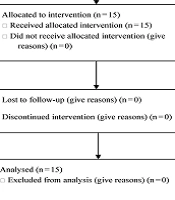
In this study, to examine the effect of parenting education on mothers of children with ADHD, data were collected from 46 children. The intervention group consisted of 23 children, and the control group also had 23 children. Data were collected at three time points: Before the intervention, 8 weeks after the intervention, and 3 months after the intervention. In the intervention group, three children were excluded from the study due to non-participation in the parenting education sessions. Similarly, in the control group, three children were excluded due to non-responsiveness during follow-up. Therefore, data from 20 participants in each group were analyzed.
As Table 1 shows, 62.5% of the children were boys and 37.5% were girls, with no significant gender differences between the groups. All children lived in cities, and the mean age was 9.36 ± 3.22 years, with ages ranging from 4 to 16, showing no significant age differences. Most children (74.4%) were in elementary school, and education levels were similar between the groups. Additionally, mothers' education levels were comparable across both groups, with a mean age of 37.38 ± 6.08 years, and the birth rank distribution showed no significant difference between the groups.
Table 1.
Demographic and Social Characteristics of Children and Mothers a
| Characteristics | Without Educational Intervention (N = 20) | With Educational Intervention (N = 20) | P |
|---|---|---|---|
| Child's gender | 0.102 | ||
| Female | 10 (50.0) | 5 (25.0) | |
| Male | 10 (50.0) | 15 (75.0) | |
| Residence location | - | ||
| City | 20 (100.0) | 20 (100.0) | |
| Village | 0 (0.0) | 0 (0.0) | |
| Child's age | 0.149 | ||
| Mean | 10.10 | 8.63 | |
| Standard deviation | 3.26 | 3.08 | |
| Minimum | 6.00 | 4.00 | |
| Maximum | 16.00 | 16.00 | |
| Child's education | 0.319 | ||
| Primary | 13 (65.0) | 16 (84.2) | |
| Junior | 6 (30.0) | 2 (10.5) | |
| High school | 1 (5.0) | 1 (5.3) | |
| Mother's marital status | - | ||
| Single | 0 (0.0) | 0 (0.0) | |
| Married | 20 (100.0) | 20 (100.0) | |
| Mother's education | 0.256 | ||
| Below high school | 6 (30.0) | 3 (15.0) | |
| High school and above | 14 (70.0) | 17 (85.0) | |
| Father's education | 0.429 | ||
| Below high school | 3 (15.0) | 5 (25.0) | |
| High school and above | 17 (85.0) | 15 (75.0) | |
| Mother's age | 0.855 | ||
| Mean | 37.20 | 37.55 | |
| Standard deviation | 6.45 | 5.84 | |
| Minimum | 28.00 | 22.00 | |
| Maximum | 46.00 | 50.00 | |
| Child's order in family | 0.168 | ||
| First child | 12 (60.0) | 16 (80.0) | |
| Second child | 8 (40.0) | 4 (20.0) |
a Values are expressed as No. (%).
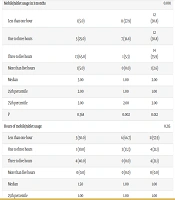
In Table 2, the comparison of hours of television, video game, and mobile/tablet usage between the two study groups is presented. Before the intervention, there was no significant difference in television usage hours between the groups (P = 0.819). However, after the educational intervention, the group with the intervention showed significantly fewer television usage hours both at 8 weeks (P = 0.043) and 3 months (P < 0.001). In the 3 months following the intervention, the group with the educational intervention had lower median and 25th percentile values for television usage compared to the group without the intervention. The trend in television usage for the group without the intervention remained stable, as reflected by the median and percentiles (P = 0.814), while the intervention group showed a significant decrease in usage (P = 0.001). Before the intervention, the educational intervention group had a median of 2 hours of television usage, which decreased to a median of 1 hour after 3 months.
Table 2.
Comparison of Hours of Television, Video Game, Mobile/Mobile/Tablet, and Communication Application Usage in the Two Study Groups a
| Usage Hours | Without Educational Intervention (N = 20) | With Educational Intervention (N = 20) | Total | P |
|---|---|---|---|---|
| Video game usage in 3 months | 0.001 | |||
| Less than one hour | 2 (16.7) | 11 (84.6) | 13 (52.0) | |
| One to three hours | 6 (50.0) | 2 (15.4) | 8 (32.0) | |
| Three to five hours | 4 (33.3) | 0 (0.0) | 4 (16.0) | |
| More than five hours | 0 (0.0) | 0 (0.0) | 0 (0.0) | |
| Median | 2.00 | 1.00 | 1.00 | |
| 25th percentile | 2.00 | 1.00 | 1.00 | |
| 75th percentile | 3.00 | 1.00 | 2.00 | |
| Mobile/tablet usage | 0.003 | |||
| Less than one hour | 1 (5.0) | 6 (30.0) | 7 (17.5) | |
| One to three hours | 5 (25.0) | 9 (45.0) | 14 (35.0) | |
| Three to five hours | 14 (70.0) | 5 (25.0) | 19 (47.5) | |
| More than five hours | 0 (0.0) | 0 (0.0) | 0 (0.0) | |
| Median | 3.00 | 2.00 | 2.00 | |
| 25th percentile | 2.00 | 1.00 | 2.00 | |
| 75th percentile | 3.00 | 2.50 | 3.00 | |
| Mobile/tablet usage in 8 weeks | < 0.001 | |||
| Less than one hour | 1 (5.0) | 9 (47.4) | 10 (25.6) | |
| One to three hours | 7 (35.0) | 10 (52.6) | 17 (43.6) | |
| Three to five hours | 12 (60.0) | 0 (0.0) | 12 (30.8) | |
| More than five hours | 0 (0.0) | 0 (0.0) | 0 (0.0) | |
| Median | 3.00 | 2.00 | 2.00 | |
| 25th percentile | 2.00 | 1.00 | 1.00 | |
| 75th percentile | 3.00 | 2.00 | 3.00 | |
| Mobile/tablet usage in 3 months | 0.001 | |||
| Less than one hour | 1 (5.0) | 11 (57.9) | 12 (30.8) | |
| One to three hours | 5 (25.0) | 7 (36.8) | 12 (30.8) | |
| Three to five hours | 13 (65.0) | 1 (5.3) | 14 (35.9) | |
| More than five hours | 1 (5.0) | 0 (0.0) | 1 (2.6) | |
| Median | 3.00 | 1.00 | 2.00 | |
| 25th percentile | 2.00 | 1.00 | 1.00 | |
| 75th percentile | 3.00 | 2.00 | 3.00 | |
| P | 0.368 | 0.002 | 0.012 | |
| Hours of mobile/tablet usage | 0.215 | |||
| Less than one hour | 5 (50.0) | 6 (66.7) | 11 (57.9) | |
| One to three hours | 1 (10.0) | 3 (33.3) | 4 (21.1) | |
| Three to five hours | 4 (40.0) | 0 (0.0) | 4 (21.1) | |
| More than five hours | 0 (0.0) | 0 (0.0) | 0 (0.0) | |
| Median | 1.50 | 1.00 | 1.00 | |
| 25th percentile | 1.00 | 1.00 | 1.00 | |
| 75th percentile | 3.00 | 2.00 | 2.00 | |
| Hours of mobile/tablet usage in 8 weeks | 0.027 | |||
| Less than one hour | 3 (30.0) | 6 (75.0) | 9 (50.0) | |
| One to three hours | 2 (20.0) | 2 (25.0) | 4 (22.2) | |
| Three to five hours | 4 (40.0) | 0 (0.0) | 4 (22.2) | |
| More than five hours | 1 (10.0) | 0 (0.0) | 1 (5.6) | |
| Median | 2.50 | 1.00 | 1.50 | |
| 25th percentile | 1.00 | 1.00 | 1.00 | |
| 75th percentile | 3.00 | 1.50 | 3.00 | |
| Hours of mobile/tablet usage in 3 months | 0.006 | |||
| Less than one hour | 2 (20.0) | 6 (85.7) | 8 (47.1) | |
| One to three hours | 2 (20.0) | 1 (14.3) | 3 (17.6) | |
| Three to five hours | 5 (50.0) | 0 (0.0) | 5 (29.4) | |
| More than five hours | 1 (10.0) | 0 (0.0) | 1 (5.9) | |
| Median | 3.00 | 1.00 | 2.00 | |
| 25th percentile | 2.00 | 1.00 | 1.00 | |
| 75th percentile | 3.00 | 1.00 | 3.00 | |
| P | 0.022 | 0.607 | 0.157 | |
| Hours of communication apps usage | 0.215 | |||
| Less than one hour | 5 (50.0) | 6 (66.7) | 11 (57.9) | |
| One to three hours | 1 (10.0) | 3 (33.3) | 4 (21.1) | |
| Three to five hours | 4 (40.0) | 0 (0.0) | 4 (21.1) | |
| More than five hours | 0 (0.0) | 0 (0.0) | 0 (0.0) | |
| Median | 1.50 | 1.00 | 1.00 | |
| 25th percentile | 1.00 | 1.00 | 1.00 | |
| 75th percentile | 3.00 | 2.00 | 2.00 | |
| Hours of communication apps usage in 8 weeks | 0.027 | |||
| Less than one hour | 3 (30.0) | 6 (75.0) | 9 (50.0) | |
| One to three hours | 2 (20.0) | 2 (25.0) | 4 (22.2) | |
| Three to five hours | 4 (40.0) | 0 (0.0) | 4 (22.2) | |
| More than five hours | 1 (10.0) | 0 (0.0) | 1 (5.6) | |
| Median | 2.50 | 1.00 | 1.50 | |
| 25th percentile | 1.00 | 1.00 | 1.00 | |
| 75th percentile | 3.00 | 1.50 | 3.00 | |
| Hours of communication apps usage in 3 months | 0.006 | |||
| Less than one hour | 2 (20.0) | 6 (85.7) | 8 (47.1) | |
| One to three hours | 2 (20.0) | 1 (14.3) | 3 (17.6) | |
| Three to five hours | 5 (50.0) | 0 (0.0) | 5 (29.4) | |
| More than five hours | 1 (10.0) | 0 (0.0) | 1 (5.9) | |
| Median | 3.00 | 1.00 | 2.00 | |
| 25th percentile | 2.00 | 1.00 | 1.00 | |
| 75th percentile | 3.00 | 1.00 | 3.00 | |
| P | 0.022 | 0.607 | 0.157 |
a Values are expressed as No (%).
Regarding video game usage, the group without the intervention spent more time on video games before the intervention (P = 0.002), and this trend continued after the intervention, with the median and percentiles remaining higher in the group without the educational intervention at both 8 weeks (P = 0.033) and 3 months. Although both groups showed stable trends in video game usage, with no significant changes in the group without the intervention (P = 0.999), the group with the educational intervention also demonstrated a stable pattern, though not statistically significant (P = 0.074).
Table 2 compares mobile phone and tablet usage between the two groups with and without the educational intervention. Before the intervention, there was a significant difference in mobile phone usage between the groups (P = 0.003), with the group without the intervention having higher usage. Eight weeks after the intervention, the group without the intervention continued to show higher usage, and this trend remained significant even three months later (P < 0.001). The group without the intervention showed stable usage patterns, while the group with the intervention showed a significant reduction in mobile phone and tablet usage, with median and percentiles decreasing from 2, 1, 2.5 to 1, 1, 2 (P = 0.002). The educational intervention was found to be effective in significantly reducing mobile phone and tablet usage.
Table 2 also shows no significant difference in communication application usage between the groups before the intervention (P = 0.512). However, 8 weeks after the intervention, the group without the intervention had significantly higher usage (P = 0.027), and this trend continued three months later (P = 0.006). In contrast, the group with the educational intervention maintained stable usage (P = 0.607), highlighting the intervention's effectiveness in stabilizing usage compared to the control group's increasing trend.
Table 3 compares total screen time usage between the two study groups. Before the intervention, there was no significant difference in screen time usage between the groups, indicating they were matched. However, 8 weeks after the intervention, the group without the educational intervention showed significantly higher total screen time (P = 0.019). Three months after the intervention, the difference remained significant (P < 0.001), with the group without the intervention having an average of 5.99 ± 1.94 hours compared to 2.92 ± 1.44 hours in the group with the intervention. The group with the educational intervention showed a significant decreasing trend in screen time (P = 0.002), while the group without the intervention maintained a stable trend (P = 0.280).
Table 3.
Comparison of Total Screen Time Usage Between the Two Study Group a
| Screen Time Usage | Without Educational Intervention (N = 20) | With Educational Intervention (N = 20) | Total | P |
|---|---|---|---|---|
| Total screen time usage | 5.50 ± 1.96 | 5.07 ± 3.34 | 5.29 ± 2.71 | 0.627 |
| Total screen time usage in 8 weeks | 5.70 ± 2.00 | 3.77 ± 2.89 | 4.74 ± 2.64 | 0.019 |
| Total screen time usage in 3 months | 5.90 ± 1.94 | 2.92 ± 1.44 | 4.41 ± 2.26 | < 0.001 |
| P-values | ||||
| Ptime | 0.028 | - | - | - |
| Partial eta squared | 0.162 | - | - | - |
| Observed power | 0.753 | - | - | - |
| PGroup | 0.028 | - | - | - |
| PInteraction | 0.001 | - | - | - |
a Values are expressed as mean ± SD.
The repeated measures ANOVA indicated significant effects for time (P = 0.028), group (P < 0.001), and their interaction (P = 0.001). The partial eta squared value of 0.162 suggests a large effect, and the test's power was 75.3%, indicating the intervention significantly reduced screen time usage.
Table 4 compares changes in screen time usage based on individual and social variables of the child and mother. The results showed no statistically significant differences in screen time usage based on variables such as the child's gender, age, education level, mother's education level, mother's age, and the child's birth rank. This indicates that the educational intervention had the same effect across all children, regardless of these factors. As a result, the intervention was equally effective for all participants. Therefore, we can conclude that this educational intervention is applicable to diverse groups.
Table 4.
Comparison of Changes in Screen Time Usage from Pre-intervention to the End of the Study in the Intervention Group
| Changes in Screen Time Usage in the Intervention Group | Mean ± SD | Min - Max | P |
|---|---|---|---|
| Child's gender | 0.341 | ||
| Girl | 1.00 ±1.58 | -1.00 - 3.00 | |
| Boy | 2.53 ± 3.34 | -2.00 - 12.00 | |
| Child's age (y) | 0.865 | ||
| Under 10 | 2.07 ± 3.43 | -2.00 - 12.00 | |
| Over 10 | 2.33 ± 2.07 | -1.00 - 5.00 | |
| Child's education | 0.585 | ||
| Primary | 2.35 ± 3.20 | -2.00 - 12.00 | |
| Junior high school | 2.00 ± 0.00 | 2.00 - 2.00 | |
| High school | -1.00 ± 0.00 | -1.00 - -1.00 | |
| Mother's education | 0.372 | ||
| Below diploma | 0.67 ± 1.53 | -1.00 - 2.00 | |
| High school or higher | 2.41 ± 3.18 | -2.00 - 12.00 | |
| Mother's age (y) | 0.166 | ||
| 30 or less | 1.50 ± 0.71 | 1.00 - 2.00 | |
| Over 30 | 2.22 ± 3.19 | -2.00 - 12.00 | |
| Father's education | 0.759 | ||
| Below diploma | 3.80 ± 4.71 | 0.00 - 12.00 | |
| High school or higher | 1.60 ± 2.20 | -2.00 - 5.00 | |
| Child's birth order | 0.411 | ||
| First child | 2.44 ± 3.31 | -2.00 - 12.00 | |
| Second child | 1.00 ± 1.15 | 0.00 - 2.00 |
5. Discussion
The use of screens and social media is widespread worldwide, especially among children and adolescents, leading to the notion that today's younger generations are immersed in a digital environment (11). While social media and new technologies have transformed society by providing faster access to important information, enhancing communication, and supporting social relationships and identity management (12), there are growing concerns regarding their physical, social, and psychological consequences (13).
This study examined the impact of parenting education for mothers as an accessible and straightforward approach to managing screen time in children with ADHD. The intervention was based on shared educational content using the Triple P Parenting Protocol (14) and delivered through PowerPoint presentations, educational handouts, and Q&A sessions. The results indicated that parenting education significantly reduced TV screen time in the intervention group, with no similar changes observed in the control group. Additionally, in the control group, the use of computer games, mobile devices, and tablets increased, while the intervention group saw significant reductions, confirming the positive impact of parenting education on technology use in children with ADHD.
Furthermore, while the average total screen time in the control group increased, the intervention group showed a significant decrease in screen time over three months, highlighting the substantial effect of the educational intervention. In other words, the observed decreasing trend and median changes from the 8th week to the 3rd month further support the effectiveness of the parenting education in our study.
Parenting is a process involving the knowledge and skills needed to raise children constructively, supporting their physical, emotional, cognitive, and social development. This method aims to foster children's abilities and manage behavioral problems. It emphasizes teaching children to take responsibility for their actions and consequences. Parenting strategies also involve creating positive communication with children and adolescents, reinforcing desired behaviors, and setting rules, including those regarding screen time. Research generally focuses on enhancing parental support and responsibility for the development of children's cognitive abilities, providing sensitive caregiving effects on cognitive growth. Supportive and sensitive parents provide children with security and self-confidence, and proper parenting contributes to emotional and behavioral growth (15, 16).
Effective parenting is a process where parents meet their child's needs based on changing cultural standards passed down through generations. Parenting styles significantly influence the growth and maturation of young children (17). Parenting behaviors and styles often concern parents, requiring expert assistance to address these issues. Behavioral education for parents directly targets parenting mechanisms to create sustainable improvements in children's behavior, promoting effective parenting strategies (18). It has been supported that the efficacy of this accessible approach reports significant clinical progress in ADHD symptoms and disruptive behavior, along with improvements in parenting skills, stress levels, confidence, and family well-being (19).
Multidimensional psycho-social interventions, including parenting education, have been gaining attention for expanding the impact of treatment for ADHD. Randomized trials investigating multi-component psycho-social interventions for ADHD have demonstrated broader effects in various settings, both at home and in school (18, 19). Similar to our study, previous research has shown that parenting practices improve outcomes related to child disorders, challenging the past assumption that symptoms should be managed directly with medication. Improved parenting can lead to significant changes in various outcomes at home and school. Additionally, previous research highlights parenting as a crucial mechanism for change in psychosocial treatments for ADHD (20).
In contrast, evaluating screen time usage in children generally involves measuring time spent on activities such as watching TV, playing video games, and using mobile devices or computers (21). Parents have long been concerned about internet use, which has notably impacted their lives. The increasing influence of the internet on family dynamics, especially parent-child interactions, is becoming difficult to control (22). There are also growing concerns that excessive exposure to electronic devices can have negative effects on children's growth and development (23). Despite the American Academy of Pediatrics' recommendation that children under two should avoid digital media, and screen time for children over two should be limited to two hours a day, screen time has been increasing globally (24).
In this study, the average TV watching time in both the intervention and control groups was initially over five hours, with a significant reduction in the intervention group after the education. In the study by Vaidyanathan et al., conducted to assess screen time exposure in preschool children with ADHD, 80.4% of children exceeded recommended screen time limits, with an average of 140 minutes per day (range: 20 - 500 minutes). The most common devices used were television (98.2%), mobile phones (87.3%), tablets (17.9%), and laptops (10.7%) (25). The results indicate that more attention needs to be paid to screen time for these children, and assessing the impact of educational interventions could be practical.
Longitudinal studies in community samples suggest that increased screen time may predict developmental delays, increased inattention, and reduced language skills over time (26). This relationship may be particularly relevant for subgroups of children at risk of developmental delays or behavioral issues, such as those with a family history of autism spectrum disorder or ADHD (27). For children with ADHD, excessive screen time can exacerbate behavioral issues, self-regulation, and concentration, making them more vulnerable to social isolation and other challenges (28). However, the link between internet addiction and ADHD remains debated, with some researchers suggesting that individuals with ADHD may exhibit brain activity irregularities that contribute to difficulties in self-control and increased vulnerability to internet addiction (29).
Medication for ADHD may provide better control over screen time usage. In this study, all children and adolescents were undergoing medication treatment, though stimulant medications only have a temporary effect, wearing off after several hours.
This study did not determine whether the stimulant medication was of short or long duration or when it was taken, nor did it assess the timing of excessive screen time during the day. Additionally, the significance of the relationship between excessive screen time and the end of medication efficacy remains unclear. Future studies should evaluate the type of medication (short or long-acting) and the relationship between excessive screen time and the duration of medication effectiveness.
A study by Park et al. (30) involving 903 students in middle and high school in Korea found that parenting characteristics, including parental attitudes, family communication, family cohesion, and parental violence toward children, were related to internet addiction. Although our study did not examine the impact of parenting styles on screen time usage or dependency, as all participants in the intervention group followed the same intervention, similar results were observed.
In a study by Motahhari Nejad and Ghasemi Nejad, aimed at examining the effect of parenting styles on internet usage by students at home, results showed that the highest internet usage was associated with lenient parenting styles, while authoritative parenting styles led to the lowest usage (31). Similarly, in a study by Valcke et al., the highest screen time use was associated with permissive parenting styles, and the lowest with authoritative styles (32).
5.1. Conclusions
This study is the first to investigate the impact of parenting education on screen time in children with ADHD. The findings show that parenting education significantly reduced screen time in these children, highlighting the potential of this accessible and practical approach. Parenting education can play an essential role in helping reduce screen time and improving overall behavior in children with ADHD.
5.2. Limitations
While this study effectively examined the impact of parenting education on reducing screen time and improving behavior in children with ADHD, there were some limitations. The post-test was conducted during the exam season, which may have implicitly contributed to the decrease in TV watching time. The lack of data on other influential factors, such as cultural and social differences, parenting styles, and other life factors, could also impact the results. Furthermore, the study sample was limited to children from the city of Rasht, which restricts the generalizability of the findings. Larger studies with broader samples across different regions are needed to enhance the applicability of the results. Additionally, the three-month follow-up may not have been long enough to observe stable behavioral changes. Further assessments at multiple time points after the intervention could provide more information. Other limitations include the lack of consideration for the severity of ADHD and the presence of comorbid psychopathologies. Also, we did not have access to fathers because they were at work and could not attend sessions. Further investigations addressing these limitations are recommended.
5.3. Strengths
This study is the first to investigate the impact of parenting education on screen time in children with ADHD. The findings show that parenting education significantly reduced screen time in these children, highlighting the potential of this accessible and practical approach. Parenting education can play an essential role in helping reduce screen time and improving overall behavior in children with ADHD.