
1. Context
Cardiovascular diseases (CVDs) remain the leading cause of mortality globally, accounting for an estimated 17.9 million deaths each year. Among the pediatric population, congenital heart diseases (CHDs) represent the most common type of birth defect and often necessitate early surgical intervention. Advances in surgical techniques and perioperative care have improved survival rates for children with complex CHDs; however, these procedures — particularly those involving cardiopulmonary bypass (CPB) — pose significant physiological challenges that extend into the postoperative period (1). The CPB, a technique commonly employed during cardiac surgery to maintain systemic circulation and oxygenation while the heart is stopped, triggers a systemic inflammatory response syndrome (SIRS). This inflammatory cascade disrupts homeostatic mechanisms and has been associated with multi-organ dysfunction, including alterations in thyroid function (2, 3).
A well-documented endocrine consequence of CPB is the development of sick euthyroid syndrome (SES), a transient but clinically significant condition characterized by abnormal thyroid hormone levels — typically low triiodothyronine (T3), normal or low thyroxine (T4), and normal or low thyroid-stimulating hormone (TSH) — in the absence of preexisting thyroid disease (4). The SES is especially common in critically ill patients and is frequently observed in children undergoing cardiac surgery. Although the pathophysiological mechanisms are not fully understood, this non-thyroidal illness syndrome is believed to reflect an adaptive response to stress; however, mounting evidence suggests that low thyroid hormone levels may contribute to poor postoperative outcomes rather than being merely a byproduct of illness severity (5). These conditions place additional stress on the cardiovascular system, prolonging recovery, and increasing the likelihood of adverse outcomes.
Thyroid hormones play a pivotal role in cardiovascular physiology by regulating myocardial contractility, vascular tone, and metabolic homeostasis. In the postoperative setting, hypothyroidism or SES may exacerbate low cardiac output syndrome, prolong the duration of mechanical ventilation, and increase the risk of hemodynamic instability and mortality (6, 7). Given these observations, levothyroxine — a synthetic form of T4 — has emerged as a potential therapeutic agent to restore euthyroid status and support cardiovascular recovery. Although levothyroxine is routinely used in patients with congenital or acquired hypothyroidism, its role in the management of SES following CPB remains controversial and under investigation.
2. Objectives
This narrative review aims to synthesize current evidence regarding the use of levothyroxine therapy in patients undergoing cardiac surgery, with a particular focus on pediatric populations. It explores the pathophysiology of SES, evaluates the clinical significance of thyroid dysfunction in the postoperative period, and examines whether thyroid hormone replacement can improve cardiovascular outcomes and reduce morbidity and mortality in this high-risk group.
3. Methods
This narrative review synthesizes existing research on the effects of levothyroxine therapy in patients undergoing heart surgery, particularly those with CVD or thyroid dysfunction. The review focuses on studies from inception to 2024 evaluating the postoperative impact of levothyroxine on cardiac function, given the well-established role of thyroid hormones in regulating the cardiovascular system. A comprehensive literature search was conducted using keywords such as "Levothyroxine therapy", "Post-heart surgery outcomes", "Cardiovascular disease", and "Thyroid function and heart surgery". Multiple scientific databases, including PubMed, Scopus, and Web of Science, were utilized to ensure a broad scope of relevant studies. The review emphasized studies that met specific inclusion criteria, particularly those assessing cardiac performance after surgery and the role of levothyroxine in aiding recovery and improving patient outcomes. We included original articles (e.g., RCTs, cohort studies, etc.) in English.
4. Results
In patients undergoing open-heart surgery, thyroid hormone abnormalities are frequently observed even in the absence of primary thyroid disease. These changes in thyroid hormone levels have been shown to negatively impact myocardial performance and postoperative recovery (8). Thyroid hormones play a vital role in regulating metabolic, immune, and cardiovascular functions, and their levels often decrease following CPB, especially in pediatric patients undergoing surgery for CHD. To counteract this relative thyroid dysfunction, thyroid hormone, particularly levothyroxine, has been administered perioperatively in an attempt to improve outcomes (3).
The high prevalence of hypothyroidism in the postoperative period has led to levothyroxine being commonly prescribed to manage these hormonal deficits. However, the decision to administer levothyroxine is not always straightforward, as it raises several controversial issues regarding its potential benefits and drawbacks, the appropriate dosage, and the optimal duration of therapy (9). While levothyroxine therapy can be beneficial, determining the most effective regimen for each patient remains a complex challenge for clinicians. It is noteworthy that in these investigations, thyroid function tests were evaluated before and after CPB.
For instance, Haas et al. presented evidence supporting modern treatment protocols for children with congenital heart defects, showing that levothyroxine administration resulted in excellent postoperative outcomes. Their study highlighted shorter ventilation times, reduced length of hospital stays, and lower mortality and morbidity rates in most clinical cases (10). Similarly, Mackie et al. conducted a double-blind, randomized placebo-controlled trial, which demonstrated favorable clinical outcomes with levothyroxine therapy. They administered levothyroxine to all patients in one group after surgery, regardless of T4 level. They found that early administration of levothyroxine facilitated a quicker achievement of negative fluid balance, resulting in shorter stays in both the ICU and the hospital. Mackie et al. concluded that T3 supplementation is safe and promotes early recovery, enhancing postoperative care (11).
On the other hand, previous investigations administered levothyroxine after surgery in SES. Talwar et al. also reported positive findings, showing that oral T4 supplementation improves cardiac output and reduces the need for inotropic support in infants recovering from complex congenital heart defect surgery. They noted significant reductions in the duration of mechanical ventilation, ICU stay, hospital stay, and the therapeutic intervention scoring system (TISS) (12). Furthermore, Tehrani et al. performed a double-blind clinical trial on 120 children aged 6 - 60 months who underwent diverse cardiac surgery with CPB. They found that those who received levothyroxine preoperatively had improved clinical indices of perioperative care (13). These results suggest that thyroid hormone replacement therapy may play a critical role in supporting postoperative recovery in this patient population.
However, the optimal dosage, timing, and route of administration for thyroid hormone therapy remain subjects of debate. For example, Quasim et al. found an inverse relationship between total T4 levels and inotropic scores, as well as the duration of mechanical ventilation, but they were unable to clarify the most effective dosage and administration protocols for thyroid hormones (14). Additionally, Flores et al. demonstrated that routine thyroid hormone replacement did not lead to significant improvements in postoperative outcomes, with no notable reductions in mechanical ventilation duration or ICU stay (3). Moreover, Panchal et al. recently compared two groups of infants undergoing CHD surgery with CPB, receiving oral levothyroxine or placebo pre- and post-operatively. They indicated that there was no significant difference between these groups in terms of clinical outcomes (15).
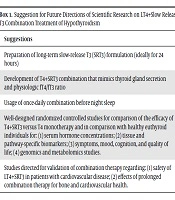
These results highlight the need for further research to establish clear guidelines for the use of levothyroxine and other thyroid hormone therapies in patients undergoing heart surgery. While some studies show promising benefits in terms of recovery and reduced complications, others suggest that thyroid hormone replacement may not significantly alter postoperative outcomes in all cases. Therefore, the precise role of levothyroxine in this context continues to be a topic of ongoing investigation.
5. Conclusions
This review explores whether levothyroxine therapy post-heart surgery can enhance cardiac performance and improve long-term survival outcomes. The evidence suggests that levothyroxine, a synthetic thyroid hormone, plays a significant role in improving cardiac function and reducing mortality in patients with hypothyroidism after heart surgery. Thyroid hormones are critical for cardiovascular regulation, influencing heart rate, myocardial contractility, and vascular resistance. Administering levothyroxine to patients with thyroid dysfunction postoperatively has been shown to stabilize hemodynamics, enhance cardiac output, and promote smoother recovery, leading to reduced ICU stays and fewer postoperative complications. These findings support the use of levothyroxine as an essential element of postoperative care for patients with thyroid dysfunction, especially those undergoing major surgeries like CPB.
Despite these positive outcomes, questions remain about the optimal duration and dosing of levothyroxine therapy. While the short-term benefits are clear, the long-term effects on cardiac function and survival need further exploration. There is also a need for more research to establish safe and effective protocols for levothyroxine use in diverse patient populations, including those with subclinical thyroid dysfunction, such as SES. Determining the appropriate dosage, timing, and long-term safety will be crucial in integrating levothyroxine therapy into broader post-heart surgery care practices. Thus, while the review supports levothyroxine’s role in enhancing recovery, more studies are necessary to fully understand its long-term impact and refine its clinical use.