
1. Background
Attention-deficit/hyperactivity disorder (ADHD) is characterized by a persistent pattern of severe inattention and/or hyperactivity/impulsivity. The estimated global prevalence of ADHD in children and adolescents has varied across recent studies but is typically in the range of 5 - 8%. ADHD symptoms are, however, etiologically and phenotypically on a continuum, meaning that many are affected at subclinical levels (1, 2). Low self-esteem is common in adolescents with ADHD symptoms and has also been related to some of the negative outcomes associated with ADHD symptoms, such as depression (3). Epidemiological studies have documented a rise in ADHD diagnoses over recent decades, with data from the U.S. National Health Interview Survey indicating an increase from 7% to 9% between 1998 and 2009 (4). Although such estimates often rely on parental reports, which may be influenced by recall bias or access to healthcare, the trend suggests growing clinical and societal awareness. In Iran, the reported prevalence of ADHD varies widely depending on diagnostic criteria and study design. A recent meta-analysis estimated the overall prevalence in Iranian children and adolescents to be between 12% and 17%, notably higher than the global average (5). Regional studies in cities such as Tehran, Shiraz, and Tabriz have reported prevalence estimates ranging from 3% to over 12%, highlighting significant variability associated with tools used, informant perspectives, and cultural perceptions of child behavior (6-8). Beyond its core symptoms, ADHD is frequently associated with functional impairments, especially in academic performance and social functioning. Children with ADHD are more likely to exhibit academic underachievement, receive lower grades, and experience school dropout (9). Socially, these children often struggle to form and maintain peer relationships, face higher rates of peer rejection, and are at increased risk of social isolation and stigma (10). The social difficulties experienced by children with ADHD are multifaceted and can include impulsive, aggressive interactions, poor emotional regulation, limited perspective-taking, and reduced responsiveness to social cues (11). These challenges may stem not only from behavioral symptoms but also from cognitive deficits, impaired self-perception, weaknesses in social information processing (12). Moreover, difficulties in peer interactions can exacerbate emotional problems and contribute to long-term psychiatric risk if left unaddressed (13, 14). Despite the well-documented social and academic challenges in children with ADHD, relatively few studies in Iran have simultaneously examined social skills and self-esteem in this population. Given the elevated prevalence of ADHD in Iranian samples and its profound impact on children’s functioning, further research is warranted to deepen our understanding of its social and psychological correlates in local contexts.
2. Objectives
The objectives of this study were to compare social skills and self-esteem between children and adolescents with ADHD and healthy peers, and to examine the association between these domains.
3. Methods
3.1. Study Design and Setting
This cross-sectional, descriptive-analytical study was conducted between March 2024 and September 2025 at the Child and Adolescent Psychiatry Clinic of Isfahan University of Medical Sciences, Iran. The study aimed to compare social skills and self-esteem in children and adolescents diagnosed with ADHD versus healthy peers.
3.2. Participants
The study population included children and adolescents aged 6-18 years. The case group consisted of patients diagnosed with ADHD according to DSM-5 criteria by a certified child psychiatrist. Participants were categorized into one of three DSM-5 ADHD subtypes: Predominantly inattentive, predominantly hyperactive-impulsive, or combined. The control group included age-matched children with no history of psychiatric diagnosis, recruited from the general pediatric outpatient clinic during routine visits. Using the formula for comparing two groups, a sample size of 100 people was determined for a 95% confidence level and 80% power, with 50 people for each group. A total of 50 participants with ADHD and 50 healthy controls were enrolled using simple random sampling. ADHD patients had been receiving pharmacological treatment (methylphenidate or atomoxetine) for a minimum of six months.
3.3. Inclusion and Exclusion Criteria
Inclusion criteria for the ADHD group were: (1) Age 6 - 18 years; (2) confirmed diagnosis of ADHD based on DSM-5 criteria; (3) written informed consent from parents and verbal assent from the child/adolescent; and (4) presence of one of the three recognized ADHD subtypes. Exclusion criteria for all participants included: (1) Comorbid psychiatric disorders using K-SADS Questionnaire; (2) chronic or serious physical illnesses potentially affecting outcomes; (3) current use of psychotropic medications other than methylphenidate or atomoxetine; (4) incomplete clinical data or questionnaires; and (5) lack of cooperation during the study process.
3.4. Study Instruments
All participants completed validated questionnaires assessing social skills and self-esteem themselves or, if they were unable to read, with the cooperation of their parents. Data were collected under the supervision of a trained clinical psychologist. The validity and reliability of the tools used had previously been established in Persian-speaking populations.
3.5. Ethical Considerations
The study was approved by the Ethics Committee of Isfahan University of Medical Sciences (Approval ID: IR.MUI.MED.REC.1404.105). Informed consent was obtained from the legal guardians, and assent was provided by the children and adolescents.
3.6. Statistical Analysis
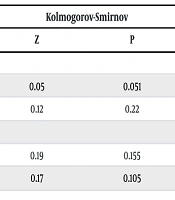
Statistical analyses were conducted using the latest version of SPSS. Descriptive statistics were reported as median with interquartile range for continuous variables, and frequencies with percentages for categorical variables. The Kolmogorov-Smirnov and Shapiro-Wilk tests were used to assess the normality of data distribution. Between-group comparisons were performed using the Mann-Whitney U test for non-normally distributed variables, and chi-square tests for categorical variables. A two-tailed P-value < 0.05 was considered statistically significant.
4. Results
4.1. Participant Characteristics
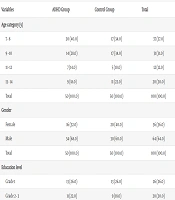
A total of 100 children participated in the study (50 ADHD, 50 controls). The mean age of participants was 9.97 ± 2.73 years, with no significant difference between the ADHD group (9.90 ± 2.73) and the control group (10.04 ± 2.77) (P = 0.800). Age distribution across the four age categories (7 - 8, 9 - 10, 11 - 12, and 13 - 14 years) was similar between groups. Males represented 68% of the ADHD group compared with 60% in the control group. Educational grade distribution did not significantly differ between groups (Table 1). Logistic regression analysis indicated that age (OR = 1.35), male sex (OR = 1.39), and educational grade (OR = 0.76) were not statistically significant predictors of ADHD diagnosis.
Table 1.
Distribution of Age, Sex and Education of Participant a
| Variables | ADHD Group | Control Group | Total |
|---|---|---|---|
| Age category (y) | |||
| 7 - 8 | 20 (40.0) | 17 (34.0) | 37 (37.0) |
| 9 - 10 | 14 (28.0) | 17 (34.0) | 31 (31.0) |
| 11 - 12 | 7 (14.0) | 5 (10.0) | 12 (12.0) |
| 13 - 14 | 9 (18.0) | 11 (22.0) | 20 (20.0) |
| Total | 50 (100.0) | 50 (100.0) | 100 (100.0) |
| Gender | |||
| Female | 16 (32.0) | 20 (40.0) | 36 (36.0) |
| Male | 34 (68.0) | 30 (60.0) | 64 (64.0) |
| Total | 50 (100.0) | 50 (100.0) | 100 (100.0) |
| Education level | |||
| Grade 1 | 13 (26.0) | 13 (26.0) | 26 (26.0) |
| Grade 2 - 3 | 11 (22.0) | 9 (18.0) | 20 (20.0) |
| Grade 4 - 5 | 13 (26.0) | 14 (28.0) | 27 (27.0) |
| Grade 6 - 10 | 13 (26.0) | 14 (28.0) | 27 (27.0) |
| Total | 50 (100.0) | 50 (100.0) | 100 (100.0) |
Abbreviation: ADHD, attention-deficit/hyperactivity disorder.
a Values are presented as No. (%).
4.2. Social Skills
Scores on the Matson Evaluation of Social Skills with Youngsters (MESSY) differed significantly between groups (Table 2). Children with ADHD had lower scores in appropriate social skills (median 70 vs. 73; P = 0.016), antisocial behavior (28 vs. 43; P = 0.001), and aggressive/impulsive behavior (29 vs. 40; P = 0.001). No statistically significant difference was observed in excessive assertiveness/self-confidence (P = 0.159). The peer relations subscale was higher in the ADHD group compared with controls (32 vs. 28.5; P = 0.026). Total social skills scores were significantly lower in the ADHD group (178.16 ± 23.98) compared with controls (199.66 ± 36.73) (Mann-Whitney U = 719.50, Z = -3.658, P < 0.001).
Table 2.
Compare Subscale and Total Scores of Social Skills on the Matson Evaluation of Social Skills with Youngsters in Two Groups a
| Subscale | ADHD Group | Control Group | P-Value b |
|---|---|---|---|
| Appropriate social skills | 70.0 (62.0 - 74.0) | 73.0 (66.7 - 79.0) | 0.016 |
| Antisocial behavior | 28.0 (22.7 - 34.0) | 43.0 (36.0 - 48.0) | 0.001 |
| Aggressive/impulsive behavior | 29.0 (23.5 - 32.2) | 40.0 (32.0 - 47.0) | 0.001 |
| Assertiveness/self-confidence | 19.0 (15.0 - 24.2) | 17.5 (12.0 - 22.2) | 0.159 |
| Peer relations | 32.0 (27.0 - 38.0) | 28.5 (20.0 - 35.2) | 0.026 |
| Total social skills scores | 178 (162.0 - 196.25) | 200.0 (180.0 - 227.25) | 0.001 |
Abbreviation: ADHD, attention-deficit/hyperactivity disorder.
a Median (interquartile range).
b Mann-Whitney U test.
4.3. Self-esteem
On the Coopersmith self-esteem Inventory, the ADHD group scored significantly lower on Social self-esteem (median 2 vs. 5; P = 0.001) and Family self-esteem (4 vs. 6; P = 0.001). No significant differences were observed in General self-esteem (15 vs. 16; P = 0.190) or Academic self-esteem (both medians = 5; P = 0.220). Total self-esteem scores were lower in the ADHD group (27.14 ± 7.09) compared with controls (31.78 ± 7.43) (Mann-Whitney U = 834.50, Z = -2.869, P = 0.004) (Table 3).
Table 3.
Compare Subscale and Total Scores on the Coopersmith Self-esteem Inventory in Two Groups a
| Subscale | ADHD Group | Control Group | P-Value b |
|---|---|---|---|
| General self-esteem | 15.0 (11.0 - 18.2) | 16.0 (12.0 - 19.0) | 0.190 |
| Social self-esteem | 2.0 (1.0 - 4.0) | 5.0 (3.7 - 6.0) | 0.001 |
| Family self-esteem | 4.0 (3.0 - 6.0) | 6.0 (4.0 - 7.0) | 0.001 |
| Academic self-esteem | 5.0 (4.0 - 6.0) | 5.0 (4.0 - 7.0) | 0.220 |
| Total self-esteem scores | 25.0 (22.0 - 33.0) | 33.0 (25.0 - 38.0) | 0.004 |
Abbreviation: ADHD, attention-deficit/hyperactivity disorder.
a Median (interquartile range).
b Mann-Whitney U test.
4.4. Correlation Between Social Skills and Self-esteem
Spearman correlation analysis revealed a significant positive correlation between total social skills and total self-esteem scores in the overall sample (ρ = 0.500, P = 0.001). This correlation was significant in the control group (ρ = 0.594, P = 0.001), but not in the ADHD group (ρ = 0.221, P = 0.124) (Table 4).
Table 4.
Correlation Between Social Skills and Self-esteem in Two Groups
| Group | Spearman’s ρ | P-Value |
|---|---|---|
| Total Sample | 0.500 | 0.001 |
| ADHD | 0.221 | 0.124 |
| Control | 0.594 | 0.001 |
Abbreviation: ADHD, attention-deficit/hyperactivity disorder.
5. Discussion
The present study demonstrated that children with ADHD scored significantly lower than healthy peers in both social skills and self-esteem domains. No correlation was found between ADHD occurrence and age, gender, or school grade. Healthy children had higher scores in appropriate social behaviors such as cooperation and communication, consistent with previous findings (15, 16). Conversely, children with ADHD showed higher scores in antisocial, aggressive, and impulsive behaviors, aligning with core ADHD characteristics and earlier studies reporting poor emotional control and peer difficulties (17, 18). Significant group differences were also found in social and family self-esteem, suggesting that children with ADHD experience lower perceived self-worth, likely due to social rejection and repeated behavioral failures. Cognitive-behavioral interventions have been shown to improve these domains (15, 16). However, no significant difference was observed in general or academic self-esteem, possibly reflecting the influence of supportive educational settings (17, 18). A positive correlation between social skills and self-esteem was found in the total sample, particularly among healthy children, supporting theories that self-esteem reflects successful social experiences. In contrast, this association was not significant in the ADHD group, implying potential moderating effects of symptom severity, comorbid disorders, or family environment (1, 19-21). The greater impairment in social skills compared to self-esteem aligns with studies highlighting social perception difficulties in ADHD (22). Reviews also support overall reduced self-esteem in this population, though its severity varies by age, symptom profile, and environment (23). These findings underscore the importance of early psychological and behavioral interventions to enhance both social functioning and self-esteem (24, 25).
5.1. Limitations
This study relied on Self-report Questionnaires, which may introduce response bias. Lack of full control for comorbidities such as anxiety or learning disorders may affect interpretation, and the limited age range restricts generalizability.
5.2. Conclusions
Overall, the results are consistent with previous literature, confirming social and emotional deficits among children with ADHD. The absence of a strong correlation between social skills and self-esteem within the ADHD group is a novel observation, suggesting complex psychosocial mechanisms that warrant further investigation.