
1. Introduction
Among the most common causes of inflammatory disorders in children is Kawasaki disease (KD). But there are many unresolved questions regarding the presentation of this condition (1). We report on the case of a child, who presented with a coronary artery aneurysm (CAA) and myocarditis, which is one of the rare presenting signs of KD.
2. Case Presentation
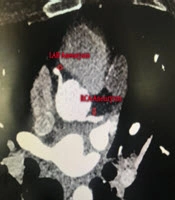
A 4-year-old girl presented with a history of fever for 2 weeks, for which she had been referred to our hospital. On admission, the child was clinically diagnosed with irritability and tachycardia. A physical examination showed that she had an axillary temperature of 38.4 ◦C, pulse rate = 168/min, respiratory rate = 23/min, and a grade III/VI systolic and diastolic murmur in the lower sternal border. Her laboratory data were as follows: Complete blood count (CBC) = 11400/ mm3 (with 55% neutrophils, 36% lymphocytes, 7% monocytes and 2% eosinophils), erythrocyte sedimentation rate (ESR) = 130 mm/h; platelet count = 738000/mm3. In the meantime, urine and blood culture reports had negative results. A twodimensional echocardiography was done, which revealed aneurysmal dilatation of the coronary arteries. High dose intravenous immunoglobulin (IVIG), 2 g/kg was administered over 12 hours infusion, and this was started along with oral aspirin 80-100 mg/kg/day in divided doses. The child responded very quickly, her fever subsided and features of myocarditis improved within 24 hours of therapy.
3. Discussion
KD, first described in 1967 (2), as an acute febrile mucocutaneous lymph node syndrome, is among the most mysterious diseases that affects children, usually this disease presents with fever and a variety of other clinical manifestations (1). Although this condition has been investigated for many years and in different research centers, there is still no diagnostic test for KD (3). So diagnosis of this disease depends on the presence of a fever for longer than a 5 day duration, in addition to 4 out of 5 signs of mucocutaneous inflammation (bilateral non-exudative conjunctivitis, erythema of the lips and oral mucosa, changes in the extremities, rash, or cervical lymphadenopathy) (3). There are many children with prolonged fever, but they do not fulfill the diagnostic criteria of classic KD. The literature supports the view that at least 10% of children with the characteristic CAA seen in KD, never actually fulfill the criteria for KD (4). In this group of patients, fewer clinical signs of mucocutaneous inflammation in the presence of fever and CAA, seems sufficient for a diagnosis of KD (5). In the study by Heuclin et al., 39 patients were identified prospectively as having confirmed or suspected KD, 33 had confirmed KD, with an incidence of 9/100000 children < 5 years old. 7 of these 33 cases had incomplete KD, which in all except one case, was confirmed with abnormalities in the echocardiogram (6). So the discovery of cardiac involvement in KD can largely resolve the diagnostic problem in incomplete cases. Nevertheless, this can lead to another question: should every case of CAA be considered as a KD. There is little differential diagnosis existing for the involvement of the coronary artery such as aneurysm or dilatation. Systemic-onset juvenile idiopathic arthritis is difficult to distinguish from KD (7, 8). When we are highly doubtful about KD, confirmatory test should be evaluated in the presence of CAA, as the only paraclinical finding in patients with prolonged fever (1). In a review of the literature, we can find a great deal of variety and sometimes unusual presentations of KD, which are not included in classic criteria, such as; acute cholestasis (9), ischemic small bowel strictures (10), multifocal lymphadenopathy (11), retropharyngeal edema (12), and facial nerve palsy (13), but CAA and myocarditis are the only manifestations and finding in childhood KD that has not reported until now and our patient seems to be the first with this type of presentation. According to our case report and the study by Heuclin et al. the use of minor criteria and an echocardiography may favor an earlier diagnosis and treatment of KD (6). In another study by Bear et al. (14) the prevalence of coronary artery lesions on the initial echocardiogram in KD was evaluated, 44% of the patients had coronary abnormalities, 31% had coronary dilatations, and 13% had aneurysms. Also, in those patients who had only a short time period between diagnosis and treatment, less severe coronary artery lesions were observed. Significant valvular regurgitation may occur in KD, but this is uncommon (5). From the study it is evident that the possibility of atypical KD should be considered whenever a child presents with prolonged fever and myocarditis in association with very high level of ESR. Echocardiographic evaluation should be carried out early to rule out coronary artery abnormality.