
1. Background
Asthma is a common disease among children with the prevalence of 7-10%. It is also the fourth most prevalent illness among adults with the rate of approximately 5% (1). Asthma is considered a reversible obstructive lung disease with symptoms of dyspnea, coughing, and wheezing in the lungs. The disease and its morbidity and mortality rates are increasing among children and the youth. From 1980 to 1996 the prevalence of asthma among children under the age of five was estimated to be more than 80%. According to a study, the prevalence of childhood asthma in Iran is 13% and in some parts of Tehran it is 35% (2). Children with moderate to severe asthma have more psychiatric, social, and physical problems (3).
Several psychiatric factors such as over expressive and borderline personality, psychiatric conditions, family environment and demographic factors such as age and gender can influence the outcome of asthma treatment. Among people with asthma, the prevalence of pain symptoms is 6.5% to 24% and this value for non-asthmatic adults is reported 1-3%. Patients with asthma may suffer from depression. Children and adults with chronic diseases more suffer from depression. The prevalence of depression symptoms among patients with chronic disease is 17-50%. It has also been shown that patients with chronic diseases and depression are less compliant with medical treatment (4, 5).
People with asthma suffer from symptoms such as wheezing, dyspnea and waking up many times during the night and these factors increase the risk of developing depression and other psychiatric conditions. Feldman et al. have shown a high prevalence of psychiatric conditions (65%) such as mood disorder and anxiety among people with asthma. They have strongly suggested that psychiatric disorder should be considered when treating children with asthma (4, 6). In a study by Afari et al. it was shown that prevalence of pain and phobia from open places is more common in people with asthma compared to ordinary society members (2).
2. Objectives
The current study aimed to evaluate hospitalized children with asthma at Masih Daneshvari Hospital, which is a referral center, by General Health Questionnaire (GHQ -28) questionnaire, and also any correlation between demographic factors, parental education, and occupation.
3. Materials and Methods
This study was observational and cross-sectional. All hospitalized children in the pediatric ward were considered as patients with asthma. Parents agreed on the participation of their children and were assured of privacy of the information. They gave informed consent and the whole project was approved in the ethical committee of the hospital. Demographic information was provided and the General Health Questionnaire-28 (GHQ-28) was completed by all children with asthma hospitalized from February 2011 to March 2013 at the center. They were interviewed by an experienced psychiatrist who is an associate professor of Shahid Beheshti University and the final diagnosis was made based on the results of the questionnaire according to DSM-IV TR criteria.
They were placed in a quiet environment and mothers’ cooperation in questioning was requested. GHQ-28 questionnaire has 28 questions provided by Goldberg and Hillier. It is one of the useful questionnaires to evaluate mental health, or psychological distress and has four subscales including somatic symptoms, anxiety and sleep disorders, social function, and depression symptoms. Somatic symptoms include some pains or injuries in body. Anxiety and sleep disorders include stress, agitation, and problems in normal sleep. Social function includes the behavior in the society. Depression symptoms include down mood (7). This questionnaire has four sections to evaluate depression, anxiety, sleep disturbance, and social functioning and is scored based on Likert scale (0-3 from not at all to more than usual) for each question and a higher score for the total questionnaire is associated with more possibility of psychiatric illness (8). Researchers believe that the higher the score, the more severe the symptoms are (9). This questionnaire is sensitive to mood disorders but scoring has shown to be influenced by factors such as gender and socio-economic status (10).
Studies performed in Iran have used the questionnaire 28-item version. In a study conducted in 2007, 204 individuals above 50 years old were randomly selected and they filled out the Persian version of the questionnaire. The Cronbach’s alpha for the total questionnaire was 0.89 and the coefficient of reliability of the questionnaire was 0.58 which was acceptable. Considering the area under the ROC curve method of estimation, score 19.20 or higher was considered in the illness range and had sensitivity of 0.83 and specificity of 0.78 as a diagnostic tool (11).
Results of another study performed in Iran by Dr. Emami et al. indicated the prevalence rate of depression among high school students as 20%, ,with a depression score of seven or more by statistical inference (34% girls and 24% boys). In this study the 12-item GHQ questionnaire was used (12). There were 177 subjects who were in appropriate mental status to answer the questions and had not been treated with psychiatric medications prior to suffering from asthma. The accessible sampling method was employed and 177 subjects were accessible during the performance of the project. The sample size was sufficient for the observational and cross-sectional design. Participants with sufficient education completed the questionnaire by themselves. Pulmonary function tests were performed according to the patient charts.
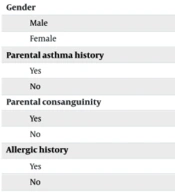
The data obtained from the questioners and the demographic information were analyzed by the SPSS ver.16 software. Distribution of patient characteristics were summarized in Table 1 and Correlation between variables was investigated by T and chi-square tests.The participants’ parents signed an informed consent prior to the study, and the whole project was approved in the Ethics Committee of the hospital and was in accordance with the World Medical Association Declaration of Helsinki.
4. Results
Mean age of participants was 10 ± 4 years and 117 (66%) subjects were girls and 60 (34%) were boys. Incidence of depression was 45%, using the GHQ-28 questionnaire with a cut-off score of 19, and 64.5% and 35.5% of the subjects were boys and girls respectively. Parental education did not have significant correlation with the mental disorder in the children. Significant correlation existed between questionnaire score and social function, weight, and height of children (P > 0.05). Significant correlation was also found between social functioning and gender (P =0.023) (Table 2). Among parents of children with psychiatric disturbance 2.6% smoked and abused drugs to the same extent, 53.9% and 46.1% of children with depression were born naturally and by cesarean respectively. Total questionnaire score and section scores were correlated (P < 0.001) (Table 2). The demographic information and questionnaire results are summarized in Tables 1 and 3.
Table 1.
Demographic Information a
| Variable | Information |
|---|---|
| Age, y | 10 ± 4 |
| Height, cm | 133 ± 18 |
| Weight, kg | 31 ± 12 |
| Gender | |
| Girl | 117 (66) |
| Boy | 60 (34) |
| Education | |
| Illiterate | 34 (19) |
| Primary school | 95 (54) |
| Junior high | 44 (25) |
| Diploma | 4 (2) |
| Residence | |
| Central Tehran | 100 (56) |
| Periphery of Tehran | 13 (8) |
| Suburbs of Tehran | 64 (36) |
| Second hand smoke exposure | |
| Yes | 3 (2) |
| No | 174 (98) |
| Contact with drug abuse | |
| Yes | 2 (1) |
| No | 175 (99) |
| History of allergies | |
| Yes | 175 (99) |
| No | 2 (1) |
| Kind of birth | |
| Natural | 101 (58) |
| Caesarian section | 76 (42) |
Table 2.
Correlations a
| Correlations | Weight of Children | Height of Children | Social Function | Gender | Section Scores |
|---|---|---|---|---|---|
| Social function | No | No | No | Yes | No |
| Total questionnaire score | Yes | Yes | Yes | No | Yes |
Table 3.
Scores of the Questionnaire a
| GHQ-28 Scores | Mean ± SD |
|---|---|
| Depression | 6 ± 4 |
| Sleep | 4 ± 4 |
| Anxiety | 7 ± 4 |
| Social interaction | 1 ± 3 |
| Total | 19 ± 12 |
| Incidence of depression based on GHQ-28 | |
| Scores < 19 | 93 (55) |
| Scores ≥ 19 | 76 (45) |
5. Discussion
The incidence of depression among hospitalized children with asthma was 45% much higher than that of the general population (1-5%) (5-18 years healthful children and adolescents) (13). There was no significant difference in incidence of psychiatric disorders based on the kind of birth, although prevalence of depression was higher among natural birth patients, which requires more attention, it is considerable that birth trauma has been associated with worse outcomes in some psychiatric disorders such as schizophrenia. As a result, it is recommended to consider the psychiatric disorders at the same time that the asthma is being treated.
A study was conducted on psychiatric illness among the patients with asthma in Kuwait in the years 2004-2005. Participants were 102 patients aged 20 - 60 years old. Patients with other chronic illnesses such as diabetes, high blood pressure, cardiac disease and overweight were excluded from the study. The study and control groups were similar regarding age, gender and nationality. Results showed that 68.6% of the study and 22.5% of the control group subjects were in the psychiatric illness range (14).
A study in Turkey evaluated psychiatric illness among 100 children with asthma aged 6-16 years and 50 healthy children. In this study 67% of the patients were boys and 33% girls. Mean age for both groups was 10.2 years. The children with asthma were then divided into two groups of younger than five and older than five. Results showed that anxiety and depression occurs more frequently in the children with asthma compared to the control (15).
In 2008 a study was performed in Canada to evaluate the correlation between sleep and mood and behavioral difficulties in children. In this study 5781 children and their parents completed questionnaires and among them 496 kids had chronic pulmonary disease. There was no significant difference in sleep patterns of the patients and those of the control group. Yet, children with lung diseases noted longer periods of waiting before falling asleep and more episodes of night waking (16). During teenage years when children advance through adolescence and particularly when hospitalized, they have difficulty complying with their treatment. Among the adolescents with chronic diseases, 10-40% lack of treatment compliance has been reported (17).
Children with asthma and lower resilience, and children whose parents are rigid and restrictive have significantly more depression (18). The children with asthma, anxiety, and affective disorders have poorer self-esteem, fewer activities and worse social competence (19). Emotional disorders in the children with asthma are associated with pathogenic maternal family relationship patterns (20). Children need to be assessed for the requirement of support regarding anxiety and depression status (21). As hospitalized children with asthma increase demonstrating emotional difficulties, or they are from dysfunctional families, they are more likely to experience negative psychological changes (22). The self- image, coping with stressful situations and family interaction are lower in children with asthma (23). Psychological interventions are effective for significant improvements of health related quality of life in children with asthma (24). Children with asthma are at a greater risk for psychopathology (25). The presence of anxiety or depressive disorders is highly associated with increased asthma symptom burden for the youth with asthma (26). There is a temporal relationship between depression and asthma-related emergency department visits (27). High-risk adolescents with asthma may be more likely to experience psychological distress than the ones without asthma (28). Adolescents with allergies or asthma are at risk for experiencing higher rates of depressive and anxious symptoms (29). Children who have asthma/bronchitis by the age of five are at greater risk of having internalizing behavior problems in adolescence (30). Lower levels of parent participation in the child asthma disease are associated with higher levels of depressed mood in children (31). Severity of asthma is also related to increased emotional difficulties in children (32). Mothers of asthmatic children also are prone to psychiatric symptoms (33). In fact, significant percentages of asthmatics have anxiety and depression (34).
Considering the above discussion, limitation in the sample size and only a single hospital for evaluation in the current study, it is hoped that further studies will be performed to consider the mentioned issues.