1. Background
Prevalence of constipation ranges from 0.7% to 29.6% in systematic reviews of the literature. In a review of visits to the gastroenterology clinic during one year, prevalence of children referred for evaluation and treatment of constipation was 11%, the second after gastroesophageal reflux (1, 2).
There is no structural, endocrine or metabolic etiology in most conditions and is called idiopathic or functional constipation (3).
This wide variation of prevalence in literature may be due to lack of consensus in diagnostic criteria. There has been an effort to standardize terminology of childhood constipation and create a consensus on the definition of defecation disorders. Even though, several international guidelines, such as NASPGHAN (4), PACCT (5), and ROME III (6) accepted to provide criteria for definition of constipation, none of them have been worldwide used in clinical practice or research yet.
Overall 6 to 12 months recovery rate of constipation in children was found to be 58.9%, but there is a large variation ranging from 36.0% to 98.4% among the included studies (7-11). Interpretation of these large variation recovery rates is probably due to heterogeneity of studies regarding study populations, definitions of constipation and outcome measures used. These studies emphasized the chronic nature of constipation in children, contrary to the common belief that children outgrow constipation and the need for ongoing management.
2. Objectives
Despite its common and benign nature, constipation can cause significant distress to parents. Therefore, this study was performed to investigate the response and recurrence rate after treatment with polyethylene glycol alone versus polyethylene glycol plus lactulose in children with chronic functional constipation.
3. Patients and Methods
This was a randomized clinical trial study on all children with functional constipation (aged 1 - 12 years) referred to pediatric outpatient service of Nemazee Teaching Hospital in Shiraz, Iran, from March 2012 to February 2013 during a 12-month period.
Diagnosis of functional constipation was based on the 2006 ROME III criteria. Children with organic causes of constipation including Hirschsprung΄s disease, spina bifida occulta, hypothyroidism, chronic intestinal pseudo-obstruction, anorectal abnormalities, history of anorectal/colon surgery, non-retentive fecal incontinency, and taking concomitant medications which could modify bowel habit were excluded from the study. Children and their families were recruited by two authors, but all children were assessed by one of the authors. All parents gave a written informed consent.
Two hundred patients were eligible for the study and divided randomly by random block of four, into two therapeutic groups. Group I (n: 100) was treated with PEG without electrolyte at maximum dose (0.7 g/kg /day, 13.8 - 40 g/day), twice daily and group II (n: 100) received PEG without electrolyte at maximum dose (0.7 g/kg /day, 13.8 - 40 g/day), twice daily and lactulose, maximum dose twice daily (3 cc/kg/day). No more treatment for constipation was allowed during the study.
At the first appointment, a detailed questionnaire was reviewed with parents including name, gender, age, family history for constipation, duration of constipation, previous treatment, diet, frequency/size/consistency of stool defecated, frequency of painful defecation, fecal incontinency per week, presence of an abdominal fecal mass and/or rectal mass and anal fissure on physical exam.
Children with fecal impaction were disimpacted with suppository bisacodyl (2.5 mg/daily/ < 5 years of age and 5 mg/daily > 5 years) for 3 - 5 days (12) and then started laxative therapy.
Dietary advice given and toilet training discussed face to face and in pamphlets. Parents were provided with written instructions regarding how to adjust the dosage of medication. Parents were instructed to keep a stool diary during the study, recording each bowel movement’s amount and consistency, episodes of fecal incontinence, abdominal pain, flatulence, painful defecation, diarrhea, feeling of bloating, and medication use. Parents’ verbal reports were accepted. Return clinic visits were planned at 1, 3, 6 and 12 months after starting the treatment. At each visit, history was assessed, stool diaries were reviewed and physical examination was performed. Laxative dosage adjustment, toilet sitting and reward system were discussed and parents were encouraged to come for a follow-up visit.
Children were treated with the maximum effective dosage of PEG or lactulose + PEG allowing for a ≥ 3 bowel movement weekly, ≤ 2 episodes of fecal incontinence per month without abdominal pain (improvement criteria); small changes every 3 days were recommended. The improved patients (in the last month more than three bowel movements per week, fewer than two fecal incontinence episodes per month and had no abdominal pain) from both treatment groups followed up for 12 months and recurrence rate (fecal incontinence > 2 episodes per month and recurrent impaction) was evaluated. Loss of follow-up was 5% in group I and 10% in group II (P = 0.07). Factors attributed to loss of follow-up monitoring included low income (two cases), unhappiness with the treatment that improvement was too slow (four cases), side effects attributed to lactulose (seven cases) and fear of permanent damage of laxatives to the bowel in long-time use (two cases).
Lactulose and PEG used in this study were obtained from Tolid Darou and Sepidaj Pharmaceutical companies respectively. The study protocol was approved by the institutional review board of Shiraz University of Medical Sciences. Collected data were entered excel and analyzed using appropriate descriptive statistics. Comparisons between the two treatment groups were performed using Mann-whiney U test and chi-square test. Results expressed as mean ± SD or percentage. P value < 0.05 was considered statistically significant SPSS 18 (SPSS Inc., Chicago, IL, USA).
4. Results
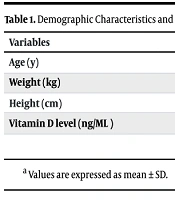
Two hundred children aged 1 to 12 years (6.5 ± 3.1 years) with functional constipation were enrolled. One hundred were in group I and one hundred in group II. There were no significant differences regarding demographic data and recorded baseline characteristics between the two groups (Table 1).
Table 1. Baseline Patient’s Characteristics a
| Variable | Groups | ||
|---|---|---|---|
| PEG | PEG/Lactulose | P Value | |
| Gender | 0.06 | ||
| Female | 42 | 55 | |
| Male | 58 | 45 | |
| Age onset of constipation, y | 4.4 ± 2.5 | 4.4 ± 2.2 | 0.62 |
| Mean duration of constipation, y | 2.2 ± 1.9 | 3.1 ± 1.8 | 0.61 |
| Positive family history, % | 28 | 26 | 0.75 |
| Fecal impaction, % | 72 | 73 | 0.87 |
| low dietary fiber, % | 58 | 65 | 0.13 |
| Fecal incontinence | 16 (8) | 11.6 (5) | 0.54 |
| Taking laxative before study,% | 49 | 60 | 0.12 |
aData are presented as mean ± SD or No. (%).
Adverse effects such as abdominal pain, diarrhea, and flatulence were seen in 15% of patients treated with lactulose in group II, but not seen with PEG. Toileting and high dietary fiber were seen after treatment in 56.4% and 86% of patients in group I, and 47.6% and 76% of patients in group II (P 0.26 and P 0.07). Response rate was 70% in group I and 87% in group II (P 0.003). At 12 month follow-up, recurrence rate was 15.9% (11) in group I and 10.3% (8) in group II (P 0.3). According to Table 2, there were no significant differences regarding response rate to treatment and gender, positive family history, mean duration of constipation and high dietary fiber.
Table 2. Association Between Response Rate and Gender, Positive Family History, Mean Duration of Constipation and High Dietary Fiber a
| Variable | Groups | |||||
|---|---|---|---|---|---|---|
| Group 1, of 70 Improved Patients | Group 1, of 30 Without Improved Patients | P Value | Group 2, of 87 Improved Patients | Group 2, 0f 13 Improved Patients | P Value | |
| Gender | 0.86 | 0.61 | ||||
| Male | 29 (41) | 13 (43) | 47 (54) | 8 (61) | ||
| Female | 41 (58) | 17 (56) | 40 (45) | 5 (38) | ||
| Positive family history | 24 (34.3) | 4 (13.3) | 0.32 | 23 (26.4) | 3 (23.1) | 0.79 |
| Mean duration of constipation, mo | 24.8 ± 23 | 32.6 ± 23.3 | 0.05 | 17.23 ± 13.2 | 23.9 ± 22.4 | 0.06 |
| High dietary fiber | 87.1 (61) | 25 ( 83.3) | 0.61 | 65 (74.7) | 11 ( 84.6) | 0.43 |
aData are presented as mean ± SD or No. (%).
In group I, of 75 improved patients (> 2 years old) 33 (61.1%) had toileting and of 24 patients (> 2 years old) without improvement, 11 (45.8%) were cooperative (P = 0.20). In group II, of 75 improved patients (> 2 years old), 36 (48%) had toileting and of 9 patients (> 2 years old) without improvement, 4 (44.4%) were cooperative (P = 0.84).
In group I, 5 (15.2%) of improved patients (> 4 years old) were incontinent and 3 (17.6%) of patients (> 4 years old) without improvement were incontinent (P = 0.82). In group II, 4 (10.5%) of improved patients (> 4 years old) were incontinent and 1 (20%) of patients (> 4 years old) without improvement were incontinent (P = 0.53).
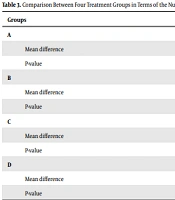
As shown in Table 3, there were no significant differences regarding recurrence rate and gender, positive family history, mean duration of constipation and high dietary fiber.
In group I, of 27 (79.4%) patients (> 4 years old) without recurrence, 23 (85.1%) had not fecal incontinence and of 7 (20.6%) patients (> 4 years old) with recurrence, 5 (71.4%) had not fecal incontinence (P = 0.39). In group II, of 37 (91.9% > 4 years old) patients (> 4 years old) without recurrence, 31 (91.1%) had not fecal incontinence and of 3 patients (> 4 years old) with recurrence, 2 (66.6%) had not (P = 0.19).
Table 3. Association Between Recurrence Rate and Gender, Positive Family History, Mean Duration of Constipation and High Dietary Fiber a
| Variable | Groups | |||||
|---|---|---|---|---|---|---|
| Group 1, of 58 Patients Without Recurrence | Group 1, of 11 Patients With Recurrence | P Value | Group 2, of 70 Patients Without Recurrence | Group 2, of 8 Patients With Recurrence | P Value | |
| Gender | 0.37 | 0.32 | ||||
| Male | 34 (58.6) | 8 (72.7) | 31 (44.2) | 5 (62.5) | ||
| Female | 24 (41.3) | 3 (27.2) | 39 (55.7) | 3 (37.5) | ||
| No Positive family history | 38 (65.5) | 8 (72.7) | 0.64 | 52 (74.2) | 8 (10.3) | 0.96 |
| Mean duration of constipation, mon | 23.74 ± 21.64 | 34.27 ± 30.44 | 0.17 | 27.27 ± 23.37 | 36.13 ± 18.33 | 0.11 |
| No high dietary fiber | 7 (12) | 3 (27) | 0.18 | 14 (20) | 3 (37.5) | 0.25 |
aData are presented as mean ± SD or No. (%).
5. Discussion
This research investigated the response and recurrence rate after treatment with polyethylene glycol alone versus polyethylene glycol plus lactulose in children with chronic functional constipation. Lactulose is a non-absorbable disaccharides, which breaks down in the colon by bacteria into short-chained fatty acids, which causes an increase of peristaltic movements and water retention in the intestine. Common side effects of this sugar are flatulence, abdominal cramps and bloating. Many patients also dislike the sweet taste of lactulose syrups. Polyethylene glycol hydrates stool, increases its volume, decreases the duration of the colon passage and very rarely causes flatulence, bloating and abdominal cramps compared with lactulose (13).
The mean age onset of constipation in this study was 4.3 ± 2.3years. Similar data showed that most children develop constipation around 2 - 4 years of age (14). In this study, gender had no effect on the prevalence of constipation. In some, but not all studies, prevalence of constipation in prepubertal males is higher than females (15-17), which is in line with our cases. It means that there is no consistent effect of gender on the prevalence of childhood constipation, but in adulthood, constipation is three times more common in women than men (18).
In a study in Hong Kong, positive family history was found in 14% of children with constipation, which is significantly higher than the control group (29% in our cases) (19).
Totally, 54.5% of our patients had unsuccessful treatment when referred to us. Delayed or inadequate intervention may result in functional fecal incontinence, which is the most obvious complication of constipation.
Fecal incontinence affects 2.8% of 4-year-old children, 1.5% of 7 to 8 year old children and 1.6% of 10 to 11 year-old children. In a study by Loening-Baucke et al. this prevalence was 4.4% in children aged 4 to 17 years. In another study, 68% of boys and 52% of girls of children with constipation, presented with fecal incontinence (9, 20, 21). In our study, 14% of 4 to 12 years old children with constipation were incontinent. Low dietary fiber consumption has long been considered as one of the leading risk factors for constipation. Available studies from Asia showed that fiber consumption in Asian countries (22, 23) is lower than the recommended values. The present study showed that a significant percent of our children with constipation (65%) consume less amount of dietary fiber. Previous clinical trials failed to show significant improvement of bowel habits after fiber treatment compared to placebo and traditional treatments such as lactulose (24, 25).
Since symptoms reported such as abdominal pain, bloating and flatus were seen only in group II, we can conclude that these symptoms are due to lactulose. Delayed diagnosis of constipation can increase the risk of complications and making the problem more difficult to management. In a systematic review of children included in a specialist setting, a better response to treatment (70.8 ± 16.8%) was shown than children in general pediatric departments (54.1 ± 15.6%) (7). This finding is somewhat surprising, since children with constipation referred to a tertiary center more likely have a more severe form of constipation. On the other hand, children seen in specialist settings may receive more aggressive treatment than children in general pediatric settings. Another study showed that early identification and management of constipation result in better treatment response and outcomes (9). Because rectal distension and insensitivity due to withholding behavior, fecal impaction and prolonged constipation affect the outcome. It is acceptable that therapeutic response is better in short-term duration of chronic constipation.
Two studies (7, 9) showed no significant association between a positive family history in children with constipation and recovery rate. Moreover, conflicting evidences exist on the prognostic value of gender, fecal incontinence and behavior modification. In our study, factors such as positive family history for constipation, sex, diet with low fiber, toileting, and fecal incontinence did not significantly contribute to success rate of treatment in the both groups, but it was lower in those children with high mean duration of constipation in group II and borderline in group I. The present study showed that the group II (PEG + Lactulose) had higher therapeutic response rate than the group I (PEG) at first month of treatment (P 0.003), but at 12 month follow-up, recurrence rate had no significant difference between the two groups.
This study did not provide insight on the prognostic value of fecal incontinence, positive family history, gender, high dietary fiber, and toileting on therapeutic response and outcome. Nevertheless, larger studies are needed to identify prognostic factors in childhood constipation.
In our study, constipated children treated with PEG plus lactulose had higher therapeutic response rate after the first month of treatment, resulted in increased reliance of parents to physician, which is necessary for compliance in long-term treatment of constipation. Consequently, primary aggressive treatment of constipation improves outcome. We could not demonstrate superior efficacy of PEG plus lactulose over PEG alone in 12 months follow-up. Therefore, switching lactulose plus PEG cocktail to PEG alone would result in an improvement in compliance of patients for long-term treatment and would be cost effective.