
1. Background
Idiopathic overactive bladder syndrome (IOAB) is a common cause of urinary incontinence. As defined by the International Continence Society, IOAB is characterized by the presence of urinary urgency, often with urinary incontinence, increased frequency (> 8 voids per da), and nocturia (interruption of sleep ≥ 1 time to urinate) (1). When the amount of urine in the bladder is low, involuntary contractions of detrusor muscle begin and cause urgency (2). NDO usually results from spinal cord injury, stroke, multiple sclerosis, and other neurological diseases (3-5). But in most cases, the overactive bladder has an idiopathic cause (6). Urinary symptoms due to NDO, in particular urge urinary incontinence, affects health-related quality of life (HRQOL) of the patients adversely (7). In fact, it has been reported that patients suffering from urge urinary incontinence, have very low quality of life compared to some chronic diseases including diabetes and cardiac conditions (8). Conservative treatments include scheduled urination (time voiding), limited use of stimulating foods and fluids, behavioral therapy, and pelvic floor muscle training (9, 10). In the absence of appropriate response to the mentioned treatments, pharmacotherapy with anticholinergic drugs is the next step. Although these drugs reduce urinary frequency, they have several side effects that prohibit the patients to take them for long time (11). Dry mouth, blurred vision, constipation, increased pulse rate, hypertension and tachycardia are the most side effects of the anticholinergic drugs (12). Injection of botulinum toxin into the detrusor muscle is performed for several years. Injection of botulinum toxin into the bladder for treatment of neurogenic bladder was approved in 2011 and for the treatment of urinary incontinence was approved in 2013 by the FDA. Various studies have shown that injection of OnabotulinumtoxinA into the bladder wall is useful in women who have overactive bladder and do not respond to pharmacotherapy. Injection of botulinum toxin into the bladder, even in women with recurrent overactivity, interstitial, and chronic bladder pain syndrome are usefull (13, 14). Following a single injection of OnabotulinumtoxinA, its therapeutic effects remain for about 8 to 11 months, and after this time there will be a need for re-injection (15). OnabotulinumtoxinA is produced from a Gram-positive non-aerobic bacterium and is a suitable alternative for patients who are unable to tolerate anticholinergic drugs. Botulinum toxin injection prevents the release of a chemical agent called acetylcholine, which is responsible for muscle contraction and consequently a temporary paralysis is created that persists for three to six months.
2. Objectives
The purpose of this study was to determine the effect of botulinum toxin type A injection on the quality of life (QOL) and symptoms of female patients with NDO and urge urinary incontinence.
3. Methods
3.1. Study Population
The study population included 25 women with urge urinary incontinence referred to our academic medical center for management of their condition in 2018. The study was approved by Ethics Committee of Kermanshah University of Medical Sciences .The inclusion criteria were menopause married women patients older than 50 years of age, body mass index (BMI) of 20 to 29 kg/m2, three or more episodes of urge urinary incontinence per day, urinary frequency > 8 times per day in at least three days according to frequency volume chart, Patients had been inadequately managed by anticholinergic drugs (insufficient efficacy or intolerable side effects), residual urine volume of 100 cc or lower, and physical and mental ability to perform clean intermittent urinary catheterization (CIC) post procedure if necessary. Exclusion criteria included psychiatric disorders, dominance of stress urinary incontinence, large uterine masses, previous bladder surgery and history of chronic urinary tract infections (UTIs).
3.2. Study Design
Initially, the patients’ demographic data including age, previous delivery status (number and type of delivery), duration of urge urinary incontinence, frequency of urge urinary incontinence per day, urination frequency at night (nocturia), and duration of anticholinergic use were recorded in a data collection form. Urge urinary incontinence diagnosis was confirmed by urodynamic study and frequency volume chart. Urinalysis was performed to rule out bacterial cystitis. The anticoagulant was stopped 5 to 7 days before procedure. Prophylactic antibiotic (1 g cefazolin) was administered for patients 30 minute before procedure. Intradetrusor botox injection was performed in surgery room with mild intravenous sedation.
3.3. Surgical Technique
Onabotulinumtoxin typeA was injected intradetrusor in 0.5 mL through cystoscopy at 20 points with 1 cm distance, avoiding the trigone. A total approximate dose of was 200 units. The distance between injection points was 1 cm and the injection depth was 2 mm. The injections were done under general anaesthesia. Foley catheter was remained for 6 hours after procedure. Patients participated in the study for 6 months. Then, a urinary diary (frequency volume chart) was delivered to the patients to document urination frequency per day and at nighttime.
3.4. Outcome Assessment
The follow up of the patients was done to assess the effect of treatment on urinary symptoms and quality of life one and six months after the injections. The quality of life was assessed using the incontinence quality of Life (I-QOL) questionnaire. This questionnaire yields total score (0 - 100) as well as three domains including avoidance and limiting behavior, psychosocial, and social embarrassment. The reliability and validity of this questionnaire has been verified in patients with neurogenic urinary incontinence (16). The Persian version of this questionnaire has been previously studied in Iranian population and its validity and reliability were confirmed (17). Additionally, the occurrence of complications (urinary retention, urinary tract infection, hematuria, and dysuria) was also investigated.
3.4. Statistical Analyzes
The Kolmogorov-Smirnov (KS) test was performed to check the normal distribution of the data. To measure the quantitative variables (urinary retention, frequency of urinary incontinence episodes, and frequency of urination at night), one and six months after the injections, the repeated measure test was used. The Friedman test was used to compare qualitative variables. The McNemar test was used to compare the complications of treatment at one and six months follow up. To compare the quality of life before, 1 and 6 months after injection, the paired t-test or Wilcoxon test was used. A significance level of 0.05 was considered. The data were analyzed by SPSS software (Ver. 22.0, IBM).
3.5. Ethics
The study protocol was approved by Ethics committee of Kermanshah University of Medical Sciences, Kermanshah, Iran. Firstly, the study details and objectives were explained to the patients. Then, written informed consent was obtained.
4. Results
4.1. Demographic Features
Twenty Five postmenopausal women with OAB and urge urinary incontinence were included in the study. Table 1 presents mean age of the patients was 59.44 (± 7.63) years (range = 50 to 69 years). Mean BMI of the patients was 27 (± 3.1) kg/m2. All patients had normal (natural) delivery in their previous deliveries. Mean (± SD) duration of urge incontinence was 24.33 months (± 10.33). (range = 3 months to 4 years). All patients had a history of anticholinergic use. Mean (± SD) duration of taking anticholinergic drugs was 12.33 (± 10.43) months.
Table 1.
Baseline Demographic and Clinical Characteristics
| Values | |
|---|---|
| Mean age | 59.44 ± 7.63 |
| Mean BMI, kg/m2 | 27 ± 3.1 |
| Mean duration UUI, mo | 24.33 ± 10.33 |
| Mean duration anticholinergic use | 12.33 ± 10.43 |
4.2. Urinary Retention and Symptoms
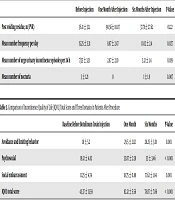
Table 2 presents post voiding residue (PVR), urge urinary incontinence episodes per 24 hours, and nocturia frequency at baseline (before botulinum toxin injection) and at 1 and 6 months following the injections. According this study, PVR did not change significantly. However, significant reduction was seen in episodes of urge incontinence and nocturia at 1 and 6 months following the botulinum toxin injections.
Table 2.
Urinary Symptoms and Urge Incontinence Before and 1 and 6 Months After Intradetrusor Injection of OnabotulinumtoxinA 200 U
| Before Injection | One Month After Injection | Six Months After Injection | P-Value | |
|---|---|---|---|---|
| Post voiding residue (PVR), m | 36.11 ± 32.1 | 90.56± 10.07 | 37.78± 27.62 | 0.122 |
| Mean number frequency per day | 15.25 ± 3.31 | 8.87 ± 2.47 | 10.12 ± 2.4 | 0.027 |
| Mean number of urge urinary incontinence episodes per 24 h | 7/25 ± 3.31 | 2.87 ± 2.10 | 3.12 ± 1.4 | 0.019 |
| Mean number of nocturia | 3 ± 1.21 | 0 | 1 ± 1.9 | 0.007 |
4.3. Quality of Life
Table 3 presents IQOL total scores at baseline and at follow up time-points. As observed, IQOL total score increased significantly at 1 and 6 months of follow-up. This trend was also observed in the domains of QOL. Mean IQOL total scores at one month of follow up was significantly higher than baseline values (P = 0.002). This was also seen regarding total score of the IQOL at six months compared to baseline values (P = 0.003).
Table 3.
Comparison of Incontinence Quality of Life (IQOL) Total Score and Three Domains in Patients After Procedure
| Baseline Before Botulinum Toxin Injection | One Month | Six Months | P-Value | |
|---|---|---|---|---|
| Avoidance and limiting behavior | 18 ± 5.2 | 29.5 ± 2.82 | 28.25 ± 3.01 | 0.001 |
| Psychosocial | 19.12 ± 4.82 | 33.87 ± 2.58 | 33 ± 3.46 | < 0.001 |
| Social embarrassment | 11.25 ± 4.74 | 18.75 ± 0.88 | 17.62 ± 1.84 | 0.001 |
| IQOL total score | 43.37 ± 13.59 | 82.12 ± 5.56 | 78.87 ± 7.86 | < 0.001 |
4.4. Complications
Two patients (8%) developed UTI, which improved with ciprofloxacin. One patient had urinary retention, which improved with clean intermittent catheterization over a week. No other side effects of the injections were reported during the follow-up period.
5. Discussion
Urge urinary incontinence is defined as the complaint of involuntary leakage immediately preceded by urgency. A common health problem, especially in elderly women, which not only causes physical problems, but also causes psychological, social, and economic problems. Urinary incontinence has been shown to negatively impact quality of life (QOL) (8).
Based on the presented results, after detrusor injection of botulinum toxin type A, average number of urinary incontinence episodes decreased significantly. This observation persisted at six month follow-up.
In a former study on 43 women with urinary incontinence (18), the authors compared injection of 200 units of botulinum toxin into a bladder detrusor muscle with placebo injection. About 60% of the intervention group responded to the injections and their urinary symptoms improved. The mean response time to treatment was 373 days in the treated group with toxin. In another study, at 3 months follow-up, urinary incontinence symptoms decreased significantly following onabotulinumtoxin A (8).
Botulinum toxin (BONT neurotoxin) is produced from the Gram-positive anaerobic bacteria and is not a suitable alternative for patients who are unable to tolerate anticholinergic drugs. The neurotoxin molecule of the toxin is composed of two chains. Botox injections prevent the release of a chemical mediator called acetylcholine, which is responsible for muscle contraction at the injection site.
In a previous study (8), Patients tolerated the injections of the toxin well. Improvement, regarding urinary frequency and need for urinary catheterization, was seen. Cruz et al. (19) in their study divided patients with overactive neurogenic bladder, such as multiple sclerosis and spinal cord injuries, into three groups and subcutaneously injections with 300 units and 200 units of botulinum toxin as well as a placebo group. At the end of 6 weeks, both groups who received 200 and 300 units of botulinum toxin demonstrated better outcomes regarding urinary frequency episodes compared to placebo group.
According to the current results, injection of botulinum toxin improved QOL of the patients. Besides urinary symptoms, QOL has also gained attention in research studies as a pivotal factor when evaluating the effectiveness of botulinum toxin use for urge urinary incontinence. The findings of this study with regards to beneficial effect of botulinum toxin injection for QOL are in agreement with previous study (20). According to Hsiao et al. (21), female gender was the only independent factor associated with the success of OnabotulinumtoxinA intravesical injection for overactive bladder, and they hope to compare botox intravesical injection between men and women with high sample volumes in the future. In our study all patients were female and botox injection was performed only with detrusor. Emami et al. (22), evaluated injection of onabotulinumtoxinA in trigone and bladder neck/ prostatic urethra in addition to detrusor. She confirmed multifocal injection provides better symptoms relief and urodynamic findings in patients with idiopathic detrusor overactivity. Greater reductions in OABSS score and less residual urine volume was occurred , but a lower volume at urgent desire to void in comparison with detrusor only injection has seen (22). Our study showed that OnabotulinumtoxinA treatment improved overall satisfaction with good effects in a urinary frequency ,urge incontinence, relationships, sleep and travel. Treatment reduced the patient’s embarrassment in the family and society.
5.1. Limitations
We faced some limitations in this study. Firstly, we did not include a placebo group. So comparison with placebo effect was not amenable here. Secondly, as the number of patients was relatively low, further subgroup analyses to evaluate the effect of age and duration of NDO was not possible.
5.2. Conclusions
Onabotulinumtoxin A detrusor injection significantly reduces urge urinary incontinence and frequency as well as improvement of their QOL. These effects were observed in the first and sixth months after procedure. In the sixth month, the effect of treatment was less than the first month but more than before treatment.