
1. Background
Living with people suffering from a mental health condition is accompanied by several difficulties, such as drug resistance, drug regimen maintenance, painful behaviors, sleep disturbances, aggression, suicide threats, addiction, patient morbidities, and disease-related weaknesses. Additionally, environmental stressors experienced by the caregiver, such as stigma and shame, financial problems, family conflicts, judicial problems, treatment and rehabilitation costs, the provision of occupation for the patient, social isolation, and lack of social support, are pervasive among families with mentally ill patients (1).
According to research, relatives of individuals with mental disorders are more likely to exhibit psychological and physical illness symptoms (2). Around 40 and 55 percent of family members who care for a chronic mental patient experience psychological problem, such as depressive symptoms, anxiety, adaptive disorders, and mental weakness. Families of mentally ill patients also report experiencing physical disorders such as headaches, backaches, migraines, heart attacks, and shortness of breath (3). Additionally, research has demonstrated that the variety and intensity of caregiving roles may result in psychological issues for patients’ families. If these family caregivers are left untreated, their mental health and mental well-being will deteriorate significantly to the extent that they will be considered hidden patients (4).
A decline in the family’s mental health and well-being will disrupt the family’s function and role. This may eventually result in insufficient patient care, the patient being abandoned, and worsening the problem of homeless mental patients. The patient is more likely to relapse and be readmitted if the patient’s family is experiencing tension while psychological issues are in place. According to research conducted in the Iranian context, relapse and readmission of patients are common phenomena that impose massive costs on the healthcare system and diminish the quality of services provided to these patients (5). Consequently, addressing the mental well-being and mental health of the families of chronic mental patients is a necessary and undeniably significant issue.
The notion of well-being is used as a general mental health term in the psychology literature. Approximately sixty years ago, the World Health Organization (WHO) defined health as a state of complete physical, mental, and social well-being as opposed to a mere absence of illness (6). Beyond the absence of disease and disability, health is a multidimensional concept that encompasses well-being, quality of life, and other facets of positive psychology. Mental well-being has been introduced as the optimal human function (7). According to empirical research, several cultures regard mental health as the most significant part of life; they also believe it to be the greatest desire and the most important goal of human existence, which affects mental health more than any other factor (8).
Mental well-being is a psychological construct formed not by the events that occur to individuals but by how they perceive and react to those events (9). As such, mental well-being is one of the most significant dimensions of personal experiences considered by positive psychologists, as it refers to how individuals evaluate their own lives. These judgments include both cognitive assessments (life satisfaction) and emotional evaluations (positive and negative emotions and feelings) (9). Well-being has been defined as a “positive and stable state of mind” that enables individuals to take action to achieve success and progress (10).
Mental well-being is an essential aspect of people’s health, with a profound impact on both mentally ill patients and their families. Inattention to this notion results in various mental and physical disorders and diseases for the patient’s families and caregivers; hence, the necessity of intervening and enhancing the mental well-being of the families of chronic mental patients. In this respect, logotherapy is an appropriate method and intervention.
In the introduction to his 1984 book, Man’s Search for Meaning, Gordon Alport correctly asserts that logotherapy is the most significant psychological movement of our time and the most profound notion after propositions (11). The ontological purpose of life is to create meaning (12). The view that logotherapy offers about humans is founded on three tenets: Life has meaning under all circumstances; our primary motivation for living is our desire to find meaning in life; and we have the freedom to find meaning in life (13). The three main pillars of logotherapy are the meaning of life, the freedom of will, and the will for meaning (8, 11, 13). Frankl’s psychotherapy primarily refers to the concept of humans and the philosophy of life. The philosophy of the meaning of life begins with the fundamental belief that life has an unconditional meaning that cannot be lost under any circumstances (8). In other words, life has meaning even in the worst circumstances. According to Frankl, one of the principles of understanding the meaning of life is attitudinal values, that is, a meaningful way of looking at life’s adversities. Although humans cannot change their inevitable fates, they can choose their response to adversity.
The existential and spiritual approaches, specifically logotherapy, manifest themselves with Viktor Frankl. A careful examination, however, reveals that the Eastern elders and mystics had been writing about such notions for centuries before Frankl (14). Maulana Jalaluddin Mohammad Balkhi (Rumi) is one of the most influential individuals who has exerted great effort in this regard and placed meaning at the core of his thinking, actions, and speech in terms of both human opinion and action. He was unceasingly searching for meaning by investigating and utilizing every aspect of existence. Additionally, he extended the invitation to meaning to each and every person. Rumi viewed himself as a fish that never grew tired of water, and as such, Rumi was a teacher of meaning (15).
In keeping with the tenets of logotherapy, Rumi considers suffering to be an inward and relative phenomenon, holding that one can gain mastery over their pain through the illumination of insight, comprehension, and meaning. The insightful and profound words of Rumi regarding responsibility, freedom of will, search for meaning, and addition of meaning to life, pain, suffering, and ignoring suffering, human’s attitude and perspective toward troubles, love, self-exaltation, relationship with God, and other existential concerns are consistent with Frankl’s psychotherapy concepts. These notions are also commensurate with the type and magnitude of problems families of the chronic mental patients face.
The present study was inspired by findings from comparative studies, the compatibility of Frankl’s theories and concepts of logotherapy with the mystical ideas of this great poet and mystic, and the World Health Organization’s approach to achieving health. In addition, the current research was driven by the need to develop and implement coherent programs based on acceptable cultural and indigenous methods that are compatible with the context. This being said, the current researcher developed a logotherapy educational program based on the mystical thoughts of this great poet and mystic. In fact, Rumi’s views and the story “The King and the Maid” provide ample evidence of this cultural and indigenous perspective (16).
“Very gently, he said (to her), “Where is thy native town? For the treatment suitable to the people of each town is separate. And in that town, who is related to thee? With what hast thou kinship and affinity?” (16).
There is no evidence in the literature of a study investigating the effectiveness of logotherapy based on Rumi’s ideas on the mental health of the families of chronic mental patients. However, the results of this study are implicitly consistent with the findings of research elsewhere demonstrating the efficacy of logotherapy on Well-being and psychological health. Noruzi et al. (14), concluded that both logotherapy based on Rumi’s thoughts and acceptance and commitment therapy raise psychological well-being and its components in older adults. In addition, the results revealed no significant difference between the efficacy of logotherapy and acceptance and commitment therapy in improving the mental well-being of older adults.
Given the complexity of the factors that influence mental health and the need for a wide range of theoretical explanations in this area, the researcher chose to explore the nurturing effects of a logotherapy educational program inspired by Rumi’s ideas on the mental well-being of the families of chronic mental patients.
2. Objectives
The research examines the central hypothesis: A logotherapy educational program based on Rumi’s thoughts affects the mental well-being of the families of chronic mental patients.
3. Methods
3.1. Subjects
The study is a controlled semi-experimental study with a pretest-posttest design. Aim of the current study was to examine the efficacy of a logotherapy educational program based on Rumi’s thoughts on the mental well-being of the families of chronic mental patients. The study was approved by the Ethics Committee of Sanandaj Branch, Islamic Azad University, Sanandaj, Iran (reference number: IR.IAU.SDJ.REC.1400.055).
The statistical population comprised families of all chronic mental patients (aged 18 to 60) who resided in Kermanshah’s rehabilitation and maintenance facilities for chronic mental patients in 2020.
Recommendations for the minimum sample size for experimental and quasi-experimental studies are 15 individuals per group (17). However, for the research to have high external validity and avoid generalizability issues due to possible attrition, n = 16 individuals were recruited for each group. One facility was selected randomly to serve as the research sample cent, and 32 eligible family members of chronic mental patients were chosen using the convenience sampling method and were randomized to experimental and control groups (n = 16 per group).
The inclusion criteria comprised the provision of informed consent, age between 18 and 60 years, a middle school level of education or higher, non-use of psychiatric drugs or psychotherapeutic interventions since six months before recruitment, absence of a specific physical disease (such as disability or epilepsy) that prevented participation in the program, and absence of a diagnosis of mental disorders according to the fifth edition of the Diagnostic and Statistical Manual of Mental Disorders. The exclusion criterion was a refusal to continue participation.
3.2. Procedure
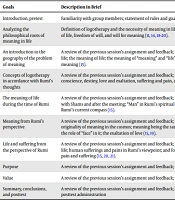
First, the logotherapy educational program based on Rumi’s ideas was designed and developed (Table 1). Upon receipt of the necessary approvals and following the ethical considerations and research conditions, the random sample was selected with the collaboration of Kermanshah’s Welfare Organization and the rehabilitation and maintenance facilities. In order to select candidates, motivational interviews were conducted (as regards responsibility, ability to cooperate in and beyond sessions, eligibility, confidentiality, study goals and agreement on terms and time of sessions). When the research sample was selected, a treatment agreement with informed consent was drafted between the participants and the therapist. A mental well-being questionnaire was subsequently administered to the experimental and control groups as a pretest. Afterward, upon invitation, members of the experimental group attended ten 90-minute sessions held twice weekly as part of the training program. One week after the training sessions concluded, the posttest was administered to both study groups using the same questionnaire as the posttest. Incomplete questionnaires were excluded, and only perfectly responded questionnaires were utilized. To comply with ethical considerations, eight group counseling sessions were held for members of the waiting list group at the conclusion of the study. Analysis of covariance (ANCOVA) was employed to assess the significance of the program’s effect.
Table 1.
The Structure of the Logotherapy Educational Sessions Based on Rumi’s Thoughts
| Sessions | Goals | Description in Brief |
|---|---|---|
| 1 | Introduction, pretest | Familiarity with group members; statement of rules and goals; pretest administration. |
| 2 | Analyzing the philosophical roots of meaning in life | Definition of logotherapy and the necessity of meaning in life; three pillars of logotherapy: the meaning of life, freedom of will, and will for meaning (11, 14, 18-20). |
| 3 | An introduction to the geography of the problem of meaning | A review of the previous session’s assignment and feedback; the range of fields related to the meaning of life; the meaning of life; the meaning of “meaning” and “life”; and different attitudes to the problem of meaning (15). |
| 4 | Concepts of logotherapy in accordance with Rumi’s thoughts | A review of the previous session’s assignment and feedback; search for meaning, freedom, responsibility, conscience, destiny, love and exaltation, suffering and pain, and way of attitude (14, 15, 19, 21). |
| 5 | The meaning of life during the time of Rumi | A review of the previous session’s assignment and feedback; the core of meaning in life before Rumi met with Shams and after the meeting; “Man” in Rumi’s spiritual geometry; and the geometry of meaning in Rumi’s current compass (15). |
| 6 | Meaning from Rumi’s perspective | A review of the previous session’s assignment and feedback; Frankl, a citizen of the city of Rumi; the originality of meaning in the cosmos; meaning being the same as God; the way to deal with meaning and the role of “face” in it; the exaltation of love (15, 19). |
| 7 | Life and suffering from the perspective of Rumi | A review of the previous session’s assignment and feedback; the limits and pitfalls of life; the purpose of life; human sufferings and pains in Rumi’s viewpoint; and focus on patience and tolerance in the face of pain and suffering (15, 20, 21). |
| 8 | Purpose | A review of the previous session’s assignment and feedback; meaning as purpose (15). |
| 9 | Value | A review of the previous session’s assignment and feedback; meaning as value (15). |
| 10 | Summary, conclusions, and posttest | A review of the previous session’s assignment and feedback; summary and conclusion of the sessions; posttest administration |
3.3. Research Tools
3.3.1. Warwick-Edinburgh Mental Well-being Scale
The 14-item Warwick-Edinburgh Mental well-being Scale was developed by Tennant et al. (22) way back in 2007 to measure Mental well-being. In Iran, Rajabi (23) has validated it as a tool for measuring the Mental well-being of cancer patients. This 12-item scale has three components: Optimism (6 items; questions 1, 2, 3, 8, 10, 14), positive relationships with others (3 items; questions 4, 7, 9), and vigor (3 items; questions 5, 6, 11). Two items have been removed during validation in the Iranian version of this scale.
On a Likert scale, respondents respond to questions such as “I am optimistic about the future”. The total score of each subscale is derived by adding the scores of the items that make up that subscale. To calculate the overall score of the questionnaire, the scores of all items will be added, and the score range will be between 12 and 60. The higher the score on this questionnaire, the greater the level of mental well-being, and vice versa.
This scale’s Cronbach’s alpha coefficient has been 0.89 for a student sample and 0.91 for the general population; its retest reliability coefficient (with a one-week interval) has been 0.83. The correlation test has revealed that its concurrent validity is also high and significant (23). Cronbach’s alpha coefficient was 0.97 in the present study, indicating the scale’s good reliability.
Clarke et al. (24) reported a Cronbach’s alpha coefficient of 0.87 for this scale. In addition, they determined that the test-retest reliability was 0.66 and that the correlation between the total score and the individual items ranged from 0.20 to 0.80. Several correlation coefficients have been mentioned between the Warwick-Edinburg Mental well-being Scale and other scales, including 0.59 with the Psychological well-being Scale, 0.65 with the Mental Health Continuum Short Form, 0.57 with the World Health Organization-Five well-being Index, and 0.40 with the 12-item General Health Questionnaire, as well as the one-factor model fit. Stewart-Brown et al. (18), noted a correlation of 0.95 between the 14-item scale and the 7-item Warwick-Edinburgh Mental well-being Scale.
3.4. Structure of the Intervention
The package and charter of the logotherapy educational program were developed based on the ideas of Rumi as expressed in his poems and prose works, as well as the books describing these works (11, 19). The researcher collected relevant articles (14, 21) and other works of authors under the guidance of supervising and advising professors, extracted meaning-oriented concepts and ideas, and designed and developed a logotherapy educational program based on Rumi’s ideas. Table 1 details the structure of the educational program.
4. Results
Descriptive indices (mean and standard deviation) for the research variables were computed both overall and separately (Table 2).
Table 2.
Descriptive Analysis of the Dependent Variable by Group
| Stages | Logotherapy Educational Program Based on Rumi’s Thoughts (Mean ± SD) | |
|---|---|---|
| Experimental (N = 16) | Control (N = 16) | |
| Pretest | 42.81 ± 4.49 | 40.750 ± 3.531 |
| Posttest | 51.125 ± 3.964 | 38.438 ± 5.621 |
In the posttest phase, the mean mental well-being score of the experimental group increased, as displayed in Table 2. The pretest and posttest results of the control group were not significantly different. Therefore, the logotherapy training program based on Rumi’s thoughts contributes to mental well-being. Analysis of covariance (ANCOVA) was implemented to determine whether or not this effect was significant at the 95% confidence level. First, the test’s assumptions were examined:
4.1. Assumptions for ANCOVA
- Independence of the members of the two groups: Neither members of the control group nor members of the experimental group are members of the other group.
- The normality of the score distribution: The Kolmogorov-Smirnov test is used to examine this condition. The test results are presented in Table 3.
Table 3.
Kolmogorov-Smirnov Test Results for Research Variables by Group
| Stages and Normality Test Results | Logotherapy Educational Program Based on Rumi’s Thoughts | |
|---|---|---|
| Experimental | Control | |
| Pretest | ||
| Test statistic | 0.171 | 0.212 |
| Significance level | 0.2 | 0.053 |
| Posttest | ||
| Test statistic | 0.185 | 0.163 |
| Significance level | 0.148 | 0.2 |
In probability theory, the normal distribution is one of the fundamental continuous probability distributions. This is primarily due to the role of the normal distribution in determining the central limit. In fact, as the number of samples increases, the central limit’s distribution will approach that of the normal distribution. The assumption of parametric tests is the normality of the distribution of variables. However, a normal distribution is not required; a non-normal distribution can be justified in the case of a large sample size and the absence of severe skewness. This research employed the "Kolmogorov-Smirnov" test to examine the distribution of variables. As shown in Table 3, the significance levels for both variables in both groups at the pretest and posttest stages are greater than the error value of 0.05, indicating that the null hypothesis holds. In other words, as per the study phase, the dependent variable data are typically distributed in both groups.
- Homogeneity of variances: This assumption’s index is included in the output of the analysis of variance test; however, its results are presented separately in Table 4.
Table 4.
The Result of Levine’s Test for Homogeneity of Variances
| Type of Intervention | Research Variables | Levene’s Test Result | |
|---|---|---|---|
| P-Value | F | ||
| Logotherapy educational program based on Rumi’s thoughts | Mental well-being | 0.257 | 1.334 |
As seen in Table 4, the significance value for Levene’s test is greater than 0.05; therefore, the null hypothesis assuming homogenous variances is not rejected; instead, it can be concluded that the variances in the two groups are homogenous.
- Administration of pretest at baseline: Before the commencement of the educational program, the pretest was administered to both groups.
- Regression slope: In order to demonstrate the homogeneity of the regression slope, the F index of the covariant-dependent variable interaction must be significant in both groups. Table 5 displays the result of confirming this default. This assumption holds that the relationship between the dependent variable and the auxiliary random variable is linear, leading to parallel regression lines.
Table 5.
Interaction Test Between the Educational Program Based on Rumi’s Thoughts and Mental Well-being Pretest
| Source of Variation | Sum of Squares | df | Mean of Squares | F | Significance Level | Effect Size |
|---|---|---|---|---|---|---|
| Intercept | 1533.334 | 1 | 1533.334 | 33.375 | 0.001 | 0.544 |
| Group | 173.748 | 1 | 173.748 | 3.782 | 0.062 | 0.119 |
| Posttest | 176.387 | 1 | 176.387 | 3.839 | 0.060 | 0.121 |
| Group* posttest | 78.242 | 1 | 78.242 | 1.703 | 0.203 | 0.057 |
| Error | 1286.386 | 28 | 45.942 | |||
| Total | 1286.969 | 31 |
As depicted in Tables 4 and 5, the F values of the interaction between the educational program and the pretest in terms of the mental well-being variable are 0.005 and 1.730, and the significance levels are 0.944 and 0.203, respectively. Since the significance is less than 0.05, the alternative hypothesis is rejected, and the null hypothesis, which is the homogeneity of the regression slopes, is supported.
Hypothesis: An educational program based on Rumi’s thoughts contributes to mental well-being.
According to the covariance analysis (sig. < 0.05; F = 30.813), the educational program significantly impacts mental health. In other words, the difference in the level of psychological well-being between the control and experimental groups was caused by the logotherapy program, with no effect attributable to the pretest (Table 6). This effect is approximately 50.7% in size. Therefore, the researcher’s hypothesis is confirmed with a 95% level of confidence. The experimental group’s mean baseline (mean = 42.813) and posttest scores (mean = 51.125) demonstrate an increase in mental health over time.
Table 6.
The Result of the Mental Well-being Posttest Influenced by the Educational Program Based on Rumi’s Thoughts
| Source of Variation | Sum of Squares | df | Mean of Squares | F | Significance Level | Effect Size |
|---|---|---|---|---|---|---|
| Experimental group | 508.037 | 1 | 508.037 | 27.426 | 0.001 | 0.486 |
| Error | 537.194 | 29 | 18.524 | |||
| Total | 1090.969 | 31 |
5. Discussion
The findings of this study indicate that an educational program based on Rumi’s ideas can significantly impact the mental well-being of the families of chronic mental patients, as confirmed by the covariance table (sig. < 0.05, F = 30.813). In other words, the difference in the level of mental well-being between the study groups was caused by the logotherapy program and not the pretest (effect size = 50.7%).
This finding was consistent with the findings of Noruzi et al. (14). Therefore, the finding may serve as a justification for applying logotherapy based on Rumi’s ideas in conjunction with psychological rehabilitation programs to improve the mental well-being of the family members of chronic mental patients.
Rumi has a more profound and elevated view of “the meaning of life”. In addition to the two well-known associated aspects, namely “purpose of life” and “value of life,” a more profound and expansive meaning can also be understood (15). The essence of Rumi’s thought is the presence of the Soul (divinity), upon which the existence of all souls depends, similar to how our bodies rely on air and water. Thus, the essence of Rumi’s thought is “Allah”.
“Why set your heart on a piece of turf, O simple man? Seek out the source which shines perpetually”.
“The Reality is Allah,” said the Shaykh, (who is) the sea of the spiritual realities of the Lord of created beings (16).
In this interpretation, the distinction between “God” and “meaning” is crucial. God is meaning, and meaning is God. In other words, everything of significance in the cosmos, from king to kingdom, from the natural to the divine, is God. Nothing else in all dimensions and levels of existence possesses meaning (15).
Rumi views the Soul as the protector of human life, and as such, he ascribes to Him the provision of meaning and healing. With the Soul, our soul will be life-creating because He is the creator of life. A human soul sees to the Soul (20). At the beginning of the Masnavi, Rumi attributes the laments and wails of the soul, as well as the cause of human suffering, to the soul’s separation and distance from the Soul (20). The researcher’s model is a psychotherapeutic approach inspired by Rumi’s ideas; it sees life as a meaning-giving foundation (life-creating) that plays a genuine and decisive role in hope and the well-being of the body because the soul is connected with the Soul.
“As the worth of the body is (derived) from the soul, (so) the worth of the soul is (derived) from the radiance of the Soul of souls”.
“Choose the love of that Living One who is everlasting, who gives thee to drink of the wine that increases life” (16).
According to an existential ontological explanation, the despair experienced by the family of chronic mental patients is caused by existential issues such as separation from the Soul, time infliction, or a lack of dynamism. Teaching this concept to the family members of mentally ill patients introduces the idea that the spiritual dimension of man is added to the “sublime place of control” (11). The family of chronic mental patients rests in God’s safe haven as “There is no tranquility but by the remembrance of God” (Quran: Chapter Rab’d: Verse 13) and “There is no peace except in the retreat of truth” (16). Thus, the family caregivers provide solace for the spirit, with mental well-being being the outcome.
Moreover, with attention to, trust in, and focus on God, with secure and affectionate attachment to the Soul, which has made their soul life-creating, caregivers can better overcome their stress and discomfort, leading to their higher mental well-being. This training successfully revitalized families through love. Indeed, as Rumi puts it, “Love’s kingdom came, and I came to be the kingdom of eternity”.
“Hail, our sweet-thoughted Love —thou that art the physician of all our ills” (16).
In the shadow of love, every flaw is completely eradicated, and all etiologies, pains, and problems vanish. This theory is also evident in the works of Victor Frankl. As he states, “Love is the highest and ultimate aspiration of humanity” (13). Thus, this passion is one of the effects of love that has led to the improved mental well-being of the families of patients with chronic mental illness.
Also incorporated into the logotherapy package based on Rumi’s ideas was the reality of human existence on earth. Existence is infused with inevitable afflictions. There are concepts and meanings behind human suffering. In the Qur’an, God reveals, “Indeed, I created man in adversity” (Chapter Balad: Verse 4). Consequently, a logotherapy educational program based on Rumi’s ideas instills in the families of chronic mental patients the tolerant human way of thinking, highlighting that many maladies and woes are inevitable and that human life has always been accompanied by pain and suffering. In this manner, the family of chronic mental patients deals with mental stress with a meaningful attitude, their search for meaning is awoken, and the tragic concepts of suffering and guilt acquire meaning from this viewpoint. As a result of these concepts, resilience, adaptability, and effective coping, and consequently, mental comfort and well-being, are enhanced. Rumi encourages the families of mentally ill patients to accept pain and suffering and to seek its meaning.
“When an afflicted person has perceived the (true) interpretations (reasons) of his pain, he sees the victory: How should the pain vanquish him?” (16).
The caregivers recognized upon realizing the significance of creating meaning that the primary purpose of life is not to avoid pain and suffering. In doing so, they were able to lessen the emotional and mental strain brought on by caring for a loved one with mental illness and reach a state of acceptance.
Overall, the training and its consolidation drew families of chronic mental patients to existential concepts and issues. If a matter is deemed existential, it will, as such, be illuminated (20). They learned to adopt an appropriate attitude (correction of perspective), mindfulness (de-thinking), style of acceptance, patience, and tolerance (paradoxical intention), resulting in the birth of meaning, freedom, and responsibility in life. This accomplishment allowed them to control their life circumstances mentally and prevented the development of neurogenic neurosis.
Our culture has employed Rumi-inspired metaphors and allegories for centuries. Therefore, families of chronic mental patients in our culture have a greater acceptance and comprehension of them. Furthermore, these cultural metaphors and allegories have increased the ability of chronic mental patients’ families to make sense of their sufferings, demonstrating its effectiveness as an intervention. Moreover, as an integral part of the treatment, the family of mentally ill patients enjoyed optimal mental health and well-being, which provided the patients with the necessary emotional, social, and psychological support and led to the family playing a more significant role in the care of the patient. This would reduce the likelihood of patient relapse and readmission.
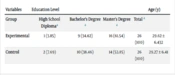
A limitation of the study is that the study groups were not matched in terms of gender, educational level, and socioeconomic status. It is recommended that this research be conducted in other communities so that the generalizability of the results and the efficacy of this therapeutic approach can be discussed with greater precision and confidence. It is suggested that additional works by Islamic, mystic and Iranian thinkers be used to develop psychotherapy models. In addition to mental well-being, the model’s efficacy can be evaluated on other psychological parameters. Lastly, this study can serve as a guide and method in the field of culture-based counseling and psychotherapy, as well as a guide for researchers who desire to develop a model from indigenous and mystical sources.
5.1. Conclusions
Our culture has employed Rumi-inspired metaphors and allegories for centuries. Therefore, families of chronic mental patients in our culture have a greater acceptance and comprehension of them. Furthermore, these cultural metaphors and allegories have increased the ability of chronic mental patients’ families to make sense of their sufferings, demonstrating its effectiveness as an intervention. Moreover, as an integral part of the treatment, the family of mentally ill patients enjoyed optimal mental health and well-being, which provided the patients with the necessary emotional, social, and psychological support and led to the family playing a more significant role. Lastly, this study can serve as a guide and method in the field of culture-based counseling and psychotherapy, as well as a guide for researchers who desire to develop a model from indigenous and mystical sources.