1. Background
One of the important challenges of teachers in classrooms is to focus students' attention on subjects and help them learn. The important question is, what factors affect the academic activities and learning of students? Academic engagement is one of the factors affecting students' academic progress (1).
In recent years, the study of the concept of academic engagement in academic and work environments has been the focus of a large group of researchers. Since the realization of great progress experiences in academic situations requires responding to different levels of motivating and challenging content and assignments, using the concept of engagement in academic environments is a defensible idea. Engaging students and drawing attention to problems has always been one of the key challenges in education. Inadequate student involvement in academic activities in the classroom and at school is likely to lead to academic failure, which can have a negative impact on academic and professional futures (2). Strong empirical evidence shows the necessity of high academic engagement of students in combating the increasing growth rate of dropping out of school around the world (3).
Academic engagement is a multidimensional structure conceptualized in different ways by different theorists and taking into account different dimensions (4). The concept of academic engagement refers to the quality of effort a student makes to achieve a given academic goal, and in order to directly achieve acceptable results, the concept is commonly referred to as metacognitive It focuses on the role of self-awareness in researching and shaping ideas. Self-regulation is emphasized (5). Scientific engagement includes an emotional component (enjoyment and interest in the task at hand in an academic setting), a cognitive component (mental readiness to study a range of subjects), and a behavioral component (a attendance and compliance with the rules of the educational environment) (6).
Students with high academic commitment exhibit positive traits. They attend school regularly and are making good progress in school. Low academic engagement leads to lack of creativity and initiative, and reluctance to give up on homework when faced with academic challenges (7).
On the other hand, during each academic year, teenagers spend part of their time in the school complex. Therefore, what is important is to understand how school is evaluated, as it is related to school satisfaction. Satisfaction with school or academic satisfaction provides a cognitive assessment of the quality of life at school (8). Several factors affect students' academic satisfaction, some of which are personal and some are environmental (9). According to the conducted studies, there is a significant relationship between academic satisfaction and elements such as students' interactions with each other and the teacher, types of material and spiritual support, student freedom, the quality of educational technology and also the level of self-efficacy of students (10).
The concept of satisfaction is an inner experience that includes the presence of positive emotions and the absence of negative emotions. Academic satisfaction includes the student's perception of educational programs, the conditions necessary for studying, as well as the teacher's behavior and guidance (11). Satisfaction with school or academic satisfaction as a cognitive-emotional evaluation is considered to be overall satisfaction with classroom and school experiences and an important aspect of the personal well-being and quality of life of adolescents, a positive attitude and mental well-being towards school and a person's mental and cognitive evaluation of the perception of the quality of life (12). This evaluation includes goals and standards related to specific areas of life in class and school, namely academic learning, teacher-student relationships, emotional experience of school life, course value and life experiences in the learning program (13). Academic satisfaction is an influential structure in the course of education, which includes students' perception of educational programs, the conditions necessary for studying, as well as teacher's behavior and guidance (14).
Academic satisfaction of students, in addition to individual consequences for students themselves, can be effective in the growth and improvement of the educational system of any society. Therefore, the structure of academic satisfaction can be an indicator of the success of the educational system and even at the level of higher education, it can be an indicator of the success rate of universities (15). Researches conducted in the field of academic satisfaction strengthen its positive value and consider this variable as a facilitating factor in the learning process, education in higher grades and job performance in the future (16).
Therefore, considering the importance of academic engagement and the place of academic satisfaction and the challenges facing the educational system, students are always at risk of academic failure due to unfavorable educational conditions.
2. Objectives
This research aims to answer the question of whether the educational program predicted based on the model is effective on the academic satisfaction of female students in the second year of high school?
3. Methods
This research is part of applied research in terms of purpose and in terms of methodology it is part of experimental designs of pre-test, post-test and follow-up with control group. For the relevant model (extracted from the first phase of research (17)), a training program was designed and the experimental group was taught during different sessions, and the results of this training were evaluated in three stages of the test and compared to the control group. The statistical population of the research was all the students of the third grade of the second period of high school in the 1st and 2nd districts of Sanandaj city in the academic year of 2022 - 2023.
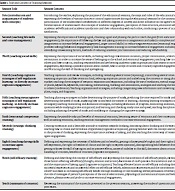
After distributing the academic satisfaction questionnaire among the third grade students of one of the randomly selected schools and identifying the students with low academic satisfaction, 40 of those students were selected using a random sampling method. They were replaced randomly in two groups of 20 people, experimental and control. First, the students of both experimental and control groups were justified for cooperation and a pre-test was held for both groups. The experimental group was taught ten 90-minute sessions of the program based on academic engagement. In the process of developing an educational program based on academic engagement, first the theoretical topics of academic engagement and the variables in the model proposed by the researchers (17) were re-examined and studied, and then their research background was carefully examined and related researches were considered according to the include and exclude criteria. which includes (1) the degree of influence of related variables on predictive and mediating variables, (2) the ability to teach those variables, and (3) the existence of an educational program related to them that has already been approved by experienced researchers and professors). Finally, the educational program was reviewed and approved by 10 educationl psychology experts in a expert pannel. In Table 1, the title and content of educational sessions based on academic engagement are presented.
Table 1.
Title and Content of Training Sessions
| Session Title | Session Content |
|---|---|
| First (introduction and acquaintance of students with concepts) | Introducing the teacher, explaining the purpose of the educational sessions, the steps and rules of the educational sessions, expressing the freedom of various choices or control opportunities during the educational sessions for the constructive participation of the students with involvement in different degrees of activity and direct influence on the agent's engagement, familiarization of students with the concepts of academic engagement, perception of class structure, emotional self-regulation, academic self-efficacy and academic satisfaction and their relationship with each other, conducting a pre-test of academic satisfaction. |
| Second (teaching life skills and time management) | Expressing the importance of having a goal, choosing a goal and phasing the path to reach the goal (from indicators of cognitive engagement), the importance of following the law and paying attention to assignments and tasks (to complete and complete assignments to increase behavioral engagement), anger control skills ( to reduce negative emotions (emotional engagement) and problem solving (behavioral engagement); Task management training to increase behavioral engagement including prioritizing, identifying time-wasting factors, methods of reducing academic procrastination and reducing self-disability. |
| Third (teaching social skills) | Expressing the importance of social skills, including teaching conversation initiation, proper continuation, active listening, and termination in order to increase the sense of belonging to the school and emotional engagement; teaching how to demand from others and how to say no, teaching responsibility and performing academic tasks in groups and class teams to increase behavioral engagement, expressing a positive opinion about oneself, how to accept criticism and criticize (cognitive engagement), explaining and Practicing the skill of thanking and apologizing. |
| Fourth (teaching cognitive strategies of self-regulation learning - to directly increase cognitive engagement) | Teaching repetition and review strategies, including rereading several times (repeating), transcribing several times (repeating), repeating important and key terms out loud, selecting important points and underlining the contents or using phosphorescent marker; teaching the strategies of semantic expansion and expansion, including the use of mediators, mental imagery, the method of places, keywords, keywords, note taking, summarizing, marking and annotations, analogies and teaching the learned material to others (conference). Teaching organizational strategies, including categorizing new information and converting textbooks into plans, maps, and diagrams. |
| Fifth (teaching metacognitive strategies of self-regulation learning - to directly increase cognitive engagement) | Teaching planning strategies includes determining the purpose of study, predicting the time required for study and learning, determining the speed of study, analyzing how to deal with the subject of learning, choosing learning strategies (cognitive strategies); teaching monitoring and evaluation strategies, including evaluation of progress, monitoring attention, asking questions while studying (active occupation) and learning and checking study time and speed; teaching discipline strategies including adjusting the speed of study and modifying or changing the cognitive strategy. |
| Sixth (emotional competency training) | Expressing the possible risks and benefits of emotional reactions, becoming aware of emotions and their motivating factors, as well as naming emotions, teaching emotion management methods to increase emotional engagement. |
| Seventh (strategic thinking training) | Creating motivation and a favorable attitude in students towards thinking, discussing about thinking and the way of thinking, teaching how to create and formulate a hypothesis (cognitive occupation), getting familiar with the concept and role of curiosity in the process of thinking, expressing the importance and way of asking, and also teaching the correct way of reasoning to increase agent engagement. |
| Eighth (teaching daring skills to increase agent engagement) | Defining and expressing the necessity of boldness and its benefits, getting to know people's rights and their rights (the right to self-expression, the right to freedom of choice and the right to express opinions), distinguishing bold behaviors from aggression, getting to know the skill of saying no and its positive effects, causes of inability in this skill, discussion about criticism and proper handling of criticism, benefits of criticism (cognitive occupation). |
| Ninth (self-efficacy training) | Defining and describing the concept of self-efficacy and expressing the characteristics of self-efficacy people, investigating the three factors affecting self-efficacy (thought, emotion and action). Awareness of one's positive characteristics and competencies and the importance of having a goal (cognitive occupation). Teaching effective factors on self-efficacy including dominant or successful experiences and its powerful effect on self-efficacy beliefs, substitution experiences and the contribution of observing others' successes in increasing self-efficacy beliefs through modeling or role modeling, verbal persuasion or verbal persuasion and the role of messages of person's perceptions of the social environment, physiological and emotional states and feelings of pleasure, pleasantness and pride to increase emotional engagement. |
| Tenth (summary of contents) | Reviewing the summary of the materials presented in the previous sessions, answering the students' questions and holding the post-exam. |
During this period of training, the students of the control group did not receive training. Then the post-test was performed for both groups. After two months, a follow-up test was performed. The members of both groups completed the Students' Life Satisfaction Scale (SLSS) in all three stages of pre-test, post-test and follow-up. This scale includes 7 items and the scoring method is done in a 5-point scale (1 completely disagree to 5 completely agree) and the range of scores is between 7 and 35. Lent et al. (18) have reported the reliability of this scale using internal consistency of 0.86 and 0.87, and its validity has also been verified through correlation with academic resistance, life satisfaction and other cognitive-social variables. In Hashemi et al.'s research (19), Cronbach's alpha and Spearman-Bron's classification methods were used to determine the reliability of this scale, which was 0.82 and 0.77, respectively. In this study, Cronbach's alpha coefficient was 0.76. Finally, the data were analyzed using the mixed variance analysis method and SPSS-25 software version 25. We use the mixed analysis of variance test when there is both an intergroup factor (at least two groups) and an intragroup factor (each group has several observations).
Therefore, considering that in this research we had two groups (experimental and control) and for each group, there were three observations (pre-test, post-test and follow-up), this test is a suitable test because in addition to examining the effect of the factors (group effect and time effect) also examines their interaction. Before performing this test, it is necessary to check its assumptions including normality of data distribution, equality of error variances and equality of covariance matrices between groups.
In order to comply with ethics in the research, after the completion of the intervention and the implementation of the follow-up test, 2 training sessions of the program based on academic engagement were also presented to the control group. Also, other ethical considerations, including the preservation of private information of individuals, were observed.
4. Results
The mean and standard deviation of the total age of the experimental and control group students were 17.21, 0.649, 17.11 and 0.612, respectively. Also, the average and standard deviation of their total GPA (Grade Point Average) in the last report for the experimental and control groups were 18.13, 0.841, 18.02, and 0.826, respectively. Descriptive information related to academic satisfaction is presented in Table 2. Descriptive findings in this table show that the average scores of the post-test and the follow-up of the academic satisfaction variable have changed compared to the pre-test, but no noticeable changes are observed in the control group.
Table 2.
Mean and Standard Deviation of Academic Satisfaction by Experimental and Control Groups
| Tests and Groups | Academic Satisfaction, Mean ± SD |
|---|---|
| Pre-test | |
| Experimental | 15.10 ± 3.12 |
| Control | 14.95 ± 2.98 |
| Post-test | |
| Experimental | 26.90 ± 4.02 |
| Control | 14.80 ± 3.04 |
| Follow-up | |
| Experimental | 23.55 ± 3.76 |
| Control | 14.60 ± 3.11 |
The results of the Shapiro-Wilk test to check the normality of the data distribution in the research variables are presented in Table 3. According to the results of this table, the Z value obtained in the academic satisfaction variable is not significant (P < 0.05). Therefore, the assumption of normality of data distribution has been respected.
Table 3.
Shapiro-Wilk Test Results to Check the Normality of Data Distribution
| Variables | Steps | Significance Level Statistics | Significance Level | ||
|---|---|---|---|---|---|
| Experimental Group | Control Group | Experimental Group | Control Group | ||
| Academic satisfaction | Pre-exam | 0.489 | 0.494 | 0.398 | 0.401 |
| Post-exam | 0.464 | 0.490 | 0.91 | 0.92 | |
| Follow up | 0.473 | 0.489 | 0.94 | 0.98 | |
Table 4 shows the results of Levin's test to check the equality of error variances in the three times of the academic satisfaction test. As the results of this table show, the F values obtained for the academic satisfaction variable in three tests with degrees of freedom (df = 1 and 38) are not significant (P > 0.05). As a result, there is no significant difference between the error variances of the groups, and therefore the assumption of homogeneity of the error variances has been met and the mixed variance analysis test can be used.
Table 4.
The Results of Leven's Test to Check the Equality of Error Variances
| Variables | Steps | F | Degree of Freedom 1 | Degree of Freedom 2 | Level of Significance |
|---|---|---|---|---|---|
| Academic satisfaction | Pre-exam | 0.196 | 1 | 38 | 0.660 |
| Post-exam | 0.904 | 1 | 38 | 0.348 | |
| Follow up | 1.070 | 1 | 38 | 0.307 |
Table 5 shows the results of the Box's M test t to check the equality assumption of the observed covariance matrices of the dependent variable among the groups. As shown in this table, the F value obtained for the academic satisfaction variable with degrees of freedom (6 and 10462.189) is not significant at the 0.05 level, hence it can be said that in the dependent variable of the research, the assumption The equality of the observed covariance matrices has been observed.
Table 5.
Mbox Test Box's M Test Results to Check the Assumption of Equality of Covariance Matrices
| Variables | F | Degree of Freedom 1 | Degree of Freedom 2 | Level of Significance |
|---|---|---|---|---|
| Academic satisfaction | 3.414 | 6 | 10462.189 | 0.054 |
Considering that the presuppositions of using the mixed analysis of variance test have been met, Table 6 presents Wilks's lambda test to investigate the effect of time as well as the interaction between time and group. As the results of this table show, the effect of time and the interaction effect of time and group in academic satisfaction are significant at the level of 0.001. Therefore, the results indicate that the scores over time as well as the interaction of time and group are significant.
Table 6.
Lambda-Wickels Test Results for Checking the Whole Model
| Variables | The Main Effect of the Group | Value | F | Degree of Freedom of Hypothesis | Error Degree of Freedom | Level of Significance | Eta-squared |
|---|---|---|---|---|---|---|---|
| Academic satisfaction | Time | 0.245 | 57.103 | 2 | 37 | 0.001 | 0.755 |
| Time and group | 0.242 | 58.096 | 2 | 37 | 0.001 | 0.758 |
In Table 7, the results of the analysis of variance between groups are presented. According to the results of this table, the effect of group (78.477) and the interaction effect of time and group (80.451) in the variable of academic satisfaction are significant at the level of 0.001.
Table 7.
Analysis of Variance Between Groups
| Variables | Siurce | Sum of Squares | Degree of Freedom | Sum of Squares | F | Level of Significance | Eta-squared |
|---|---|---|---|---|---|---|---|
| Academic satisfaction | Time and group | 328.050 | 1 | 328.050 | 80.451 | 0.001 | 0.679 |
| Group | 320.002 | 1 | 320.002 | 78.477 | 0.001 | 0.674 | |
| Error | 154.950 | 38 | 4.078 |
Table 8 shows the results of the Bonferroni test for comparing the means. Examining the means in this table shows that the difference between the means of the academic satisfaction variable in the first time (pre-test) with the second time (post-test) and the third time (follow-up) as well as the second time (post-test) with the third time (follow-up) is significant at the (0.001) level.
Table 8.
Bonferroni Test to Compare the Means a
| Variables | Time | Difference of Means | Standard Error | Level of Significance | |
|---|---|---|---|---|---|
| Academic satisfaction | 1 | 2 | -5.675 * | 0.524 | 0.001 |
| 1 | 3 | -4.001 * | 0.452 | 0.001 | |
| 2 | 3 | 1.675 * | 0.289 | 0.001 | |
a P < 0.01
5. Discussion
The findings of the present study showed that the implementation of an educational program based on academic engagement can increase the average scores of academic satisfactions. In other words, the developed educational program, i.e. educational program based on academic engagement, is effective in increasing the academic satisfaction of students.
The analysis of the results of the mixed variance analysis test in this research indicated the effectiveness of the educational program based on academic engagement on increasing the academic satisfaction of the students in the post-test and follow-up stages, which is consistent with the results of the research by Bayramnejad et al. (20), Gray and DiLoreto (21) and Froment and de-Besa Gutiérrez (22), but no research based on educational program based on academic engagement and its effectiveness on academic satisfaction was found. However, in re-checking the research background, indirectly but logically, the effect of educational program based on academic engagement on academic satisfaction was deduced. For example, in the research of Hassani et al. (23), the effectiveness of academic engagement training on the psychological capital of secondary school female students in public schools in Qom city was investigated. They came to the conclusion that academic engagement training increases psychological capital. On the other hand, the research results of Jafari Nasirmahalleh and colleagues (24) indicated a strong, positive and significant relationship between psychological capital and academic satisfaction. In explaining this finding, it is necessary to discuss the various aspects of the impact of the educational program developed based on the approved model (17), which includes the mediation of the variables in the approved model between the variables raised in the research background and academic engagement, which in total their various effects are explained in the form of academic engagement on increasing academic satisfaction of students.
It should be said that considering that in the educational program compiled in the present research and in the same introductory meeting, the expression of freedom of choice or opportunities for control during the educational sessions in front of them is discussed; Students' motivational or emotional engagement is stimulated, which means hope and interest in academic tasks and activities during educational sessions based on academic engagement. Also, getting interested and attracting the attention of the students in the very first session, causes their constructive participation and engagement in different degrees of activity and has a direct effect on the agent's engagement. The increase in emotional and factor engagement has led to more success in completing academic assignments and improving academic performance, which ultimately brings the academic satisfaction of students.
In addition, teaching life skills and time management in the program based on academic engagement increases the ability of emotional self-regulation (25). In other words, learning problem-solving skills (behavioral engagement), anger control skills (emotional engagement), goal selection and phasing to reach it (cognitive engagement), prioritizing, identifying time-wasting factors, academic procrastination reducing methods and reducing self-incapacitation (behavioral busyness) increases the student's ability to overcome academic problems and challenges, and the resulting success leads to academic satisfaction.
Considering that academic satisfaction includes elements such as interactions with classmates and teachers and the quality of face-to-face activities (26); the presence of social skills training in the education program based on academic engagement, such as: “teaching to start a conversation, continue appropriately, listen actively and terminate in order to increase the feeling of belonging to the school and emotional engagement; teaching how to demand from others and how to say no, teaching responsibility and performing academic tasks in groups and class teams to increase behavioral engagement, expressing a positive opinion about oneself, how to accept criticism and criticize (cognitive engagement), explaining and Practicing the skill of thanking and apologizing” directly and meaningfully increases academic satisfaction in students.
Also, in the educational program compiled in the present study, the training of cognitive and metacognitive strategies of self-regulation learning is included to directly increase the cognitive engagement of students, which in an organized and strategic manner, it increases academic success and creates satisfaction with curricula, satisfaction from participating in academic activities, increasing self-confidence and, in general, enjoying the role of a student or the experience of being a student, which is one of the definitions of academic satisfaction (27).
As stated in the introduction, the concept of satisfaction is an internal experience that includes the presence of positive emotions and the absence of negative emotions (28). For this reason, any pleasant feeling that is the result of comparing people's mental performance with their expectations is called satisfaction (29). On the other hand, the perception of pleasure and emotions of progress directly and significantly affects the academic satisfaction of students (30, 31). According to the stated content and the existence of emotional competence training in the program compiled in the current research, which included training in emotion management methods to increase emotional engagement; It can be said that educational program based on academic engagement increases academic satisfaction in teenage students both through increasing emotional engagement and directly.
5.1. Conclusions
The findings of the study indicated that the average scores of the academic satisfaction variable in the experimental group compared to the control group increased significantly in the post-test and follow-up phase. In other words, the results showed the effectiveness of the developed educational program based on academic engagement on increasing students' academic satisfaction. Therefore, the educational program based on academic engagement has been effective on students' academic satisfaction. Also, it is suggested to school managers and curriculum planners to pay more attention to the extra-curricular educational classes of secondary school students and to increase the level of students' academic engagement and academic satisfaction through the awarding of prizes, and by encouraging students to participate in these educational programs to improve their academic performance. Therefore, its results can be used to prevent academic failure in students and their academic progress. Based on this conclusion, psychologists and counselors active in public and private schools are suggested to investigate the role of educational equipment and educational content on academic engagement.
5.2. Research Limitations
The limitations of the present study were: a) The large number of questions in the questionnaires used were completed in the form of self-reports, and it is possible that the students were not careful enough in answering the questionnaires; b) Environmental factors: lack of control over all environmental factors related to the implementation of the test, including the time to go to school, as well as classroom events and topics before and after the implementation of the educational program.