1. Background
Blood pressure is a risk factor for cardiovascular diseases and increased death in people of different ages. Studies conducted in both developed and developing countries have shown that blood pressure is one of the primary factors causing death, and is the third factor affecting peoples’ quality of life. Therefore, blood pressure is considered as a polygenic and complicated disease (1). Hypertension is defined as systolic blood pressure more than or equal to 140 mmHg and diastolic blood pressure greater than or equal to 90 mmHg (2). The reported results indicate that pathologic hypertension is accompanied by dysfunction of endothelial cells of the blood vessels and imbalance between the contractile and relaxant factors of the vessels which in turn lead to changes in the blood vessels and growth of smooth muscle cells of the vessels, cell migration, inflammation, and fibrosis (3). In most cases, the causes of raised blood pressure are unclear; however, it can be controlled effectively by weight adjustment, healthy diet, and physical activity (2).
Physical activity has useful effects in improving the performance of endothelial cells of the blood vessels. One of the endothelial performance indices is the vasodilation response resulting from an increase in blood flow due to exercise (4). Regarding the effects of physical activity, especially resistance and endurance training, on blood pressure, contradictory results have been reported in earlier studies. For example, Ghardashi Afousi et al. (2016) reported no significant changes in the systolic and diastolic blood pressure of patients with type 2 diabetes and hypertension following 10 weeks of periodic aerobic training (5). In this respect, Gomes et al. (2017) have shown that 8 weeks of resistance training produced no significant changes in the blood pressure in hypertensive rats (6). However, Trevizani et al. (2017) have reported that 4 weeks (12 sessions) of resistance training reduces blood pressure significantly (7), and Grace et al. (2017) have also reported similar results following 6 weeks of aerobic training (8). Moreover, by comparing the effects of resistance and endurance training on blood pressure, Hakimi et al. (2015) have shown that 12 weeks of both types of training improved systolic and diastolic blood pressure in hypertensive men; however, the endurance training had a significantly more positive effect on the systolic blood pressure (2).
Nutritional factors may also be effective in reducing blood pressure, among which reference could be made to the role of vitamin D (9). Vitamin D, a fat-soluble vitamin considered as a prohormone enters the body through food and sunlight in two important forms, vitamin D2 (ergocalciferol) and D3 (cholecalciferol) (10). In order to become biologically active in the body, vitamin D must be subjected to two hydroxylation reactions; first, hydroxylation in the liver to 25-hydroxy vitamin D3 (25-OH-D3), and then, hydroxylation into 1,25-dihydroxyvitamin D (1,25-OH-D3, calcitriol), which is its active form, in the renal proximal tubular cells (11). Thus, it seems that vitamin D3 supplementation (cholecalciferol) is more effective than vitamin D2 supplementation (ergocalciferol) in increasing the serum concentration of vitamin D (10). The quantitative level of vitamin D is mostly evaluated by the measurement of 25-dihydroxyvitamin D (calcitriol), which reflects the skin-produced vitamin D, obtained from foods (12). Many factors prevent the production of vitamin D in the body. These include dark pigmentation, very little exposure to sunlight, dressing up in a way that exposure of skin to sunlight would become limited, living in latitudes over 40° (north and south), the seasons of a year, environmental pollution, using sunscreens, and aging (13). Furthermore, serum vitamin D level is affected by vitamin D supplementation or the factors affecting its absorption or metabolism (14) and obesity (15). Obese people have less plasma vitamin D compared with others because it is a fat-soluble vitamin, and increase in the body fat mass results in a decrease in its plasma level. Therefore, obese people are at a higher risk of disorders related to endocrine glands including tubular reabsorption of calcium in the kidneys, increase in serum levels of parathyroid hormone and cyclic adenosine monophosphate, and cardiovascular diseases (16). Considering the extensive distribution of vitamin D receptors in various body tissues, numerous roles have been attributed to it, such as its considerable effect on blood pressure. This way, insufficient consumption of vitamin D has an important role in the pathogenesis and development of hypertension (9). Ghasemi et al. (2016) showed that daily consumption of 1000 IU of vitamin D for 3 months did not lead to significant changes in the blood pressure and cholesterol level in pre-diabetic individuals (17). McMulan et al. (2017) have reported similar results and shown that 8 weeks of vitamin D consumption does not affect blood pressure (18). However, Qi et al. (2017) have shown that vitamin D consumption results in a decrease in systolic blood pressure (19).
Considering the effectiveness of exercise training (resistance or endurance) and vitamin D supplementation in hypertension, it is expected that the interactive effects of these training and vitamin D supplementation would be better. Considering the presence of limited studies in this respect and the lack of studies regarding the effects of resistance and endurance training combined with vitamin D supplementation on blood pressure, the present study aimed at investigating and comparing the effects of 8 weeks of resistance and endurance training with vitamin D supplementation on blood pressure, resting heart rate, and body composition in obese hypertensive middle-aged men.
2. Methods
This applied research of the experimental type was performed as a double-blind, randomized, placebo-controlled clinical trial in which pre-and post-test comparisons with the control group have been performed. The study population consisted of men suffering from hypertension who visited the health centers of Marivan town (Kurdistan province) during the year 2016. After being invited to participate in the study and informed, 81 patients declared their willingness to take part in the research. Among these, 72 individuals were considered to be eligible for the study. Unfortunately, during the initial procedures (within first and second weeks), 9 patients withdrew due to various reasons, and finally, 63 individuals were selected as the statistical sample for the research through purposive sampling. The criteria for eligibility for the study were as follows: being a non-athlete, age between 35 - 45 years, being obese, and having hypertension. The exclusion criteria were as follows: being a smoker, being a diabetic, suffering from other diseases such as respiratory, digestive, and kidney diseases, using medication to treat high blood pressure during the research period, and being absent during the training period.
Before starting the training protocols, in a briefing (one week before starting the training), all the procedures, advantages, and probable risks, as well as the correct method of performing the resistance and endurance training, were explained to the participants. Also, they were asked to avoid medications especially antihypertensives and to report it in case of usage. Also, the subjects were assured of the confidentiality of their personal information which would be finally reported in general. They were authorized to withdraw upon unwillingness, during any stage of the training. Again, at the end of the briefing, they were asked to fill out and sign testimonial forms regarding participation in the training protocols and that the participation was voluntary and with complete knowledge. After the subjects’ familiarity with the different stages of the work procedure, they were randomly divided into six groups. As mentioned before, after the drop-out of 9 participants from among the primary 72, the 63 remaining participants were grouped as follows: resistance training with consumption of vitamin D3 group (n = 11, R + D), resistance training with consumption of placebo group (n = 12, R + P), endurance training with consumption of vitamin D3 group (n = 9, E + D), endurance training with consumption of placebo group (n = 11, E + P), group with only consumption of vitamin D3 (n = 10, D), and control group with no intervention (n = 10, C).
The training protocol included 8 weeks of resistance and endurance training with three sessions in each week. The resistance training included bench press, wide-grip pulldown, triceps pushdown, leg extensions, and leg curls. After the subjects became familiar with the correct methods of performing the exercises, one-repetition maximum test was performed on the subjects for all movements in the resistance program to impose training intensity. The program was performed in three sets of eight repetitions at 80% intensity of one-repetition maximum and 2 and 3 minutes rest intervals between a set and the exercises, respectively, observing the overload principle. At the end of each week, one-repetition maximum test was recorded again for all the exercises, and an intensity of 80% was imposed, considering the new record (2). Also, the endurance training included running in a gym in a way that the duration of running during the first session was 25 minutes with 50% intensity of maximum heart rate. By increasing the level of physical readiness of the subjects, the intensity of the training and time of running was gradually increased to a point such that during the last session, the duration of training was equal to 45 minutes with an intensity of 70% of the maximum heart rate intensity (2). At the beginning and also at the end of each training session, the subjects had 10 minutes of general warm-up and 5 minutes of cool down. The target maximum heart rate of the subjects was calculated using the following formula (2):
Maximum heart rate = (Age × 0.7) - 208
The measurement of the systolic and diastolic blood pressure of each subject was performed two times with rest intervals of a minimum of 10 minutes in a sitting position using the upper arm model of KD-5917 digital Easy Life blood pressure monitor (Sphygmomanometer) licensed by the UK, and made in China. The mean of these two measurements was considered as the blood pressure of each subject. Moreover, the monitor was capable of recording the resting heart rates of the subjects; hence, the heart rate was also recorded. The weight of the subjects was measured using a German-made Seca digital scale with 0.1 kg accuracy, without wearing shoes and with minimal clothing. Their height was measured using a wall-mounted height gauge (model 44440, manufactured by Kaveh Co. in Iran, with ± 0.1 cm accuracy) in a standing position without shoes and shoulders being in the normal position. The body mass index was calculated using the following formula: multiplying the person’s height in meters (m) by itself and dividing his weight in kilograms (kg) by the step 1 result. The fat percentage and fat-free mass were measured using a Harmenden caliper by pinching the chest, abdomen, and thigh on the right side of the body, in addition to Jackson and Pollock formula as well as Siri equation.
The subjects in the three supplementation groups consumed 3000 IU of vitamin D3 daily (at night before going to bed), and those in the two placebo groups took lactose placebo with color, shape, and weight percentage similar to the vitamin D3 formulation, by the same method of consumption (20). It should be noted that the supplement and placebo in the training groups were used in a double-blind form. The vitamin D3 supplement was manufactured by Zahravi Pharmaceutical Co. in Iran and supplied by valid drug distribution centers.
The Shapiro-Wilk test was used to ensure that the data were normally distributed. The assumption of sphericity was validated by the Mauchly’s test of Sphericity. For the evaluation of the programs pre- and post-test (time effects) and to compare between the groups (the study of group effects), the variance analysis with repeated measures was used (interaction effects of time and group). The changes from the baseline were assessed using the paired sample t-test. Analysis of covariance (ANCOVA) was used to compare the post-training blood pressure, body composition, and resting heart rate among the attendance groups using the baseline values as covariates. The Bonferroni procedure was used for the post hoc analysis. All data were analyzed using SPSS (version 22.0). The level of significance was set at P < 0.05.
3. Results
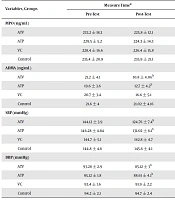
As shown in Table 1, 8 weeks of resistance and endurance training combined with vitamin D3 supplementation significantly reduced systolic and diastolic blood pressure in obese hypertensive middle-aged men whereas no significant change was seen in the C and D groups. ANCOVA showed between-group differences in the post-training systolic and diastolic blood pressure indicating that all the training groups had lower values than the C group. Moreover, the reduction in the systolic blood pressure in the E + D group was significantly more than that in the other groups (except for the E + P group). However, there was no significant difference between the training methods (resistance and endurance) with vitamin D3 supplementation on the reduction of diastolic blood pressure. Also, D group showed a significant difference compared with the E + D and E + P groups in terms of systolic blood pressure, and the difference in the diastolic blood pressure was just significant on comparison with the E + D group.
Table 1.
Systolic and Diastolic Blood Pressure Changes in the Studied Groupsa
| Variables, mmHg | Measure Time | F | P Value | |||
|---|---|---|---|---|---|---|
| Pre-Test | Post-Test | Time | Group | Time × Group | ||
| Systolic blood pressure | 10.44 | 0.000 | 0.000 | 0.000 | ||
| E + D | 145.11 ± 3.92 | 125.89 ± 8.55b | ||||
| E + P | 147.36 ± 4.86 | 132.09 ± 9.19b | ||||
| R + D | 147.72 ± 3.95 | 136.27 ± 7.48b | ||||
| R + P | 144.92 ± 4.81 | 136.67 ± 6.91b | ||||
| D | 145.6 ± 5.12 | 143.7 ± 4.85 | ||||
| C | 145.9 ± 4.62 | 146.8 ± 4.84 | ||||
| Diastolic blood pressure | 6.09 | 0.000 | 0.002 | 0.000 | ||
| E + D | 94.22 ± 2.91 | 86.67 ± 4.06b | ||||
| E + P | 96.09 ± 1.81 | 89.72 ± 4.03b | ||||
| R + D | 95.18 ± 2.4 | 89.64 ± 3.85b | ||||
| R + P | 93.83 ± 2.08 | 89.58 ± 3.42b | ||||
| D | 94.2 ± 1.69 | 92.8 ± 2.1 | ||||
| C | 94.1 ± 2.38 | 94.6 ± 2.79 | ||||
aValues are expressed as mean ± SD.
bSignificant difference from pre-test.
The body composition of the obese subjects improved significantly after the resistance and endurance training with vitamin D3 supplementation. The body fat mass in all the training groups reduced significantly; however, the fat-free mass significantly increased only in two resistance training groups. Meanwhile, no significant changes were observed in the C and D groups. Between-group post-test comparisons showed that there was a significant difference only in the weight and fat mass indices wherein, on comparing with the other groups, more reduction of weight and fat mass was observed in the E + D and E + P groups (Table 2).
Table 2.
Body Composition Changes in the Studied Groupsa
| Variables, kg | Measure Time | F | P Value | |||
|---|---|---|---|---|---|---|
| Pre-Test | Post-Test | Time | Group | Time × Group | ||
| Body weight | 14.31 | 0.000 | 0.018 | 0.000 | ||
| E + D | 96.67 ± 8.62 | 92.55 ± 8.61b | ||||
| E + P | 96.27 ± 8.59 | 92.98 ± 8.30b | ||||
| R + D | 101.43 ± 8.65 | 103.37 ± 8.93b | ||||
| R + P | 99.10 ± 7.79 | 100.65 ± 7.50b | ||||
| D | 104.76 ± 8.62 | 104.72 ± 6.39 | ||||
| C | 102.89 ± 6.93 | 103.67 ± 6.67 | ||||
| Fat mass | 5.83 | 0.000 | 0.002 | 0.000 | ||
| E + D | 28.7 ± 3.91 | 23.58 ± 4.06b | ||||
| E + P | 27.9 ± 3.12 | 22.34 ± 3.84b | ||||
| R + D | 30.4 ± 3.81 | 26.62 ± 4.25b | ||||
| R + P | 31.6 ± 3.89 | 27.92 ± 3.42b | ||||
| D | 29.2 ± 3.69 | 29.17 ± 3.61 | ||||
| C | 30.1 ± 3.38 | 30.6 ± 3.79 | ||||
| Fat free mass | 0.61 | 0.037 | 0.42 | 0.068 | ||
| E + D | 67.97 ± 6.85 | 68.97 ± 6.45 | ||||
| E + P | 68.37 ± 7.33 | 70.64 ± 3.79 | ||||
| R + D | 71.03 ± 7.65 | 76.75 ± 7.33b | ||||
| R + P | 67.5 ± 6.41 | 72.73 ± 7.11b | ||||
| D | 75.56 ± 7.12 | 75.57 ± 7.05 | ||||
| C | 72.79 ± 6.64 | 73.07 ± 6.83 | ||||
aValues are expressed as mean ± SD.
bSignificant difference from pre-test.
As shown in Table 3, the resting heart rate in obese hypertensive middle-aged men significantly reduced after performing the resistance and endurance training with vitamin D supplementation whereas no significant changes were observed in the C and D groups. Again, the post-test between-group comparisons demonstrated that all the training groups had a significant reduction in the resting heart rate in comparison with that in group C; however, no significant difference was seen between the intervention groups.
Table 3.
Resting Heart Rate Changes in the Studied Groupsa
| Variables | Measure Time | F | P Value | |||
|---|---|---|---|---|---|---|
| Pre-Test | Post-Test | Time | Group | Time × Group | ||
| Resting heart rate, beats per minute | 4.21 | 0.001 | 0.041 | 0.047 | ||
| E + D | 78.43 ± 3.62 | 77.25 ± 2.89b | ||||
| E + P | 79.17 ± 3.19 | 78.57 ± 2.56b | ||||
| R + D | 79.54 ± 2.65 | 78.61 ± 2.93b | ||||
| R + P | 77.76 ± 3.09 | 76.94 ± 2.62b | ||||
| D | 77.64 ± 3.2 | 77.48 ± 3.12 | ||||
| C | 79.69 ± 3.53 | 79.74 ± 3.67 | ||||
aValues are expressed as mean ± SD.
bSignificant difference from pre-test.
4. Discussion
In the present study, we investigated and compared the effects of 8 weeks of resistance and endurance training with vitamin D3 supplementation on blood pressure, resting heart rate, and body composition in obese hypertensive middle-aged men. The study results demonstrated that 8 weeks of resistance and endurance training with vitamin D3 supplementation improved body composition in hypertensive subjects with a significant decrease in the fat mass in all the training groups.
The decrease in the fat mass in all the training groups was a natural and predictable result. The mechanism by which the resistance or endurance training leads to decreased fat mass is related to the increase in the metabolism, energy usage, and enzymatic processes involved in fat metabolism. In this respect, an increase in lipoprotein lipase activity has been reported (21). One limitation of the present study was that the lipoprotein lipase changes were not measured. Regarding vitamin D supplementation in this study, the effectiveness of vitamin D in decreasing the fat mass could probably be because it is capable of regulating intracellular calcium levels. Calcium binds to fatty acids and reduces fat absorption in the digestive system, which may be considered as one of the fat reduction mechanisms (22). Also, fat mass comparisons showed that subjects in the E + D and E + P groups had a greater decrease compared with that in the other groups. The level of free fatty acids released from the adipose tissue depends on the blood flow to the adipose tissue. It has been shown that blood flow to the adipose tissue during resistance training in obese men is less (23). Moreover, energy is produced by the system during aerobic endurance training, and fatty acid metabolism is considered as the main source of energy. Therefore, the aforementioned factors could be the reasons for the greater reduction in the fat mass in the two endurance training groups. Moreover, the fat-free mass significantly increased only in the two resistance training groups (R + D and R + P); there was no significant difference in the changes in the fat-free mass among the other training groups. In addition to muscle hypertrophy, resistance training increases the synthesis of contractile proteins and contractile myofilaments, especially in the fast-twitch muscle fibers (24). Resistance training is associated with significant elevations in the levels of anabolic hormones such as growth hormone and testosterone which are important for skeletal muscle anabolism during growth and development (24). Nevertheless, the changes in the body weight and increase in the fat-free mass in the present study are most likely due to an increase in the muscle mass or structural proteins (24). No significant changes were observed in the C and D groups regarding body composition.
Interestingly, the training groups showed a significantly reduced resting heart rate post-test compared with the pre-test values, but no significant difference was observed among the resistance and endurance training with vitamin D supplementation groups. These findings are similar to the studies by Aram et al. (2016) and Eghbali and Moradi (2016) regarding the effects of exercise on the reduction of resting heart rate (25, 26). Exercise training creates a balance between the sympathetic and parasympathetic nervous systems; reduction in the sympathetic activity on the sinoatrial and atrioventricular nodes leads to improvements in the left ventricular systolic function. In turn, this process increases the stroke volume and cardiac output which leads to a reduction in the resting heart rate (25, 26).
In the current study, a significant decrease in the systolic and diastolic blood pressure was observed after 8 weeks of resistance and endurance training with vitamin D3 supplementation, whereas this difference not observed in the C and D groups. These results are similar to those reported by Trevizani et al. (2017), Grace et al. (2017), and also Hakimi et al. (2015) (2, 7, 8). But these findings are different from those of Gharfashi Afousi et al. (2016) and Gomez et al. (2017) (5, 6). The reasons for this inconsistency may be related to the training protocol, training intensity, and subject’s status; the above studies were done in type 2 diabetic animals whereas the participants in this study were obese hypertensive middle-aged men. Among the other reasons, reference could be made to the use of vitamin D supplementation in the present study. The mechanism of the effectiveness of resistance and endurance training in hypertension is not exactly clear, and all hypotheses have been presented as probabilities. Some of these probabilities have been mentioned below.
The reduction of blood pressure after exercise training is probably due to a reduction in the level of catecholamine. The decrease in catecholamine causes a decrease in the systemic vascular resistance against blood flow, which in turn could result in decreased blood pressure (25). Furthermore, vitamin D supplementation was used in the present study. Vitamin D is an inhibitor of the renin-angiotensin system, and it may contribute to regulation of the blood flow through a direct effect on the smooth muscles and endothelial cells of the blood vessels (9). Another probable mechanism of reduction of blood pressure is related to the nitric oxide (NO) produced by resistance and endurance training. Resistance and endurance training can lead to increase in the vascular shear stress. Shear stress is the tangential force of the flowing blood on the endothelial surface of the blood vessel (27). Exercise training increases blood flow in the tissues, including muscle tissue (28), which in turn imposes shear stress on the endothelial cells (29). The increase in shear stress results in an increase in the production of nitric oxide which in turn causes an increase in the guanosine monophosphate levels. This is followed by increased vasodilation and, finally, reduction of blood pressure (30). The resistance and endurance training may facilitate sodium excretion from the kidneys which reduces blood pressure (25). The decrease in the resting heart rate in the current study may be another reason for the reduction of blood pressure (31). The blood pressure decreased in the D group, but this reduction was not statistically significant. However, the reduction was clinically significant because vitamin D led to the suppression of hypertension and, somehow, stopped the progression. These data are in line with the results of Ghasemi et al. (2016) and Mc Mulan et al. (2017) (17, 18); however, these findings are different from that of Qi et al. (2017) (19). The contradiction may be attributed to the dosage of vitamin D used and the varying periods of consumption.
Finally, the results showed that there were significant differences in the systolic blood pressure between the groups in favor of the E + D group post-test. In other words, the effect of endurance training with vitamin D supplementation on blood pressure was significantly better than that of resistance training with vitamin D supplementation. Among the probable reasons, reference could be made to the difference in the reduction of fat mass of the subjects in the E + D and R + D groups because the level of reduction of fat mass was higher in the E + D group. Adipose tissue causes systemic inflammation and increase of blood pressure (32); hence, blood pressure naturally reduces with the reduction in body fat mass. Additionally, researchers have shown that the level of effectiveness of resistance and endurance training on the structure and performance of heart is different (33); the left ventricular end-diastolic diameter in endurance athletes is more than that in resistance athletes, and it may create more shear stress. As a result, it is considered as a factor for the increase in secretion of nitric oxide and the greater reduction of blood pressure due to endurance training.
4.1. Conclusion
Although the implementation of endurance and resistance training with vitamin D3 supplementation for 8 weeks improved the body composition, resting heart rate, and systolicdiastolic blood pressure in obese hypertensive middle-aged men, the reduction in the systolic blood pressure and body fat mass was significantly higher in the endurance training with vitamin D3 supplementation group.