
1. Background
Non-communicable diseases are health conditions that last for a long period, and they usually have slow progression. Cardiovascular diseases, cancer, chronic respiratory diseases, and diabetes are the four main types of these diseases. Around 80% of deaths due to non-communicable diseases occurs in developing countries (1). Cardiovascular diseases (CVDs) are the main non-communicable diseases, which are responsible for over 12% of the worldwide disease burden (2). CVDs currently are the most epidemic diseases, and they are becoming the main cause of death, debility and disease burden worldwide (3). The number of people suffering from cardiovascular diseases will be increased in the future (4). This increasing trend is occurring in low, middle and high-income nations (5, 6). The incidence and prevalence of cardiovascular diseases differ from area to area. The Middle East possibly have the maximum cardiovascular death rates in the world, and Iran probably has a greater burden than other countries in this region. Iran is a middle-income country with high cardiovascular diseases rate, and recently, cardiovascular diseases have become the leading cause of death in Iran (5). Unfortunately, in Iran, like other low and middle-income countries, a great ratio of deaths due to cardiovascular diseases occurs because of risk factors such as wrong diet style, inadequate physical activity, and smoking, as well as demographic transitions (6).
Based on previous studies, CVDs kill 12 million persons yearly worldwide, and they are responsible for 58% of disability adjusted life years (DALYs), 50% of all deaths per year, and 79% of deaths due to chronic diseases in Iran (7, 8). One Iranian study stated that in all ages, the rate of stroke among men is 144 strokes per 10000, and among women is 113 per 10000 (6). Researchers reported that in Tehran, more than 40% of deaths has been due to cardiovascular diseases. They also stated that nearly 20% of people aged 30 or older have symptoms of cardiovascular diseases, and above 70% of them had at least one cardiovascular diseases risk factors (9). Previous studies discovered that the prevalence of hypertension among Iranian people was 25.2% in 2005, and this amount increased to 26.6% in 2007 (10). The results of one study showed that 78% of Iranian men and 80% of Iranian women have at least one CVDs risk factor (4). Based on this study only 4% of individuals aged 15 - 44 years and 1% of individuals aged 45 - 64 years had no CVDs risk factors (11). Based on one Iranian study, from 2006 to 2010, the number of deaths in Iran was 1172278, which 46.04 percent of them (539679 cases) were due to cardiovascular disease (12). The result of another study showed that 39.3 percent of deaths in Iran are due to CVDs, while over 80% of CVDs are avoidable and preventable (10, 13). There is no definite cause for heart disease, but there are some modifiable and non-modifiable risk factors of CVDs. Several unchangeable risk factors include heredity (such as race), family history, gender, organic heart diseases, preeclampsia, and age (14). However, some studies have claimed that psychosocial risk factors are significant risk factors of CVDs (15). The most significant psychosocial factors are mental health and heart-healthy lifestyle, depression, anxiety, stress, quality of life, and inappropriate personality types. These psychosocial risk factors of CVDs have a significant role in the onset and duration of disease, as well as survival, and recovery of patients (16, 17). Based on the health model, a desirable quality of life should encompass physical, emotional, mental, social, spiritual, and occupational dimensions (18). Quality of life is the subjective general well-being, which WHO defines it as an individual's perception of their position in life in the context of the culture and value systems in which they live and in relation to their objectives, beliefs, values, and concerns (19). Today, specialists use the quality of life as an index to evaluate the general health (20).
Moreover, personality traits have been associated with physical and psychological health in cardiovascular patients. It seems that personality traits have significant effects on the incidence and prevalence of CVDs (21). Defining predisposing factors of diseases requires the study of personality traits (22).
Regarding the personality structure, individuals show different behavior and emotions while dealing with stress (23). Therefore, type D personality is one of the mediating factors in the relationship between health and stress (18). Researchers described two components of type D personality: Negative affect (such as sadness, apprehension, and hostility) and social inhibition (avoidance from potential dangers in social interactions such as disconfirming by others) (24). Emotional inhibition in type D personality predisposes people to health problems, including high tension, cardiovascular disease, and mental disorders. Individuals with type D personality are susceptible to unhealthy behaviors such as smoking, alcoholism, physical inactivation, and emotional stresses such as anxiety, depression, and anger (25).
Previous studies have stated that improving the patients’ quality of life and treating the pathological personality traits reduces the cardiac disease symptoms, and decreases the mortality and disabilities among patients (18, 22, 23). In addition, there is no comprehensive psychological intervention for cardiovascular patients. Furthermore, we need to have a comprehensive and multidimensional approach to CVDs, and we have to know a specific treatment, which is significantly effective for this disease. Therefore, we assume that the multidimensional intervention, which targets all risk factors of CVDs can be appropriate and effective.
2. Objectives
The purpose of this study was to establish the cardiac integrated intervention program and assessing its effectiveness on quality of life and type D personality traits.
3. Methods
3.1. Participants
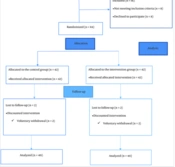
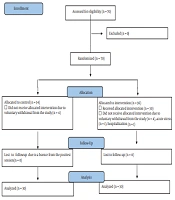
In This semi-experimental study, the design of pre-test and post-test with control group was used. Based on the inclusion criteria, all patients with CVDs from Rasol E Akram Hospital in Rasht were invited to participate in this study. The inclusion criteria included: Age of 25 - 45 years, cardiologist diagnosis, having a history of heart failure for at least 6 months, consenting to participate, Persian reading and writing ability, and the existence of psychiatric disorders and chronic diseases. Exclusion criteria were the history of a psychological disorder, the history of receiving psychotherapy and psychiatric treatment, and substance dependence. This quasi-experimental study was conducted on thirty patients, who randomly and equally divided into the experimental and the control groups. Just the cardiovascular patients of the experimental group received the treatment for two months. Based on Gpower software: [Effect size f2 [V] = 0.7, α err prop = 0.05, Power [1-β err prop] = 0.95, Number of groups = 2, Response variables = 2, Total sample size = 30] Sample size was determined (26). After two months, these thirty patients completed the scales.
3.2. Instruments
Age, gender and marital status were recorded by a short demographic questionnaire. Two other questionnaires were the WHOQOL-BREF and the type D personality.
3.3. Measures
3.3.1. WHOQOL-BREF
This questionnaire was standardized for the Iranian population in order to assess the quality of life. This scale provides a subjective assessment of somatic, psychological, social, spiritual, and environmental dimensions of quality of life. The internal consistency of the WHOQOL-BREF was 0.8 that shows its appropriate psychometric properties (27, 28).
3.3.2. Type D Personality Scale
This scale had been standardized for the Iranian population. It had been developed by Denollet in 1998. This scale consists of fourteen questions assessing negative affect and social inhibition (29). Scores range from 14 to 56. Cronbach’s α for negative affectivity and social inhibition subscales were reported about 0.80 and 0.88, respectively. Test-retest stability of subscales were 0.86 and 0.77, respectively during two months (29, 30). Cronbach’s alpha for two questionnaires was calculated about 0.68 and 0.82, respectively, which are adequate values.
All data appeared normally distributed, with no outliers. Univariate analysis of covariance (ANCOVA) and multivariate analysis of variance (MANCOVA) were used in order to examine the effects of intervention. All analyses were conducted using SPSS version 20.
3.3.3. Ethical Considerations
The procedures of intervention were in accordance with the ethical standards of the University of Guilan for Research Involving Human Participants. Regarding ethical concerns, there was no deception in this study. After a complete clarification of the research procedures, patients were given the written informed consent. All data obtained from the patients remained confidential. Group therapy was conducted in eighteen sessions and twice-weekly.
3.3.4. Intervention
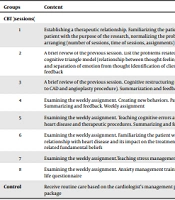
In the present study, all of the psychological risk factors of CVDs were extracted from Iranian publications by the systematical review. These psychological risk factors were extracted based on cognitive behavioral therapy instructions, author experience as a psychotherapist, psychometric indices such as the effect size of each risk factor, and the comments of several experienced psychologists. A systematical review was performed to search the related keywords in all of the famous Persian and English academic search engines to find the relevant published articles. All related publications were reviewed. Then, the reviewer reevaluated 213 appropriate full articles. Finally, 88 articles were selected based on the psychometric properties, and the cardiac integrated intervention program was established. The content of the program include the following: Session 1: Teaching cardiac symptomatology, self-introducing; understanding the psychosocial risk factors of CVDs; introducing the objectives of the program, discussing about treatment commitment. Sessions 2 - 3: Understanding type A and D personality, the relation between personality traits and CVDs. Sessions 4 - 5: Explaining resiliency and psychological hardiness; effective coping strategies, and importance of achieving social support. Sessions 6 - 7: Teaching healthy lifestyle, including exercise, healthy nutrition, alcohol consumption, and smoking. Sessions 8 - 9: Teaching cognitive processing, positive perspective taking, and explaining the irrational beliefs. Sessions 10 - 11: Explaining emotion management; problem solving methods, and assertiveness methods. Sessions 12 - 13: Discussing about religiousness, individual growth, and humanity. Sessions 14 - 15: Explaining about social communication skills such as active listening, empathy, emotional and cognitive feedback, and unconditional positive attention. Sessions 16 - 17: Teaching the relaxation techniques.
3.3.5. Sessions 18
Conclusion and reviewing the contents. The program had been developed based on the cognitive-behavioral therapy. The Cardiac integrated intervention program consisted of 18 sessions, and each session lasted two hours.
4. Results
Demographic Data of Patients in experimental and control groups are presented in Table 1. The findings showed that the participants aged between 29 and 42 years old with the mean of 33.42 ± 2.20 years old. About 56% of participants were males, and 46% were females, and all of them were married.
Table 1.
Demographic Data of Patients in Experimental and Control Groups
| Parameters | Experimental Group | Control Group |
|---|---|---|
| Age, mean ± SD | 31.09 ± 1.25 | 33.75 ± 3.16 |
| Marital status, F. (%) | ||
| Married | 15 (100) | 15 (100) |
| Single | 0 (0) | 0 (0) |
| Gender, F. (%) | ||
| Female | 5 (33) | 8 (54) |
| Male | 10 (67) | 7 (46) |
Table 1 shows that in experimental group, all of the participants were married, mean and standard deviation of age were 31.09 and 1.25, respectively. Thirty-three percent of the participants were female and 67% of them were male. In the control group, all participants were married, mean and standard deviation of age were 33.75 and 3.16, respectively. Fifty-four percent of the participants were female and 46% of them were male.
Table 2 shows the Mean ± SD of the score of type D personality and QOL and its subscales in both groups at pre-test and post-test.
Table 2.
Mean ± SD of D Personality Type and QOL and Its Subscales in Experimental and Control Groupsa
| Stage | Experiment | Control |
|---|---|---|
| D personality type | ||
| Pre-test | 21.67 ± 2.10 | 18.25 ± 2.67 |
| Post-test | 15.33 ± 2.84 | 17.67 ± 3.06 |
| Physical | ||
| Pre-test | 8.83 ± 2.41 | 8.08 ± 1.24 |
| Post-test | 10.67 ± 1.67 | 9.33 ± 1.15 |
| Psychological | ||
| Pre-test | 8.67 ± 2.19 | 10.75 ± 1.60 |
| Post-test | 13.50 ± 1.17 | 11.75 ± 1.60 |
| Social | ||
| Pre-test | 12.50 ± 2.15 | 12.50 ± 1.68 |
| Post-test | 14.33 ± 1.50 | 12.42 ± 1.51 |
| Environment | ||
| Pre-test | 10.58 ± 1.62 | 11.17 ± 1.19 |
| Post-test | 13 ± 1.28 | 13.58 ± 1.16 |
| Total QOL | ||
| Pre-test | 40.50 ± 6.30 | 43.75 ± 5.33 |
| Pre-test | 52.17 ± 4.65 | 46.08 ± 5.76 |
a Values are expressed as mean ± SD.
Since the pre-test was covariant and the post-test was the dependent variable, and grouping was the independent variable, The MANCOVA was administered to compare the post-test of two variables with covariation of pretests of two groups at two variables. The output of analyzed data showed that there is a significant difference in QOL’ subscales means between two groups after the intervention [Box's Test of Equality of Covariance Matrices = 7.188, P = 0.835, Pillai's Trace = 0.744, F = 10.89, P = 0.00, Partial Eta Squared = 0.744].
However, according to Table 3, after carrying out the cardiac integrated intervention program, the mean score of experimental group for physical [F = 7.44, P = 0.014, η = 0.293], psychological [F = 7.94, P = 0.011, η = 0.306], Social [F = 15.26, P = 0.001, η = 0.459], and environment [F = 4.95, P = 0.039, η = 0.216] subscales were significantly higher than the control group [P < 0.05]. Findings show that the cardiac integrated intervention program has significant effects on the type D personality traits and QOL’ subscales among cardiovascular patients.
Table 3.
The Results of MANCOVA on the QOL’ Subscales
| Variable | SS | df | MS | F | Sig | Eta |
|---|---|---|---|---|---|---|
| Physical | 9.517 | 1 | 9.517 | 7.446 | 0.014 | 0.293 |
| Psychological | 21.706 | 1 | 21.706 | 7.940 | 0.011 | 0.306 |
| Social | 29.396 | 1 | 29.396 | 15.260 | 0.001 | 0.459 |
| Environment | 4.827 | 1 | 4.827 | 4.953 | 0.039 | 0.216 |
However, according to Table 4, after conducting the cardiac integrated intervention program the mean score for total QOL [F = 18.271, P = 0.465] was significantly higher in the experimental group. Besides, the mean score of type D personality [F = 7.097, P = 0.253] was significantly lower in the experimental group [P < 0.05]. Based on these results, it can be concluded that the cardiac integrated intervention program has a significant effect on the quality of life and type D personality among the participants. According to table 3 and table 4, the cardiac integrated intervention program had significant effects on post-test scores (P < 0.05). Considering the beta coefficients, it could be concluded that 29%, 30%, 45%, 21%, 46%, and 25% of changes of physical, psychological, social, and environmental factors, as well as total score of QOL and type D personality type are due to the effect of cardiac integrated intervention program, respectively.
Table 4.
The Results of ANCOVA on the Total Scores of Quality of Life and Type D Personality in the Post-Test
| Variable | Sum of Squares | df | Mean of Squares | F | Sig | Eta |
|---|---|---|---|---|---|---|
| Total QOL | 213.814 | 1 | 213.814 | 18.271 | 0.003 | 0.465 |
| D personality type | 56.505 | 1 | 56.505 | 7.097 | 0.015 | 0.253 |
5. Discussion
The goal of the current study was to study the effect of cardiac integrated intervention program (CIIP) on the quality of life and type D personality in the cardiovascular patients. The results showed that the cardiac integrated intervention program significantly improved the quality of life, and reduced the type D personality in the intervention group. The results are consistant with the findings of previous studies (31-35) that confirmed the significant effect of psychological interventions in decreasing the psychosocial risk factors among cardiac patients. This program focuses on irrational beliefs, emotion regulation styles, behavioral coping strategies, and the context, which the patient lives and works in it. This new treatment had been developed based on the bio-psychosocial approach, which considers biological, psychological, and social aspects and their complicated interactions in understanding the illness and the health care.
According to this program, distorted interpretations of body symptoms are the cause of the development of mood disorders Hence, the cardiac patients need to change their perspective about the world, their present, and future life. Based on the cognitive approach, the dysfunctional or negative cognitive triangle leads to psychological disorders. Thus, establishing the positive cognitive triangle is very important, because it leads to shape the positive thought, behavior, and emotion. All of these three components have complicated interactions, and changing one component can effectively change another one. In addition, changing each of these three components of the cognitive triangle can affect the physiological dimension (33). Attribution Styles are the ways, which patients explain the causes of events were another important cognitive element of this treatment. Based on previous studies, stable vs. unstable, overall vs. specific, and internal vs. external attribution styles can lead to psychological wellness or illness. Therefore, developing healthy attribution styles was one of the main goals. As other researchers showed, stable, overall and internal attribution styles of negative events lead to mood disorders (34). patients who have rational attribution Styles have a tendency to attribute positive happenings to unchangeable, general, and intrinsic reasons (35). Therefore, developing the unstable, specific, and external attribution style of negative events was one of the main task of participants. It is obvious that rational thinking buffers against the dysfunctional attributional style and can decrease its destructive influences. The cognitive triad, as another important cognitive factor is the patients’ appraisals of themselves, the world, and the future. The negative cognitive triad can make serious psychological problems for patients, because it leads to a negative assessment of their abilities and aptitudes, low self-esteem, and negative self-confidence (36). These negative self-perceptions decrease patients’ motivation for recovery and medical adherence.
Thus, sessions 2 - 3 included understanding the type A and D personality ,and the relationship between personality traits and CVDs. In these two sessions, the main educational contents were about the characteristics of type A and D personality ,which includes the trait of being competitive, highly organized, ambitious, impatient and highly aware of time management, and negative affectivity such as worry, irritability, gloom, and social inhibition such as reticence and a lack of self-assurance (37). These personality characteristics are linked to dysfunctional, irrational, and negative cognitive processing (37, 38). Thus, it was so important to educate the patients some positive psychological skills in order to help them to cope with these negative cognitive processing. In this regard, the sessions 4 - 5 were planned. In these treatment sessions, psychotherapist explained resiliency, psychological hardiness, and effective coping styles. Previous studies showed that resiliency and psychological hardiness have a positive cognitive effect that leads to powerful health coping style with stress and challenges events (39, 40). In the sessions 8 - 9, psychotherapist educated the cognitive processing, positive perspective taking and explaining the irrational beliefs that lead to psychological and physiological disorders. In constant with our assumptions, as some researchers showed, many dysfunctional cognitive processes such as misinterpretations, negative automatic thoughts, and immature cognitive defense mechanisms such as catastrophizing and personalization can lead to impulsive reactions to external environmental events. This increases the heart rate and the level of cortisol in the blood and then finally leads to heart disease (33). However, positive thinking calm down the patients, and help them to control their reactions to external stressors. This behavioral management that is related to rational and healthy cognitive processing leads to adequate physiological responses that help the heart to work healthy and normal (32-34).
Beside the cognitive elements of this program, based on the mentioned comprehensive approach, the behavioral elements added to the treatment. Thus, in the Sessions 6 - 7 and 16 - 17 the psychotherapist educated patients about healthy lifestyle including exercise, healthy nutrition, alcohol consumption, smoking, and relaxation. Studies have suggested that healthy lifestyle impacts the brain function, and leads to better and efficient executive functions, problem solving, decision making, cognitive-emotional regulation, and cognitive processing (41). Previous studies claimed that high function of the brain is related to rational decision-making (42). Behavioral techniques such as relaxation reduce the blood pressure and improve heart function. Hence, they lead to the high quality of life (43).
In the sessions 10 - 11, the psychotherapist explained about emotion management, problem solving methods , and assertiveness methods. Based on recent studies, emotion regulation and emotional intelligence significantly affect the cognitive, behavioral, and biological functions (44). Consistent with our findings, previous studies showed that depressed patients remember negative memories more than non-depressed patients (45). It is so interesting that the patients’ mood has affects their cognitive processing. Therefore, in this program, the psychotherapist explained the relation between mood, emotion regulation, and cognition. Thus, emotion regulation has a mediating role between cognition and biological reactions of the body such as elevated heart rate, breathing pattern disorder, the nervous system arousal, changes in blood flow, and abnormalities of brain, stomach, and digestive functions (44, 45).
Reconceptualization was another cognitive task of patients in CIIP. Recent studies showed that reframing and reconceptualization of events and stressors can help patients to reduce their attention to negative aspects of events, and replace them with positive and realistic perspectives (32). This replacement activates efficient emotion regulation and normal physiological body reactions such as decreasing the cortisol secretion (33), which leads to healthy heart function (46). Reconceptualization can reduce psycho-biological activation that is connected to better cardiovascular functions. In the sessions 12 - 13, beliefs about religiousness, individual growth, and humanity added to the program. Based on previous findings and world health organization’ definition of health, the health includes everyone’s’ view of their status in life in the context of their culture and value systems (46). Therefore, as mentioned before, value systems, culture,, and spirituality can affect the physiological reactions of patients to external events.
In the sessions 14 - 15, the psychotherapist explained the social communication skills such as active listening, empathy, emotional and cognitive feedback, and unconditional positive attention. Studies showed that interpersonal skills could play important role in the management of stressful events (46). The social support, positive family atmosphere, and mature social communication skills can help people to properly manage their psychological stresses. Learning the skills that help people to find social support are essential. Social support could be emotional or informational. Informational social support means providing data to help someone for making him/her life meaningful and worthy. These social communications that need social skills, has been shown to decrease the psychosomatic consequences of stress, and they could positively change individuals’ perceptions about the world, themselves, and others. Hence, social communication could finally change people’s emotions and physiological reactions to external stresses. Researchers found that changing the patients’ perception about themselves lead to positive treatment results. Many researchers have revealed that cognitive-based psychological interventions are significant interventions for improving self-efficacy because motivate patients to develop the perception that they are able to successfully manage the stressful situations.
Previous studies found that the patients with high self-efficacy are more likely to recover (36). Similarly, cognitive flexibility can help patients to change their negative perceptions and take more positive psychological perceptions about their abilities, while, some studies showed that individuals’ positive perceptions about themselves are significantly correlated with the quality of life, healthy lifestyle, and the perspective about the future.
Totally, the cardiac integrated intervention program declines dysfunctional beliefs in participants and replaces them with rational and functional beliefs. Many studies have revealed that cognitive factors are correlated with mood and anxiety disorders (34, 35). In this regard, we introduced cardiac integrated intervention program to health psychologists to use it in the clinical settings for cardiovascular patients. The present research had some limitations; using self-reporting tools was one of the limitations of the current study. We suggest that future studies use behavioral objective indicators and semi-structural interviews. The goal of this treatment was to modify the styles of thinking, feeling, or behaving that had led to the patient’s problems.
5.1. Conclusions
The outcomes of the current study proved that quality of life and type D personality both change by conducting the. These findings propose that CIIP has a significant effect on quality of life and type D personality traits. These two variables have a significant influence on the cardiovascular functions. The outcomes of the current study suggested the benefits of cognitive behavioral therapy. We applied cognitive behavioral therapy techniques in the cardiac integrated intervention program to impact the psychological risk factors of cardiovascular diseases. Nowadays, psychosocial risk factors are not completely recognized in the treatment of CVDs. In addition, the side effects of pharmacological and psychopharmacological therapies should be considered as important factors that lead to treatment nonadherence (38). Therefore, the psychological factors have direct and indirect effects on the improvement of CVDs. Taking a comprehensive approach, which considers all psychological risk factors is essential for an effective and long-lasting improvement. As mentioned above, 80% of psychological risk factors are preventable and controllable. In this regard, developing and applying a treatment, whichaffects the psychological risk factors is so important. The cardiac integrated intervention program encompass all psychological risk factors and could be useful for clinical settings.
5.2. Limitations
This research had some limitations that need to be considered. Using the self-report scales was one of the limitations of this study. Because of the small sample size, we could not generalize the results of this study to other populations. More researches is needed to approve the effectiveness of this program on the patients with CVDs. We suggest that future researchers study the effectiveness of cardiac integrated intervention program for the patients with CVDs in other cities, because the current study had been conducted in Rasht, which can impact the generalizability of the outcomes. In addition, applying follow up measures could show the progress of patients over time