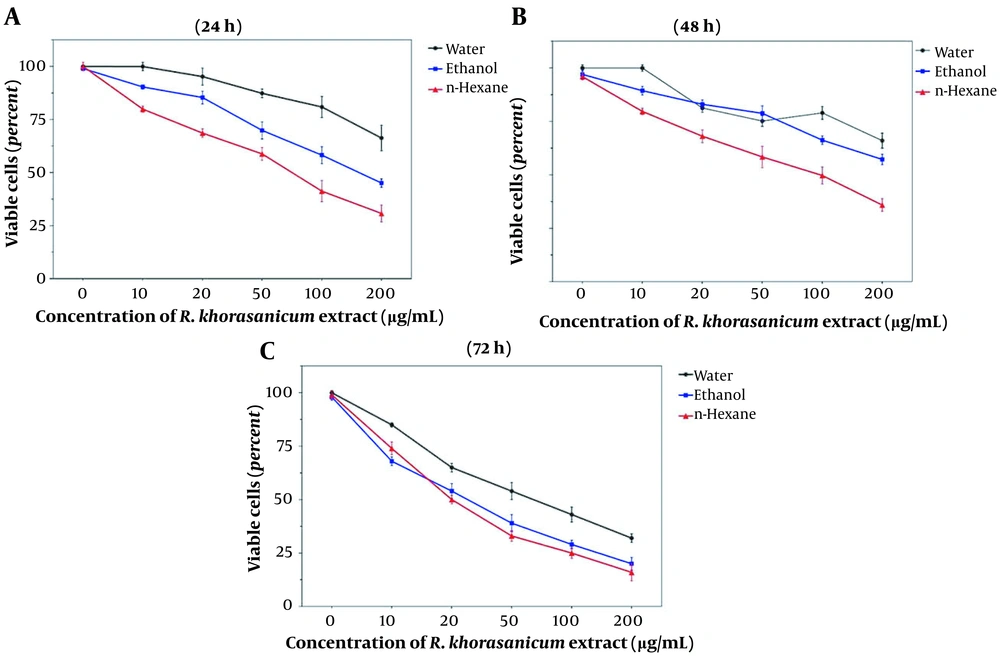
The present study showed that
R. khorasanicum extracts exerted dose-dependent cytotoxic effects on MCF-7 breast cancer cells. Numerous studies have examined the biological and anti-proliferative activities of rhubarb extracts. Tartik et al. (
17) suggested the biological activity of rhubarb root ethanolic extract on PC3 and HUVEC cancer cells and showed that these cells were affected in dose- and time-dependent manners compared to control cells, while their stability was reduced. The study by Shiezadeh et al. (
19) examined the toxicity and apoptotic properties of ethyl acetate, hexane, and water extracts of another species of this plant (
Rheum turkestanicum) on MCF-7 cancer cells, Hela, and blood lymphocytes, and showed that the hexane and ethyl acetate extracts could reduce malignant cancer cells at the proper dose and time point. Moreover, Uyar et al. (
20) showed that rhubarb root’s ethyl acetate extract could possess antioxidant properties. According to the results,
R. khorasanicum could be considered a plant with anticancer compounds.
Among all three extracts studied in this study, n-hexane extract showed the highest cytotoxic effects. Due to its low polarity, hexane can extract molecules with a low polarity that usually pass better through cell membranes and have more cytotoxicity (
21). Increased levels of the ODC enzyme have an essential effect on the metabolism of polyamines in cancer cells. Polyamines are ubiquitous molecules in eukaryotic cells and play a key role in cell growth, survival, and differentiation (
7,
22). Accordingly, identifying them and their synthesis pathways would be crucial in understanding cell biology and, ultimately, a suitable target for controlling cell growth. Various studies have shown that the ornithine decarboxylase enzyme could be a suitable target for chemotherapy. According to the literature, a decrease in the amount and activity of ODC reduces the growth of cancer cells (
4,
23). The application of herbal compounds or plant extracts has drawn considerable attention in anticancer research studies, while the reduction of polyamines and ornithine decarboxylase is among the most noticeable alterations. Grimminger et al. showed that the mRNA expression of the ODC1 gene in cancerous tissues was significantly higher than in non-cancerous tissues (
24). In another research study by Sharma et al. (
25), the
Hibiscus rosa extract was administered in the cancerous tissue of mice and prevented the progression of cancer, while the activity of ODC was decreased compared to the control group. In another study, the mice transplanted with human MDA-MB-231 breast cancer cells were fed with grape extract for 33 days. The expression of several genes, including ODC1, was then measured. The results showed a decrease in the expression of the ODC1 gene in treated mice compared to the control group (
26).
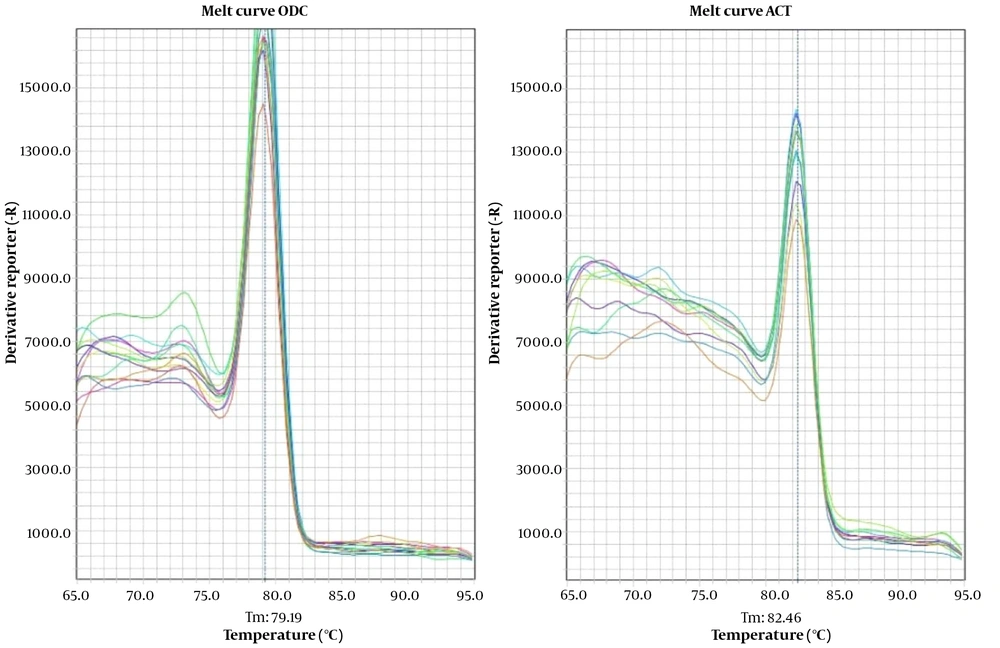
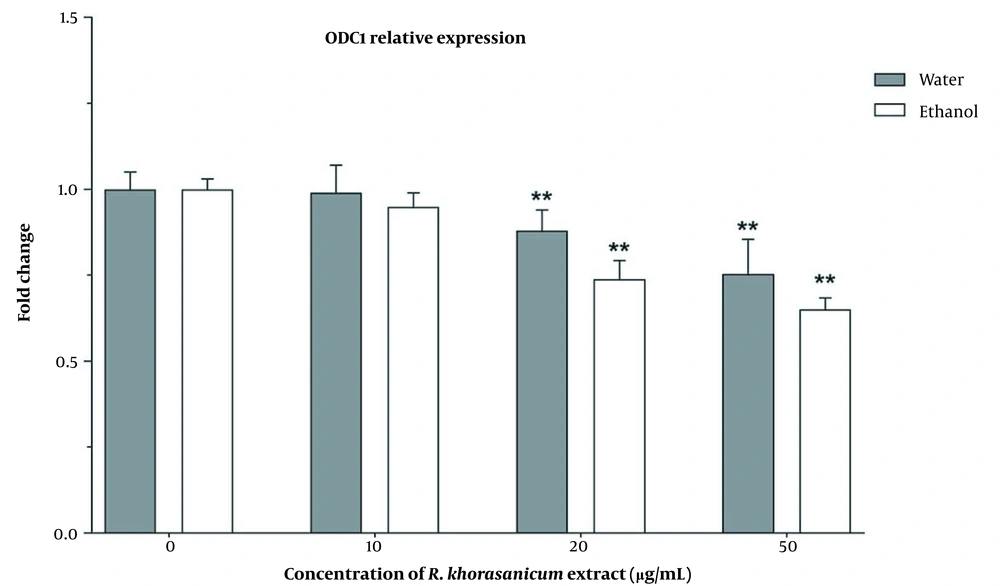
In this study, after carefully examining the cytotoxicity results obtained from all extracts, aqueous and ethanolic extracts with moderate cytotoxicity were selected to study gene expression. Concentrations less than IC50 were also used. The results showed that the plant extracts could reduce the expression of the ODC1 gene in cancer cells in a dose- and time-dependent manner. Decreased expression of the ornithine decarboxylase 1 gene and consequently decreased concentrations of polyamines can affect the proliferation of cancer cells and reduce the survival of MCF-7 cells.