
1. Background
Carbapenems define the most recent generation of antibiotics effective against drug-resistant Gram-negative bacterial pathogens (1) . However, with the extensive use of these antibiotics, the number of carbapenem-resistant Enterobacteriaceae (CRE) are emerging and increasing rapidly. Carbapenemase is the main determinant contributing to carbapenem resistance in Enterobacteriaceae (2-4). NDM-1 belongs to the B1 subclass of class B metallo-β-lactamases (MBLs) according to the Ambler’s classification. NDM-1 hydrolyzes almost all β-lactams except aztreonam, and was first identified in Klebsiella pneumoniae in isolated from the urine of a 59-year-old Swedish male patient hospitalized in India in 2008 (5).
Enterobacter cloacae often causes a variety of nosocomial infections and contains chromosome-mediated AmpC. Thus, multi-drug resistance can easily develop during the antimicrobial therapy leading to a higher mortality rate associated with bacteremia (6). NDM-1-positive E. cloacae have been found in India, Lebanese, China, the UK, and Mexico, indicating that the blaNDM-1 gene has spread from K. pneumoniae to E. cloacae (7-11). The blaNDM-1 gene is mainly located on incompatible conjugative plasmids and can be transmitted among different bacterial species, resulting in extensive drug resistance (5, 6). So far, most studies of NDM-1-positive isolates have focused on resistance mechanisms and transmission. However, it is not known whether blaNDM-1 affects the biological characteristics of the strains, such as growth ability and competitiveness (6-11).
2. Objectives
In this study, the genetic features of the blaNDM-1 gene of E. cloacae were analyzed and compared with those from other bacterial species. This allowed us to estimate the possible transmission and epidemic regularity at the molecular level. A blaNDM-1 knockout mutant was constructed by Red homologous recombination, and the effect of the knockout on antimicrobial resistance, growth ability, and in vitro competitiveness was investigated.
3. Methods
3.1. Bacterial Strains and Plasmids
A total of ten NDM-1-positive E. cloacae clinical isolates were obtained from the First Affiliated Hospital of the Kunming Medical University between June 2012 and January 2016. The blaNDM-1 gene was located on plasmids in all isolates, with sizes ranging from ~33.3 to ~50kb, which was confirmed by plasmid conjugation tests and Southern blot analysis (6). Escherichia coli DH5α was used for the cloning procedures (12). The plasmid pKD46 (harboring an ampicillin resistance gene) allows the expression of Gam, Beta and Exo following L-arabinose induction, leading the host bacteria to be suitable for homologous recombination. The plasmid pCP20 (harboring an ampicillin and chloramphenicol resistance gene) can express FLP recombinase, which can eliminate resistance genes between FRT sites. Both plasmids are Red Homologous recombinant helper plasmids that contain a temperature-sensitive replicon. The pBR322 plasmid (harboring a tetracycline resistance gene) was used to modify pKD46.
3.2. Genetic Features of the DNA Regions Surrounding blaNDM-1
The upstream and downstream structures of the blaNDM-1 gene in E. cloacaeT1 were obtained by primer walking. Primers were designed according to the sequencing results to carry out PCR mapping of the remaining nine E. cloacae isolates (Table 1). All sequences were reconstructed with the use of DNA MAN version 9, compared and analyzed with BLAST. The sequences were submitted to GenBank using the sequin software and the sequence accession number MF927777.
Table 1.
Primers used for PCR Mapping
| Primer | Sequence (5’→3’) |
|---|---|
| F1 | TGTATAGCGCGGGAGTACAC |
| F2 | CGAGCATTACCAAAGGGTGA |
| F3 | GGTAAGTGGCTTTCAGGTGC |
| F4 | CCAGCTCGCACCGAATGTCT |
| F5 | CCGCGAAAATCAAGATTTGC |
| F6 | TCGACGCAGGTAAGACACTT |
| R1 | GTTGCCAAGATACAGAGCCG |
| R2 | TGGTCGCTGGATTAACTGGT |
| R3 | CCGCAACCATCCCCTCTT |
| R4 | GCGACGCTGGATAGAACACC |
| R5 | ACTGACGCAAAATCAAC |
| R6 | AGTATGGCGGTATGGAGGTG |
| R7 | TGCAACGACACAGAGCTAAC |
3.3. Construction of the Knockout Mutant
Disruption of the blaNDM-1 gene in E. cloacaeT2 was performed as described by Datsenko (13), with some modifications. Due to the ampicillin resistance of E. cloacaeT2, a tetracycline resistance cassette was inserted into pKD46. The specific primers Ftet/Rtet were designed to amplify the tetracycline resistance fragment from pBR322 (Table 2). The amplified DNA was purified, digested by Pvul, and ligated with the use of T4 DNA ligase into pKD46 digested by the same enzyme. The integrity of pKD46-Tet was checked by restriction analysis.
Table 2.
Primers for Knockout and Identificationa
| Primer | Sequence (5’→3’) |
|---|---|
| Ftet | ATCGATCGTTCTCATGTTTGACAGCTTATC |
| Rtet | ATCGATCGTCAGGTCGAGGTGGCCCGGCT |
| PN1 | TGCGGGTAAGGATTTCAGGC |
| PN2 | TGACAGCATCATCCGCATCG |
| PZ1 | ATCGCCGGGAGAATGCTTTATC |
| PZ2 | CGATTCCGAACCGTGCAGCT |
| PD1 | AGCTCGGCACCGAATGTCT |
| PD2 | CCGCAACCATCCCCTCTT |
| FropB | AAGGCGAATCCAGCTTGTTCAGC |
| RropB | TGACGTTGCATGTTCGCACCCATCA(12) |
aNucleotides indicated by underlining are restriction sites
Based on the blaNDM-1 sequence (accession No. MF927777) and the kanamycin-resistant gene sequence, homologous recombinant fragments were synthesized. Both sides of the homologous recombinant fragment were homologous with both sides of the blaNDM-1 gene (an approximately 500 bp homologous region), and the middle included the kanamycin-resistant gene with the FRT site. PCR-amplified homologous recombinant fragments were purified and digested by DpnI (DpnI is often used to remove template DNA after PCR). pKD46-Tet was introduced into E. cloacaeT2 using heat shock, and transformants were selected on LB plates (containing 100μg/mL tetracycline), after incubation for 24 h at 30ºC. pKD46-Tet allows the expression of Gam, Beta, and Exo following L-arabinose induction, allowing the host bacteria to be suitable for homologous recombination.
The transformants were cultivated to reach OD600 = 0.3 in Luria Broth (LB). L-arabinose (10%) was then added to a final concentration of 0.25%, and the bacteria were cultured until OD600 reached 0.6. Approximately 2 μL of the homologous recombinant fragments were used for transformation by electroporation (1.8 kv, 5 ms). Transfected strains were grown on LB plates (containing 50 μg/mL kanamycin) overnight at 37ºC, and positive colonies (T2 Δ NDM-1::Kn) were selected for PCR analysis and sequencing (Table 2). pCP20 was transformed into the positive colonies by heat shock to remove the kanamycin gene by FRT recombination. The colonies growing on LB plates (containing 100 ug/mL ampicillin and 20 ug/mL chloramphenicol) at 30ºC were transferred to liquid LB and cultivated at 42ºC for 6h. Subsequently, kanamycin- and chloramphenicol-sensitive colonies, corresponding to E. cloacae T2 blaNDM-1 mutants (T2 Δ NDM-1), were selected. E. cloacaeT2 and the E. cloacae T2 blaNDM-1 knockout mutant were verified by PCR and DNA sequencing (Table 2).
RT-qPCR was performed to confirm that the blaNDM-1 gene was completely inactivated. Total RNA isolated from the parental strain, the blaNDM-1knockout mutant, and the control strain E. cloacaeT1 was extracted, and cDNAs were produced by reverse transcription. The expression of blaNDM-1 was quantified by RT-qPCR using the primers PD1/ PD2, and ropB was used as the reference gene (Table 2).
3.4. Antimicrobial Susceptibility
The Minimal Inhibition Concentration (MIC) values were determined by the broth micro dilution method using the VIKET-2 Compact system (bioMerieux, France). The values were confirmed using E test gradient strips (imipenem, meropenem, and ertapenem) (bioMerieux, France) on Mueller-Hinton plates. Escherichia coli ATCC25922 was used for quality control. Results were interpreted according to the CLSI guideline (14).
3.5. Growth Curves and in vitro Competition Experiments
Growth curves for the parental and mutant strains cultivated in LB at 37ºC were monitored for 24 h under agitation at 180 rpm. The OD600 was measured at 30-min intervals during the exponential phase and every hour after that. Three independent experiments were performed for each strain. For in vitro competition experiments, growth curves of the knockout mutant and the parental strain were constructed. The strains were cultured in LB at 37ºC under agitation at 180 rpm until OD600 = 0.6. Cells were harvested by centrifugation and washed three times with a 0.9% saline solution. Then, the OD600 of both strains was adjusted to 0.9 with a 0.9% saline solution, and both suspensions were mixed at a ratio of 1:1. Serial 10-fold dilutions were plated in duplicate on LB plates and LB plates containing 1μg/mL of imipenem. The number of CFU was determined after overnight incubation at 37ºC. The competition index (CI) was defined as the knockout mutant/ parental strain ratio. CI values were calculated for each of the eight independent competition experiments, and the median values were recorded.
3.6. Statistical Methods
SPSS version 22.0 was used for statistical analysis. The measured data were expressed as
4. Results
4.1. Genetic Features of the blaNDM-1 Gene
Nine E. cloacae isolates displayed the same genetic features in the surrounding of blaNDM-1. ΔISAba125 was truncated by the ISEc33 element and the bleomycin resistance gene, bleo followed by a truncated trpF gene (ΔtrpF), and ISSen4 were located immediately upstream and downstream of the blaNDM-1 gene, respectively. In another isolate, E. cloacae T10, the ΔISAba125 and the bleo followed by a ΔtrpF were located immediately upstream and downstream, respectively (Figure 1).
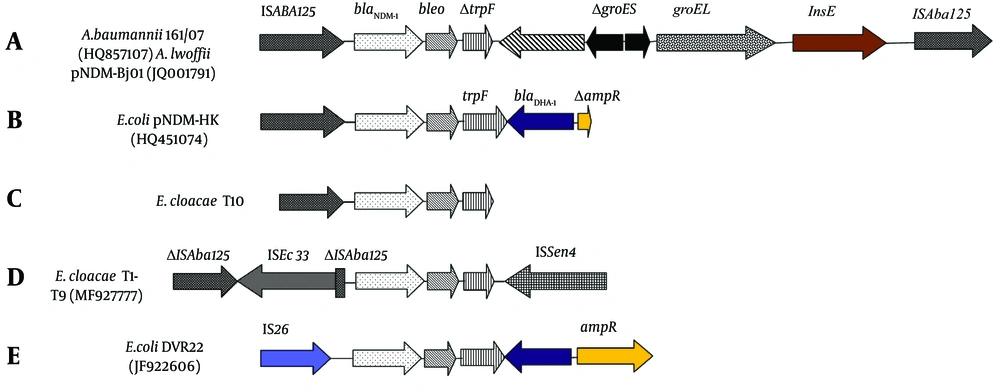
Figure 1.
Comparison of the sequences surrounding the blaNDM-1 gene. (A) blaNDM-1-surrounding sequences in A.baumannii 161/07 (accession no. HQ857107), A. lwoffii pNDM-Bj01 (accession no. JQ001791); (B and E) blaNDM-1-surrounding sequences in E. coli pNDM-HK (accession no. HQ451074) and E. coli DVR22 (accession no. JF922606). (C and D) blaNDM-1-surrounding sequences identified in this study, E. cloacae T1-T9 and E. cloacae T10. The boxed arrows indicate the positions and directions of gene transcription. Δ represents truncated genes.
4.2. Construction of the blaNDM-1 Knockout Mutant in E. cloacaeT2
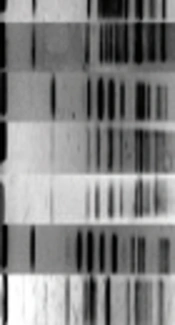
Restriction analysis of the recombinant plasmid pKD46-Tet is shown in Figure 2A. The sizes of the smallest fragments were consistent with the predicted sizes of the tetracycline resistance gene fragments (1,276 bp). The sizes of the bigger fragments were consistent with that of the linear plasmid pKD46 (6,329 bp) following digestion. The tetracycline resistance fragment (1,276 bp) was confirmed to be inserted into the plasmid pKD46 and labeled with tetracycline resistance. Homologous recombination fragments (2,408 bp) flanked by arms homologous to blaNDM-1and the kanamycin resistance gene were amplified by PCR (Figure 2B). Positive colonies (T2 Δ NDM-1::Kn) and the blaNDM-1knockout mutant (T2 Δ NDM-1) were identified by PCR (Figure 2C and D) and then were confirmed by DNA sequencing. The primers PZ1 and PZ2 were located outside of the arms homologous to the blaNDM-1 gene, with a size of 2,051 bp in the original strain, 2,542 bp in the positive colonies (T2 Δ NDM-1::Kn) and 1,320 bp in the mutant (T2 Δ NDM-1).
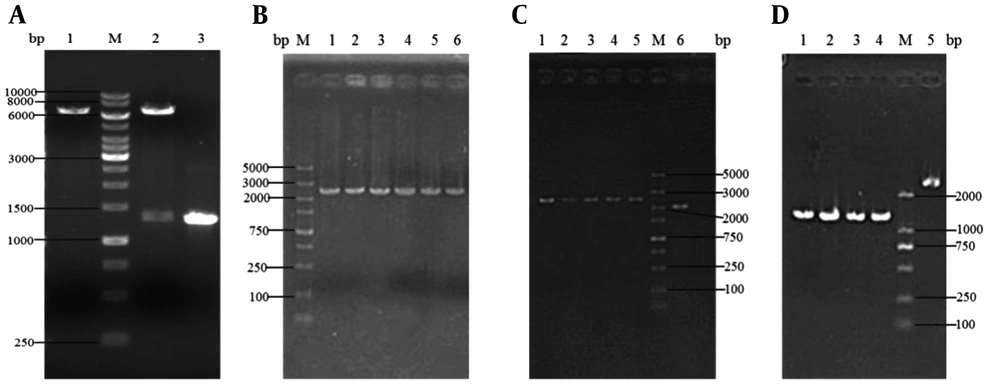
Figure 2.
Construction of the blaNDM-1 knockout mutant. (A) M: Middle DNA Marker I; lane 1: PCR amplification of pKD46-Tet using the primers Ftet/Rtet; lanes 2~3: Digestion of pKD46-Tet using Pvui. (B) M:DL5000 DNA Marker; lanes 1~6: PCR amplification of the homologous recombination fragments using the primers PN1/PN2. (C) M: DL5000 DNA Marker; lanes 1~5: PCR amplification of the positive colonies (T2 Δ NDM-1::Kn); lanes 6: PCR amplification of the original strain. (D) M:DL2000 DNA Marker; lanes 1~4: PCR amplification of the blaNDM-1 knockout mutant (T2 Δ NDM-1); lane 5: PCR amplification of the positive colonies (T2 Δ NDM-1::Kn).
The expression of blaNDM-1 in the parental strain was 1.2 times higher than that observed in the control strainT1. Moreover, expression was not detected in the knockout mutant, which indicated that the blaNDM-1 knockout mutant was successfully constructed.
4.3. Antimicrobial Susceptibility Patterns
The parental and blaNDM-1 mutant strains exhibited similar resistance patterns to penicillins, cephalosporins, aminoglycosides, tetracycline, and quinolones, apart from carbapenems. The parental strain was resistant to imipenem, meropenem, and enopenem, but the blaNDM-1 knockout strain was sensitive to all carbapenems agents tested (Table 3).
Table 3.
Antimicrobial Drug Susceptibility Profiles (mg/L) of the Parental Strain and the blaNDM-1 Knockout Mutant.
| Isolate No. | VITEK2 | Etest | |||||||||||
|---|---|---|---|---|---|---|---|---|---|---|---|---|---|
| PIP | TET | ATM | CRO | CIP | AMK | MEM | IPM | ETP | TGC | MEM | IMP | ETP | |
| E. cloacae T2 | ≥ 128 | 4 | ≥ 64 | ≥ 64 | ≥ 4 | ≤ 2 | ≥ 16 | ≥ 16 | ≥ 8 | 1 | > 32 | > 32 | > 32 |
| T2 Δ NDM-1 | ≥ 128 | 4 | ≥ 64 | ≥ 64 | ≥ 4 | ≤ 2 | ≤ 0.25 | ≤ 1 | ≤ 0.5 | 1 | 0.125 | 0.38 | 0.125 |
| ATCC25922 | ≤ 4 | ≤ 1 | ≤ 1 | ≤ 1 | ≤ 0.25 | ≤ 2 | ≤ 0.25 | ≤ 1 | ≤ 0.5 | ≤ 0.5 | 0.032 | 0.019 | 0.008 |
Abbreviations: AMK, amikacin; ATM, aztreonam; CIP, ciprofloxacin; CRO, Ceftriaxone; ETP, ertapenem; IPM, imipenem; MEM, meropenem; PIP, piperacillin; TET, tetracycline; TGC, tigecycline
4.4. Growth Curves and Growth Competition Experiments
OD600 was plotted versus time for evaluating bacterial growth. This analysis showed no significant difference in the growth trend and rate between the parental strain and the blaNDM-1knockout mutant (t = 0.263, P = 0.793) (Figure 3). The CIs, corresponding to knockout mutant/parental strain ratios, of eight independent in vitro competition experiments were 0.67, 0.58, 0.75, 0.83, 0.71, 0.67, 0.79, and 0.62, and the median was 0.69. These data showed that the in vitro competitiveness of the blaNDM-1 gene deletion mutant was slightly reduced compared with the original strain.
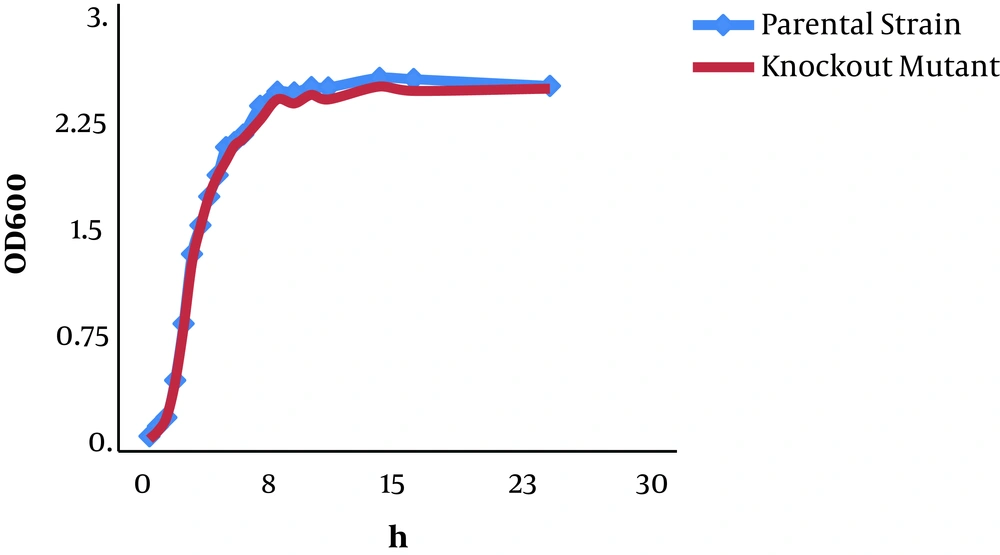
Figure 3.
Growth curves of the parental strain and the blaNDM-1 knockout mutant.
5. Discussion
NDM-1-positive isolates are mainly found in E. coli and K. pneumoniae. However, in China, they are mainly observed in Acintobacter baumannii (15). We collected ten NDM-1-positive E. cloacae isolates from the First Affiliated Hospital of the Kunming Medical University, and observed that the blaNDM-1 gene was located on ~33.3kb or ~50 kb plasmids (6). In this study, the genetic structures surrounding blaNDM-1 were characterized in ten E. cloacae isolates. The “ISAba125-blaNDM-1-bleo-ΔtrpF” appeared to be conserved in our ten study isolates with some degree of variation. The genetic structures were generally consistent with those present in the K. pneumoniae plasmid pTR3J (JQ349086) from Singapore and the E. coli ECS01 plasmid pNDM-ECS01 (KJ413946) from Thailand (16, 17). These highly conserved gene clusters “ISAba125-blaNDM-1 -bleo-ΔtrpF” also appeared in most of the reported NDM-1-positive isolates, such as E. coli (pNDM-HK and DVR22), A. baumannii 161/07, and A. lwoffii (pNDM-BJ01 and pNDM-BJ02) (Figure 1). The blaNDM-1 gene was located on plasmids of different sizes and types, but its upstream and downstream structures were relatively consistent (5, 6, 10). Therefore, we hypothesized that the presence of the IS elements was indicative of the genetic mobility of the resistance determinant.
Although Red recombination is mainly used for gene integration and knockout in E. coli (13), this study successfully used this technology to construct the blaNDM-1 knockout in E. cloacae, indicating that this strategy is not only suitable for E. coli but also E. cloacae. The present work lays a foundation for further functional studies of E. cloacae-related genes. blaNDM-1 deletion did not alter the antimicrobial sensitivity to penicillin, cephalosporins, aminoglycosides, and quinolones. However, it induced changes in the antimicrobial sensitivity to carbapenems. The blaNDM-1 gene usually coexists with other drug-resistant genes. For instance, E. cloacae T2 carries blaTEM, blaCTX-M, and other drug resistance genes in addition to blaNDM-1 (6). Thus, the blaNDM-1 knockout mutant was still resistant to penicillin, cephalosporins, aminoglycosides, and quinolones. The parental strain and the blaNDM-1 knockout mutant displayed similar proliferation curves in LB, and the competitive index of the knockout mutant and parental strain was 0.69. Therefore, the blaNDM-1 gene did not affect the growth trend of E. cloacae, but it had an impact on its competitiveness.
5.1. Conclusions
In summary, our study demonstrated that the upstream and downstream regions of the blaNDM-1 gene in E. cloacae often contain ISAba125, bleo, ISEc33, and ISSen4 insertion sequences and elements. Furthermore, we showed that the Red homologous recombination technology could be used for gene knock out in E. cloacae, and the blaNDM-1 gene can affect the drug resistance and in vitro competitiveness of E. cloacae. However, it does not affect the growth trend and growth rate.