


1. Background
2. Objectives
3. Methods
3.1. Cell-Line and Virus
3.2. Plasmid Construction
3.3. Expression and Purification of the Recombinant Protein
3.4. Preparation of Polyclonal Antibody Against RABV-P
3.5. Screening and Characterization of Monoclonal Antibodies
3.5.1. Indirect Enzyme-Linked Immunosorbent Assay (iELISA)
3.5.2. Western Blot Analysis
3.5.3. Indirect Immunofluorescence Assay
4. Results
4.1. Plasmid Construction
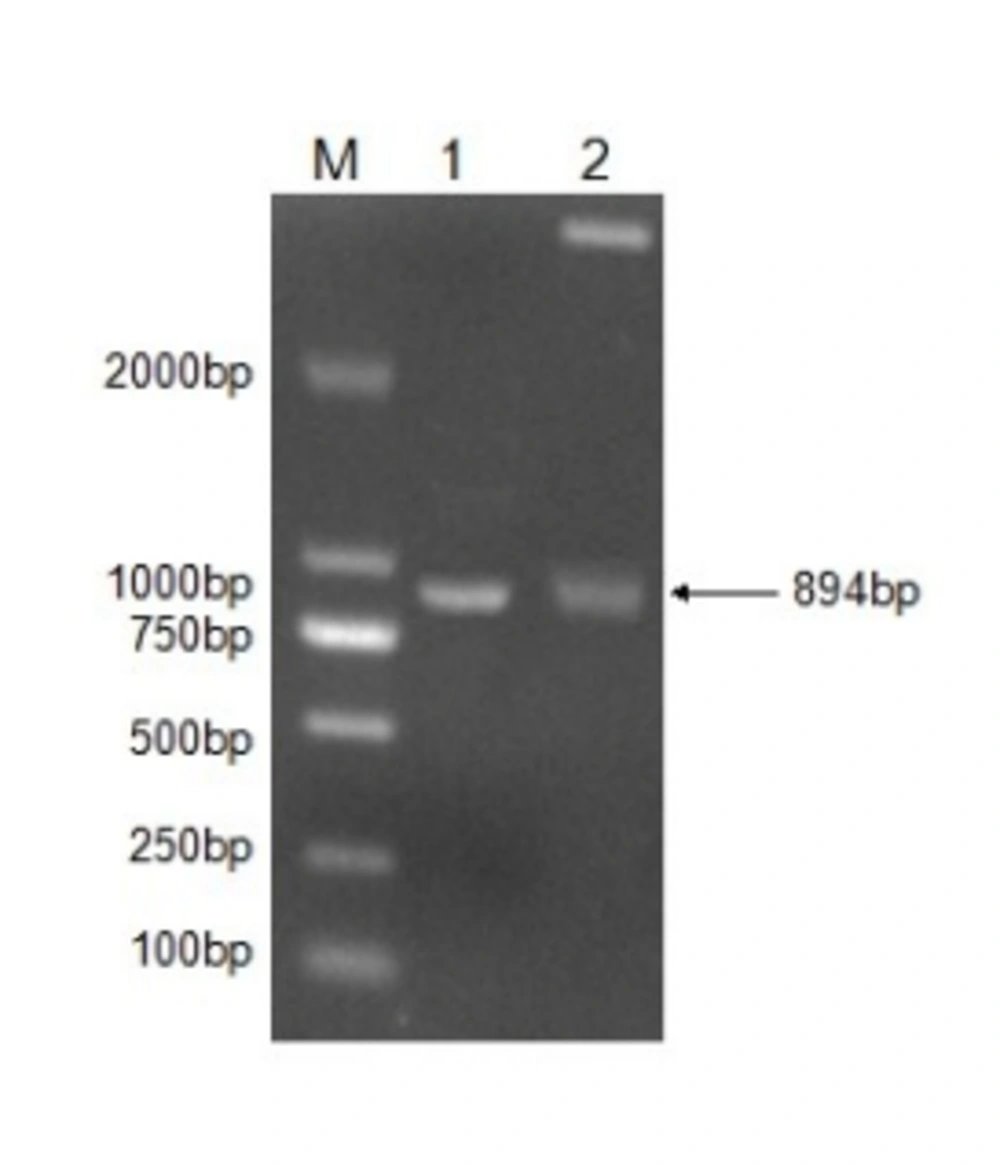
M: DL2000 DNA marker; 1: phosphoprotein gene fragment; 2: digestion production of pET-32a-P by EcoR I and Sal I Enzymes.
4.2. Expression and Purification of the Recombinant Protein
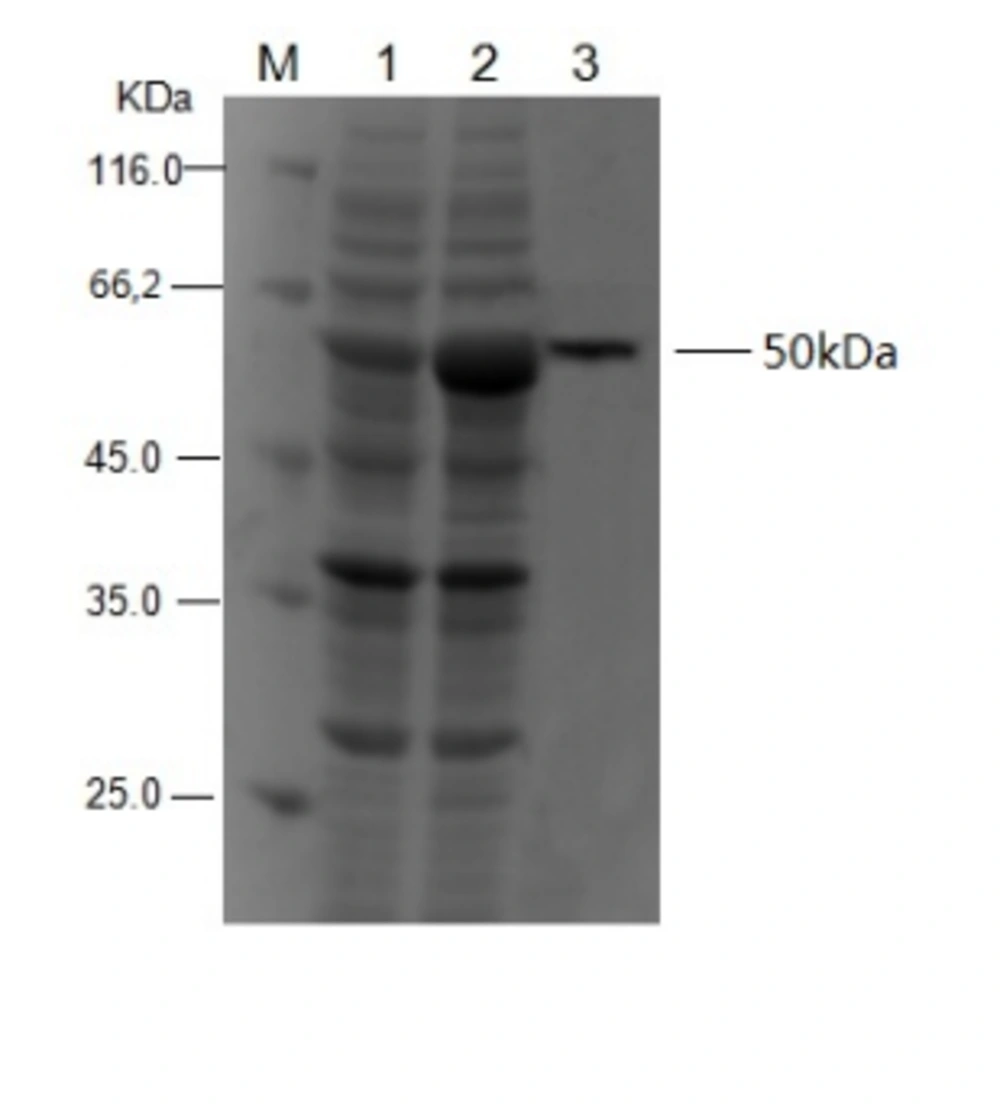
The input of sample are 10 μL. The lysates of E. coli before induced, after induced and purified recombinant RABV phosphoprotein were separated using 12% SDS-PAGE gels and then stained with Coomassie brilliant blue. M: Protein Marker; 1: E. coli Rosetta (DE3) containing pET-32a-RABV-P before induced by IPTG; 2: E. coli Rosetta (DE3) containing pET-32a- RABV-P was induced with IPTG; 3: Purified recombinant RABV-P protein.
4.3. Production and Characterization of Monoclonal Antibodies
4.3. 1. Anti-RABV-P Ascites titer and Specificity Analysis by iELISA
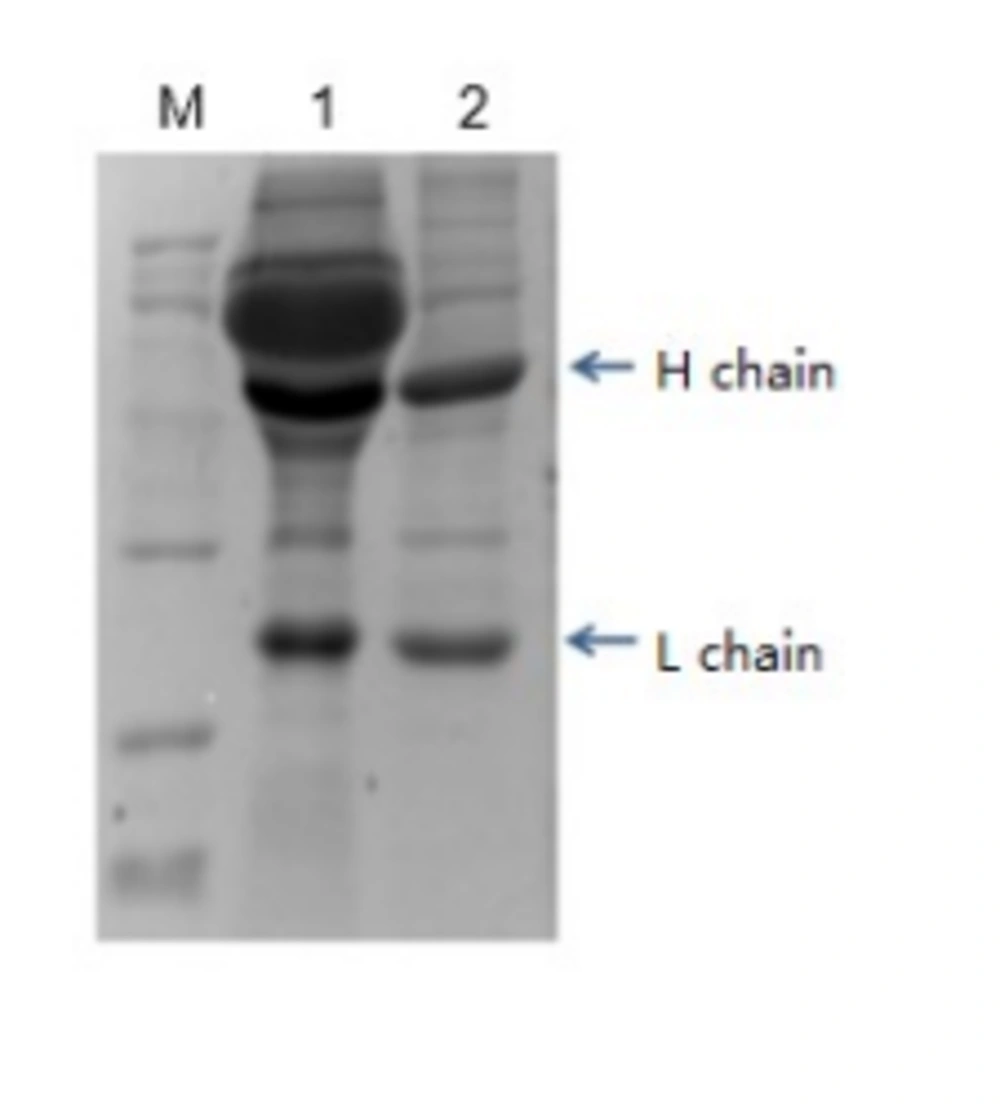
M: Protein Marker; 1: Unpurified ascites; 2: Purified ascites of mAb 1A4.
| Ascites | Dilution | ||||||||
|---|---|---|---|---|---|---|---|---|---|
| 1:2000 | 1:4000 | 1:8000 | 1:16000 | 1:32000 | 1:64000 | 1:128000 | 1:256000 | negative | |
| OD450 | 1.607 | 1.431 | 1.023 | 0.674 | 0.389 | 0.259 | 0.163 | 0.107 | 0.056 |
4.3.2. Western Blot and Indirect Immunofluorescence Assay
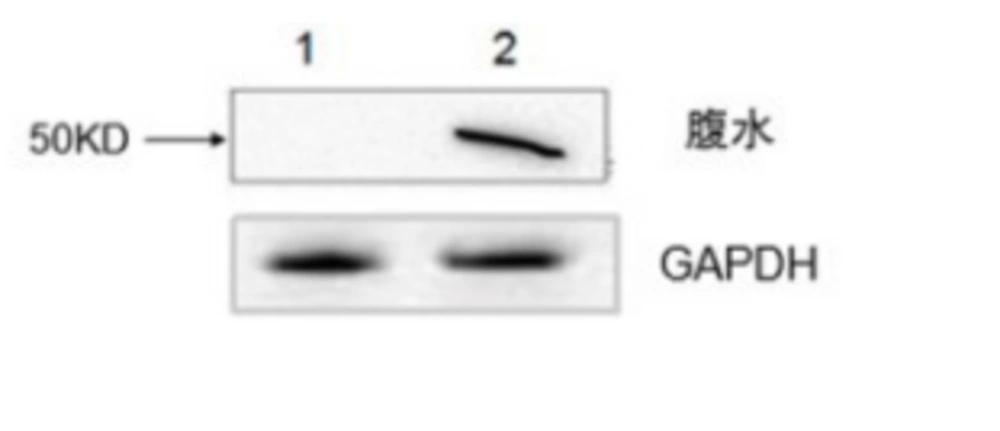
1: lysates of the N2a cells uninfected with rabies virus; 2: lysates of the N2a cells infected with rabies virus.
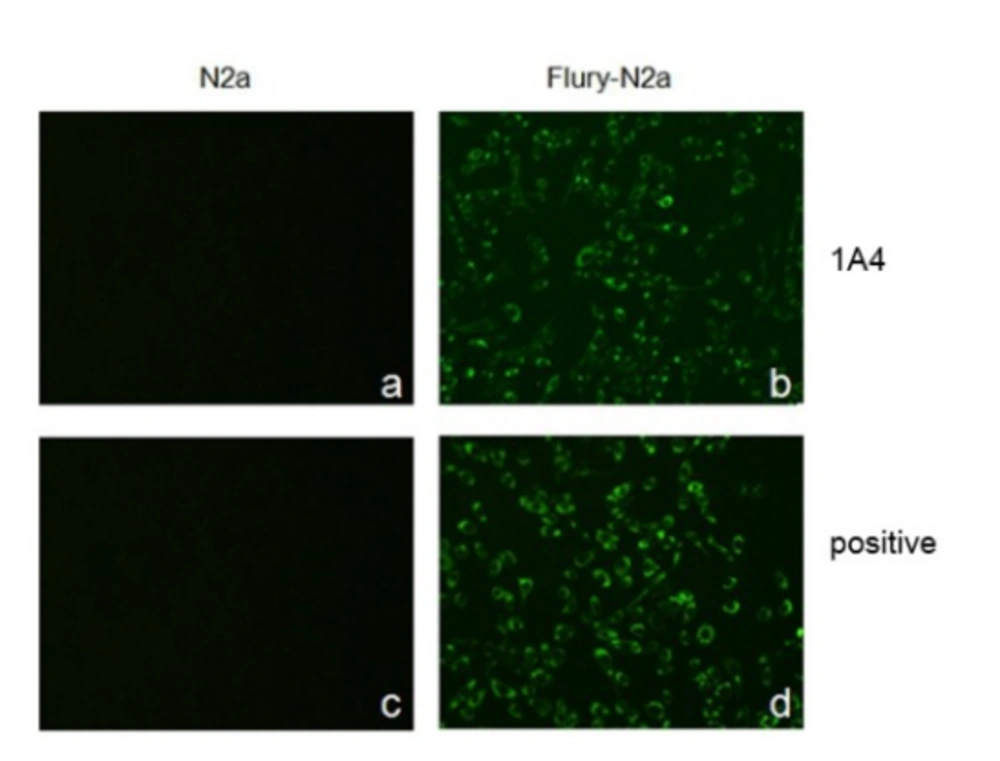
A, C are mock-infected N2a cells; B, D are the rabies virus infected N 2a cells. Anti-rabies virus serum was used as positive control.



