
1. Background
Escherichia coli is a significant pathogen affecting both hospitalized and non-hospitalized patients (1). The acquisition of resistance genes against commonly used antibiotics has become a growing concern in both community and hospital settings. Among the emerging and spreading isolates, extended-spectrum beta-lactamase (ESBL) E. coli strains are particularly worrisome, as they exhibit resistance to third-generation cephalosporins and aztreonam, which are commonly prescribed for severe infections in both out-patients and in-patients (2). ESBL isolates of E. coli are notably more significant than non-ESBL isolates in terms of their response to carbapenems (3). So far, approximately 300 variants of ESBL enzymes have been identified, with the most prevalent being C-TXM, TEM, and SHV (4). These enzymes differ in their hydrolyzing activity, stability, genetic composition, amino acid sequence, and susceptibility to beta-lactamase inhibitors such as clavulanic acid, tazobactam, and sulbactam (5, 6).
The prevalence of ESBL-producing E. coli exhibits geographical variation worldwide. For instance, in Germany, Canada, and Scandinavian countries, the prevalence of these isolates is below 10%. In the USA, France, Spain, Portugal, and England, it ranges from 10% to 25%. In Saudi Arabia, Japan, and Russia, the prevalence falls between 25% and 50%. Mongolia, China, India, and Pakistan show a higher prevalence range of 10% to 50%. The prevalence pattern of ESBL-E. coli in Africa is similar to that of Asian countries, ranging from 10% to 50% (1, 7, 8). In Iran, the antimicrobial resistance pattern of E. coli isolates varies from 2.5% to 100%, depending on the specific antibiotics, with an overall prevalence exceeding 50%. The prevalence of ESBL-producing isolates in different studies conducted in Iran ranged from 2.4% to 80.5%, influenced by factors such as sample type, study duration, city, and province (9, 10). Limited studies have examined the prevalence of ESBL-producing E. coli in clinical samples, specifically in the Kerman province, with three studies conducted in Kerman city and none in other cities within the province. The reported prevalence in Kerman City ranged from 35% to 65% (11-13).
2. Objectives
Given the significance of ESBL-producing E. coli isolates in the clinical setting, and to the best of our knowledge, this study represents the first investigation in Rafsanjan city that examines the antibiogram resistance pattern and frequency of ESBL-producing E. coli isolates among both out-patients and in-patients of Ali-Ebn-e-Abitaleb Hospital.
3. Methods
3.1. Sample Collection and Data Analysis
A total of 390 E. coli isolates were obtained from clinical samples of both out-patients and in-patients at Ali-Ebn-e-Abitaleb Hospital. The identification of isolates as E. coli was confirmed through biochemical tests (14). Data analysis was performed using SPSS software (version 20, IBM), utilizing independent t-student, chi-square, and analysis of variance (ANOVA) tests.
3.2. Antimicrobial Susceptibility and ESBLs Isolate Detection
Antimicrobial susceptibility testing was conducted using the Kirby-Bauer method, following the instructions provided by the Clinical and Laboratory Standards Institute (CLSI). The antimicrobial resistance of all isolates was assessed against ampicillin (30 µg), co-trimoxazole (10 µg), ciprofloxacin (30 µg), cefotaxime (30 µg), ceftriaxone (30 µg), ceftazidime (30 µg), cefixime (5 µg), gentamicin (10 µg), nitrofurantoin (30 µg), nalidixic acid (30 µg), imipenem (10 µg), amikacin (30 µg), and meropenem (10 µg) using discs obtained from Padtan Teb, Iran (14, 15). ESBL-producing E. coli strains were identified using the combination disk confirmatory test, as previously described (16). All experiments were performed in triplicate, with the E. coli ATCC 25922 strain used as a control.
3.3. DNA Extraction, CTX-M, SHV, and TEM Genes Detection
Isolate genomes were extracted using a DNA extraction kit (Karmania Pars Gene, Iran). The prevalence of common ESBL enzymes (CTX-M, SHV, and TEM) was determined among phenotypically ESBL-producing E. coli isolates. Polymerase chain reaction (PCR) was conducted using the previously described primer sets (17, 18).
4. Results
4.1. Antimicrobial Resistance
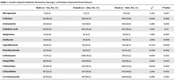
The rates of antibiotic resistance were as follows: Meropenem (2.8%), imipenem (6.7%), amikacin (10.3%), nitrofurantoin (14.4%), gentamicin (22.8%), ciprofloxacin (38.7%), ceftazidime (44.6%), cefixime (51.8%), cefotaxime (53.3%), nalidixic acid (58.2%), co-trimoxazole (63.6%), ceftriaxone (71.5%), and ampicillin (85.1%). Significant differences in antibiotic resistance were observed between males and females in all tested isolates, except for co-trimoxazole, ceftriaxone, amikacin, and nalidixic acid. Carbapenems displayed the lowest resistance rates, while the third generation of cephalosporins and cefixime exhibited the highest resistance rates. Co-trimoxazole and ampicillin antibiotics demonstrated very high resistance levels (Table 1).
Table 1.
Gender-related Antibiotic Resistance Among Escherichia coli Isolates Separated from Patients a
| Male (n = 94) | Female (n = 296) | Total (n = 390) | χ2 | P Value | |
|---|---|---|---|---|---|
| Meropenem | 6 (6.4) | 5 (1.7) | 11 (2.8) | 5.735 | 0.017 |
| Cefixime | 62 (66.0) | 140 (47.3) | 202 (51.8) | 9.950 | 0.002 |
| Gentamicin | 30 (31.9) | 59 (19.9) | 89 (22.8) | 5.816 | 0.016 |
| Nalidixic acid | 63 (67.0) | 164 (55.4) | 227 (58.2) | 3.957 | 0.47 |
| Imipenem | 12 (12.8) | 14 (4.7) | 26 (6.7) | 7.405 | 0.007 |
| Amikacin | 14 (14.9) | 26 (8.8) | 40 (10.3) | 2.893 | 0.089 |
| Ciprofloxacin | 58 (61.7) | 93 (31.4) | 151 (38.7) | 27.575 | 0.000 |
| Nitrofurantoin | 22 (23.4) | 34 (11.5) | 56 14.4 () | 8.240 | 0.004 |
| Ceftriaxone | 71 (75.5) | 208 (70.3) | 279 (71.5) | 0.970 | 0.325 |
| Ampicillin | 86 (91.5) | 246 (83.1) | 332 (85.1) | 3.959 | 0.047 |
| Cefotaxime | 61 (64.9) | 147 (49.7) | 208 (53.3) | 6.650 | 0.010 |
| Ceftazidime | 50 (53.2) | 124 (41.9) | 174 (44.6) | 3.243 | 0.055 |
| Co-trimoxazole | 61 (64.9) | 187 (63.2) | 248 (63.6) | 0.091 | 0.763 |
aValues are expressed as No. (%).
The resistance rates varied across different sample types among the isolates (Table 2). Antibacterial resistance in E. coli isolates obtained from the trachea showed rates of 14%, 13%, 34.8%, 60.9%, and 34.8% against meropenem, imipenem, amikacin, ciprofloxacin, and nitrofurantoin, respectively. The difference in resistance rates among E. coli isolates was significant for meropenem, amikacin, and nalidixic acid antibiotics, indicating a higher prevalence of resistance in E. coli from tracheal samples compared to other samples, particularly urinary samples (13% vs. 2.4%, respectively).
Table 2.
Resistance to Antibiotics Among Escherichia coli Isolates According to the Sample Type a
| Antibiotics | Urine (n = 327) | Tracheal Secretions (n = 23) | Blood (n = 20) | Wound (n = 15) | Others (n = 5) | Total (n = 390) | χ2 | P-Value |
|---|---|---|---|---|---|---|---|---|
| Meropenem | 8 (2.4) | 3 (13.0) | 0 (0.0) | 0 (0.0) | 0 (0.0) | 11 (2.8) | 10.097 | 0.039 |
| Cefixime | 164 (50.2) | 11 (47.8) | 15 (75.0) | 10 (66.7) | 2 (40.0) | 202 (51.8) | 6.419 | 0.170 |
| Gentamicin | 78 (23.9) | 4 (17.4) | 5 (25.0) | 0 (0.0) | 2 (40.0) | 89 (22.8) | 5.910 | 0.206 |
| Nalidixic acid | 191 (58.4) | 13 (56.5) | 10 (50.0) | 9 (60.0) | 4 (80.0) | 227 (58.2) | 1.582 | 0.812 |
| Imipenem | 17 (5.2) | 3 (13.0) | 4 (20.0) | 1 (6.7) | 1 (20.0) | 26 (6.7) | 9.778 | 0.044 |
| Amikacin | 30 (9.2) | 8 (34.8) | 0 (0.0) | 2 (13.3) | 0 (0.0) | 40 (10.3) | 18.465 | 0.001 |
| Ciprofloxacin | 110 (33.6) | 14 (60.9) | 13 (65.0) | 10 (66.7) | 4 (80.0) | 151 (38.7) | 22.663 | 0.191 |
| Nitrofurantoin | 44 (13.5) | 8 (34.8) | 3 (15.0) | 0 (0.0) | 1 (20.0) | 56 (14.4) | 10.670 | 0.031 |
| Ceftriaxone | 232 (70.9) | 17 (73.9) | 16 (80.0) | 12 (80.0) | 2 (40.0) | 279 (71.5) | 3.796 | 0.435 |
| Ampicillin | 276 (84.4) | 21 (91.3) | 19 (95.0) | 13 (86.7) | 3 (60.0) | 332 (85.1) | 4.890 | 0.299 |
| Cefotaxime | 164 (50.2) | 15 (65.2) | 16 (80.0) | 11 (73.3) | 2 (40.0) | 208 (53.3) | 11.116 | 0.251 |
| Ceftazidime | 139 (42.5) | 11 (47.8) | 13 (65.0) | 9 (60.0) | 2 (40.0) | 174 (44.6) | 5.527 | 0.237 |
| Co-trimoxazole | 206 (63.0) | 14 (60.9) | 13 (65.0) | 12(80.0) | 3 (60.0) | 248 (63.6) | 1.913 | 0.752 |
aValues are expressed as No. (%).
4.2. ESBL-Producing Isolates
The total number of ESBL-producing E. coli isolates was 177 (45.4%), out of which 52.3% (52 from 94) and 42.2% (125 from 296) of cases obtained from men and women, respectively. These isolates accounted for 42.5% of outpatients and 46.1% of hospitalized patients. The prevalence of ESBL-producing isolates in different sample types was as follows: Urine (43.1%), tracheal secretions (52.2%), blood (65%), wound (60%), and other samples (40%). These differences were not statistically significant except for gender (Table 3). Overall, 45.4% of E. coli isolates were ESBL producers, with frequencies of 42.5% and 46.1% in out-patients and in-patients, respectively. The prevalence of ESBL-producing isolates in urine, tracheal secretions, blood, wound, and other samples (unknown source) was 43.1%, 52.2%, 56%, 60%, and 40%, respectively, and these differences were not statistically significant. However, a significant difference was observed in the rate of ESBL-producing E. coli between male and female patients (Table 3).
Table 3.
Frequency of ESBL Producing Escherichia coli Among Clinical Samples
| N | ESBL (177, %45.6), No. (%) | χ2 | P Value | |
|---|---|---|---|---|
| Gender | 4.931 | 0.026 | ||
| Male | 94 | 52 (52.3) | ||
| Female | 296 | 125 (42.2) | ||
| Patient’s status | 0.309 | 0.578 | ||
| Out-patient | 73 | 31 (42.5) | ||
| In-patient | 317 | 146 (46.1) | ||
| Sample type | 5.751 | 0.219 | ||
| Urine | 327 | 141 (43.1) | ||
| Trachea | 23 | 12 (52.2) | ||
| Blood | 20 | 13 (65.0) | ||
| Wound | 15 | 9 (60.0) | ||
| Others | 5 | 2 (40.0) |
4.3. ESBLs Types in the Out-and In-patients
Table 4 presents the distribution of ESBL types based on patients' status. The majority of isolates carried two or three ESBL genes concurrently. The most prevalent ESBL genes among the ESBL-producing isolates were TEM + CTX-M (20%) and TEM + CTX-M + SHV (14.4%). No statistically significant difference was observed in the prevalence of ESBL-producing isolates between out-patients and in-patients. A similar pattern of ESBL genes was observed between out-patients and in-patients in other sample types, including urine, tracheal secretions, blood, wound, and other samples (Table 4).
Table 4.
Frequency of TEM, SHV, and CTX-M ESBL Genes According to Patients’ Status (In- and Out-patient) a
| ESBLs Genes | Out-patients (n = 73) | In-patients (n = 317) | Total (n = 390) | χ2 | P-Value |
|---|---|---|---|---|---|
| SHV | 0 (0.0) | 3 (0.9) | 3 (0.8) | 5.327 | 0.620 |
| TEM | 0 (0.0) | 6 (1.9) | 6 (1.5) | ||
| CTX-M | 5 (6.8) | 14 (4.4) | 19 (4.9) | ||
| SHV + TEM | 0 (0.0) | 6 (1.9) | 6 (1.5) | ||
| SHV + CTX-M | 1 (1.4) | 9 (2.8) | 10 (2.6) | ||
| TEM + CTX-M | 13 (17.8) | 65 (20.5) | 78 (20.0) | ||
| TEM + CTX-M + SHV | 12 (16.4) | 44 (13.9) | 56 (14.4) | ||
| Negative | 42 (57.5) | 170 (53.6) | 212 (54.4) |
aValues are expressed as No. (%).
4.4. ESBLs Producing Escherichia coli Based on Sample Types
Most E. coli isolates were obtained from urine samples, followed by tracheal secretions, wounds, blood, and other samples. Depending on the sample type, the percentage of isolates without ESBL genes ranged from 35% to 60%. Most isolates carried two or three types of ESBLs simultaneously, with TEM + CTX-M (20%) and TEM + CTX-M + SHV (14.4%) being the most common combinations. Two or more ESBL genes were frequently found in isolates from urine, tracheal secretions, blood, and wound samples. The TEM + CTX-M combination was the most prevalent, although no statistically significant difference was observed (Table 5).
Table 5.
Frequency of ESBL Genes According to Sample Type a
| ESBLs Genes | Urine (n = 327) | Trachea (n = 23) | Blood (n = 20) | Wound (n = 15) | Others (n = 5) | Total (n = 390) | χ2 | P-Value |
|---|---|---|---|---|---|---|---|---|
| SHV | 2 (0.6) | 1 (4.3) | 0 (0.0) | 0 (0.0) | 0 (0.0) | 3 (0.8) | 39.593 | 0.072 |
| TEM | 5 (1.5) | 1 (4.3) | 0 (0.0) | 0 (0.0) | 0 (0.0) | 6 (1.5) | ||
| CTX-M | 15 (4.6) | 1 (4.3) | 3 (15.0) | 0 (0.0) | 0 (0.0) | 19 (4.9) | ||
| SHV + TEM | 3 (0.9) | 2 (8.7) | 0 (0.0) | 1 (6.7) | 0 (0.0) | 6 (1.5) | ||
| SHV + CTX-M | 7 (2.1) | 0 (0.0) | 2 (10.0) | 1 (6.7) | 0 (0.0) | 10 (2.6) | ||
| TEM + CTX-M | 64 (19.6) | 3 (13.0) | 7 (35.0) | 4 (26.7) | 0 (0.0) | 78 (20.0) | ||
| TEM + CTX-M + SHV | 46 (14.1) | 4 (17.4) | 1 (5.0) | 3 (20.0) | 2 (40.0) | 56 (14.4) | ||
| Negative | 185 (56.6) | 11 (47.8) | 7 (35.0) | 6 (40.0) | 3 (60.0) | 212 (54.4) |
aValues are expressed as No. (%).
5. Discussion
Considering the relatively high resistance rate (around 50%) of the tested E. coli isolates against third-generation cephalosporins (ceftriaxone and ceftazidime) found in this study and similar research (19, 20), it is advisable to refrain from prescribing these antibiotics for E. coli infections. As most isolates in this study demonstrated sensitivity to nitrofurantoin and amikacin (21), it is recommended to avoid using carbapenems as a first-line treatment for severe infections (19, 21, 22). The increasing prevalence of extended-spectrum beta-lactamase-producing E. coli isolates in clinical samples is a growing concern. The prevalence of these isolates in different regions of Iran ranges from 12% to 80%. In Kerman City, the prevalence of ESBL isolates in various clinical samples was as follows: 25.9% in diarrheal samples, 43.7% in urinary samples, and 68% in other tested clinical samples (9).
According to the World Health Organization's report, the prevalence of ESBL E. coli isolates worldwide ranges from 10% to 50%. In specific regions, the percentages vary, such as Iran (25 - 50%), China, India, and Pakistan (more than 50%), United States, France, Russia, and Britain (10 - 25%), and Scandinavian countries, Germany, and Australia (less than 10%) (22). In the present study, the prevalence of ESBL-producing strains in Rafsanjan (45.6%) was found to be similar to Zabol (44.4%), Tehran (50%), and Kashan (46%), higher than Sanandaj (19.02%), Semnan (17.46%), and Shiraz (12.96%), and lower than Arak (80.5%), Tehran (70%), and Tabriz (66.2%) (9). The prevalence of ESBL-producing E. coli in this study is relatively similar to or lower than that in developing countries and higher than in developed countries. It is crucial to avoid the inappropriate use of antibiotics for treating E. coli and other bacterial infections to prevent further challenges for the healthcare system.
While previous reports have suggested that the prevalence of ESBL-producing E. coli isolates does not show a gender preference (23), our findings indicate a higher rate of these isolates in males compared to females (52.3% vs. 42.2%). This observation aligns with the study conducted by Yousefipour et al. (64.6% vs. 55.3%), where both groups consisted of hospitalized patients (19). However, our results contradict the study by Hung et al., which showed a higher prevalence in women than in men (52.1% vs. 47.9%) (24). Although the majority of E. coli isolates were obtained from hospitalized patients of both genders and from urine samples, based on our data, we cannot provide a definitive explanation for the increased presence of ESBL-producing isolates in male patients.
The prevalence of ESBL-producing E. coli varies in terms of the responsible genes. Some studies have reported the TEM gene as the most common, while others have identified the SHV gene as predominant (25-27). In our study, consistent with many other investigations, CTX-M was found to be the most prevalent gene (10), which has also been reported in several previous studies (28, 29). These findings highlight the simultaneous presence of two or more ESBL genes in a single clinical isolate, indicating their clinical significance, although it has been discussed to a lesser extent. Similar to other studies, a significant proportion of our isolates demonstrated the presence of two or more ESBL genes concurrently (28, 29). This simultaneous presence of multiple ESBL enzyme variants signifies a higher level of enzyme production and greater antibiotic degradation. Consequently, this contributes to the increased severity of infections and the prevalence of such isolates among patients.
5.1. Conclusions
Considering the high sensitivity of the isolates in our study to amikacin and nitrofurantoin, it is advisable to utilize these antibiotics for the treatment of E. coli infections. The findings indicate a growing concern regarding ESBL-producing E. coli isolates in both out-patient and in-patient settings, particularly those harboring multiple types of ESBL enzymes. Consequently, these isolates exhibit enhanced antibiotic hydrolysis capabilities and have become increasingly prevalent in clinical samples.