1. Background
Clostridium difficile is the main cause of antibiotic-associated diarrhea, colitis, and pseudomembranous colitis, which are known as C. difficile infection (CDI) (1). The clinical spectrum of symptomatic CDI ranges from mild diarrhea to severe complications (2). The incidence of C. difficile increased to 2 to 2.5-fold since the late 1990s (3). The increasing incidence of CDI was attributed to the outbreak of the BI/NAP1/027 epidemic strain, which was the most common cause of nosocomial diarrhea among the elderly (> 65 years of age), with high mortality and morbidity in the United States and Europe (4, 5). Thereafter, C. difficile has received great attention and has been regarded as a serious health problem in many industrialized countries.
Despite the increasing attention it has received, the worldwide rates of CDI have continued to steadily increase noticeably since 2000, especially among recently hospitalized elderly patients or among long-term care facility residents (6). The epidemiology of C. difficile has changed more seriously in the past decade. Many studies reported cases of CDI among historically low-risk groups such as community dwellers (7). In particular, C. difficile is increasingly being recognized as a cause of disease in the community; for instance, 40% of patients with community-associated-CDI (CA-CDI) in 1 study required hospitalization (8). Recently, a new strain, C. difficile PCR ribotype 078, which also produces binary toxin, has shown an increasing incidence in Western countries through local epidemics (9).
Compared with other Asian and Western countries, CDI awareness is inadequate in mainland China due to the lack of data on this infection. Although some reports have reported CDI in hospitals in China, all these studies were conducted in tertiary hospitals (10, 11), and there is a lack of systematic clinical surveys of CDI in community level hospitals.
2. Objectives
This study aimed at describing the molecular characteristics of toxigenic C. difficile isolated from a community level hospital and evaluating physicians’ knowledge on CDI.
3. Methods
3.1. Collection of Toxigenic C. difficile Isolates
This epidemiological study was conducted at the First People’s hospital of Wenling, Zhejiang province, China, which is a local community hospital with 250 beds. Unformed stool samples, which had been sent to the clinical microbiology laboratory, were analyzed between January 1, 2015 and March 31, 2016. To isolate C. difficile, the stool sample was inoculated on cycloserine cefoxitine taurocholate agar (Oxoid Ltd., Cambridge, UK) supplemented with 7% sheep blood after an alcohol shock procedure, and the strains were confirmed by matrix-assisted laser desorption-ionization time-of-flight mass spectrometry (MALDI-TOF-MS), with a Microflex LT system (Bruker Daltonik GmbH, Bremen, Germany).
3.2. Characterization of C. difficile
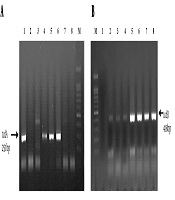
DNA was isolated according to the previously described method (12). All strains were tested for the presence of the tcdA, tcdB, cdtA, and cdtB genes by PCR as described by Kato et al. (13)and Stubbs et al. (14), respectively.
The primer sequences for the detected genes were as follow: toxin A gene, 5'-CCACCAGCTGCAGCCATA-3' (sense); toxin A gene, 5'- TGATGCTAATAATGAATCTAAAATGGTAAC-3' (antisense); toxin B gene, 5'-GTGTAGCAATGAAAGTCCAAGTTTACGC-3' (sense); toxin B gene, 5'-CACTTAGCTCTTTGATTGCTGCACC-3' (antisense); CDTa gene, 5'-TGAACCTGGAAAAGGTGATG-3' (sense); CDTa gene, 5'-GATTATTTACTGGACCATTTG-3' (antisense); CDTb gene, 5'-CTTAATGCAAGTAAATACTGAG-3' (sense); CDTb gene, and 5'-AACGGATCTCTTGCTTCAGTC-3' (antisense). The PCR protocol for the toxin A gene was as follow: 35 cycles consisting of 95°C for 20 seconds and 62°C for 120 seconds. The PCR protocol for toxin B gene included 35 cycles of 95°C for 20 seconds and 55°C for 120 seconds. The thermal profiles for the CDTa and CDTb genes were performed at 30 cycles of 94°C for 45 seconds, 52°C for 60 seconds, and 72°C for 80 seconds.
3.3. MLST
Multilocus sequence typing (MLST) was performed with 7 housekeeping genes (adk, atpA, dxr, glyA, recA, and tpi) for all of the isolates according to Griffiths et al. (15). The assignment of the allele number and sequence type (ST) was performed with C. difficile MLST database homepage (http://pubmlst.org/cdifficile/).
3.4. Antimicrobial Susceptibility Testing
The isolates were tested against the antibiotics by the Etest on Brucella agar plates containing 1 mg/L vitamin K, 5 mg/L hemin, and 5% sheep red blood cells, according to the manufacturer’s instructions. Clostridium difficile ATCC 700057, which had been preserved in our laboratory, was used as the control. The following antibiotics were assessed: metronidazole, vancomycin, clindamycin, erythromycin, linezolid, moxifloxacin, levofloxacin, rifampicin, tetracycline, and ciprofloxacin.
The minimum inhibitory concentration (MIC) breakpoints used to define resistance were 8 µg/mL for erythromycin, clindamycin, and the fluoroquinolones and 32 µg/mL for metronidazole, in accordance with the clinical and laboratory standards institute (CLSI) interpretative categories approved for anaerobic bacteria. The breakpoints used for rifampicin, linezolid, and vancomycin were 4, 4, and 2 µg/mL, respectively, according to the European committee on antimicrobial susceptibility testing (EUCAST).
3.5. Statistical Analysis
SPSS version 16.0 software (SPSS, Cary, NC, USA) was used for statistical analysis. To preserve the assumption of the independence of the observations, only the first toxigenic C. difficile of an individual patient was included in the analyses. Chi-squared test or Fisher’s exact test were applied to compare categorical variables. Statistical significance was set at P < 0.05.
4. Results
4.1. Distribution of C. difficile Isolates in Wards
During the study period, 460 stool samples were collected from the inpatients and a total of 61 (13.2%) nonduplicate toxigenic C. difficile strains were isolated. The mean age of the patients with CDI was 65.4 years (age range, 18 - 84 years), and of them, 54.7% (33/61) were male. There was no significant differences between male and female patients in CDI (P > 0.05).
Among these strains, 54 (88.5%) were positive for both tcdA and tcdB genes (A+B+), and 7 (11.5%) contained only the tcdB gene (A–B+). None of the isolates were found to be positive for the cdtA and cdtB genes. Of these isolates, 29.5% (18/61) were isolated from the patients who visited the gastroenterology department, 18.3% (13/61) from patients who visited the infection ward, and 16.4% (10/61) from those who visited the hematology department.
The incidence of CDI was the highest in August 2015 (21.3%, 13/61), followed by June and July 2015 (both 16.4%, 10/61). The number of CDI cases in these 3 months accounted for 54.1% of all cases. Among the other months, a higher incidence occurred in April 2015 (16.4%, 10/61), and the incidence was below 5% for the rest of the study period.
4.2. Molecular Epidemiology of the Isolates
All toxigenic C. difficile strains were analyzed by MLST and divided into 13 different STs. The most dominant type was ST-54 (32.8%, 20/61), followed by ST-3 (16.4%, 10/61) and ST-35 (13.1%, 8/61), while ST-1 (BI/NAP1/027) or ST-11 (ribotype 078) strain was identified. All toxin type A-B+ strains were ST-37 (11.5%, 7/61). However, the remaining 9 STs were represented by only 1 strain.
4.3. Susceptibility of the Isolates to Antibiotics
We used Etest strips to determine the antibiotic resistance profiles of the toxigenic isolates to 10 antibiotics. Table 1 presents the resistance rates of the C. difficile strains and the MICs of the 10 antibiotics against these isolates. All the isolates were susceptible to metronidazole and vancomycin. A single isolate, which was isolated from a 94-year-old female, was resistant to linezolid with MIC of 4 µg/mL, while the remained isolates were susceptible to linezolid. The toxigenic isolates showed a high level resistance to clindamycin (MIC90 > 256 µg/mL), levofloxacin (MIC90 > 32 µg/mL), erythromycin (MIC90 > 256 µg/mL), and ciprofloxacin (MIC90 > 32 µg/mL),
Table 1.
Minimum Inhibitory Concentrations (MICs) of 10 Antimicrobial Agents Against Toxigenic C. difficile
| Antibiotics | Resistance Rates, % | MIC, μg/mL | ||
|---|---|---|---|---|
| MIC50 | MIC90 | Range | ||
| Metronidazole | 0 | 0.064 | 0.125 | 0.016 - 0.38 |
| Linezolid | 0 | 0.5 | 1 | 0.125 - 4 |
| Vancomycin | 0 | 0.5 | 0.75 | 0.25 - 0.75 |
| Clindamycin | 82.0 | > 256 | > 256 | 0.5 - > 256 |
| Rifampicin | 0 | < 0.002 | < 0.002 | <0.002 |
| Levofloxacin | 80.3 | > 32 | > 32 | 0.5 - > 32 |
| Erythromycin | 80.3 | > 256 | > 256 | 0.38 - > 256 |
| Moxifloxacin | 13.1 | 0.75 | > 32 | 0.25 - > 32 |
| Tetracycline | 6.6 | 0.064 | 12 | 0.016 - 24 |
| Ciprofloxacin | 98.0 | > 32 | > 32 | 0.5 - > 32 |
5. Discussion
Currently, CDI is regarded as a nationwide burden due to its increasing morbidity and mortality. The increasing incidence of CDI has been well- documented in many populations, especially among the elderly and in groups that were previously considered low risk (5). Indeed, the incidence rates of CDI in some large tertiary health care centers in China were found to be similar to those reported in Western countries (11, 16). Despite this, no epidemiological studies have been conducted to investigate C. difficile in county level hospitals in China.
To our knowledge, this was the first report of the epidemiological features of strains isolated from a county level hospital in China. In the present study, 13.2% of all the samples were positive for toxigenic C. difficile, which is similar to the corresponding rate in a tertiary hospital in the same province (11).
In the present study, as the incidence of CDI was higher from June to August, it could be said that there is a seasonal (summer) correlation of CDI incidence. We speculate that increase in diarrhea incidence during the summer may be attributed to increased utilization of antibiotics in the winter and spring months. In Western countries, studies have found that patients are at a higher risk of CDI for 1 to 3 months following cessation of antibiotic therapy (17). Therefore, it is expected that peak CDI incidence occurs between June and August after infection over winter and spring.
MLST genotyping identified 13 different STs for all the toxigenic strains with ST-54, ST-3, and ST-35 being the 3 most common types. Previous studies have reported ST-54, ST-35, and ST-37 as the top 3 prevalent genotypes in China (18). In addition, Zhou et al. found ST-54 and ST-37 to be the prevalent genotypes in the Chinese city of Shanghai10. Therefore, the epidemiology of C. difficile in the city of Wenling was similar to that seen in larger tertiary health care centers in China. ST-3 has been rarely reported as the main epidemic genotype in China, except in a report by Fang et al. (19), who isolated ST-3 from cancer patients. In addition, ribotype 001 (ST-3) was identified as the most common PCR ribotype responsible for nosocomial infection in European countries9. However, Tian et al. found that the carrier rate of ST-3 in healthy infants and healthy adults was 32.7% and 11.0%, respectively (20). This may be the reason why ST-3 was one of the most commonly encountered type seen in this study, as it is a county level hospital for first visit patients. Different geographical locations and antibiotic regimens used in these studies may be additional reasons. Thus, further work is needed to confirm our hypothesis.
Among these clinical isolates, A–B+ strains accounted for 11.5% of the toxigenic isolates, and all A–B+ strains belonged to ST-37. Although strains belonging to ST-37 do not produce a binary toxin, this was the main A–B+ strain found in a tertiary hospital in Hangzhou (11), and it has been the reported cause of widespread disease in Asia. In addition, Huang et al. reported that ST-37 was the most common genotype in Shanghai (21). Despite this, it is still unknown why A–B+ strains, and especially ST-37, cause widespread disease in Asia. Although the isolation rate of ST-37 was not as high as that reported previously, it is of concern because it was isolated at a county level hospital.
Metronidazole and vancomycin are the 2 most commonly prescribed antimicrobial agents for the treatment of C. difficile infections in humans. In this study, all identified toxigenic stains showed susceptibility to metronidazole and vancomycin. According to EUCAST, the breakpoint for linezolid was 4 µg/mL. The toxigenic strains in our study were susceptible to linezolid with MIC50 and MIC90 values, which were considerably below 4 µg/mL. However, 1 toxigenic ST-37 strain showed reduced susceptibility to linezolid, with a MIC of 4 µg/mL. Marin et al. previously reported that linezolid has a high MIC against the isolates of toxigenic C. difficile including ribotype 017(ST-37) (22). Further studies are required to determine the possible mechanism of resistance in this strain.
Other studies have shown that strains commonly exhibit resistance to moxifloxacin, which was always associated with macrolide-lincosamide-streptogramin B (MLSB) resistance (23). Huang et al. conducted a study in Shanghai and found that 46.4% and 35.7% of 74 C. difficile isolates were resistant to moxifloxacin and tetracycline, respectively 24. However, the toxigenic strains in our study showed lower resistance rates to moxifloxacin and tetracycline (13.1% and 6.6%, respectively). This may be connected with the different antibiotic regimens used and the environmental factors unique to the city of Wenling. The toxigenic strains had high resistance rates to clindamycin, levofloxacin, and erythromycin. Nearly all of the toxigenic strains (96.7%, 59/61) were resistant to ciprofloxacin, which was similar to that reported by Huang et al. (24).
Our study had several limitations. First, the population size was small and the surveillance period was short. During the 1.5-year period, only 460 patients were enrolled. This may be due to the lack of clinical suspicion of C. difficile infection in diarrhea in China, especially in hospitals at this county/provincial level. Second, detailed information for cases of infection was obtained only for some epidemiological characteristics, and risk factors for CDI were not analyzed. Furthermore, treatment and outcome characteristics of patients with CDI were not analyzed because most patients were discharged quickly or transferred to other hospitals.
In conclusion, the incidence of C. difficile infection and molecular characteristics of the isolates in county level hospitals in this study were similar to those in nonoutbreak periods in some large tertiary health care hospitals in China (11, 24). The results of the present study also indicate that CDI may be a common problem, and large-scale multicenter studies are required to reveal the actual extent of the burden of CDI in county level hospitals.