3.1. Clinical Data
From March 2022 to June 2023, children with lower respiratory tract infections, accompanied by varying degrees of high fever, chills, and other clinical symptoms, were admitted to the Department of Pediatrics at Tongde Hospital of Zhejiang Province. Among these, 120 children were diagnosed with S. pneumoniae pulmonary infection through sputum isolation, culture, chest X-ray, and other examinations.
Inclusion criteria: (1) Children who met the diagnostic criteria for S. pneumoniae pulmonary infection; (2) age less than 10 years; (3) onset within 0 - 3 days; (4) family members were informed about the study, voluntarily participated, and provided signed informed consent. Exclusion criteria: (1) Other pulmonary infectious diseases; (2) nasal congenital dysplasia; (3) significant organ dysfunction; (4) allergic to therapeutic drugs; (5) recent treatment history with immunomodulators. The experiment was approved by the Tongde Hospital of Zhejiang Province Ethics Committee.
A total of 120 patients were randomly divided into two groups: (1) The control group; and (2) the OM85-BV group, with 60 cases in each. In the control group, there were 35 males and 25 females, with a mean age of 4.1 ± 1.5 years (range: 0.8 - 8.5 years). The average body temperature was 38.3 ± 1.0°C (range: 37.9 - 40.1°C), and body weight ranged from 12 to 30 kg (mean: 18.0 ± 4.3 kg). Imaging features in the control group suggested lung texture thickening, inflammatory infiltration, and parenchymal lesions in 38 cases, an air bronchogram in 34 cases, and a small amount of pleural effusion in 16 cases. In the OM85-BV group, there were 36 males and 24 females, with a mean age of 4.2 ± 1.8 years (range: 0.5 - 8.1 years). The average body temperature was 38.5 ± 1.1°C (range: 37.8 - 39.7°C), and body weight ranged from 12 to 30 kg (mean: 18.3 ± 3.6 kg). Imaging features in this group suggested lung texture thickening, inflammatory infiltration, and parenchymal lesions in 35 cases, an air bronchogram in 32 cases, and a small amount of pleural effusion in 15 cases. There were no significant differences between the two groups in terms of gender, age, weight, body temperature, or the proportion of imaging features (P > 0.05).
3.2. Treatment Plan
All patients received basic treatment, including oxygen inhalation, fever reduction, phlegm resolution, and cough relief. The control group was treated with intravenous mezlocillin (H37020221, Xinhua Pharmaceutical (Gaomi) Co., LTD., China) at 100 mL/kg/day, administered once daily for 10 days. In addition to this treatment, the OM85-BV group received oral OM85-BV capsules (SJ20150041, OM Pharma SA, Switzerland), 3.5 mg per capsule, taken on an empty stomach every morning, once daily for 10 days.
3.3. Observation Indexes and Efficacy Evaluation
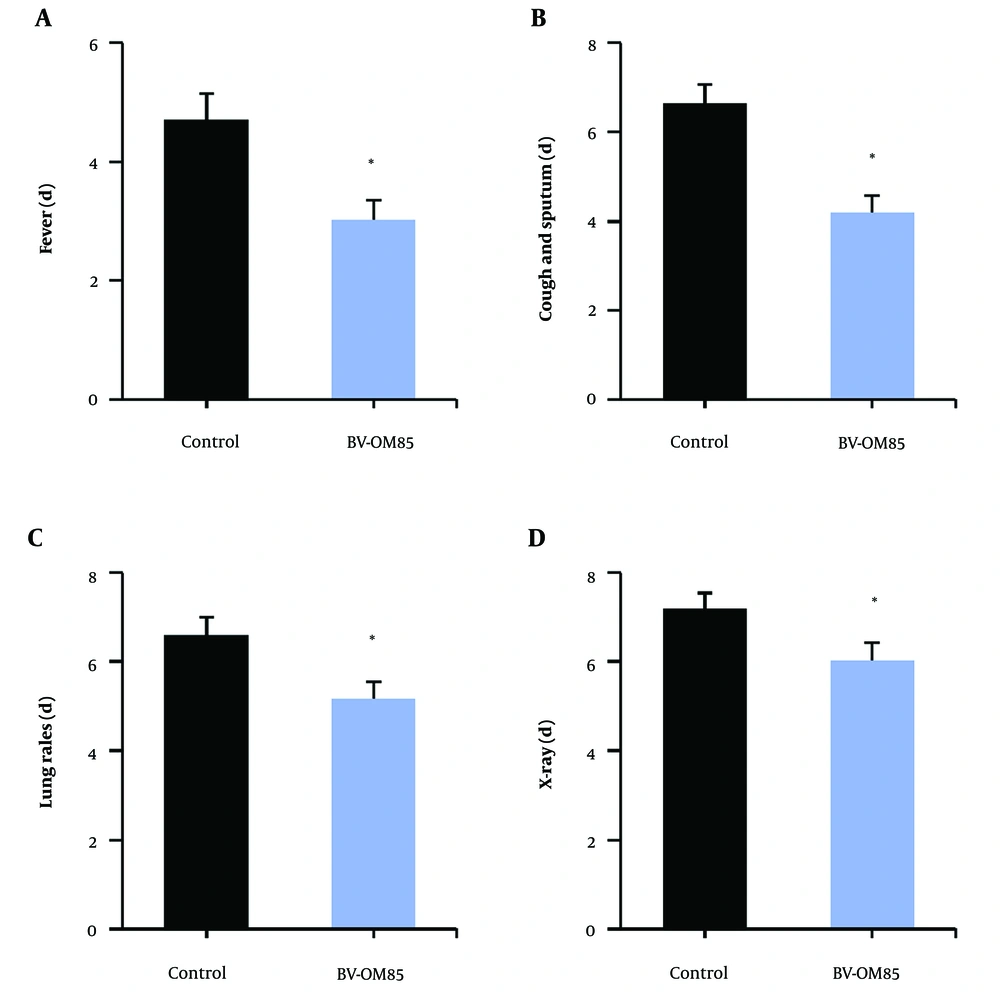
(1) Basic indicators: The time for clinical symptom disappearance and recovery of chest X-ray findings were recorded.
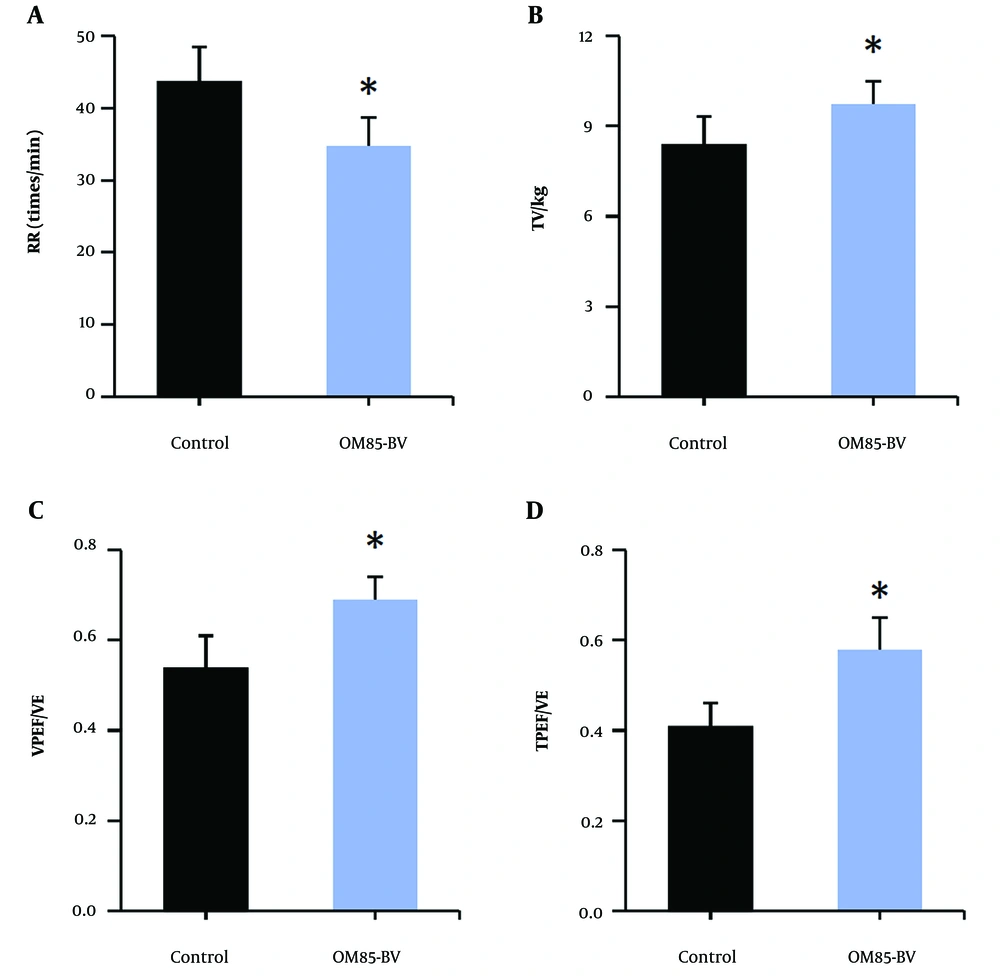
(2) Pulmonary function indicators: After treatment, changes in pulmonary function, including respiratory rate, tidal volume, volume to peak expiratory flow as a proportion of exhaled volume, and time to peak tidal expiratory flow as a proportion of expiratory time, were evaluated.
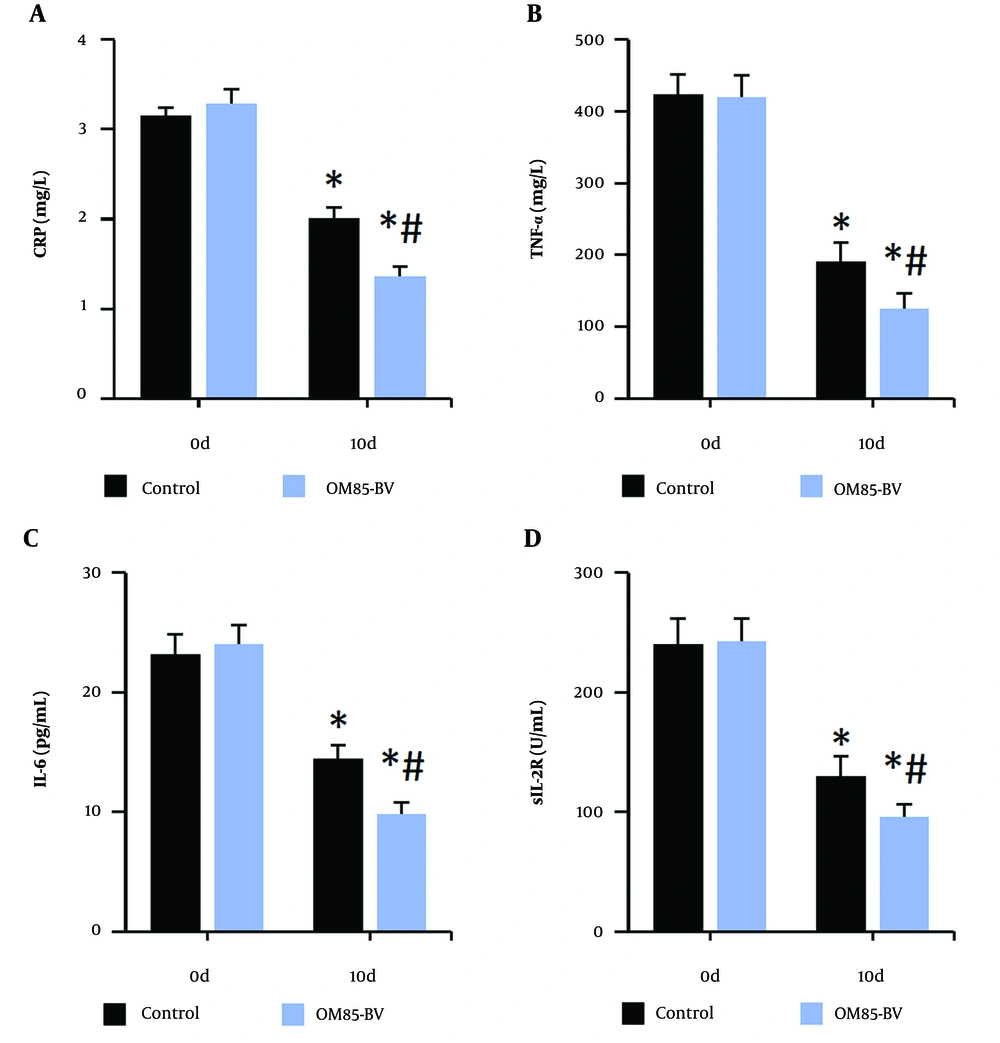
(3) Inflammatory markers: Blood samples were collected before (day 0) and after (day 10) treatment. In the morning, 3 mL of venous blood was drawn from each patient in a fasting state, and serum was collected using anticoagulant separation (Becton, Dickinson and Company, USA). Serum levels of C-reactive protein (CRP), tumor necrosis factor-α (TNF-α), interleukin-6 (IL-6), and soluble interleukin-2 receptor (sIL-2R) were measured using enzyme-linked immunosorbent assay (ELISA) kits (Shanghai Jiwei Biotechnology Co., Ltd, China).
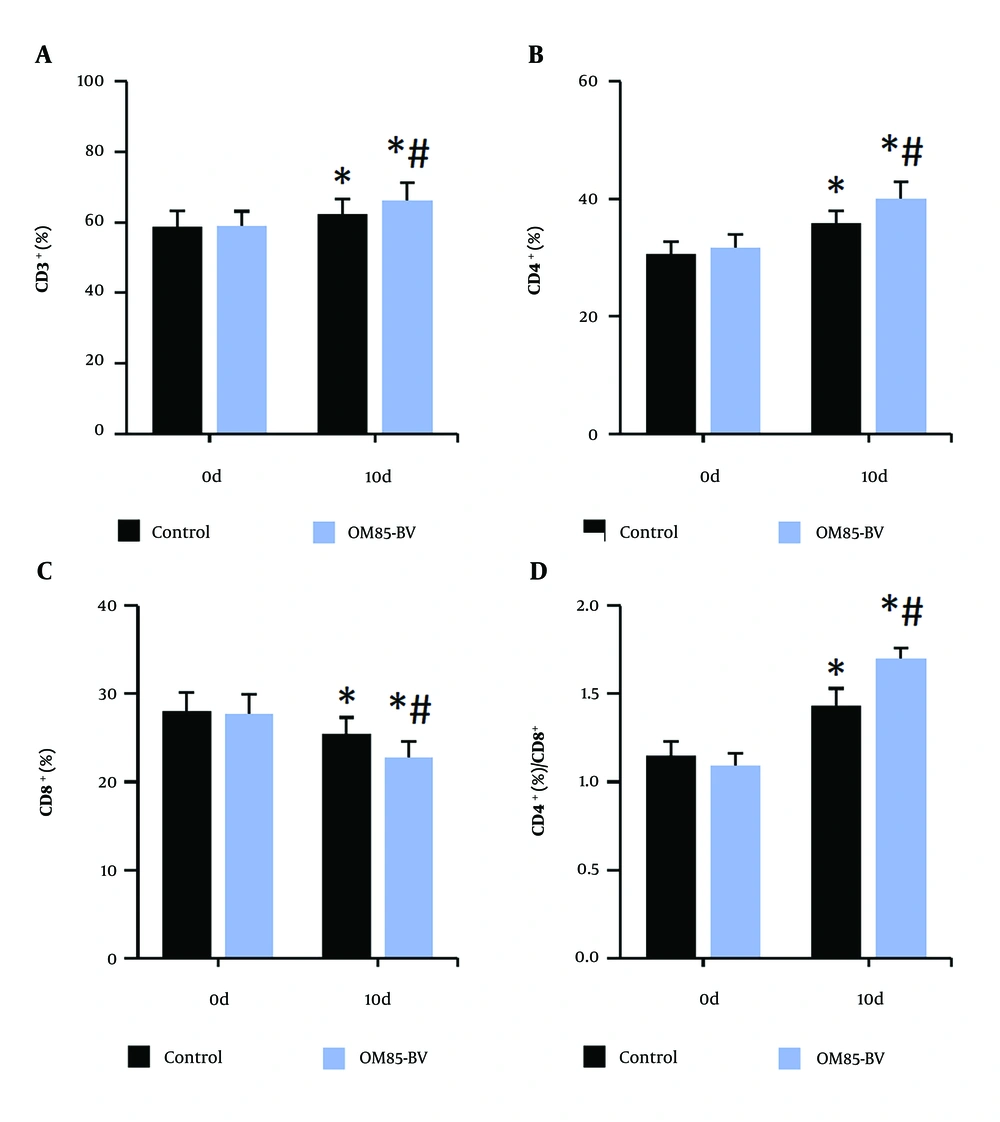
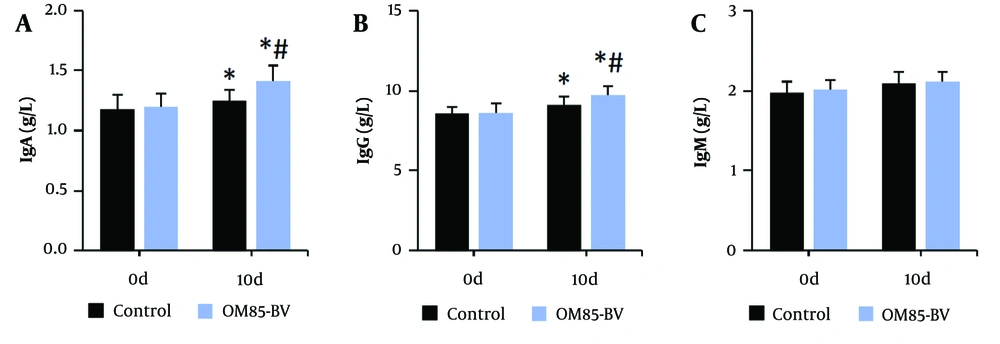
(4) Immune function indicators: The proportions of T lymphocyte subsets CD3+, CD4+, and CD8+ in serum were determined using a CytoFLEX S flow cytometer (Beckman Coulter, USA). The CD4+/CD8+ ratio was computed. The concentrations of IgA, IgG, and IgM in serum were also measured using immunoglobulin ELISA kits (Wuhan Elabscience Biotechnology Co., Ltd, China).
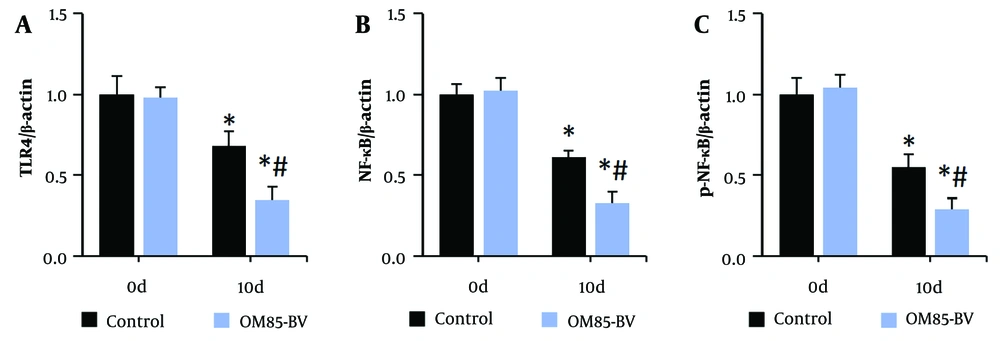
(5) Toll-like receptors/NF-κB pathway indicators: Peripheral blood mononuclear cells (PBMCs) were isolated using Ficoll density gradient centrifugation (Ficoll® 400, Merck KGaA, Darmstadt, Germany). Total protein was extracted from the lysed cells and quantified. After gel electrophoresis and protein separation, the proteins were transferred to polyvinylidene fluoride membranes for sealing. Rabbit polyclonal TLR4 (1:1000), NF-κB (1:2000), p-NF-κB (1:1000) (Thermo Fisher Scientific Inc., USA), and mouse monoclonal β-actin (1:5000) primary antibodies were incubated overnight at 4°C. Horseradish peroxidase (HRP) IgG secondary antibody (1:2000) was applied, incubated at 25°C for 2 hours. The relative gray values of TLR4 and related protein expressions were detected using a gel imaging technique.
(6) The therapeutic effect in children was classified into three categories: Markedly effective, where clinical symptoms completely disappeared and the chest X-ray showed no shadow in the lung; effective, where clinical symptoms improved significantly and the chest X-ray indicated a clear reduction in the lung shadow; and ineffective, where there was no change or an aggravation of clinical symptoms, and the chest X-ray showed no reduction or an increase in the lung shadow. The total effective rate was calculated as follows:
(7) Adverse reactions: Any adverse reactions such as nausea/vomiting, diarrhea/abdominal pain, rash, fatigue, and cough were recorded during the treatment period.