Current treatments for toxoplasmosis, such as sulfadiazine and pyrimethamine, have limitations, including teratogenic effects, bone marrow suppression, and inefficacy against tissue cysts. Therefore, there is a critical need for an effective vaccine to prevent toxoplasmosis and mitigate its impact on public health. A successful vaccine would reduce infection rates, alleviate the burden of chronic disease, and provide a cost-effective solution for managing toxoplasmosis, especially in vulnerable populations (
22,
23).
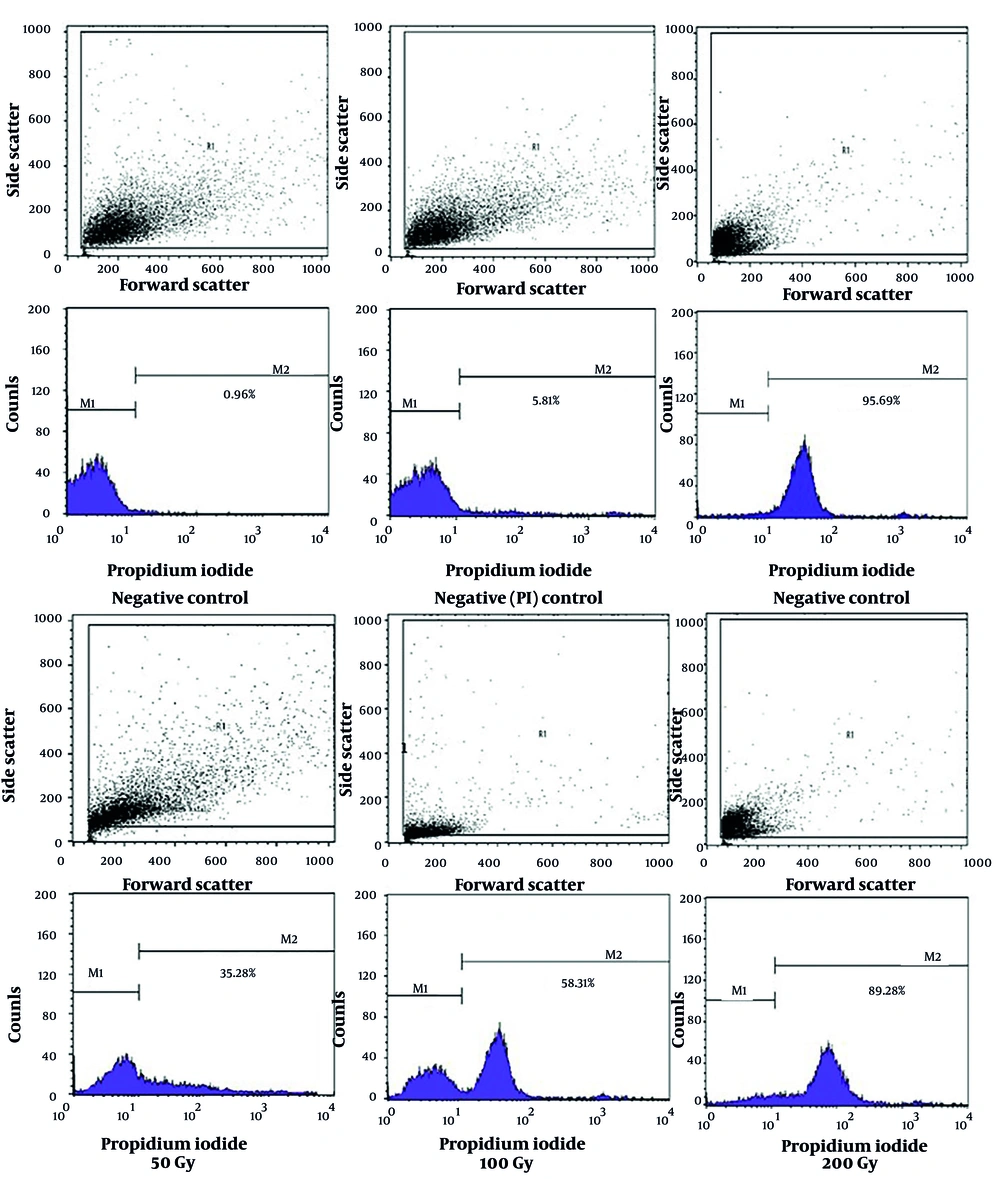
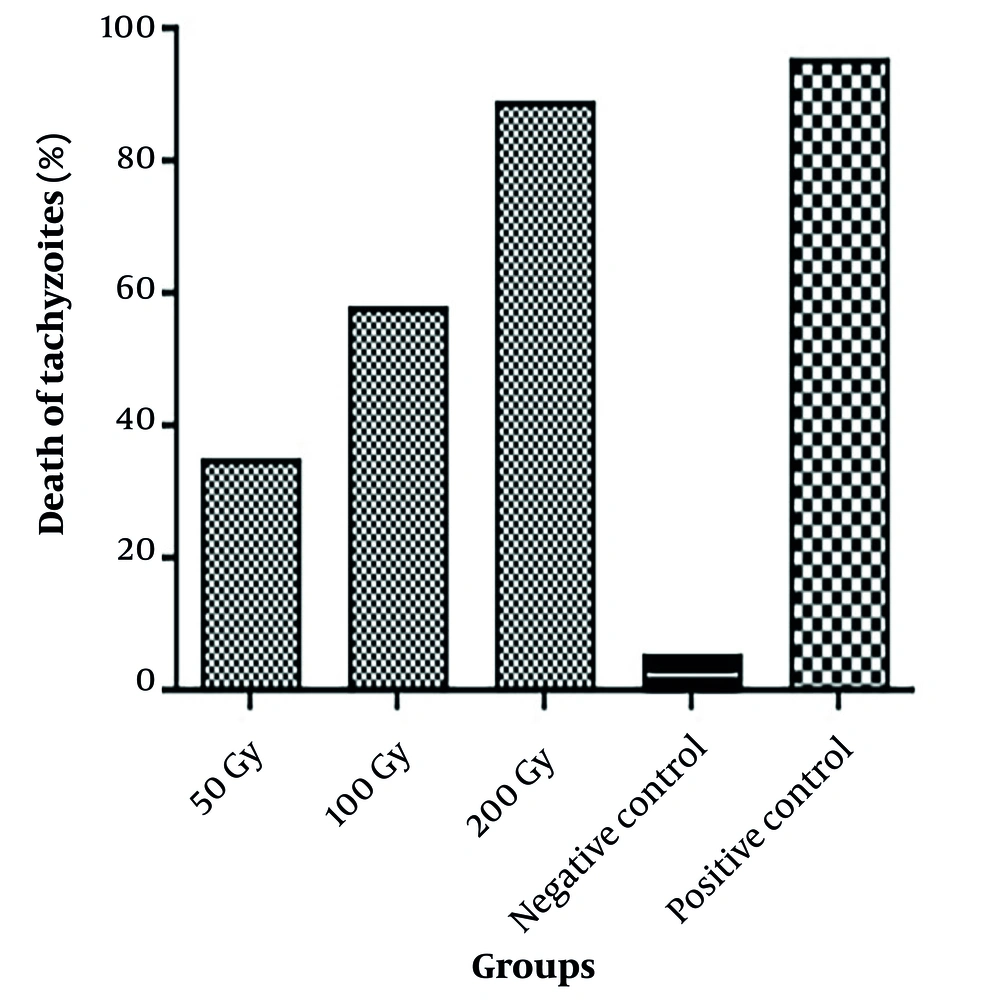
In this study, we used gamma radiation-attenuated tachyzoites of the T. gondii RH strain as a promising vaccine strategy against toxoplasmosis. The flow cytometry results clearly demonstrate that irradiation with gamma rays effectively reduces the viability and infectivity of T. gondii the tachyzoites in a dose-dependent manner. At the highest dose of 200 Gy, an impressive 89.28% of the tachyzoites were rendered non-viable. This significant reduction in viable parasites indicates that gamma radiation effectively compromises the structural and functional integrity of the tachyzoites.
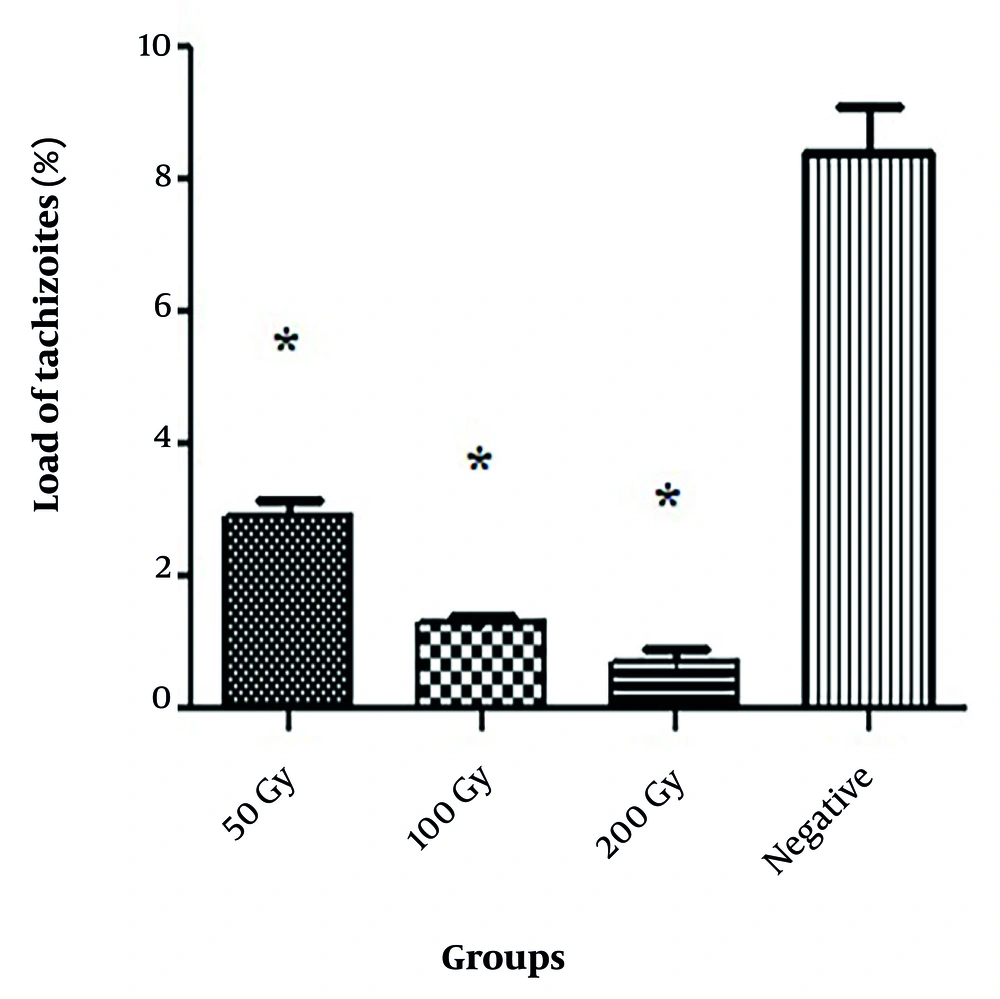
The substantial decrease in the tachyzoite load in HeLa cells following gamma radiation exposure underscores the impaired infectivity and invasion capability of the irradiated tachyzoites. This reduction in infectivity is critical because it indicates that gamma radiation not only kills the parasites but also diminishes their ability to invade host cells. This dual effect of gamma radiation could be highly beneficial in controlling the spread of toxoplasmosis, especially in immunocompromised individuals who are at greater risk of severe infection.
These findings align with previous research showing the susceptibility of protozoan parasites to ionizing radiation, suggesting that gamma radiation induces lethal damage to the parasite's cellular components, leading to apoptosis or necrosis. Dubey et al. demonstrated that mice receiving oocysts exposed to doses of 0.4 and 0.2 Gy of gamma rays developed brief immunity against oocysts of a lethal parasite strain (
24). In 1999, Assmar et al. reported an increase in survival rate, lymphoproliferative responses, and gamma interferon levels in mice receiving tachyzoites exposed to gamma radiation (
25). Freyre et al. found that irradiating doses of 250-100 Gy of gamma rays to
Toxoplasma tachyzoites allowed them to enter host cells and stimulate the immune system, but impaired their ability to reproduce and persist in host tissue (
26). Zorgi et al. concluded that after irradiating cobalt-60 with a dose of 255 Gy to
T. gondii tachyzoites and administering them intraperitoneally and orally to mice, CD4 cells, B cells, and CD8 cells increased cellular and humoral immune responses, contributing to the resistance of mice immunized with tachyzoites exposed to radiation (
27). In 2018, da Costa et al. reported an increase in the levels of CD4, CD19, CD8, and CD3 in mice immunized with
T. gondii extract proteins exposed to gamma radiation (1500 Gy) (
28).
The in vivo experiments showed that BALB/c mice inoculated with 200 Gy irradiated tachyzoites exhibited complete survival when challenged with intact tachyzoites, in stark contrast to the control group, which succumbed to the infection within an average of 6.8 ± 0.44 days. The partial mortality observed in the 100 Gy group, along with the complete mortality in the 50 Gy group, underscores the importance of optimizing the irradiation dose to achieve a balance between attenuation and immunogenicity. Survival rate monitoring post-vaccine challenge revealed that higher doses of gamma radiation (100 Gy and 200 Gy) not only attenuated the tachyzoites but also preserved their ability to elicit a protective immune response in the host. These findings are promising for the development of a vaccine against toxoplasmosis, suggesting that gamma radiation-attenuated tachyzoites could provide a safe and effective means of immunization.
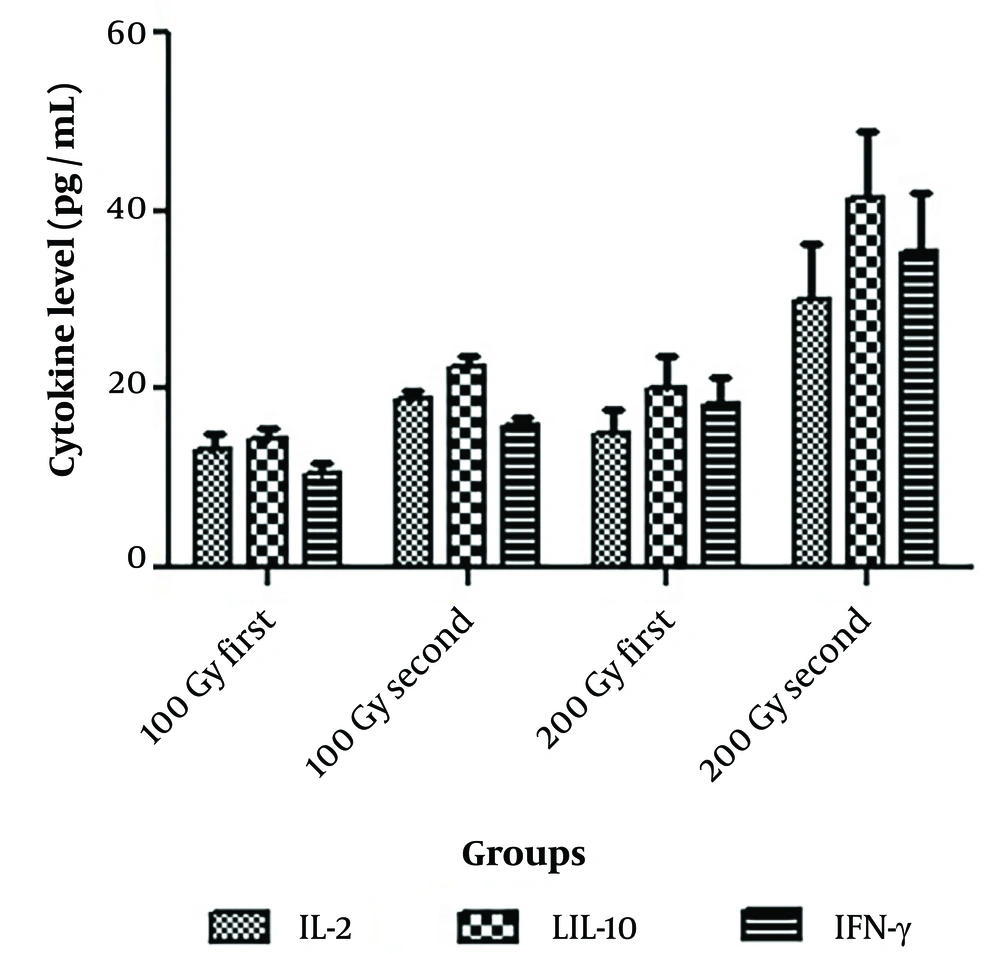
The increased levels of cytokines (IL-2, IL-10, and IFN-γ) in these mice further support this hypothesis. Cytokines play a pivotal role in orchestrating the immune response, and their elevated levels suggest that gamma radiation may enhance the host's ability to mount an effective immune defense against
T. gondii. The observed increases in IL-2, IL-10, and IFN-γ levels post-vaccine challenge indicate a heightened immune response in mice treated with irradiated tachyzoites. IL-2 is essential for T-cell proliferation and activation (
29), while IL-10 has anti-inflammatory properties that help regulate the immune response to prevent excessive tissue damage (
30). IFN-γ is a key cytokine in the immune response to intracellular pathogens, including
T. gondii (
31). The significant increases in these cytokines suggest that gamma radiation not only kills the parasites but also modulates the immune system to enhance its effectiveness. This immunomodulatory effect could be pivotal in developing vaccines and therapeutic interventions for toxoplasmosis.
The main immune mechanism involved in resistance to
T. gondii is cellular immunity (
32). The primary pathway involved in this cellular immune response is the Th1 pathway, in which cytokines and interleukins are also involved (
12). Toxoplasmosis infection stimulates the secretion of high levels of IL-12 and TNF-alpha, which are normally produced by macrophages. In addition to macrophages, dendritic cells are also the main IL-12-producing cells during toxoplasmosis infection. It has been shown that after incubation of
T. gondii with dendritic cells
in vitro, dendritic cells quickly secrete high levels of IL-12 (
33). Interferon released by CD8 cells, macrophages, and NK cells can activate macrophages and enhance their ability to kill (
34). By secreting IL-10, macrophages play an immunosuppressive role by inhibiting the proliferation of T lymphocytes and the synthesis of human gamma interferon and murine NK cells (
35).
Evidence indicates the high importance of gamma interferon in the host's resistance to the
Toxoplasma parasite (
29). Therefore, the effectiveness of a vaccine against
T. gondii is measured by its ability to induce immunity in the vaccinated animal, the survival of the infected animal, and the production of gamma interferon during infection. Several studies have reported a significant difference between immunized and non-immunized animal models in interferon gamma secretion and resistance to infection (
28). It is also stated that the secretion of interferon gamma and IL-10 cytokines by the cell-mediated immunity (CMI) system is involved in the host's resistance against toxoplasmosis infection. High levels of interferon gamma and IL-10 have been reported in the spleen cells of vaccinated mice (
36).
While the study provides promising results, several limitations need to be addressed. The long-term safety and efficacy of gamma radiation-attenuated tachyzoites in larger animal models and humans remain to be investigated. Additionally, the potential for adverse effects of high-dose gamma radiation on host tissues must be carefully evaluated. Future research should focus on elucidating the molecular mechanisms underlying the immune enhancement observed in irradiated tachyzoite-infected models and on optimizing the radiation doses to maximize therapeutic benefits while minimizing potential adverse effects.
The findings of this study have significant implications for the development of new treatments and vaccines for toxoplasmosis. The ability of gamma radiation to reduce parasite viability and enhance the immune response suggests that it could be used as an adjunct therapy to improve the efficacy of existing treatments. Additionally, the protective effects observed in the 200 Gy group indicate that gamma radiation could be explored as a standalone preventive measure or as part of a vaccine strategy.
5.1. Conclusions
In conclusion, this study demonstrates the potential of gamma radiation as an effective strategy to attenuate T. gondii and enhance the immune response in infected hosts. The significant reduction in parasite viability, impaired infectivity, and enhanced cytokine response observed in this study highlight the promise of gamma radiation in developing novel vaccines and therapeutic interventions for toxoplasmosis. These findings pave the way for further research into the use of gamma radiation in infectious disease management and the development of innovative strategies to combat toxoplasmosis and other parasitic diseases.