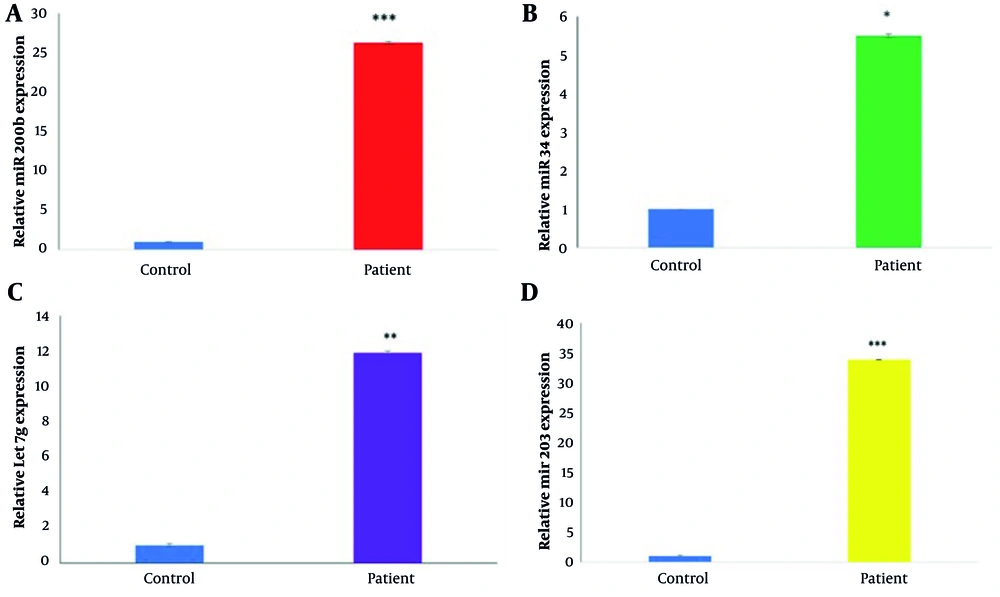
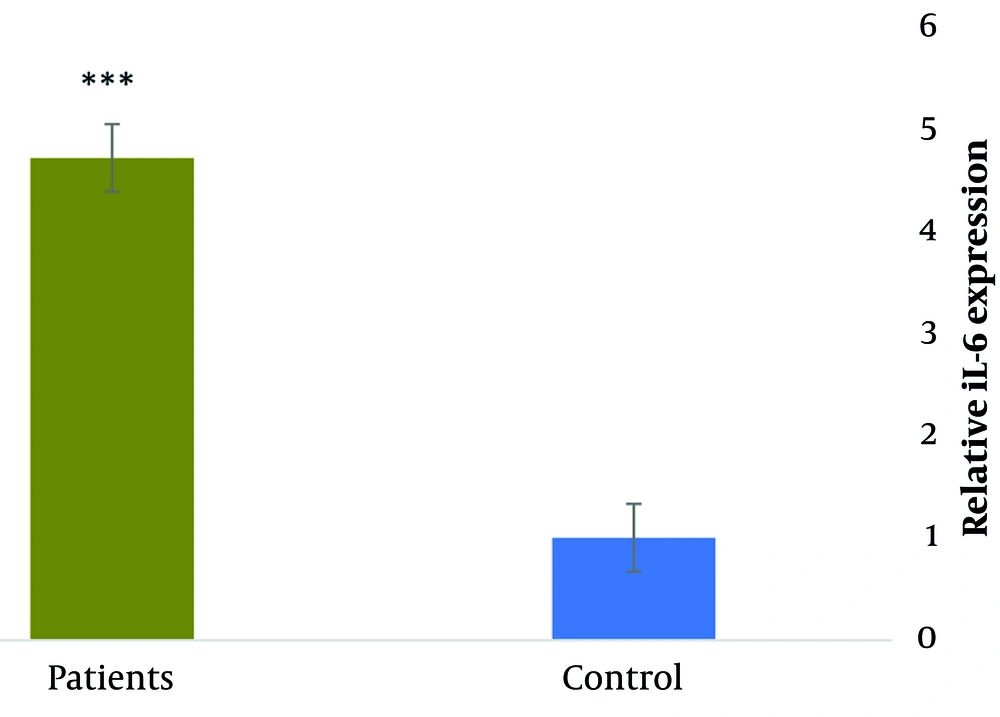
In comparison to the control group, our study demonstrated significantly elevated levels of miR200b-3p, miR34b-5p, miR203a-3p, Let7g-5p, and IL-6 in the blood of COVID-19 patients. These findings align with those observed in viral infections and underscore their potential roles in the pathophysiology of COVID-19. Notably, COVID-19 patients have higher expression levels of miR200b-3p (
24). Previous studies have shown that miR200b-3p is involved in the regulation of inflammatory pathways, suggesting its role in the heightened inflammatory response seen in COVID-19 (
25). However, some studies demonstrated that this miRNA's ability to influence cytokine production through mechanisms like the modulation of NF-κB signaling pathways could explain its association with disease manifestations (
26).
Similarly, the elevated levels of miR-34b-5p and miR-203a-3p observed in our study align with their known roles in immune response regulation. Notably, miR-34b-5p is predominantly expressed in lung tissue. Its levels have been shown to increase during acute lung injury (ALI), coinciding with a significant reduction in progranulin (PGRN) expression. This upregulation of miR-34b-5p may contribute to the pathogenesis of ALI by downregulating PGRN. In the context of COVID-19, miR-34b-5p might exacerbate inflammation and tissue damage by contributing to a dysregulated immune response (
27).
MiR203a-3p overexpression, on the other hand, has been shown to strongly promote H1N1 infection by targeting the host’s IFN signaling pathways and also targeting the viral genome (
28). Another in silico study predicted that miR203a-3p targets differentially expressed genes (DEGs) and is involved in SARS-CoV-2 processes (
29). Srivastava et al. predicted miR-203a-3p upregulation in severe COVID-19, which is consistent with our study (
30). The upregulation of Let7g-5p in COVID-19 patients adds another layer of complexity (
21). The altered expression of Let7g-5p could influence the immune response to SARS-CoV-2, contributing to the observed cytokine storm and severe clinical outcomes (
31).
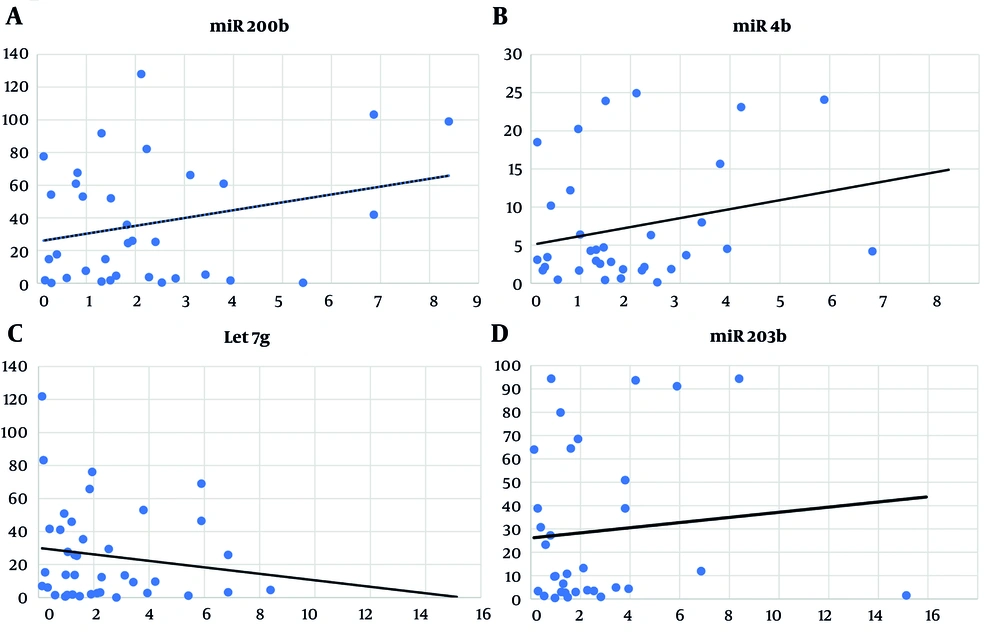
Our study also highlights a non-significant positive correlation between the expression levels of these miRNAs and IL-6. The IL-6 is a well-established marker of severe COVID-19, associated with increased disease severity and poor clinical outcomes (
32). The observed correlation suggests that these miRNAs might regulate IL-6 production, thereby influencing the inflammatory milieu in COVID-19 patients. This relationship provides valuable insights into the molecular mechanisms driving the inflammatory response in COVID-19 and suggests that these miRNAs may serve as biomarkers for disease severity (
33).
Let-7g binds to the target mRNA's 3' untranslated region (UTR) to either block translation or cause mRNA degradation, performing its regulatory role (
34). Our study aligns with previous research demonstrating that let-7g targets IL-6 mRNA, reducing its stability and translation, thereby downregulating IL-6 expression (
34). The ability of let-7g to modulate IL-6 expression is particularly relevant in the context of COVID-19, where dysregulated cytokine production is a hallmark of severe disease. By negatively regulating IL-6, let-7g may help to prevent the excessive inflammatory response associated with severe COVID-19 (
35).
In comparison with existing literature, our findings are consistent with studies that have identified miRNAs as critical regulators of the immune response in viral infections (
36). For instance, recent research has shown that miRNAs can directly or indirectly modulate cytokine production, supporting our observations of the positive correlations between miRNA expression and IL-6 levels (
37,
38). These findings contribute to the growing body of evidence that miRNAs play pivotal roles in the pathogenesis of COVID-19 and offer potential targets for therapeutic intervention (
39,
40).
The implications of our study for future research and clinical practice are significant. The identification of specific miRNAs that correlate with IL-6 levels in COVID-19 patients suggests their potential use as biomarkers for early diagnosis and risk stratification (
41,
42). To confirm these results and investigate their potential clinical utility, more studies with larger sample sizes are required. Additionally, therapeutic interventions targeting these miRNAs could be developed to modulate the inflammatory response, potentially improving clinical outcomes in COVID-19 patients (
25,
43-
46).
Although significant correlations have been found between increased expression of specific miRNAs (miR-200b-3p, miR-34b-5p, miR-203a-3p, Let-7g-5p) and IL-6 levels in COVID-19 patients, several limitations should be acknowledged. First, the small sample size may limit the statistical power and hinder the applicability of findings across various patient demographics and disease severities. Second, even though the existing literature and our results indicate the potential for these miRNAs to impact inflammatory mediators via pathways such as NF-κB signaling, IFN responses, and the stabilization of IL-6 mRNA, our investigation did not experimentally confirm these mechanistic links. The lack of functional assays (such as luciferase reporter assays or the use of miRNA mimics or inhibitors in cell models) restricts our ability to establish causal relationships regarding the regulatory functions of the identified miRNAs.
Moreover, the study's cross-sectional approach doesn't allow for tracking how miRNA levels change over time as the disease progresses or in response to treatment. To address this, future research should focus on larger sample sizes, longer-term studies, and experiments that explore the biological mechanisms behind these miRNAs, including their direct targets and the signaling pathways they affect. Also, using methods that combine different types of biological data, like gene expression and protein levels, might offer a clearer picture of how miRNAs influence the immune system. In the long run, testing whether these miRNAs can predict disease outcomes or be used as treatments in large groups of patients could lead to new strategies for managing the harmful inflammation seen in severe cases of COVID-19.
5.1. Conclusions
In conclusion, our study underscores the importance of miR200b-3p, miR34b-5p, miR203a-3p, Let7g-5p, and IL-6 in the context of COVID-19. The significant relationships between these miRNAs and IL-6 levels highlight their potential as biomarkers and therapeutic targets, paving the way for advancements in the diagnosis, prognosis, and treatment of COVID-19.