1. Background
Urinary tract infection (UTI) is one of the most common childhood bacterial infections and also the second common infection among different societies. It is also an important factor in creating scar and progressive destruction of renal structure, chronic renal failure, poor growth, urinary stones, and hypertension in children (1). Escherichia coli is the most important opportunistic pathogen causing more than 80% of urinary tract infections (2). β-Lactam antibiotics have been widely used to treat E. coli infections; however, treatment of UTIs has become increasingly problematic. The incidence rate of antibiotic resistance towards these antibiotics is growing every day in the world (3). Producing β-lactamase enzymes are the most common mechanism of bacterial resistance. Extended-spectrum β-lactamases (ESBLs)-producing bacteria have usually multi-drug resistance, because most of the times, the genes related to the other resistive mechanisms have been also placed on the same plasmid carrying the genes encoding ESBLs (4-6).
Fluoroquinolones are wide spectrum potent drugs, used in treating a wide range of infections. Although fluoroquinolones are not approved for use in persons under 18 years of age, with increasing resistance to cephalosporins, they can be used in critically ill patients with Gram-negative infections and in children with complicated urinary tract infections (7). Their extensive use has been associated with raising level of quinolone resistance. The principle mechanism of quinolone resistance was attributed to the chromosomal mutations in DNA gyrase, DNA topoisomerase IV, or active efflux pumps. However, a plasmid-mediated quinolone resistance gene encoding a pentapeptide repeat protein (qnr) was discovered in 1998 (8).
A range of plasmid-mediated quinolone resistance determinants, including qnr, have been reported global in clinical isolates of Enterobacteriaceae (9, 10). These qnr genes are frequently associated with ESBLs (9). Various studies around the world have shown that the releasing qnr genes are among the bacterial isolates. Gene qnrA causes quinolone resistance and Minimum inhibitory concentration (MIC) increases the fluoroquinolones up to 32 times in E. coli. This gene has been reported from all over the world. The other qnrB and qnrS plasmid resistance genes are also detected in Enterobacteriaceae, which have the amino acid sequence similarity of 41% and 60% with qnrA (10-12). Resistance of Gram-negative bacteria to the extended-spectrum β-lactam antibiotics has expanded rapidly in last two decades. This resistance is largely attributed to the plasmids, containing genes encoding ESBLs. Since the quinolone resistance genes are also located on plasmid.
2. Objectives
We studied the prevalence of ESBLs and frequency of qnrA, qnrB, and qnrS genes in E. coli strains isolated from UTIs in children.
3. Materials and Methods
This cross-sectional descriptive-analytic study was done on 120 urine samples collected from children suffering from UTI at Besat hospital (children’s ward), Hamadan, Iran from October 2010 to October 2011. Midstream urine collection method was performed for toilet-trained children and catheter or suprapubic aspiration was used for non-toilet-trained children. Conventional biochemical tests were used for bacterial identification. The ethics committee of the Hamadan University of Medical Sciences approved the study protocol (No.: 891224115). Inclusion criteria were children younger than 12 years suspected to UTI at Besat hospital and the exclusion criteria were as follows: 1) the patients who had received antibiotic before doing urine sample, 2) The patients that in their urine culture, more than one type of microorganism had grown and sampling was done by urine bag.
3.1. Antimicrobial Susceptibility
Antimicrobial susceptibilities were determined by disk diffusion agar assay (13) to co-trimoxazole (25 µg), amikacin (30 µg), gentamicin (10 µg), ceftriaxone (30 µg), nalidixic acid (30 µg), norfloxacin (10 µg), ofloxacin (5 µg), ciprofloxacin (5 µg), cefixime (5 µg), cefotaxime (30 µg), ceftazidime (30 µg), cefpodoxime (10 µg), azteroname (30 µg), nitrofurantoin (300 µg), and imipenem (10 µg) (India HIMEDIA company). The results were interpreted according to the Clinical and Laboratory Standards Institute (CLSI) recommendations (14). The quality control of the study was done by E. coli ATCC 25192.
3.2. Determination of Extended-Spectrum β-Lactamases-Producing Strains by the Combined Disk Method
In order to identify ESBL-producing strains, the double-disk synergy (DDS) test was carried out on Mueller-Hinton agar (Himedia CO, India) with disks, containing ceftazidime (30 µg), cefotaxime (30 µg), cefpodoxime (30 µg), and ceftriaxone (30 µg) placed respectively on the MH agar to a distance of 20 mm from combined disks of ceftazidime/clavulanic acid (30.10 µg), cefotaxime/clavulanic acid (30.10 µg), cefpodoxime/clavulanic acid (30.10 µg), and ceftriaxone/clavulanic acid (30.10 µg). The zone diameters were read using the CLSI assay. A difference of ≥ 5 mm between the inhibition zone diameters of either of the cephalosporin disks and their respected cephalosporin-clavulanate disk is considered to be phenotypic confirmation of ESBLs production (14).
3.3. DNA Extraction
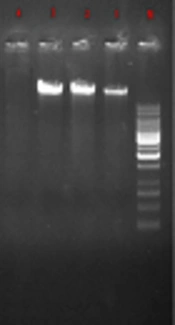
DNA of ESBL or non-ESBL -producing or quinolone-resistant strains of E. coli was extracted by boiling method as per the guidelines (15). PCR amplification of bla genes, including bla-CTX- M, bla-SHV, bla-TEM, and qnr genes (qnrA, qnrB, qnrS) were performed with the specific primers (16, 17) listed in Table 1. ESBL-positive and ESBL-negative isolates were screened by multiplex PCR for qnr genes. PCR products were analyzed by electrophoresis in a 1.5% agarose gel, containing SYBR safety at 100 V for 30 min.
Table 1.
The Primers Used in This Study
| Target | Primer Sequence(‘3 → ‘5) | Size, bp | References |
|---|---|---|---|
| bla-CTX-M | TCTTCCAGAATAAGGAATCCC | 909 | (17) |
| CCGTTTCCGCTATTACAAAC | |||
| Bla-SHV | CTTTACTCGCTTTATCG | 868 | (17) |
| TCCCGCAGATAAATCAC | |||
| bla-TEM | ATGAGTATTCAACATTTCCG | 931 | (17) |
| CCAATGCTTAATCAGTGAGC | |||
| qnrA | AGAGGATTTCTCACGCCAGG | 580 | (18) |
| TGCCAGGCACAGATCTTGAC | |||
| qnrB | GGMATHGAAATTCGCCACTG | 264 | (18) |
| TTTGCYGYYCGCCAGTCGAA | |||
| qnrS | GCAAGTTCATTGAACAGGGT | 428 | (18) |
| TCTAAACCGTCGAGTTCGGCG |
3.4. Data Analysis
Data analyzed by SPSS v.16 using McNemar and Chi-square tests. P ≤ 0.05 is regarded as significant at 95% confidence interval.
4. Results
Susceptibility testing: In this study, 120 strains of Uropathogenic E. coli (UPEC) isolated from the urine samples of children with UTIs were studied. Of 120 isolates, 25% (n = 30) were sensitive to co-trimoxazole, 92.5% (n = 111) to amikacin, 62.5% (n = 75) to ceftriaxone, and 50.8% (n = 61) to nalidixic acid (Table 2). The results demonstrate that 41 strains (34.2%) were resistant to three or more antibiotics and are known as the strains with multidrug resistance (MDR).
Table 2.
Frequency Distribution of Resistance and Antibiotic Sensitivity in Strains of Uropathogenic E. coli a
| Antibiotic | Resistance | Intermediate | Sensitive |
|---|---|---|---|
| Cefixime | 41 (34.2) | 5 (4.2) | 74 (61.6) |
| Ceftazidime | 42 (35) | 8 (6.7) | 70 (58.3) |
| Cefotaxime | 43 (35.8) | 7 (5.8) | 70 (58.3) |
| Ceftriaxone | 39 (32.5) | 6 (5) | 75 (62.5) |
| Cefpodoxime | 37 (30.8) | 11 (9.2) | 72 (60) |
| Imipenem | 3 (2.5) | 1 (0.8) | 116 (96.7) |
| Azteroname | 40 (33.3) | 12 (10) | 68 (56.7) |
| Gentamicin | 21 (17.5) | 2 (1.7) | 97 (80.8) |
| Amikacin | 7 (5.8) | 2 (1.7) | 111 (92.5) |
| Co-trimoxazole | 85 (70.8) | 5 (4.2) | 30 (25) |
| Nalidixic acid | 49 (40.9) | 10 (8.3) | 61 (50.8) |
| Nitrofurantoin | 0 (0) | 8 (6.7) | 112 (93.3) |
| Ciprofloxacin | (15) 18 | (5.8)7 | (.279)95 |
| Norfloxacin | 18 (15) | 5 (4.2) | 97 (80.8) |
| Ofloxacin | 17 (14.2) | 5 (4.2) | 98 (81.7) |
a Data are presented as No. (%).
4.1. Prevalence of Extended-Spectrum β-Lactamases in Urinary E. coli Isolates
The Double-disk synergy test (DDST) detected ESBLs in 33 (27.3%) of isolates which means 87 (71.9%) were non-ESBLs E. coli isolates. For comparison of resistance prevalence to quinolones in ESBL-producing E. coli strains and ESBL-nonproducing strains, intermediate resistance rate of isolates were considered as resistance (Table 3).
Table 3.
Comparison of Resistance to Quinolones in Extended-Spectrum β-Lactamases-Producing and Non- Extended-Spectrum β-Lactamases-Producing E. coli strains a
| Isolates | Quinolones | |||||||
|---|---|---|---|---|---|---|---|---|
| Ciprofloxacin (CF) | Ofloxacin (OF) | Nalidixic Acid (NA) | Norfloxacin (NX) | |||||
| S | R | S | R | S | R | S | R | |
| ESBL-producing | 19 (57.6) | 14 (42.4) | 19 (57.6) | 14 (42.4) | 16 (48.5) | 17 (51.5) | 20 (60.6) | 13 (39.4) |
| Non-ESBL-producing | 76 (87.4) | 11 (12.6) | 79 (90.8) | 8 (9.2) | 63 (72.4) | 24 (27.6) | 77 (88.5) | 10 (11.5) |
a Data are presented as No. (%).
Statistical analysis of the results revealed that there is a significant relation between resistance to ciprofloxacin and nalidixic acid in ESBL producing isolates (P < 0.05). However, the prevalence rate of resistance to ofloxacin and norfloxacin in strains of ESBL-producing was more than the strains of non-producing ESBLs. After doing statistical analysis the significant relation was not confirmed.
4.2. Detection of β-Lactamase and qnr genes by Polymerase Chain Reaction
A total of 120 UPEC were tested for bla-CTX-M, bla-SHV, and bla-TEM genes. Our results showed that 66.7% (n = 80), 20.8% (n = 25), and 40.8% (n = 49) of E. coli isolates harboring bla-CTX-M, bla-SHV, and bla-TEM, respectively (Table 4). Among the investigated E. coli isolates, 11.7% (14 out of 120) contained qnr genes, of which, qnrB (n = 8, 57.1%) and qnrS (n = 6, 42.9%) were detected. The qnrA gene was not found in any strains. The distribution of qnr containing isolates in ESBL-producing and quinolone-resistant strains are shown in Table 5. Based on the statistical analysis about strains resistant to quinolones, the results of Chi-squared and TauKendal tests proved the existence of a significant relation between the quinolone resistance and presence of qnr genes (P < 0.05).
Table 4.
Molecular Features of β-Lactamase Genes in strains of UPEC (n = 120) a
| Genotype | Isolates |
|---|---|
| CTX-M.TEM.SHV | 13 (10.8) |
| CTX-M.TEM | 25 (20.8) |
| CTX-M.SHV | 8 (6.7) |
| TEM.SHV | 2 (1.7) |
| CTX-M | 34 (28.3) |
| TEM | 9 (7.5) |
| SHV | 2 (1.7) |
a Data are presented as No. (%).
Table 5.
Characteristics of E. coli Strains, Containing qnr Genes in ESBL-Producing and Quinolone-Resistant Strains
| Isolates Number | ESBL Producing | Quinolone-Resistant | Status of Quinolone-Resistant | qnrA | qnrB | qnrS | |||
|---|---|---|---|---|---|---|---|---|---|
| CF | OF | NA | NX | ||||||
| 1 | + a | S | S | S | S | + | |||
| 2 | + | S | S | S | S | + | |||
| 3 | + | + | S | S | R | S | + | ||
| 4 | + | + | R | R | R | R | + | ||
| 5 | + | + | R | R | R | R | + | ||
| 6 | + | + | R | R | R | R | + | ||
| 7 | + | + | R | R | R | R | + | ||
| 8 | + | + | S | S | R | S | + | ||
| 9 | + | + | R | R | R | R | + | ||
| 10 | + | + | R | R | R | R | + | ||
| 11 | + | R | R | R | R | + | |||
| 12 | + | R | R | R | R | + | |||
| 13 | + | S | R | S | S | + | |||
| 14 | + | S | S | R | S | + | |||
a Indicates that it was positive.
5. Discussion
Urinary tract infection is one of the most common childhood infections. The prevalence of UTIs in childhood is 3% - 5% (1). There are various studies about the E. coli antibiotic resistance in different parts of the world. For example, Datta et al. stated that the rates of resistance on 87 isolates of E. coli to ampicillin, amikacin, cephalexin, ceftazidime, cefotaxime, ceftriaxone, co-trimoxazole, gentamicin, ofloxacin, and ciprofloxacin were 95%, 41%, 94%, 78%, 87%, 87%, 94%, 64%, 93%, and 16%, respectively (18). The spread of ESBL-producing bacteria has been strikingly rapid worldwide, indicating that continuous monitoring system and effective infection control measures are absolutely necessary. In this study, the prevalence of ESBL-producing E. coli by DDST method is 27.3%; whereas in 2003, this rate was reported at 28.1% in Lebanon, which is very close to the results of this study (19). Shayanfar et al. (20) in Tehran reported that 28.6% of E. coli isolates are ESBL-producing, which is very close to the result of our study (27.3%). Different and disturbing rates have been presented from different places of the world. For example, in a hospital in Poland the rate of ESBL-producing was reported at 92.2% (21) and in some hospitals in Turkey and Spain was 69.14% and 98.4% (22, 23) respectively. In hospitals of Korea in 2005 this rate was equal to 84.3% (24). The reason of differences can be due to prolonged staying of the patients in hospital (21), inappropriate and excessive use of antibiotics (22), duration of hospitalization, invasive diagnostic or therapeutic procedures, type of cephalosporins, and test method.
In the present research, our statistics suggest that CTX-M (66.7%) could be the most prevalent, followed by bla-TEM (40.8%) and bla-SHV (20.8%). In Pakistan, the frequency of CTX-M gene was reported at 100% (25) and in 2011, Yazdi et al. reported it at 87.1% (26). The rate of bla-TEM gene in Belgium was reported at 44% (27) and in 2009 in France it was 52.9% (28), which was close to our statistics. The frequency of bla-SHV is higher compared with the results of the studies done by Jonas Bonnedahl et al. in France as 11.7% (28) or Hussain et al. in Pakistan as 15.4% (25). In 2011, Yazdi et al. reported the frequency of this gene as 70.6% (26) and in 2008 in Brazil it was equal to 67.8%, which is higher than its frequency in our area.
Our results showed that 49 (40.9%), 18 (15%), 18 (15%) and 17 (14.2%) cases of the isolates were resistant to nalidixic acid, ciprofloxacin, norfloxacin, and ofloxacin, respectively. In the present study, the comparison of resistance patterns in ESBL-producing and -nonproducing E. coli demonstrated that the resistance of ESBL-producing bacteria is high and these results were similar to the study of Padmini and associates. We can explain that the plasmids carrying ESBLs genes may also transfer the genes resistant to non β-lactam antibiotics to the other bacteria (29). In this study, by using multiplex-PCR method, we examined the prevalence of qnr genes in strains of ESBL-producing E. coli and also the strains resistant to quinolones. As a result, the 10 strains (30.3%) of ESBL-producing E. coli had qnr genes from which, 6 strains (18.2%) possesd qnrB gene and 4 strains (12.1%) had qnrS gene. In this study, of 14 positive isolates for qnr genes, 8(57.1%), 9 (64.3%), 8 (57.1 %), and 11 (78.6.1%) were resistant to Ciprofloxacin (CF), Ofloxacin (OF), Norfloxacin (NX) and Nalidixic acid (NA), respectively. Determinants of qnr can confer reduced susceptibility to fluoroquinolones or low-level quinolone resistance.
In 2007, for the first time in the Middle East, two studies were carried out on the prevalence rate of qnr genes (17, 30). Oktem et al. in Turkey studied on 78 enterobacterial clinical isolates (including 34 E. coli and 44 Klebsiella pneumonia), which all were ESBLs (+) and 5 isolates (6.3%) were diagnosed to have qnrA gene. The qnrB and qnrS genes were not detected (30). Cattoir et al. in Kuwait examined 64 ESBL-producing enterobacterial isolates, including 29 E. coli, 19 K. pneumonia, 9 Proteus Mirabilis, 4 Enterobacter Cloacae, 3 Enterobacter aerogenes, 2 Citrobacter freundii, and 1 Serratia marcescens and could find only the qnrB gene just in 3 isolates (2 strains of E. Cloacae and 1 strain of C. frondy). In none of E. coli strains, qnrA, qnrB, and qnrS genes were found (17). In 2010, Bouchakour et al. studied on 39 enterobacterial isolates of ESBL-producing bacteria (including 16 E. coli, 14 Klebsiella spp, 8 E. Cloacae, and 1 P. Mirabilis) by multiplex-PCR technique in order to find qnr genes. They found that in 14 isolates (36%), there were qnr genes (qnrA: 10.25%, qnrB: 23.07%, and qnrS: 2.56%), which based on the type of bacteria, 3 strains (18.7%) were from isolates of E. coli (1 qnrA, 1 qnrB and 1 qnrS), 5 strains (62.5%) from isolates of E. Cloacae (4 qnrB and 1 qnrA), and 6 strains (50%) from isolates of K. pneumonia (4 qnrB and 2 qnrA) (31).
In this study, the qnrS gene has been identified for the first time in Iran. Although because of the harmful side effects of quinolones in children, hospitals do not recommend these drugs for children, the prevalence of these genes was high in samples of this study. Probably, the high prevalence of qnr genes in children is not related to the high use of quinolones; but may result from the transfer of these genes from adults or other sources. Also in this study, the prevalence rate of qnr genes in quinolone-resistant strains was also determined in 12 strains (26.1%), which 5 strains (10.9%) had qnrB gene and 7 strains (15.2%) had qnrS gene. In 2003, Wang et al. by studying on 213 isolates (including 146 E. coli and 67K. pneumonia) resistant to ciprofloxacin (separated from pediatric ward of hospitals in Shanghai, China, by multiplex-PCR technique) found that 7.5% (4) of E. coli isolates and 11.9% (8) of K. pneumonia isolates contained qnr genes. Among these, the qnrA gene in 8 strains were resistant to ciprofloxacin (5.5%), and qnrB as well as qnrS genes each in 5 strains (3.4%) were resistant to ciprofloxacin (5). In this study, 26.1% of E. coli strains resistant to quinolones had qnr genes that in Wang study it was higher. This high prevalence can be due to non-promiscuous use of antibiotics in adults and horizontal transfer of the strains containing these genes to children.
In summary, our study showed that frequency of bla-CTX-M was higher than bla-TEM and bla-SHV in ESBLs-producing E. coli, and also according to the similar studies in different places of the world, we can conclude that the prevalence rate of qnr genes is unfortunately very high in our country and more caution is required in prescribing and using antibiotics. We found a significant association between resistance to quinolones in ESBL-producing isolates and presence of qnr genes (P < 0.05). Based on these results, using fluoroquinolones is not recommended in the children with complicated urinary tract infections because of ESBLs-producing E. coli and carbapenems can be used in these situations instead. Our data highlight the importance of detecting ESBLs, and qnr determinants in the area. The incidence of antimicrobial resistance genes such as ESBLs and qnr genes should also be monitored constantly.