1. Background
Surgical Site Infections (SSIs) are defined as infections afflicting either the incision or deep tissue at the operation site. These infections occur within one year of a surgical procedure with an implant and within 30 days without any left implant. They are further categorized in terms of anatomic location: superficial infections afflict only skin or subcutaneous tissue around the incision; deep infections afflict deep soft tissue such as fascia and muscles; organ space infections involve any part of the body, excluding the skin incision, fascia or muscle layers, that is opened or manipulated during the operative procedure (1, 2). In spite of advance in infection control methods such as sterilization method, use of antibiotics for prophylaxis and surgical technique, SSIs have remained as a postoperative complication (3). These infections can increase the costs and duration of hospitalization. Moreover they can cause higher risk of morbidity and lower life quality in surgical patients (4, 5).
The rate of SSI lies between 15% and 20% depending mainly on the type of surgical procedure and the wound classification. SSI rates were 4.88% in clean cases, 8.39% in clean-contaminated cases, and 20.45% in dirty cases. SSI rates were highest in gastrointestinal surgeries as 80% of these infected cases were mostly dirty cases (6, 7). Several factors affect the occurrence of SSIs. These factors are categorized to patient factors, preoperative factors, intraoperative factors, and postoperative factors (2, 8). SSIs are often polymicrobial and microbiology of these infections is seldom static, including aerobes and anaerobes organism. Staphylococcus aureus, Pseudomonas aeruginosa, the members of Enterobacteriaceae family, Streptococcus spp., Enterococcus ssp., and Acinetobacter spp. are the predominant aerobe organisms that were reported in these infections (9).
The development of selective media and precise laboratory protocols for the recovery and identification of anaerobic bacteria have greatly enhanced our knowledge of their clinical importance. Most common anaerobe organisms that were reported from SSIs are Fusobacterium spp. (10, 11). In one microbiology study accomplished by Munez et al. Escherichia coli (8%), Enterococcus spp. (15%), Streptococcus spp. (8%), P. aeruginosa (7%), S. aureus (7%), Bacteroides spp. (3.6%), and Clostridium spp. (9%) were isolated from SSIs (12). In another study by Saini et al. the isolated bacteria from these infections were E. coli, S. aureus, Klebsiella spp., P. aeruginosa, Bacteroides fragilis, and Peptostreptococcus spp. (9). In one study performed by Wolcott et al. molecular method was applied for the detection of bacterial prevalence in surgical site infections. Results reported by these researchers indicated the bacteroides group as the most isolated anaerobic bacteria amongst anaerobes isolated from specimens (10). In 2006 Akhi et al. isolated S. aureus (37.5%) and Enterobacteriaceae spp. (32.5%) as the predominant bacteria from postoperative infections in different surgery wards (13).
2. Objectives
Owning to low antibiotic susceptibility in aerobic and anaerobic bacteria and presence of these bacteria in SSIs, both empirical therapy and antimicrobial prophylaxis administration may not be appropriate for these infections. Therefore, microbiology laboratory has a vital role in identification and determination of antibiotic susceptibility pattern in these infections. So, the aim of this study was to investigate anaerobic and aerobic bacteria profile in surgical site infections and determination of antibiotic susceptibility pattern in these isolates.
3. Materials and Methods
3.1. Hospital Setting
Imam Reza hospital with 520 beds in 26 clinical wards, including nephrology, gastroenterology, pulmonology, endocrine and rheumatology, neurology, infectious disease, ICU of neurology, ICU of neurology surgery, ICU of general surgery and of pulmonary, is situated in Tabriz City. This hospital provides services for nearly 2000 patients every month. Hospital environment cleaning practice is performed by special team regulatory with water, detergent and disinfectant. The most common way of staff hand hygiene is hand washing with soap and water and big spray usually are applied for tables cleaning.
3.2. Collection of Specimens
Between October 2012 and July 2013, 100 SSIs specimens (kind of infections and anatomic location were not considered in sampling) obtained from selected patients, hospitalized in Imam Reza Hospital. Some of the patients were undergoing treatment with antibiotic drugs such as metronidazole, vancomycin, clindamycin, imipenem, ceftriaxone, and other cephalosporins. All collected specimens were processed for the detection of anaerobe and aerobe bacteria in medical microbiology laboratory of medicine faculty. For sampling, infected site was first scrubbed with povidone-iodine and culture specimens were obtained by in depth needle aspiration of material in the infected site (9). First of all a drop of aspiration was introduced to thioglycolate broth medium and then syringe was immediately sealed (9, 14). Specimens were transported to laboratory within 20 minutes and generally inoculated within 1 hour after collection.
3.3. Microbial Investigation
A Gram-stain smear was used for cytology investigation and detection of bacterial presence in specimens. For the isolation of aerobic organisms, specimens were plated onto chocolate, sheep blood (5%) (Liofilchem) phenylethyl alcohol (PEA) (Hi Meia, India), and MacConkey agar (Liofilchem, Italy) plate. The plates were incubated at 37°C under 10% CO2 and examined at 24 hours and 48 hours later. Pre-reduced vitamin K enriched brucella blood agar; kanamycin-vancomycin laked blood agar (KVLB, Basal Medium is Brucella agar; Fluka Chmie AG CH-9471 Buchs, Switzerland), bacteroides bile esculin (BBE, Himedia Laboratories Pvt. Ltd, India) and phenylethyl alcohol (PEA) agar were inoculated for isolation of anaerobic organisms. The plate media were incubated under 80% N2, 10% CO2, 10% H2, and 0% O2 in anaerobic jar by using Anoxomat (MART microbiology B.V. The Netherlands) and these plates examined at 48, 72, and 96 hours. The primary inoculated thioglycolate broth (Merck Co., Germany) was incubated for 10 days and subcultured in 2 series of plates in the same way mentioned above. For enrichment and isolation of C. perfringens, a drop of syringe specimen was introduced into cooked meat broth media (Que Lab Inc) and incubated at 45°C for 4 - 6 hours. Thereafter, one loop of this incubated media was subcultured in sheep blood agar plate and incubated under anaerobic condition and examined after 24 and 48 hours. All isolated anaerobes were identified after conducting anaerobic tolerance test using biochemical tests such as catalase production, indole, and sugar fermentation (sucrose, arabinose, xylose, and rhamnose) as well as MID8 (Mast Identification 8, according to manufacturer company’s instructions) (14, 15).
3.4. Antibiotic Susceptibility Testing
For investigation of antibiotic susceptibility pattern in aerobic bacteria that isolated from these infections, we performed antibiotic susceptibility test by Kirby-Bauer method (disk diffusion test) in Muller-Hinton agar (Liofilchem Ltd, Italy) using CLSI guideline (16). Imipenem (10 μg), gentamicin (10 μg), amoxicillin-clavulanic acid (20.10 μg), ciprofloxacin (5 μg), cefoxitin (30 μg), tetracycline (30 μg), piperacillin-tazobactam (100.10 μg ), chloramphenicol (30 μg), and colistin (10 μg) were used for testing Gram-negative bacilli and erythromycin (15 μg), vancomycin (30 μg), clindamycin (2 μg), gentamicin (10 μg), cefoxitin (30 μg), oxacillin (1 μg), piperacillin-tazobactam (100.10 μg ), linezolid (30 μg), chloramphenicol (30 μg), amoxicillin-clavulanic acid (20.10 μg), and rifampin (5 μg) were used for testing Gram-positive bacteria isolated from these infections (All disks were provided from Mast Ltd.).
For antimicrobial drug susceptibility assay in Gram-negative anaerobic bacteria isolated from these infections, the Minimum Inhibitory Concentration (MIC) of imipenem, chloramphenicol, metronidazole, clindamycin, cefoxitin, and penicillin G (Sigma chemical Co. USA) was determined by the agar dilution method. MIC of penicillin, metronidazole, clindamycin, cefoxitin for Gram positive anaerobic bacteria were determined by Etest strip (AB biomerieux, Sweden ) according to CLSI guideline for anaerobic susceptibility testing (17).
4. Results
In this study, 194 bacteria (166 (85.57%) aerobic and 28 (14.43%) anaerobic) were isolated from 100 SSI specimens obtained from 42 female and 58 male patients who had undergone surgery. The patients’ ages ranged from 14 to 85 years. The results showed 82% polymicrobial nature of the surgical infections, which only 28% were mixed anaerobic-aerobic. Predominant aerobic bacteria isolated from these infections were members of Enterobacteriaceae family (66, 34.03%), including 24 (12.37%) E. coli, 20 (10.31%) Klebsiella spp. 12 (6.2%) Enterobacter spp. 4 (2.06%) Serattia spp. 4 (2.06%) Morganella spp. and 2 (1.03%) Citrobacter spp. followed by P. aeruginosa (26, 13.4%), S. aureus (24, 12.37%), Acinetobacter spp. (18, 9.28%), Enterococcus spp. (16, 8.24%), coagulase negative Staphylococcus spp. (14, 7.22%) and nonhemolytic Streptococci (2 1.03%).
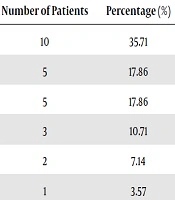
Predominant anaerobic bacteria were B. fragilis group (26, 13.4%) followed by Clostridium perfringens (2, 1.03%). In our study, 4 specimens were negative culture (96% positive), one bacterium was isolated from 14 specimens, 2 bacteria from 66 specimens and 3 bacteria from 16 specimens. All anaerobic isolated bacteria were mixed with aerobic and facultative anaerobic bacteria. Antibiotic susceptibility pattern of aerobic and anaerobic isolates are presented in Tables 1 and 2.
Table 1.
Antimicrobial Susceptibility of Bacteria Isolated From Aerobic Cultures a
| Bacterial Strain Agents | Staphylococcus aureus b | Enterococcus spp. | Coagulase- Negative Staphylococci | Streptococcus spp. Viridians group | E. coli | Klebsiella spp. | Other Enterobacteriaceae | p. aeruginosa | Acinetobacter spp. |
|---|---|---|---|---|---|---|---|---|---|
| VAN (30 µg) | 100 | 100 | 100 | 100 | NT | NT | NT | NT | NT |
| LZD (30 µg) | 100 | 100 | 100 | 100 | NT | NT | NT | NT | NT |
| OX (1 µg) | 0 | NT | 0 | NT | NT | NT | NT | NT | NT |
| C (30 µg ) | 8.3 | 25 | 28.6 | 0 | 41.7 | 20 | 45.5 | NT | NT |
| CD (2 µg) | 16.7 | NT | 42.9 | 0 | NT | NT | NT | NT | NT |
| CIP (5 µg) | 41.7 | 100 | 42.9 | NT | 33.3 | 10 | 36.4 | 53.9 | 11.1 |
| T (30 µg) | 16.7 | 50 | 14.3 | 0 | 33.3 | 30 | 27.3 | NT | 0 |
| E (15 µg) | 33.3 | 37.5 | 28.6 | 100 | NT | NT | NT | NT | NT |
| GM (10 µg) | 34.3 | NT | 0 | NT | 58.3 | 40 | 63.7 | 30.8 | 55.5 |
| FOX (30 µg) | 16.7 | NT | 14.3 | 100 | 50 | 20 | 54.6 | NT | NT |
| PTZ (110 µg) | 33.3 | NT | 42.9 | NT | 46.7 | 20 | 45.4 | 23.1 | 11.1 |
| AUG (30 µg) | 25 | NT | 14.3 | NT | 25 | 10 | 36.4 | NT | NT |
| AP (10 µg) | NT | 0 | NT | NT | NT | NT | NT | NT | NT |
| RP(5) | 41.7 | 25 | 42.9 | NT | NT | NT | NT | NT | NT |
| IMI (10µg) | NT | NT | NT | NT | 100 | 100 | 100 | 46.1 | 22.2 |
| CTX (30 µg) | NT | NT | NT | NT | 25 | 30 | 36.4 | NT | 0 |
| CO (10µg) | NT | NT | NT | NT | NT | NT | NT | 100 | NT |
a Abbreviations: AP, Ampicillin; AUG, Amoxicillin-clavulanic acid; C, Chloramphenicol; CD, Clindamycin; CIP, Ciprofloxacin; CO, Colistin; CTX, Cefotaxime; E, Erythromycin; FOX, Cefoxitin; GM, Gentamicin; IMI, Imipenem; LZD, Linezolid; NT, Not Tested; OX, Oxacillin; PTZ, Piperacillin-tazobactam; RP, Rifampin; S, Susceptible; T, Tetracycline; VAN, Vancomycin.
b Data are shown as S (%).
Table 2.
Antimicrobial Susceptibility of Bacteria Isolated From Anaerobic Culture a
| Agents | Penicillin | Cefoxitin | Chloramphenicol | Clindamycin | Metronidazole | Imipenem | ||||||||||||
|---|---|---|---|---|---|---|---|---|---|---|---|---|---|---|---|---|---|---|
| S (%) | I (%) | R (%) | S (%) | I (%) | R (%) | S (%) | I (%) | R (%) | S (%) | I (%) | R (%) | S (%) | I (%) | R (%) | S (%) | I (%) | R (%) | |
| Bacterial Strains MCI (µg/mL) | ≤ 0.5 | 1 | ≥ 2 | ≤ 16 | 32 | ≥ 64 | ≤ 8 | 16 | ≥ 32 | ≤ 2 | 4 | ≥ 8 | ≤ 8 | 16 | ≥ 32 | ≤ 4 | 8 | ≥ 16 |
| B. fragilis group | 0 | 0 | 100 | 61.5 | 0 | 38.5 | 69.2 | 0 | 30.8 | 53.8 | 7.7 | 38.5 | 69.2 | 0 | 30.8 | 92.3 | 0 | 7.6 |
| C. perfringens | 100 | 0 | 0 | 100 | 0 | 0 | NT | NT | NT | 100 | 0 | 0 | 100 | 0 | 0 | NT | NT | NT |
a I, Intermediate; MIC, Minimal Inhibitory Concentration; NT, Not Tested; S, Susceptible; R, Resistant.
5. Discussion
One common form of nosocomial infections are SSIs (4). Surgical site infections, and wounds with devitalized tissues are largely polymicrobial, and the role of both aerobic and anaerobic bacteria in the pathogenesis of these infections is well recognized (9). Microbial synergy may increase the net pathogenic effect and hence the severity of infection in several ways: 1) oxygen consumption by aerobic bacteria induces tissue hypoxia and a lowering of the redox potential, which favors the growth of anaerobic bacteria; 2) specific nutrients produced by one bacterium may encourage the growth of fastidious and potentially pathogenic cohabiting microorganisms; and 3) some anaerobes are able to impair host immune cell function and thus provide a competitive advantage for themselves as well as for other cohabiting microorganisms (11). Although the commonest bacterial strains (Enterobacteriaceae) that were isolated from specimens in this study are similar to the findings of other studies carried out by different researches (9, 12, 18), studies carried out by Giacometti et al. (19) and Mahesh (20) reported Gram-positive cocci, especially S. aureus as predominant bacterial isolate in SSIs (21). Surgical sites and the kind of operation could be the reason for such differences. In our study, most of the infected patients had surgical procedure in abdominal tract which is one of the reasons for the frequency of Gram-negative bacilli in our study because they are predominant gastrointestinal microflora.
Although diverse anaerobic populations are spread throughout the gastrointestinal tract, a relatively limited number of organisms are responsible for clinical infection in the surgical patient. Any event that may reduce the oxidation-reduction potential within the tissues encourages rapid anaerobic growth. Anaerobic infections in the surgical patient are typically associated with procedures that involve the gastrointestinal tract, but any anatomic site can also harbor anaerobic growth. Unlike nosocomial infections, which involve Gram-positive and -negative aerobic/facultative bacteria, anaerobic infections arise from the host’s own endogenous flora, provided that appropriate host and environmental factors are present (11). In this study, most common anaerobic isolate was B. fragilis (13.4%) that is similar to other studies (9, 14). Bacteroides species are significant clinical pathogens and are found in most anaerobic infections. The bacteria maintain a complex and generally beneficial relationship with the host when remain in the gut, but when they escape this environment, can cause significant pathology, including bacteremia, SSI and other infections in multiple body sites (22). Decreased antibiotic susceptibility in anaerobic bacteria, especially in B. fragilis group, outnumbering of these organisms in gastrointestinal tract and polymicrobial nature of SSIs are factors for the presence and isolation of anaerobic bacteria in these infections (14).
Results of study carried out by Wolcott et al. for detection of bacterial diversity in surgical site infection through molecular survey indicate high prevalence of anaerobic Gram-negative bacilli such as B. fragilis in these infections (10). In other studies, specimen's culture and phenotypic technique were applied for the prevalence evaluation of anaerobic bacteria in surgical site infections (12, 14). Since these organisms need particular condition for specimen's collection, transport, and cultures media, in some studies, the prevalence of anaerobic bacteria may be underestimated in surgical site infections. Correct specimen collection and accurate technique in culture workup can influence the isolation of anaerobic bacteria (14). In this study, we observed specimens collection from deep inside of infected site, immediately sealing of syringe, and primary specimen incubation in thioglycolate broth medium for 10 days, followed by subculturing in selective media supplied with antibiotics, sheep blood, vitamin K and hemin that can increase the chance of anaerobic bacteria isolation. SSIs often are polymicrobial infections and anaerobic bacteria mixed with aerobe and facultative bacteria (12, 14).
Amongst our study group, there were 14% monomicrobial (aerobic isolates only) and 82% polymicrobial cultures from which 28% were mixed aerobic-anaerobic infections, 56% aerobic/aerobic infections and the infections resulting merely from anaerobic bacteria were not observed, which were not correlated with the results of some researches (19) but similar to other works (9). Most of Enterobacteriaceae that isolated in this study have low susceptibility to β-lactam antibiotics and other antibiotics such as gentamicin and tetracycline. Extensive use of inappropriate antibiotics in empirical therapy can cause emergence of resistant bacteria strains, especially in healthcare centers. All isolated Enterobacteriaceae in this study were imipenem susceptible, which is consistent with the results of Seni et al. study (23).
Like other researches (9, 24), we reported P. aeruginosa with high level of resistance to tested antibiotics. Similar to other works, all S. aureus strains isolated in this study were oxacillin resistant and susceptible to vancomycin and linezolid (24, 25). In the past, β-lactam antibacterial agents were often used to treat anaerobic infections. In recent years, however, anaerobes have shown a tendency for development of resistance to these agents. All our B. fragilis isolates were resistant to penicillin, which is similar to findings of other researches (26). The most common mechanism of resistance to β-lactam antibiotics is β-lactamase production (22). On the other hand, these β-lactam antibiotics even along with beta-lactamase enzyme inhibitors such as amoxicillin in addition to clavulanic acid, also has lost a high percentage of their effectiveness against B. fragilis (27). This kind of resistance against β-lactam antibiotics plus β-lactamase inhibitor shows development of another method of resistance. The activities of cephalosporins vary greatly among individual agents of this family. In recent years, development of resistance of the B. fragilis group to cephalosporins has been spreading (28). In this study, 61.5% of B. fragilis isolates and 100% of C. perfringens isolates were susceptible to cefoxitin, respectively.
Although all isolated strains of B. fragilis in this research are penicillin-resistant but resistance to other tested antibiotics also were observed that is in accordance with the results of other researches (26). In contrast, 32%, 69.2%, 69.2%, and 92.3% of B. fragilis isolates were sensitive to clindamycin, chloramphenicol, metronidazole, and imipenem, respectively, which are in agreement to the results of other works (26, 27). Penicillins are reportedly effective against non-β-lactamase-producing anaerobes. Among bacteria of Clostridium species, C. perfringens is highly susceptible to β-lactam because this bacterium does not produce β-lactamase. C. perfringens isolated in this study was 100% sensitive to penicillin while resistance to this antibiotic has also been reported (29). Presence of MDR (multidrug resistant) strains (MDR was defined as an isolate with resistance to 3 or more antimicrobial classes) (23), polymicrobial nature of these infections, and the role of anaerobic bacteria in surgical site infections can cause failure in antibiotic therapy. Therefore, for appropriate antibiotic therapy in prophylaxis and treatment of these infections, identification of causative microorganisms, including aerobic and anaerobic bacteria and frequency of high level antibiotic resistant strains in surgical site infections should be considered. For achieving these goals, close correlation between surgeon and microbiology laboratory is vital.