
1. Background
The hepatitis B virus (HBV) is one of the most significant major health issues, with an estimated 350 million people as carriers throughout the world (1). Based on individual immune responses, HBV manifests itself in different ranges of development, presenting in some persons with self-limited infection and in others as persistent infection leading to chronic HBV, the latter of whom constitute 5% - 10% of all HBV patients (2). Individuals who are unable to rid themselves of HBV after six months are considered to have a chronic infection (3). Approximately 500,000 deaths occur every year as the consequence of HBV infection developing into chronic hepatitis, fulminant hepatic failure, liver cirrhosis, and hepatic cellular carcinoma (4).
The world health organization (WHO) and the centers for disease control and prevention (CDC) have estimated that 2% - 7% of the Iranian population has chronic HBV (5). Further information provided by a recent survey in Iran has demonstrated that 2% - 3% of people in this country are HBV carriers (6).
Although the precise mechanisms that lead to different susceptibility to the viral infection and the subsequently different clinical outcomes of HBV are still unclear, the host’s genetic factor is believed to play a pivotal role in virus elimination and disease resolution (7-9). A successful response to HBV requires coordinated innate and adaptive immune responses that are performed through various cytokines (10, 11).
Cell-mediated immune response cytokines, which are produced in response to the HBV antigens and classified as T-helper-1 cytokines, promote viral clearance and cellular immunity (12-14). Interferon gamma (IFN-γ) is one of the most important cytokines of this class with established intercellular pathogenic immune responding roles (15, 16). It has been demonstrated that IFN-γ plays a pivotal role in the defense against HBV through inhibiting gene expression and replication (17).
The human IFN-γ gene, which consists of four axons and three introns, is located at chromosome 12q24.1 (8). Functional studies have demonstrated that the single nucleotide polymorphism (SNP) within the first intron of the IFN-γ gene (known as IFN + 874A/T), which has been confirmed as a possible binding site for nuclear factor kappa B, can increase or decrease the overall expression and secretion of IFN-γ and ultimately determine the outcome of the infection (16, 18, 19).
2. Objectives
In this study, the distribution of the IFN-γ gene polymorphism (+ 874) was investigated based on the differences between chronic HBV patients and normal individuals in the Iranian population to elucidate whether this gene polymorphism could be associated with susceptibility to chronic HBV infection.
3. Methods
3.1. Subjects
A polymorphism detection analysis was performed on 598 subjects from North-East Iran, including 282 chronic HBV infected cases with HBs-Ag-positive indications, and 316 healthy controls. During the course of three years, the data of all chronic HBV patients who were referred to the Medical cellular and molecular research center (MCMRC) for HBV titer testing were used for recruitment purposes. The other 316 healthy individuals with HBs-Ag-negative indications presenting without any history of autoimmune or inflammatory disorders (from the blood donation center of Gorgan province) served as controls.
The average age of the HBV patients was 32 ± 8.6 years, and for the healthy individuals, the average age was 36 ± 8.43 years; the sex ratios of female-to-male patients and controls was female: 26% and male: 74%, and female: 40% and male: 60%, respectively (Table 1). For the above samples, people with precluded environmental risk factors with the same sex and ethnicities were selected. The study was carried in North-Eastern Iran. Each individual participated voluntarily, and informed consent was obtained from all subjects. This project was approved by the Golestan University of Medical Science ethical board (#23979109194).
Table 1.
Patients and Healthy Control Individual Demographicsa
| Female | Male | Average Age, Y | ||
|---|---|---|---|---|
| All subjects | 598 (100) | 197 (33) | 401 (67) | 34 |
| Control | 316 (52.84) | 125 (40) | 191 (60) | 36 ± 8.43 |
| Case | 282 (47.16) | 72 (26) | 210 (74) | 32 ± 8.6 |
aValues are expressed as No. (%) or mean ± SD.
3.2. DNA Extraction and Genotyping of IFN-Gamma
Genomic DNA from whole blood was extracted and purified using a proteinase K phenol/chloroform method and diluted to 50 ng/µL (20). The IFN-γ gene polymorphism (+ 874A/T) was genotyped by specific sequence primer polymerase chain reaction (SSP-PCR). Details of the primer sequences and fragment sizes for determining IFN-gamma gene polymorphism and amplification of the human growth hormone (HGH) sequences as an internal control are provided in Table 2 (21).
Table 2.
PCR Primers for IFN-γ + 874 and Internal Control (HGH)
| Gene | Product Size, bp | Primers |
|---|---|---|
| IFN-γ + 874 | 262 | FW:5′-TTCTTACAACACAAAATCAAATCT-3 |
| FM: 5′-TTCTTACAACACAAAATCAAATCA-3′ | ||
| R: 5′-TCAACAAAGCTGATACTCCA -3 | ||
| HGH | 429 | HGH1: 5′-GCC TTC CCA ACC ATT CCC TTA-3′ |
| HGH2: 5′-TCA CGG ATT TCT GTT GTG TTT C-3′ |
Abbreviation: HGH, human growth hormone.
The PCR amplification was carried out in 15 µL reaction containing 1 µL of genomic DNA, 0.9 µL of 25 mm MgCl2 (Qiagene, USA), 1.5 µL of each 10x buffer (Qiagene, USA), 1.5 µL of 10 mm dNTP, 2.2 µL of sucrose 60%, 0.5 µL of each 10 pm specific primer, 0.5 µL of each 10 pm HGH primer, and 0.2 µL of taq polymerase (Qiagene, USA).
The cycling condition was 95°C for 2 minutes, 10 cycles for 15 s at 95°C, 50 seconds at 62°C, and 40 seconds at 72°C followed by 20 cycles for 20 s at 95°C, 50 s at 5°C, 50 s at 72°C. The final extension was carried out at 72°C for 10 minutes. The PCR product electrophoresis was performed on 1.5% agarose gels and visualized using the Gel-Doc 2006 (Bio-Rad) after staining with ethidium bromide.
3.3. Statistical Analysis
The distribution of genotypes and alleles was tested for the Hardy-Weinberg equilibrium between the case and control groups using a chi-squared test and Fisher’s exact test. SPSS (ver. 16) and SNP Stats online software (http://bioinfo.iconcologia.net/snpstats/start.htm) were used for the statistical analysis and to determine the significance level, respectively. Odds ratios (OR) and 95% confidence intervals (CI) were calculated, and a P value smaller than 0.05 (two-sided) was considered statistically significant.
4. Results
The distribution of IFN-γ allele and genotype frequencies among the cases and controls was in accordance with the Hardy-Weinberg equilibrium (Table 3). Statistical analysis showed no significant differences between these two groups (CI = 0.68 - 1/10, OR = 0.8, P > 0.05). The frequencies of the A/A, A/T, and T/T genotypes were 31%, 51%, and 18% for the chronic hepatitis B patient group, and 40%, 45%, and 15% for the healthy control group, respectively. However, there was a lack of association between the IFN-γ + 874 gene polymorphism and chronic HBV infection (P > 0.05).
Table 3.
Distribution of IFN-γ + 874 Allele and Genotype Frequencies in HBs-Ag-Positive Patients and Control Groups
| All Subjects | Controls | HBV Patients | ||||
|---|---|---|---|---|---|---|
| Allele | Count | Proportion | Count | Proportion | Count | Proportion |
| A | 710 | 0.59 | 393 | 0.62 | 317 | 0.56 |
| T | 486 | 0.41 | 239 | 0.38 | 247 | 0.44 |
| A/A | 212 | 0.35 | 125 | 0.40 | 87 | 0.31 |
| A/T | 286 | 0.48 | 143 | 0.45 | 143 | 0.51 |
| T/T | 100 | 0.17 | 48 | 0.15 | 52 | 0.18 |
The association of the + 874 T > A SNP in the IFN-γ gene with HBV infection was estimated under codominant, dominant, recessive, and overdominant genetic models (Table 4), and a significant association was observed in the dominant model (P = 0.042).
Table 4.
IFN-γ + 874 T > A association With Chronic Hepatitis B (n = 598, Under Codominant, Dominant, Recessive, and Overdominant Models)a
| Model | Genotype | Controls | HBV Patients | OR (95% CI) | P Value |
|---|---|---|---|---|---|
| Codominant | A/A | 125 (39.6) | 87 (30.9) | 1.00 | 0.12 |
| A/T | 143 (45.2) | 143 (50.7) | 1.39 (0.97 - 2.00) | ||
| T/T | 48 (15.2) | 52 (18.4) | 1.52 (0.93 - 2.46) | ||
| Dominant | A/A | 125 (39.6) | 87 (30.9) | 1.00 | 0.042 |
| A/T-T/T | 191 (60.4) | 195 (69.2) | 1.42 (1.01 - 2.01) | ||
| Recessive | A/A-A/T | 268 (84.8) | 230 (81.6) | 1.00 | 0.31 |
| T/T | 48 (15.2) | 52 (18.4) | 1.25 (0.81 - 1.93) | ||
| Overdominant | A/A-T/T | 173 (54.8) | 139 (49.3) | 1.00 | 0.24 |
| A/T | 143 (45.2) | 143 (50.7) | 1.22 (0.88 - 1.69) |
aValues are expressed as No. (%).
5. Discussion
It is well-known that the natural outcome of HBV infection depends on the coordinated innate and adaptive humoral and cell-mediated immune response and thus varies among individuals, ranging in phases of manifestation from no infection to the presentation of different clinical features (19, 22). It should be noted that the phenotype variation of these individuals is due to a complex interplay between the host’s particular immune responses and environmental exposures (23, 24).
Many manifestations have shown that cytokines are one of the host’s most significant immunological factors, playing a crucial role in modulating the intensity and duration of the immune response (25). These soluble polypeptides also act as a defense against viral infections through driving the Th1/Th2 responses or by inhibiting viral replication (9, 11). Studies on Th1 cytokines (including IFN-gamma) have pointed out that they not only enhance cellular immunity and clearance of HBV, but also recover infection (7).
It has turned out that serum HBV surface antigen positive patients, otherwise defined as chronic HBV patients, have a lower level of IFN-γ production in response to HBV antigens compared with other patients with acute infection (17, 26). Additionally, the importance of IFN-γ as a replication inhibitor of HBV and viral load reducer has been emphasized (17). During the early phase of host defense against viral infection, this cytokine has a crucial role in terms of regulating inflammatory responses and subsequently antigen presentation and the proliferation of lymphocytes (27).
High-level IFN-γ production by natural killer cells during this early phase has a pivotal role in viral clearance (11). Previous studies have demonstrated that genetic susceptibility to diseases is likely dependent upon variability in hosts’ DNA in the form of SNPs (26). These cis-acting SNP regions can influence the transcriptional activation of IFN-γ and ultimately alter cytokine release.
It has been previously reported that a T/A polymorphism in the first intron of the IFN-γ gene provides a putative binding site for nuclear factor-kB, which is a transcriptional factor with the ability to promote IFN-γ expression (21). Furthermore, functional studies have revealed the association of A and T alleles with low and high IFN-γ production, respectively (21, 28). In addition, according to previous studies, the potential role of the IFN-γ + 874 A allele in intervening against some viral and intracellular pathogenic infections has also been identified (8). However, no association was found between the polymorphism in IFN-γ A/T and chronic HBV infection in the present study, which was in contrast to the previous studies by Liu et al. and Zhang et al. (8, 29) where it was indicated that the frequency of A allele in IFN-γ + 874 was significantly higher in patients than in the control group. However, it should be noted that in Liu et al.'s report, the clinical form of HBV infection was not mentioned.
When the effect of the polymorphism was considered under a dominant genetic model (Table 4), the genotype frequencies were compared between the HBV patients and healthy controls, and a significant association with HBV was observed in + 874 T > A SNP (P = 0.042). In Iran, this polymorphism was investigated by Arababadi et al. (30) on just 57 patients and 100 controls for another clinical form of HBV infection known as occult HBV infection (OBI). In spite of the differences in terms of sample size and clinical form of the disease, the results were in accordance with the present findings. It can therefore be assumed that the similarity between these two results may be due to the genetic and ethnic similarities of the population of these two studies. In conclusion, no association could be characterized between this polymorphism and susceptibility to chronic HBV infection in the Iranian population.
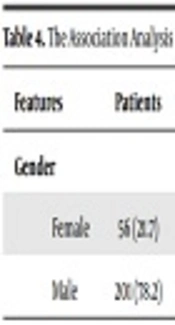
As mentioned previously (31), demographic information showed that most of the subjects were male. The frequency rates of A/A, A/T, and T/T genotype presentation in men and women are shown in Table 5. According to genotype frequency, it can be said that men are more likely than women to be susceptible to HBV.
Table 5.
IFN-Gamma + 874 T > A Based on Sex (n = 598, Crude Analysis)a
| Genotype | Controls | HBV Patients | OR (95% CI) | |
|---|---|---|---|---|
| Female | A/A | 55 | 23 | 1.00 |
| A/T | 56 | 32 | 1.37 (0.71 - 2.62) | |
| T/T | 14 | 17 | 2.90 (1.23 - 6.85) | |
| Male | A/A | 70 | 64 | 1.00 |
| A/T | 87 | 111 | 1.40 (0.90 - 2.17) | |
| T/T | 34 | 35 | 1.13 (0.63 - 2.01) |
aTest for interaction in the trend: 0.13.
Further studies on different ethnic populations and other polymorphic regions of the cytokines’ genes could allow for a more accurate definition of the involvement of the cytokines’ genetic polymorphisms in the development of such infections.