As mentioned previously, drug resistance has been a major obstacle for
Leishmania treatment, hence, developing inexpensive, accessible and orally applicable drugs with low side effects is essential, especially when humans are involved as reservoirs. There is an immediate requirement for guides on new inventive drugs (
12-
14). Hermoso et al. investigated anti-leishmanial effects of
Piper elongatum extract against promastigotes. They showed a logical description for the use of this extract (
15). Using flow-cytometry, Ghaffarifar et al. studied the effect of artemisinin on
L. major growth and their mechanism of action relating to programmed cell death. The authors observed that higher parasite death rates occur when drug doses were increased. The aforementioned study reported that the highest cell death occurred at 100 µg/mL concentration and the lowest cell death occurred at 10 µg/mL (
11). Doroodgar et al. showed that tamoxifen-induced apoptosis was dose-dependent as well. Ebrahimisadr et al. reported that artemether had an apoptotic effect on
L. major promastigotes and could prevent the growth of both
Leishmania in vitro (
12,
16). Maroufi et al. reported that cantharidin at different concentrations and times induced apoptosis in
L. major promastigotes and macrophages infected with amastigotes (
17).
Pinto et al. studied the effect of a series of histamine H1-receptor antagonists on promastigotes and amastigotes of L. infantum. They reported the IC50 value for ketotifen to be 13 µmol, which is comparable to the values obtained by the current study, although the Leishmania strains differed from each other in both studies. This work described, for the first time, the activity of H1-antagonists versus L. infantum and their possible efficiency in a speculative mice model. The evaluation showed that these drugs exert leishmanicidal effects against promastigotes. These researchers postulated that the drugs were the first antihistaminic drugs with anti-leishmanial activities and suggested that the drugs could be used as a platform for drug model studies for visceral leishmaniasis.
The anti-infective activity of H1-antagonist derivatives has also been explained versus
Mycobacterium tuberculosis. These drugs have also been described as a calcium channel blocker. Anti-leishmanial and anti-trypanosomal activities of calcium channel blockers have been demonstrated (
18). Rezaei et al. studied the effect of ketotifen and cromolyn sodium at different drug doses within 30 to 60 minutes of exposure time on stabilization of cell membrane in order to prevent penetration of
Toxoplasma gondii into Balb/c cells. Their results indicated that ketotifen and cromolyn sodium prevent entry of tachyzoites to nucleated cells, both
in vitro and
in vivo (
7).
Ibrahim et al. showed that ketotifen was effective on
Plasmodium falciparum both as a stand-alone drug or in combination with malaria common drugs (
9). You et al. reported that
P. yoelii parasites may be successfully treated with a combination of low dose of ketotifen and chloroquine. This causes the parasites to sometimes die faster with sporadic membranes and vacuoles damages (
19). Daryani et al. reported that ketotifen was more effective in preventing penetration of
Toxoplasma tachyzoites to macrophages at 10 µg/mL concentration after 60 minutes of exposure. They assumed that
T. gondii microtubules also act on each other with dinitroaniline. The cytoskeleton evidently executes significant functions in movement, intrusion, and endodyogeny. Interruption of any of these essential functions might be adopted to kill or disable the parasite.
The researchers have reported that cytochalasin D prevented the entry of
T. gondii to peritoneal macrophages and bladder tumor cells following a joint dosage yet did not avert connection. Microfilaments are incriminated to be a frequent place of activity in delaying entry of
T. gondii to cells. The researchers have showed that dinitroaniline herbicides avert
T. gondii replication. Trifluralin also binds
Leishmania tubulin and averts polymerization of subpellicular microtubules. In
Plasmodium, Trifluralins restrains fragments of the subpellicular microtubules of gametocytes, also delaying erythrocytic stages and exflagellation of gametocytes (
7,
20). Montazeri et al. showed that both ketotifen and pyrimethamine had prophylactic and curative results on acute phases of the disease. The combined treatment with ketotifen and pyrimethamine strongly prevents
T. gondii in vivo (
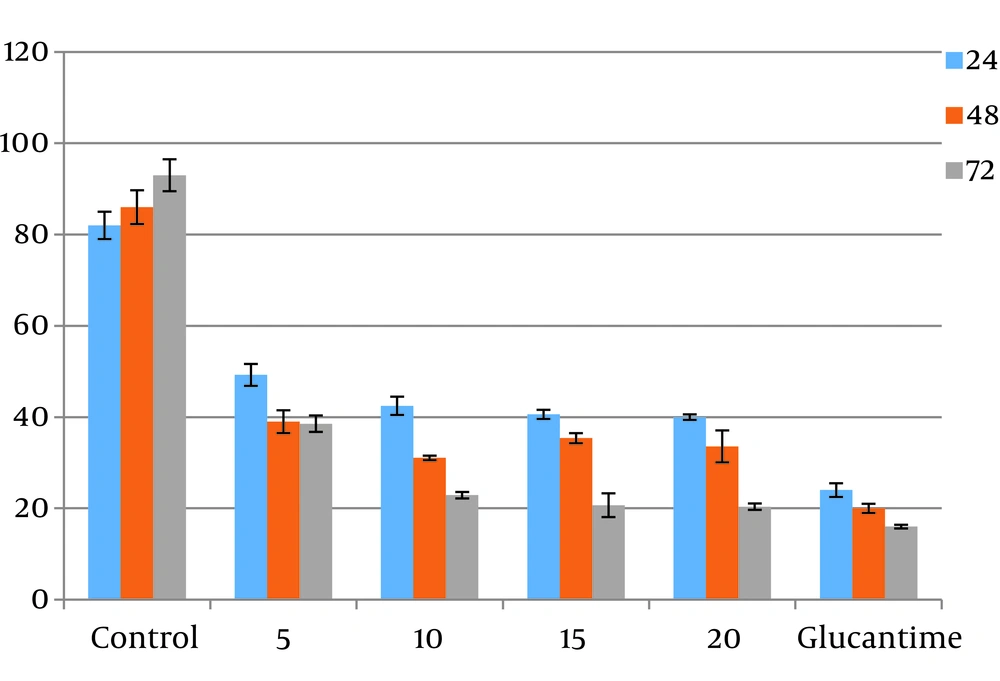
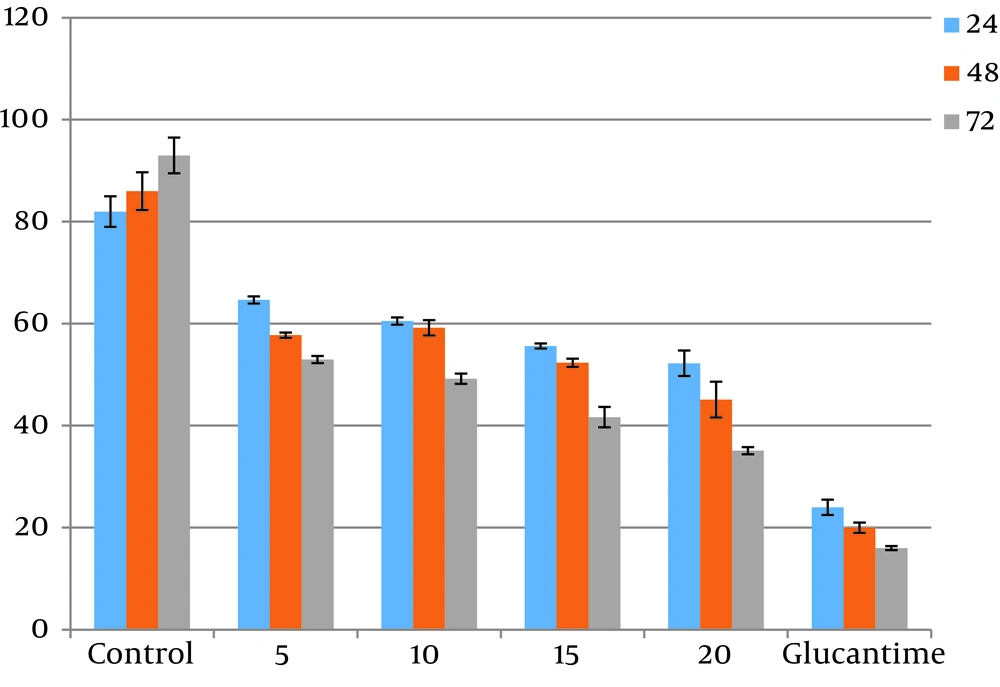
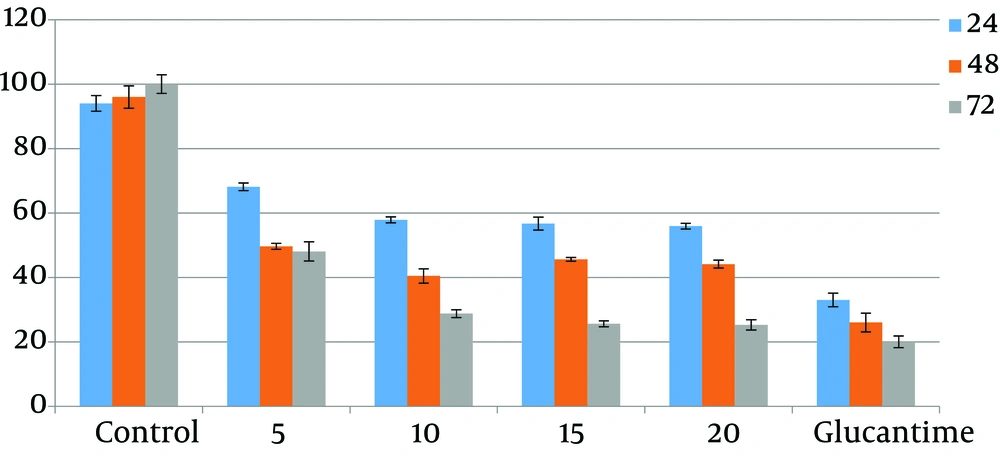
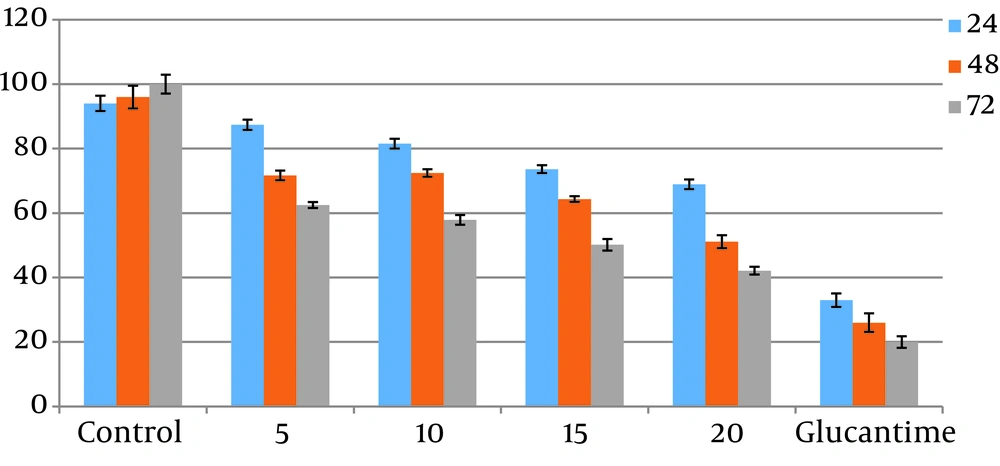
21). The used drugs in the current study stabilize cell membrane and prevent parasite entry to the host cells. This research found that drug efficacy was dose and exposure time dependent so that by increasing exposure time and drug concentration, the parasite count decreased.
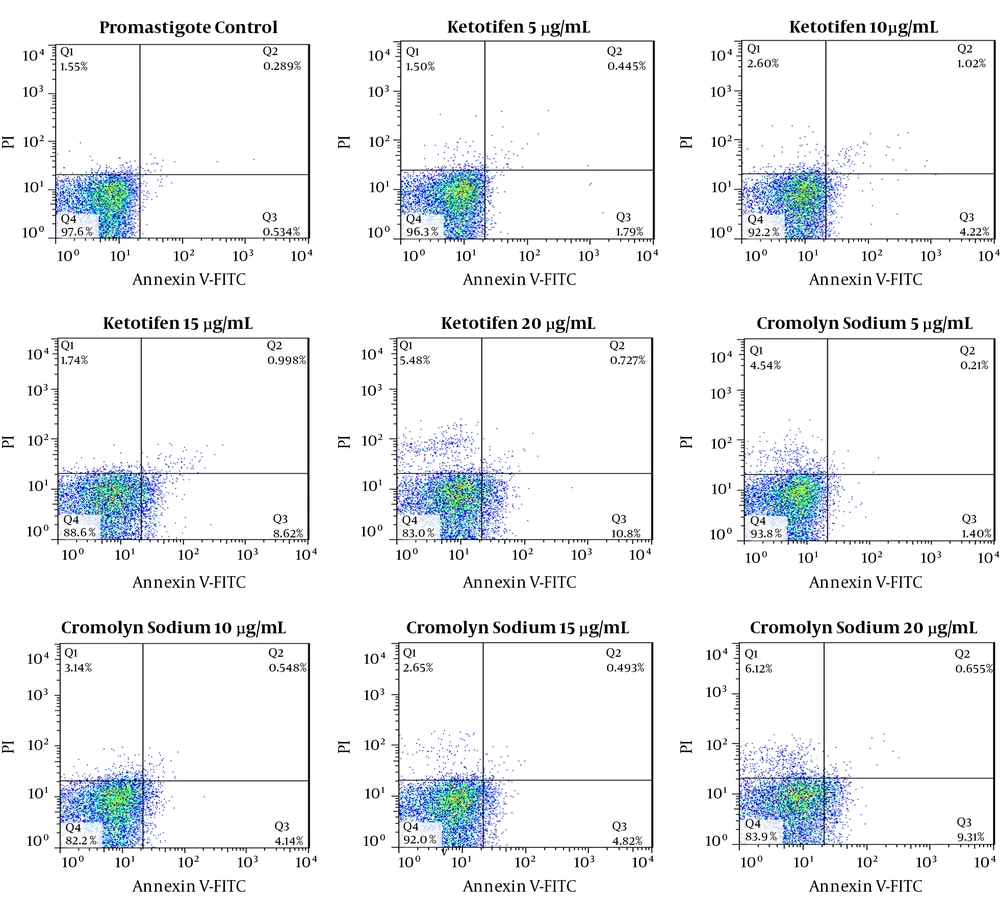
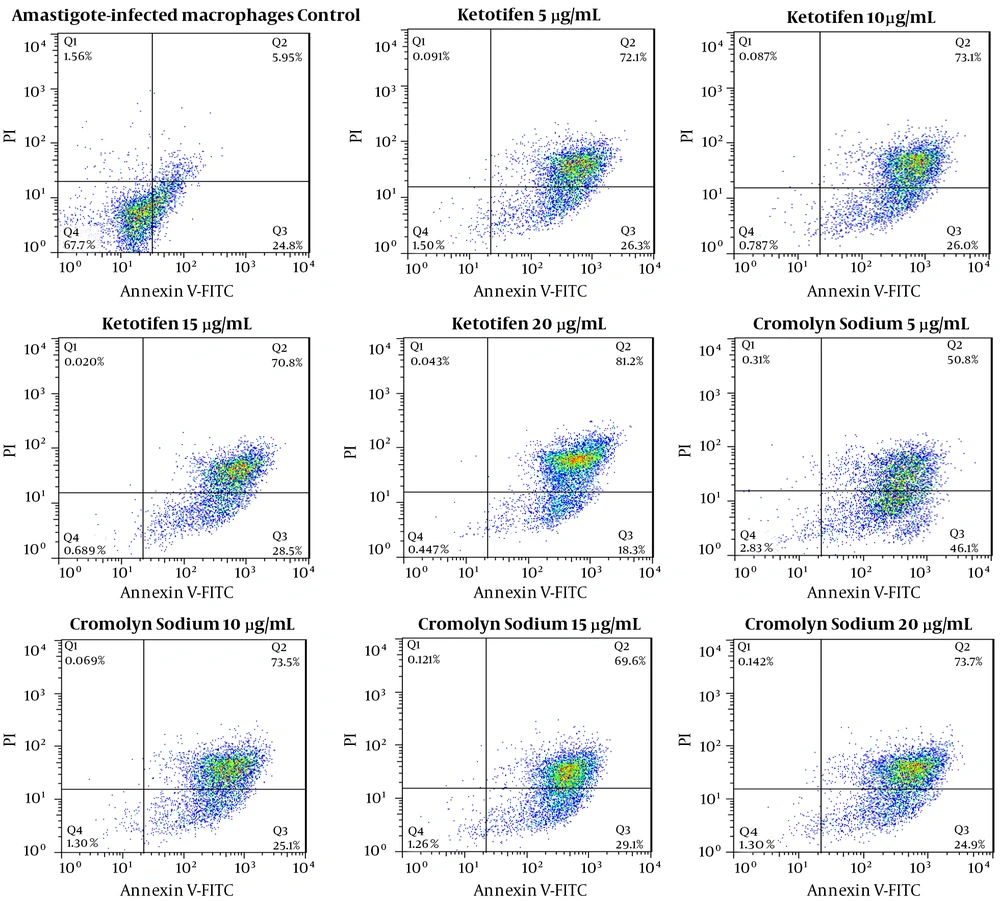
The MTT assay results showed that upon exposure to high doses of ketotifen and cromolyn sodium, percentage of viable promastigotes decreased when enough time was allowed. Under the said conditions, the viability of promastigotes was significantly different from that of the control group (P < 0.05). The drugs were significantly different from the control in terms of toxic effect (P < 0.05). Drugs used in this study, especially ketotifen, showed lower toxicity yet the same anti-Leishmania effects on both forms as cromolyn sodium did. These drugs were also able to induce apoptosis in promastigotes and amastigotes-infected macrophages of L. major, significantly different from the control groups (P < 0.05). The results showed that drugs used in this study were less effective on induction of programmed cell death in promastigotes, while they exerted greater effect on apoptosis of amastigotes-infected macrophages.
5.1. Conclusions
In this research, because of paucity of information, the apoptotic and leishmanicidal effects of ketotifen and cromolyn sodium were investigated on standard strains of L. major. The primary objective was to investigate the potency of the drugs and report on optimal doses, if proved effective. In contrast to cromolyn sodium, ketotifen showed higher inhibitory effects on both forms of the parasite, and lower toxicities to uninfected macrophages. ketotifen also showed stronger apoptosis induction of programmed cell death on amastigote and promastigote forms of the parasite. Therefore, further in vivo studies are suggested to evaluate the application of different doses of ketotifen for the treatment of leishmaniasis.