


1. Background
2. Objectives
3. Methods
3.1. Reagents, Chemicals and Equipment
3.2. Plant Selection and Extract Preparation
3.3. Antioxidant Activity
3.3.1. ABTS Radical-Scavenging Activity

3.3.2. 1,1-Diphenyl-2-Picrylhydrazyl Radical Scavenging Activity
3.3.3. Total Phenolics
3.3.4. Peroxide Value Assay

3.4. Statistical Analysis
4. Results and Discussion
4.1. Medicinal Plant Extracts
| Solvent | Number |
|---|---|
| Hexane | 1 |
| Methanol | 2 |
| Ethyl acetate | 3 |
| Chloroform | 4 |
| Water | 5 |
4.2. Antioxidant Activity by ABTS and DPPH Methods
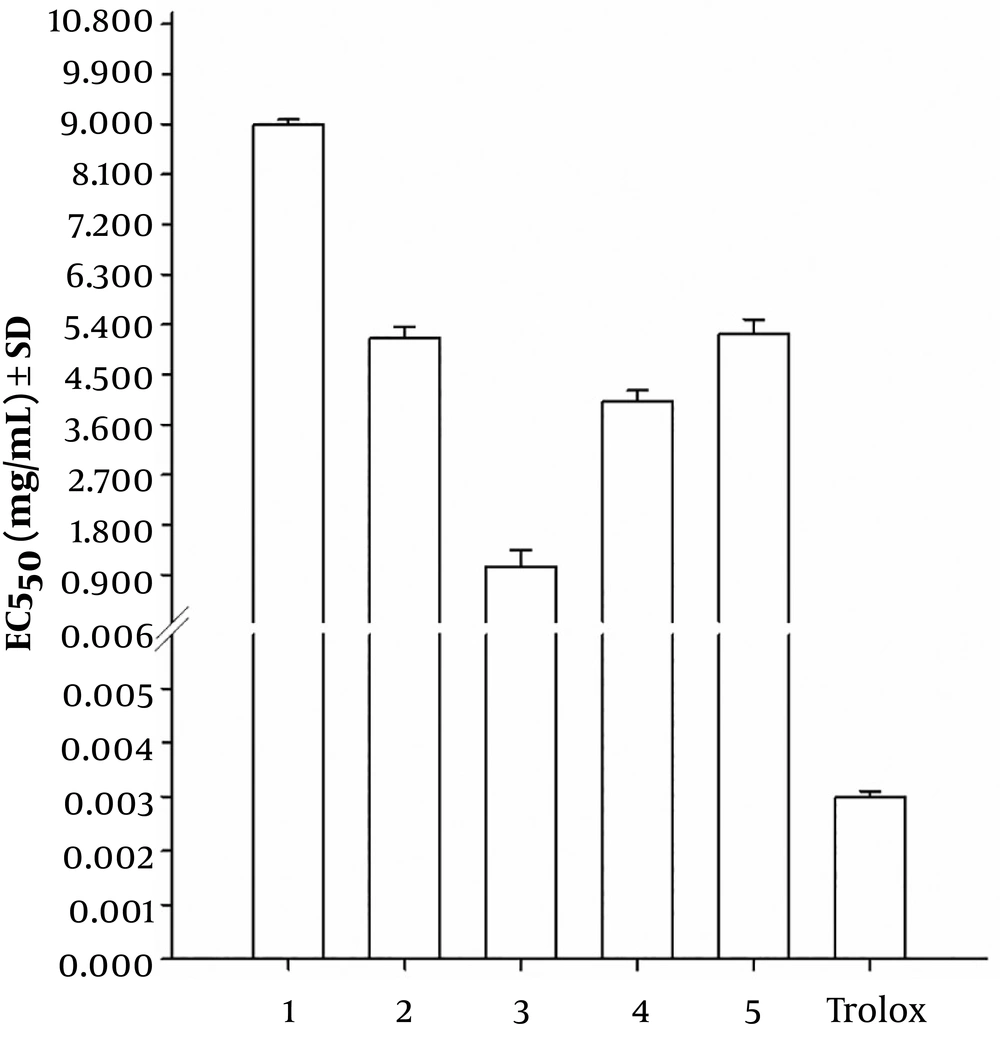
EC50 for the different Phragmanthera glaucocarpa (Table 1) and Trolox samples with the ABTS method. 1- Hexane fraction; 2- methanol extract; 3- ethyl acetate fraction; 4- chloroform fraction and 5- water fraction. Means ± SD (n = 3).
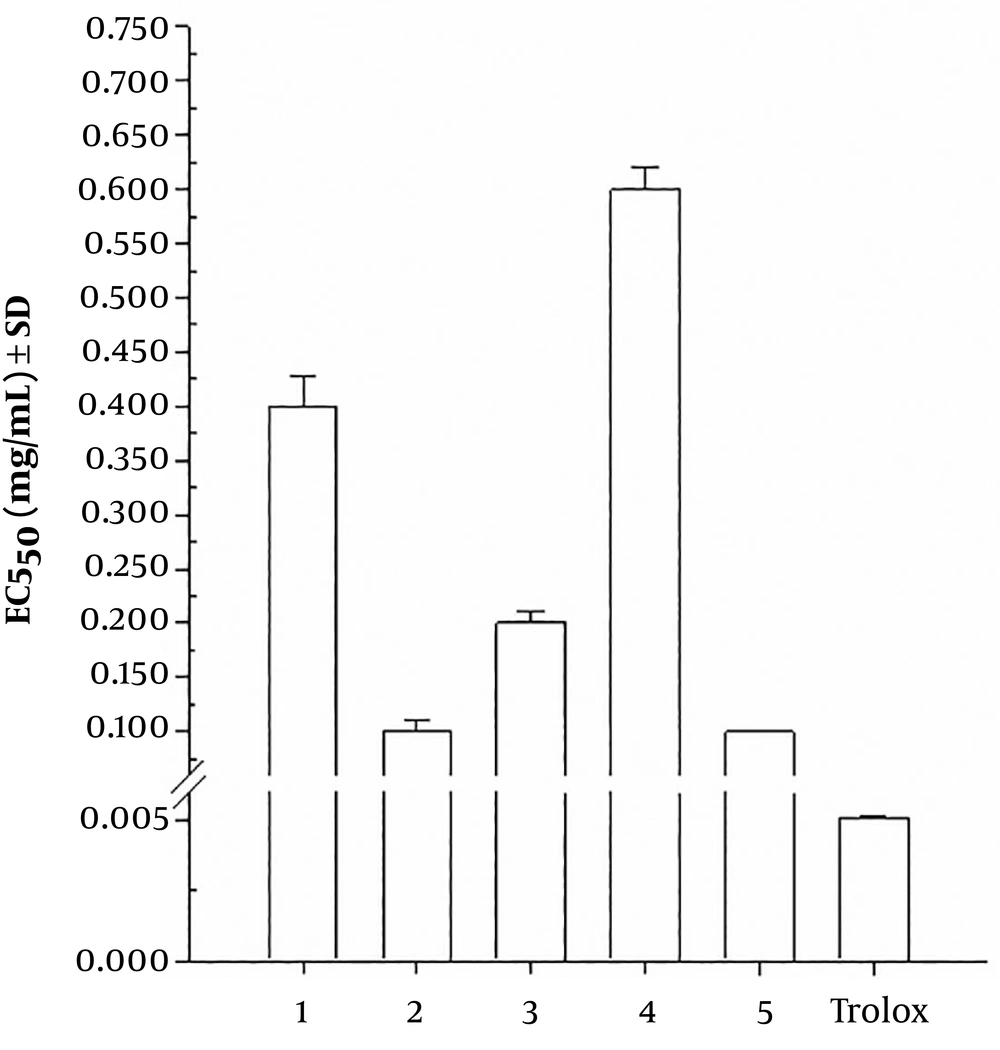
EC50 for the Phragmanthera glaucocarpa (Table 1) and Trolox samples with the DPPH method. 1- Hexane fraction; 2- methanol extract; 3- ethyl acetate fraction; 4- chloroform fraction and 5- water fraction. Means ± SD (n = 3).
4.3. Total Phenolic Content
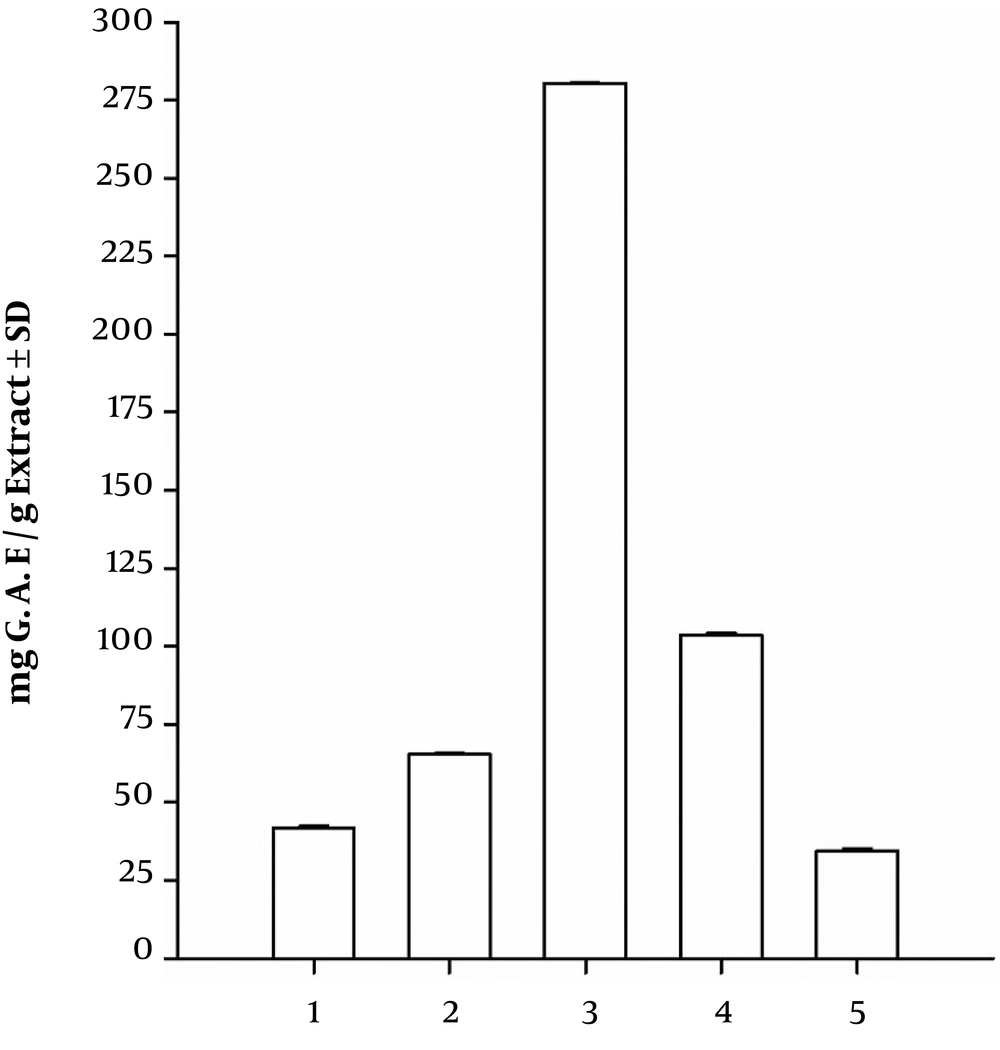
Total phenolic content of the different Phragmanthera glaucocarpa samples (Table 1) determined by the Folin-Ciocalteu method. 1- Hexane fraction; 2- methanol extract; 3- ethyl acetate fraction; 4- chloroform fraction and 5- water fraction. Means ± SD (n = 3).
4.4. Peroxide Value (PV)
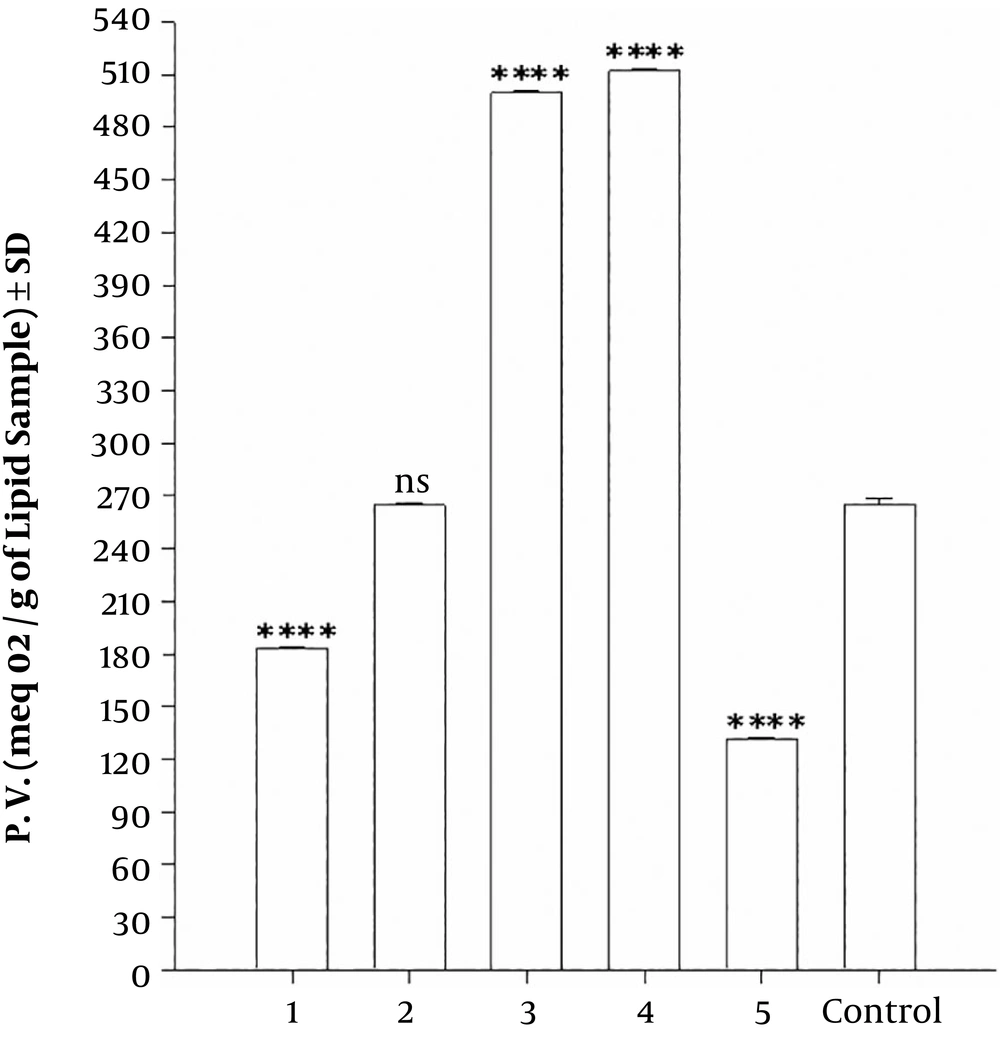
Peroxide values for sunflower oil in the presence of the five Phragmanthera glaucocarpa samples (Table 1) and for the control after eight days of lipidic oxidation. 1- Hexane fraction; 2- methanol extract; 3- ethyl acetate fraction; 4- chloroform fraction and 5- water fraction. Means ± SD (n = 3). **** Indicate P < 0.0001, which denotes the statistical comparison between the control and the various extracts. “ns” indicates not statistically significant differences.

