The ideal root-end filling materials should be biocompatible and adhere well to the root canal wall (
17). The purpose of this study was to assess the biocompatibility of three root-end filling materials: Mineral trioxide aggregate, Super-EBA, and Geristore. Mineral trioxide aggregate is a common root-end filling material composed of tricalcium silicate, tricalcium aluminate, tricalcium oxide, and silicate oxide, and it is used for pulp capping, pulpotomy, and repairing root perforations (
18). Ethoxy benzoic acid was introduced in the 1960s as a substitute for zinc oxide-eugenol cements. This material has superior strength due to the ethoxy benzoic acid in its chemical formulation. However, it has been reported that EBA can cause a moderate cytotoxic reaction because of the eugenol component (
19-
21). Geristore, a resin ionomer, is a nonaqueous, hydrophilic, polyacid-modified composite resin with advantages such as insolubility in oral fluids and good adhesion to tooth structures (
13). A study comparing the effects of Geristore with MTA and GIC on human periodontal fibroblasts revealed that Geristore was significantly better and less cytotoxic than MTA and GIC (
11). Due to these superior material properties, this study evaluated the effect of these filling materials on the production of pro-inflammatory and resorptive cytokines.
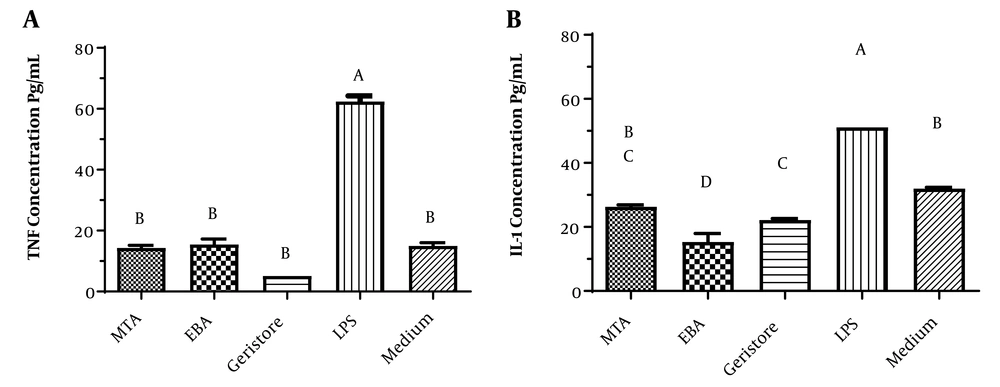
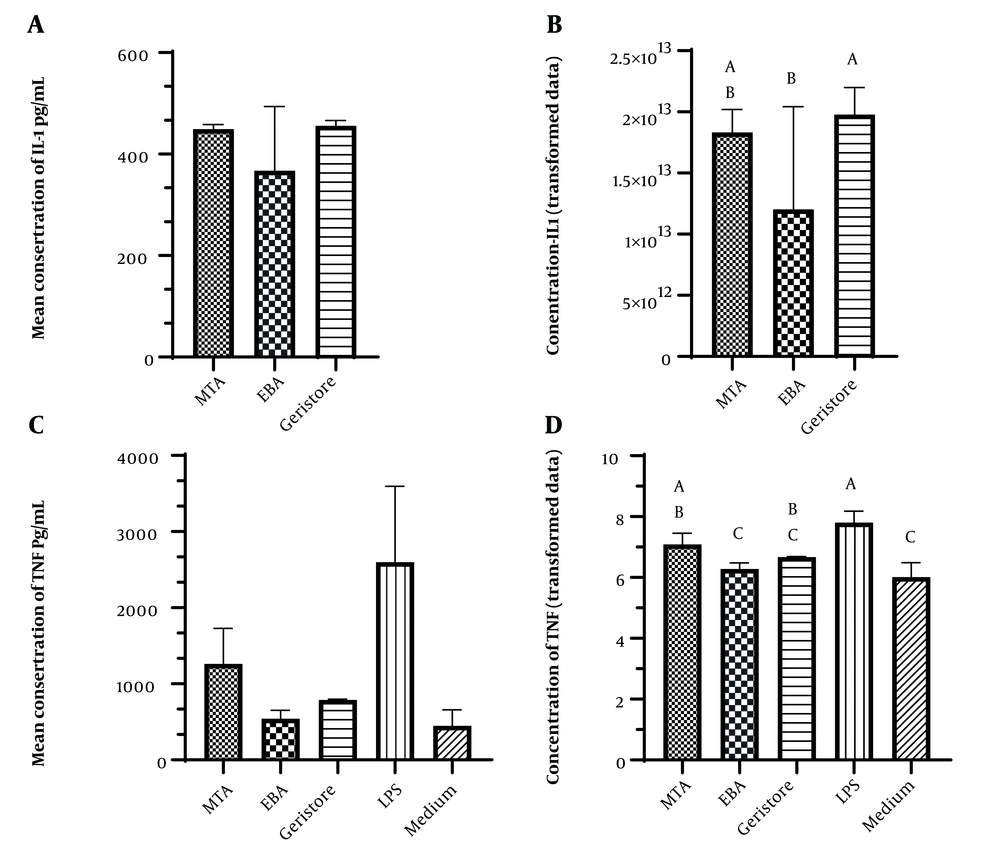
Pro-inflammatory cytokines such as IL-1β and TNF-α play crucial roles in the host's antimicrobial and anti-tumor responses, but the production of these cytokines during inflammatory processes can stimulate bone resorption. In this study, the effects of the three types of root-end filling agents on pro-inflammatory cytokine production were investigated using human normal monocytes and the macrophage cell line (THP-1) after 24 hours of exposure. Exposure of monocytes to EBA for 24 hours resulted in decreased TNF-α and IL-1β secretion compared to the other groups. In THP-1 cultures, the release of pro-inflammatory cytokines did not differ significantly between the groups. However, Geristore caused the lowest TNF-α production, and for IL-1β secretion, it was second to EBA. In a study where MG-63 cells were cultured with MTA, RT-PCR results showed that the expression of IL-1β, IL-6, and IL-8 was detected in all samples with minimal TNF-α expression (
22). This aligns with the results obtained here from co-culture with THP-1. Conversely, the culture of human dental pulp cells with MTA decreased the expression of IL-1β and IL-6 (
23). In a study by Oliveira et al., where the calvarial bone of mice was exposed to MTA, Geristore, and Emdogain in vivo, MTA did not alter TNF-α expression but increased IL-6 expression. On the other hand, Geristore significantly down-regulated TNF-α, IL-6, TGF-β, and IL-4 mRNA (
16).
The RANK-L/OPG pathway regulates the bone microenvironment. RANK-L, expressed in osteoblasts, promotes the differentiation of osteoclasts and inhibits their apoptosis, while OPG competes with RANK-L by binding to it, preventing the binding of RANK-L to RANK, which results in the inhibition of osteoclast differentiation and function. Therefore, the RANK-L/OPG pathway plays a crucial role in maintaining the balance between bone formation and resorption (
24).
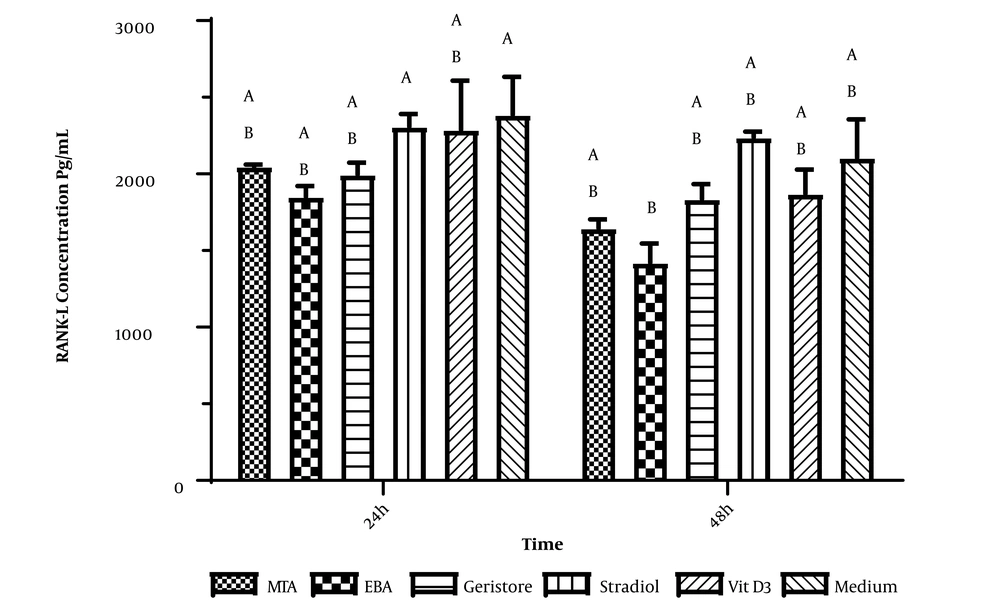
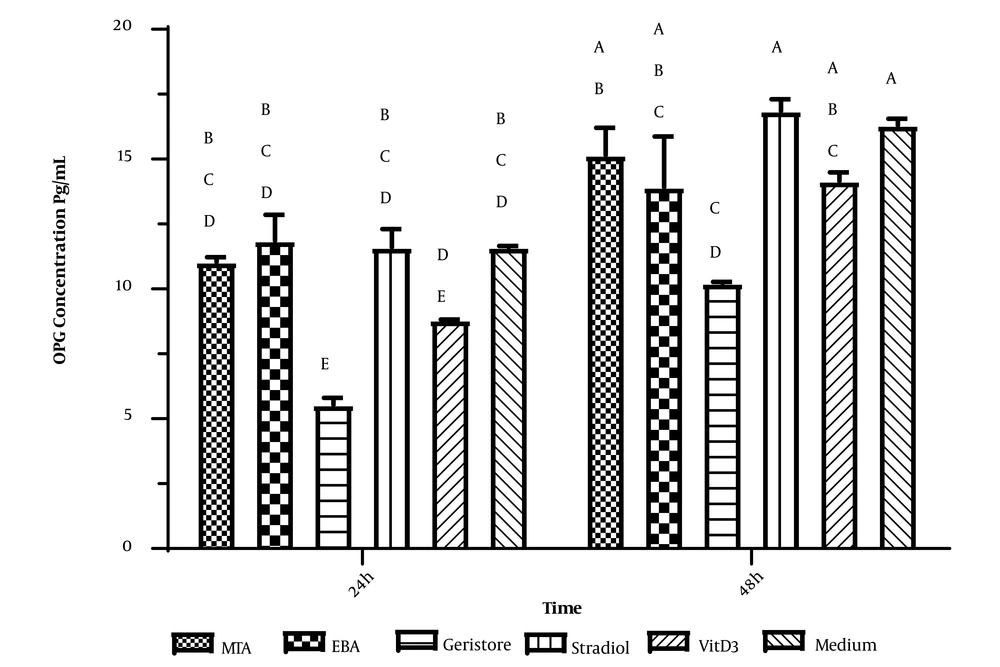
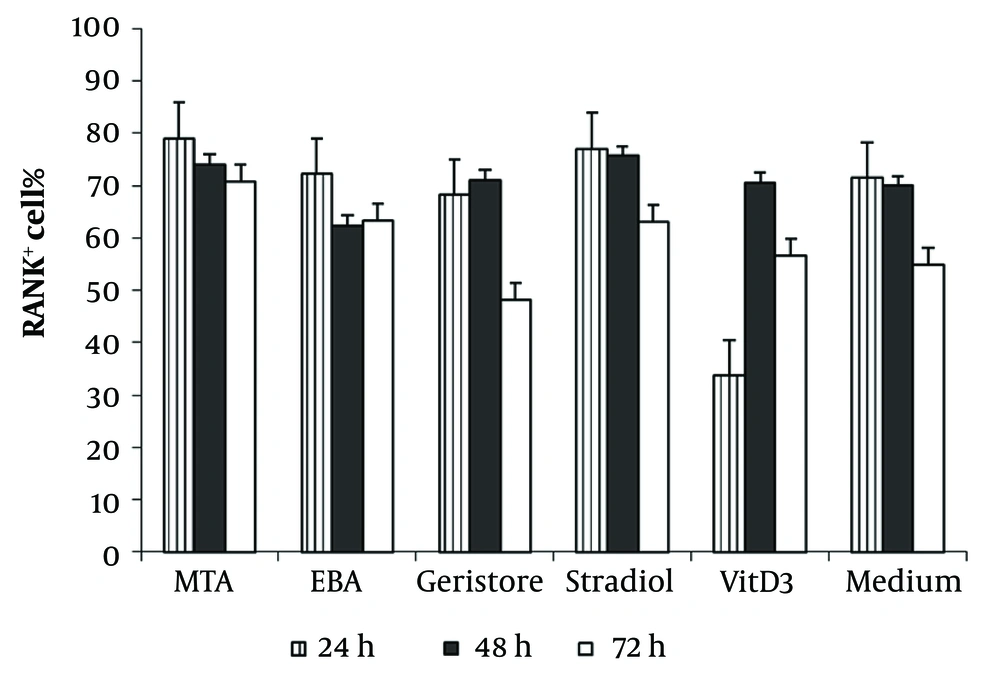
In our study, Geristore induced the highest level of RANK-L and the lowest level of OPG in cultures with the MG-63 cell line. A study by Hashiguchi et al. revealed that an MTA solution inhibited the 1α, 25(OH)₂D₃-induced downregulation of OPG mRNA and protein production but did not affect RANK-L-induced osteoclastogenesis in co-cultures of BMCs and POBs derived from OPG-deficient mice. Our findings also showed that MTA caused a moderate level of RANK-L production (between Geristore and EBA). Furthermore, Super-EBA solutions suppressed osteoclast formation in co-cultures by inhibiting proliferation (
25). A study by Oliveira et al. showed that MTA promotes a significant increase in the mRNA expression of RANK-L, RANK, and OPG, while Geristore did not alter the basal expression of these mediators during the same evaluation period (
16).
Monocytes are a subset of circulating white blood cells that mobilize and migrate to sites where they are needed. They play a crucial role in provoking immune responses during infections and driving inflammatory conditions (
26). The MTT test results showed that Geristore produced the lowest viability both early (12 hours) and late (120 hours) compared to EBA and MTA when co-cultured with monocytes. Specifically, the order of materials in terms of viability at both early and late time points was Geristore < EBA < MTA. However, at 48 hours, EBA resulted in the lowest viability, followed by MTA and then Geristore.
In one study, the histopathologic effects of three materials—mineral trioxide aggregate (GMTA), Retroplast, and Geristore—were assessed by implanting them into the subcutaneous connective tissue of rats. The statistical results showed that the infiltration of inflammatory cells was significant for Geristore but not for GMTA, and Geristore also caused more necrosis (
23). Histological evaluation of dorsal connective tissue in rats indicated that Geristore gradually increased chronic inflammation at the tube ends over the three test periods, with mild inflammation at one week and mild to moderate inflammation in the subsequent periods, leading to focal necrosis (
27).
Overall, our results suggest that Geristore does indeed cause higher expression of RANK-L, which stimulates the fusion, deposition, activation, and survival of osteoclasts, leading to bone resorption. Additionally, Geristore performed poorly in the production of inflammatory cytokines. This could be related to the high viability and reduced death of monocytes it causes in the medium term (12 hours, 120 hours) compared to the other materials. Higher viability of these cells likely leads to greater secretion of inflammatory cytokines (after 24 hours). However, given the results obtained here and those from the literature, further studies are needed before definitive conclusions can be drawn.