Fulltext
The body of the article can be found in the PDF file.
Journal of Medical Education for Future Demands
Former Title: Journal of Medical Education | The Official Journal of School of Medical Education and Learning Technologies
Image Credit:J Med Edu
Authors
Background: Knowledge transfer is known as a core process in knowledge management. Its decent and influential function in organizations would result in regeneration and innovation of knowledge.Due to this importance, the most recent research in knowledge management has been inclined toward knowledge transfer concept. We aimed to investigate the most influencing contributing factors in knowledge transfer and knowledge sharing within the faculty members at Tehran University of Medical Sciences.Method: This investigation has been conducted with a qualitative approach using grounded theory. Data were collected using semi- structured interview with 17 faculty members of ten distinct departments of Tehran University of Medical Sciences. The data has been transcribed and analyzed.Results: By carefully analyzing the interviews from 272 preliminary open codes after sequential analogies and induction, 54 concepts have been extracted that were categorized into one of eleven classes constituting the effective items and factors in knowledge transfer among faculty members,respectively. These categories could be placed into , non-communication factors and communication factors. The non-communication factors were knowledge actors (professors), organization (university), the knowledge, and surroundings. The communication factors are the factors that are formed in the dual relationships between the relevant factors.Conclusion: A decent knowledge flow in working groups and collaborative societies of faculty members within a department or through different university departments would lead to a better research and education management. This could also bring about some advantages: the research in each department falls in a well-defined, pre-missioned channel, avoiding scattered research works, and enhancing the training and research. The awareness of university senior managers about influencing contributing factors of knowledge transfer and their functions provide a robust panel for tracing the knowledge flow and help them establish the knowledge flow for production and regeneration of genuine knowledge.
© 2017, Author(s). This open-access article is available under the Creative Commons Attribution 4.0 (CC BY 4.0) International License (https://creativecommons.org/licenses/by/4.0/), which allows for unrestricted use, distribution, and reproduction in any medium, provided that the original work is properly cited.
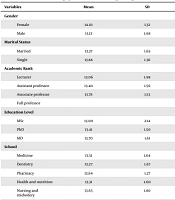
Khosravifar M, Jalili C, Jalilian F, Mirzaei-Alavijeh M, Morovati S. Status of Knowledge Sharing Intention Among the Faculty Members of Kermanshah University of Medical Sciences, Iran (2019). Educ Res Med Sci. 2021;10(1):e112084. doi: https://doi.org/10.5812/erms.112084
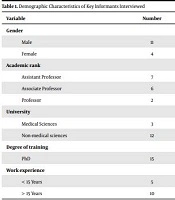
Mostafaei SMR, Khakrah F, Malekian F. Identifying the Strategies of Learning Transfer to Workplace in Kermanshah Universities: Content Analysis. Educ Res Med Sci. 2020;9(2):e103913. doi: https://doi.org/10.5812/erms.103913
Mozaffari M, Ahmadi A. Investigating the state of establishment of knowledge management in teaching hospitals of Qazvin University of Medical Sciences in 2013. J Inflamm Dis. 2017;21(3):e156031. doi:
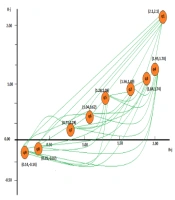
Jafari M, Nadri F, Shahsavari S, Jafari M. Analysis of the Systematic Correlations Between the Influential Factors in Effective Teaching from the Perspective of the Faculty Members of Kermanshah University of Medical Sciences Based on the Graph Theory (2019). Educ Res Med Sci. 2022;11(1):e119522. doi: https://doi.org/10.5812/erms-119522
Fattahi Z, Jalili Z, Mohamadalizadeh S, Adhami A. Knowledge and Attitude of Faculty Members of Kerman University of Medical Science about Lesson Planning. J Med Edu. 2009;13(3):e105406. doi: https://doi.org/10.22037/jme.v13i3.4515
Last Update: 2 days ago
Last Update: 2 days ago
Last Update: 2 days ago
Last Update: 6 days ago
Last Update: 7 hours ago
Last Update: 4 days ago