
1. Background
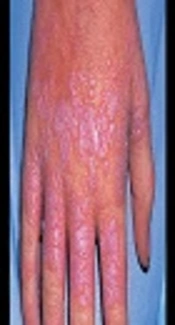
Lichen planus (LP) is a chronic inflammatory and T-cell mediated disease. Classically, the lesions of LP are symmetric and bilateral in the skin, nails, hair, and mucous membranes. Cutaneous LP mostly affects the flexor surfaces of the extremities as a small itchy violaceous papule (1). LP affects middle-aged individuals (2, 3); it is more common in females, and its prevalence in general population is about 0.1% - 4% (4). Although the immune system is implicated in its onset, however, the etiopathogenesis seems to be complex, with interactions among several factors such as genetic and environmental ones (5). Blood group, as a genetic marker, is used in many studies; genetic factors such as blood group antigens may probably influence the risk, severity, and development of some diseases. Previous researches showed the association between ABO blood groups and malignancies (6), blood group O and duodenal ulcers (7), blood group A and gastric cancer (8), blood group O and peptic ulcers (9), blood group O and toxemia of pregnancy (10), and blood group AB and carcinoma of the uterine cervix (11). Some studies indicated that the ABO blood groups and Rh may be related to the onset of the LP; however, the results of these studies are not homogenous (12-14). To address these concerns and shed light on the relationship between these antigens and LP, the current study aimed at evaluating the possible correlation between ABO, Rh, and LP.
2. Methods
The current case-control study was conducted on 79 patients with LP referring to Shohada-e-Tajrish and Loghman-e-Hakim hospitals as well as 79 healthy controls. The patients were informed about the study procedure and informed written consents were taken from them; moreover, the study protocol was approved by the ethic committee of Shahid Beheshti University of Medical Sciences, Tehran, Iran. The inclusion criteria were signing the written informed consent, having LP including cutaneous, mucosal, or follicular type diagnosed with dermatologist and biopsy evaluations. On the other hand, the patients were excluded if they had premalignancy, malignancy, severe systemic diseases, and inflammation in spite of LP. The enrolled patients were interviewed and their demographic data such as age and gender were recorded. Moreover, a dermatologist fully examined the patients and LP was diagnosed clinically and histologically. Also, mucosal, cutaneous, and follicular types of the LP were distinguished. Then, the blood samples were obtained from the participants and their blood groups (A, B, AB, O) and Rhesus (Rh-, Rh+) were determined. The ABO blood grouping was conducted by cell type tube test technique, using anti-A, anti-B, and 5% red blood cells suspension. Then, based on the agglutination pattern, the samples were classified as A, B, AB, and O blood groups.
2.1. Statistical Analysis
Data were analyzed with SPSS version 20. Categorical data were presented as numbers (%) and continuous data as mean ± SD. Chi-square test was used to compare the relationship of ABO blood groups between patients and donors. A P value of < 0.05 was considered significant.
3. Results
The patient group consisted of 30 (38%) males and 49 (62%) females with the mean age of 44.61 ± 12.81 years. The age ranges of 40 - 59 and 20 - 39 years were highly frequent, respectively, and patients with LP under 20 years were rare. The control group’s data indicated almost the same (Table 1). The most involved area in patients was cutaneous followed by follicular involvements (Table 1). The most frequent blood group in patients was A, and most of the patients were Rh+. The blood groups A+, A-, and O+ were more common in the group with LP than the control. Conversely, B+, B-, and AB+, AB-, and O- were more common in the control group than the patients group. In general, there was no significant relationship between the ABO blood groups in the patients and control groups (Table 2). Also, there was no significant difference between the 2 groups regarding Rh (Table 3).
Table 1.
The Distribution of Age, Gender, and Lichen Planus Types Among the Study Participants
| Variables | No. (%) | |||
|---|---|---|---|---|
| Gender | ||||
| Male | 30 (38) | |||
| Female | 49 (62) | |||
| Age, y | ||||
| < 20 | 2 (2.5) | |||
| 20 - 39 | 25 (31.6) | |||
| 40 - 59 | 41 (51.9) | |||
| ≥ 60 | 11 (13.9) | |||
| Lichen planus type | ||||
| Cutaneous | 57 | |||
| Follicular | 28 | |||
| Mucosal | 21 | |||
| Frequency of Lichen Planus subtype | A | B | AB | O |
| Cutaneous | 10 (33.3) | 6 (46.2) | 5 (71.4) | 14 (48.3) |
| Follicular | 6 (20) | 4 (30.8) | 1 (14.3) | 6 (20.7) |
| Mucosal | 4 (13.3) | 1 (7.7) | 0 | 0 |
| Muco-cutaneous | 7 (23.7) | 1 (7.7) | 0 | 3 (10.3) |
| Cutaneous, Mucosal, follicular | 1 (3.3) | 1 (7.7) | 1 (14.3) | 2 (6.9) |
| Cutaneous, follicular | 2 (6.7) | 0 | 0 | 4 (13.8) |
Table 2.
Blood Group Characteristics Among the Study Participantsa
| Group | A | B | AB | O |
|---|---|---|---|---|
| Controls | 22 (27.8) | 21 (26.6) | 9 (11.4) | 27 (34.2) |
| LP patients | 30 (38) | 13 (16.5) | 7 (8.9) | 29 (36.7) |
| P value | 0.17 | 0.12 | 0.62 | 0.74 |
aValues are expressed as No. (%).
Table 3.
The Distribution of Blood Groups and Rh in the Study Participants
| Blood Group | Lichen Planus | Control | Rh P Value (Chi-Square) |
|---|---|---|---|
| A+ | 26 (33) | 19 (24) | 0.3 |
| A- | 4 (5) | 3 (3.8) | |
| B+ | 13 (16.5) | 18 (22.8) | |
| B- | 0 | 3 (3.8) | |
| AB+ | 6 (7.6) | 9 (11.4) | |
| AB- | 1 (1.3) | 0 | |
| O+ | 27 (34) | 23 (29.1) | |
| O- | 2 (2.7) | 4 (5) | |
| Total | 79 (100) | 79 (100) |
In patients with cutaneous involvement, regardless of involved sites, none of the ABO blood groups were statistically different from the control group (Table 4).
Table 4.
Blood Group Characteristics Among Patients With Cutaneous LP and Controlsa
| Group | A | B | AB | O |
|---|---|---|---|---|
| Controls | 22 (27.8) | 21 (26.6) | 9 (11.4) | 27 (34.2) |
| LP patients | 20 (35.1) | 8 (14) | 6 (10.5) | 23 (40.4) |
| P Value | 0.36 | 0.06 | 0.87 | 0.46 |
aValues are expressed as No. (%).
Blood group A was significantly higher in patients with mucosal type of LP compared with the control group (Table 5).
Table 5.
Blood Group Characteristics Among the Patients With Mucosal LP and Controlsa
| Group | A | B | AB | O |
|---|---|---|---|---|
| Controls | 22 (27.8) | 21 (26.6) | 9 (11.4) | 27 (34.2) |
| LP patients | 13 (59.1) | 3 (13.7) | 1 (4.6) | 5 (22.8) |
| P Value | 0.012 | 0.16 | 0.26 | 0.3 |
aValues are expressed as No. (%).
The assessments were conducted based on the type of LP, regardless of the severity.
The P value was insignificant for the blood groups in patients with follicular involvement (Table 6).
Table 6.
Blood Group Characteristics Among Patients With Follicular LP and Controlsa
| Group | A | B | AB | O |
|---|---|---|---|---|
| Controls | 22 (27.8) | 21 (26.6) | 9 (11.4) | 27 (34.2) |
| LP patients | 9 (32.1) | 5 (17.9) | 2 (7.1) | 12 (42.9) |
| P Value | 0.68 | 0.34 | 0.48 | 0.44 |
aValues are expressed as No. (%).
4. Discussion
Although the LP is a complex disease and several factors may be correlated with its etiopathology, however, due to several familial cases of LP in previous studies, the authors suggested a possible genetic predisposition with LP. These studies indicated that gene polymorphisms, and inflammatory cytokines and chemokines are the involved factors (15, 16). Moreover, other reports indicated that the ABO antigens were related to several diseases such as autoimmune complications (6, 17, 18). Usually, blood group antigens are expressed on the surface of skin cells and many other epithelial cells. The presented antigens are fucosylated oligosaccharides that contribute in divers biological processes, including inflammation, tissue differentiation, cell movement, and bacterial adhesion (19). Additionally, other studies indicated that the glycosyltransferase contributing to the biosynthesis of A and B antigens was associated with the development of the tumors (20). Further studies are required to find out the ABO's role as tumor Ag; however, it was not the main objective of the current study. Therefore, the current study aimed at investigating the possible association between ABO and Rh, and LP. The results of the current study on 79 patients with LP and the mean age of 44.6 years showed no significant difference between the study groups in the frequency of Rh between the 2 groups. However, a significant protective association was found in blood group B (lower frequency in overall and especially in mucosal and cutaneous types) and a significant predisposing risk in blood group A in mucosal type (higher frequency in mucosal type). The results of the current study were supported by Kumar et al., in India that revealed significant correlation between the blood group A and oral LP (12). Terzi et al. came to the same conclusion and showed a significant correlation between ABO blood groups and acne vulgaris (21). Marjory et al. showed a higher incidence of LP in patient with the blood group A (19, 22).
In summary, the current study revealed a correlation between the blood group A and mucosal type of LP; some other studies also revealed similar findings. It should be mentioned that previous studies focused on the oral LP, but the current study included all subtypes of the disease.
The main limitation of the current study was the relatively small sample size; further investigations are recommended with larger sample sizes to validate the findings reported here. Furthermore, since the exact mechanism of ABO antigens in the pathophysiology of LP is unknown, more studies are required to investigate the nature of this potential relationship. Although it is an important point of view that the prevalence of ABO group is different among races, the results could not be generalized to all human skin types or races. Therefore, to ignore the race impact, outdoor patients were recruited.
Conclusion: The current study revealed that the Rh system do not affect LP, but patients with blood group A are at higher risk for developing mucosal type of LP. However, these findings should be confirmed in randomized trials with larger sizes.