
1. Background
According to the WHO (World Health Organization), renal and urinary tract diseases kill about 850,000 people each year and are the 12th leading cause of disability and death globally (1). In Iran, about 32,000 people are affected by renal and urinary tract diseases, half of whom survive by undergoing hemodialysis and the other half by undergoing renal transplant (2). As a chronic disease, renal failure alters patients’ health status and imposes great burdens on them. These individuals remain under the supervision and care of medical teams all their lives and have to follow difficult dietary and drug regimens (3). This disease also imposes a great financial burden on the health system (1). Chronic renal failure (CRF) creates different problems for patients, such as job loss or difficulty finding the right one, continuing education, dependency on others, reduced self-esteem, and isolation. It also severely affects patients’ familial, social, and economic lives (4).
Considering issues such as dependency on the dialysis machine, anxiety, and the high cost of treatment, most CRF patients prefer to undergo renal transplant surgery (5). Approximately half of CRF patients are lucky enough to receive a kidney transplant (6). Despite the many advantages of organ transplantation compared to other treatments, organ transplant recipients face a wave of new problems after the operation. After the transplant surgery, the long-term use of medications and their side effects cause many problems, such as insomnia, gastrointestinal disorders, extreme fatigue, hand tremors, and visual and memory disorders, which make patients doubt the correct use of drugs (7).
Although the recent surgical techniques and medicines used for renal transplantation have been more successful compared to the past, transplant patients’ lack of knowledge about the care process raises their anxiety and uncertainty regarding the future, weakens their ability to adapt to this new treatment method, and thus causes depression and reduces their quality of life (QoL) (8). The lengthy treatment procedure and the numerous complications of renal transplantation have turned it into a chronic disease that changes patients’ lifestyle, health status, and social role, all of which affect their QoL (9). Therefore, a goal of care for these patients is to promote their QoL, and one way of achieving this goal is to educate and support them. This education should take place in steps and in ample time so that patients can emotionally bond with their transplanted organs and accept them as their own, which ultimately increases their QoL as they can return to work and regain their social lives (10). Emotional problems are even more important than physical ones in the failure of organ transplants, greatly affecting the QoL of patients (11). Education and support in learning healthy lifestyles, adapting to new situations, and using correct dietary and pharmacologic regimens are among the principal components of care for transplant recipients (12). To educate patients, they must become self-efficient and able to take charge of their own care and treatment, overcome obstacles, and come to terms with the disease and all its associated therapies (13). This study examined the three most common and important complications of kidney transplantation, namely infection, acute transplantation rejection, and re-admission. The goal was to determine the impact of an educational package on QoL and acute transplant complications in patients undergoing renal transplantation.
2. Objectives
This study aimed to evaluate the impact of an educational package on QoL and complications of renal transplant in recipients.
3. Methods
This was a randomized clinical trial. The sample included patients who underwent kidney transplant surgery in hospitals affiliated with Tehran University of Medical Sciences (Iran), divided into intervention and control groups. The inclusion criteria were being 18 – 60 years old, literate, willing to participate, having undergone a transplant for the first time, and not having a history of psychological disorder. The principal researcher checked these criteria. The exclusion criteria were hyperacute complications following transplantation and unforeseen admission lengthier than 20 days after the surgery. With a confidence interval of 95% and test power of 80% based on a previous study (14), the standard deviation (SD) for QoL was estimated at 4.5, assuming that the educational package could improve the patients’ QoL by up to 3 points (N = 3) after placing the numbers in the following formula:
Thus, the sample size required for each group was calculated to be 36, but since an attrition rate of 10% was assumed, the sample size per group was increased to 40.
A demographic and disease information form was used to collect the data. The disease information was obtained through interviews held with the patients and by looking up their medical records. The QoL questionnaire was based on the Kidney Transplant Questionnaire (KTQ-25). This instrument consists of several parts. The first part is composed of 32 common problems in these patients, which must be marked if the patient has faced them in the last two weeks. If there is another problem not mentioned in this list, the patient should mention it. Next, the patients list 6 of the above-mentioned problems in order of importance and severity in the table (from 1 to 6). The second part of the questionnaire consists of 25 questions (on a Likert scale from very severe (83 - 100%) to not severe at all (0%)) regarding problems that the patient has faced in the last two weeks.
In this instrument, 6 questions are related to the physical dimension, 4 to appearance, 4 to fear and uncertainty, 6 to the emotional dimension, and 5 to fatigue. To determine the scores, the scores of all these 5 dimensions are calculated and divided by the total score. To determine the total score, the scores of all these areas are summed up. A lower score indicates a better QoL. This questionnaire was filled out by the patients in the control and intervention groups at the beginning of the study and 8 weeks after the intervention. The validity and reliability of this instrument were assessed and confirmed by Mollahadi et al. (15). The intraclass correlation was estimated via Cronbach’s alpha (α = 0.93).
The researcher developed a checklist based on the relevant literature to examine the acute complications of renal transplant. It included three areas: infection, acute rejection, and re-admission. After the end of the study (8 weeks), this checklist was completed by the researcher with the cooperation of the patients and also using their medical records. Once developed, the checklist was handed out to 10 faculty members and 2urologists to examine its validity and reliability (estimated by Cronbach’s alpha at 0.85).
Random allocation was used to select the hospitals as control and intervention groups (hospitals as blocks). Sampling in each group was performed after the patients in the other group were discharged to prevent information exchange. The researcher selected the patients in accordance with the inclusion criteria. The patients were first briefed and then provided written consent. Next, they completed both the demographic and disease questionnaires. Given that most patients had received their kidneys from deceased donors, had been admitted to the hospital for a short period before the surgery, and had received no other intervention until the briefing, the educational package was presented to them after the surgery. The package included 5 face-to-face teaching sessions, an educational booklet, and phone calls. Following the surgery, as soon as the patients (both groups) gained complete consciousness and became hemodynamically stable, they were asked to complete their baseline information about QoL before the intervention. First, the researcher introduced herself and described the study objectives, and then, the patients were asked to give a brief history of their diseases, their current status, and concerns. The researcher made a preliminary assessment of their needs, and then 5 teaching sessions were held for them based on their wishes and the conditions at the hospital admission. Each session took about 20 - 30 minutes. During these sessions, the researcher explained the nature of the disease, the method of treatment, the need for permanent post-transplant care, the importance of adhering to the post-transplant dietary regimen and lifestyle, how to identify the symptoms of transplant rejection, the possible complications of transplantation, and how to deal with these problems (Table 1). Patients in each session were encouraged to speak about their worries and concerns, and responding to their questions was part of the educational program. Given the concerns mentioned by the patients, the researcher introduced various stress reduction methods (e.g., listening to music, distraction, and body relaxation) and better adaptation to the current status to allow them to use whichever technique they chose. At the time of discharge, an educational booklet containing useful care points needed by the patients was handed out to them. After discharge, based on a mutual agreement, the patients were contacted via telephone calls for up to 8 weeks, between 4 and 8 p.m. During the phone calls, the patients’ educational issues were addressed, encouragement was given to them on adherence to the learned points, psychological support was provided to them, and their possible questions were answered. The control group received routine care provided by the transplant ward, including pharmacotherapy and an educational pamphlet. The QoL questionnaire was completed for all the participants at the end of the eighth week after discharge when the patients attended the transplant clinic. The researcher-made Acute Complications Checklist was completed at the end of the study for both groups by acquiring information from the patients and looking up their medical records. For ethical considerations, the educational booklet was also handed to the patients in the control group at the end of the study.
Table 1.
Content of Therapy Sessions
| Sessions | Content |
|---|---|
| 1st | Introduction of morbidity, the treatment chosen for the patients, chronic nature of the disease; Encouraging the patients to talk about their worries and fears and pose questions to be answered |
| 2nd | Explanation about the obligation to continue care after transplantation, therapeutic regimen, and lifestyle after transplantation; Encouraging the patients to talk about their worries and fears and pose questions to be answered |
| 3rd | Introducing the signs and symptoms of transplantation rejection and potential complications; Encouraging the patients to talk about their worries and fears and pose questions to be answered |
| 4th | Suitable behaviors with common problems; Encouraging the patients to talk about their worries and fears and pose questions to be answered |
| 5th | Responding to questions; Encouraging the patients to talk about their worries and fears and pose questions to be answered |
3.1. Statistical Analysis
Data analysis for QoL was performed before and after the intervention in each group and also between the two groups after the intervention. The Renal Transplantation Complications Checklist was completed only 8 weeks after the intervention, and a comparison was made between the two groups.
Independent t-test, paired t-test, chi-square test, and Fisher's exact test were used for statistical analysis in SPSS v. 26 (IBM Corp., Armonk, NY, USA).
3.2. Ethical Considerations
This study was approved by the Ethics Committee of the Nursing & Midwifery Faculty of Tehran University of Medical Sciences, and all the ethical considerations, e.g., the anonymity of patients, optional participation, and the safety of patients, were observed. This study was also registered in the Iranian Registry of Clinical Trials: IRCT 201607254443N21. The Clinical Trial Code was 201607254443N21 (https://fa.irct.ir/trial/4759).
4. Results
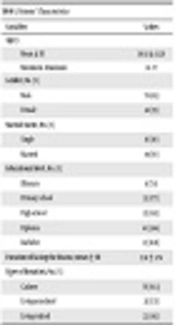
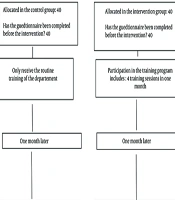
A total of 72 patients participated in this study, 31 of whom were women and 41 were men. Four patients in each group were excluded from the study because of rejection, death, and lengthy admission (Figure 1). The majority of patients were married, and urban dwellers had elementary education, had a caregiver during their sickness, and were medically insured. Most of them had a history of medication use. The data followed a normal contribution. The chi-square test indicated that most patients in the intervention and control groups were homogenous in terms of demographic characteristics and disease information, and no significant difference was observed between the two groups in this regard (P > 0.05; Table 2).
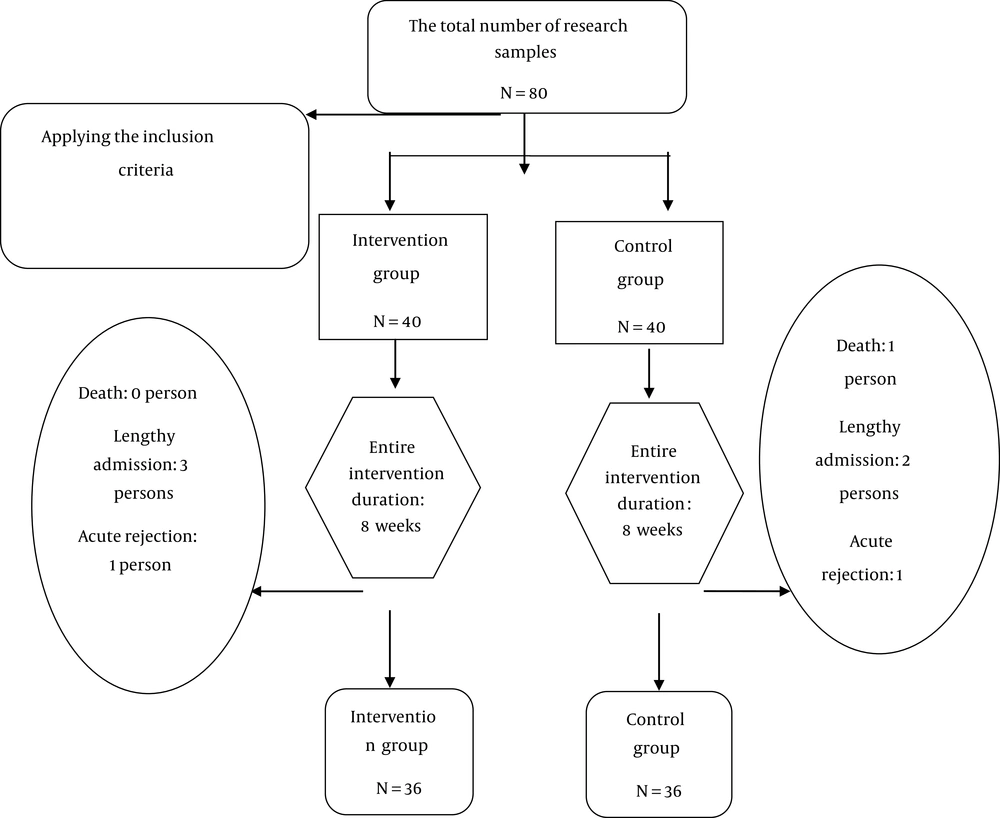
Figure 1.
Sampling diagram according to CONSORT 2010
Table 2.
Demographic Characteristics of the Intervention and Control Groups
| Variables | Intervention Group (N = 36), No. (%) | Control Group (N = 36), No. (%) | P-Value (Fisher’s Exact Test) |
|---|---|---|---|
| Living with family members | 0.913 | ||
| Spouse, child | 27 (75) | 24 (66.7) | |
| Child | 2 (5.6) | 2 (5.6) | |
| Parents | 6 (16.7) | 9 (25) | |
| Alone | 1 (2.8) | 1 (2.8) | |
| Had a caretaker during illness | 0.99 | ||
| Yes | 36 (100) | 35 (97.2) | |
| No | 0 (0) | 1 (2.8) | |
| The caretaker during illness | 0.646 | ||
| Spouse | 20 (55.6) | 19 (52.8) | |
| Child | 6 (16.7) | 3 (8.3) | |
| Parents | 7 (19.4) | 11 (30.6) | |
| Friends or family | 1 (2.8) | 2 (5.6) | |
| Nurse | 2 (5.6) | 1 (2.8) | |
| Had medical insurance | 0.99 | ||
| Yes | 35 (97.2) | 35 (97.2) | |
| No | 1 (2.8) | 1 (2.8) | |
| Type of insurance | 0.84 | ||
| Social security | 20 (55.6) | 16 (44.4) | |
| Medical services | 2 (5.6) | 2 (5.6) | |
| Health | 8 (22.2) | 11 (30.6) | |
| Other | 6 (16.7) | 7 (19.4) | |
| Place of residence | 0.84 | ||
| City | 30 (83.3) | 26 (72.2) | |
| Suburb | 5 (13.9) | 5 (13.9) | |
| Village | 1 (2.8) | 5 (13.9) | |
| History of medication intake | 0.99 | ||
| Yes | 35 (97.2) | 36 (100) | |
| No | 1 (2.8) | 0 (0) | |
| Type of replacement therapy | 0.146 | ||
| Peritoneal dialysis | 1 (2.8) | 0 (0) | |
| Hemodialysis | 27 (75) | 32 (88.9) | |
| Both | 0 (0) | 1 (2.8) | |
| None | 8 (22.2) | 3 (8.3) | |
| Kidney donor | 0.2 a | ||
| Deceased donor | 22 (61.1) | 28 (77.8) | |
| Living donor | 14 (38.9) | 8 (22.2) | |
| Number of family members | 0.178 a | ||
| > 3 | 11 (30.6) | 7 (19.4) | |
| 3 - 5 | 24 (66.7) | 25 (69.4) | |
| > 5 | 1 (2.8) | 4 (11.1) |
a Chi-square
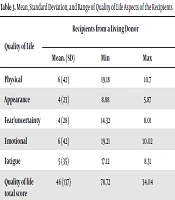
There was a significant difference between the two groups in the emotional dimension of QoL before the intervention (P = 0.045), so it was considered a confounding variable, and its effect was controlled using the analysis of covariance. Upon controlling the confounding effect of emotional dimension, no significant difference was observed between the two groups. After the intervention, significant differences were found between the two groups in the physical dimension of QoL (P < 0.001), fear (P = 0.035), and the overall QoL (P = 0.005). The QoL of the patients in both groups was at a good level after the intervention, but the patients in the intervention group had a higher QoL compared to the control group (Table 3).
Table 3.
Comparison of the Quality of Life Mean Score After the Intervention in the Intervention and Control Groups a
| Variables | Intervention Group (N = 36) | Control Group (N = 36) | Independent t-test | P-Value |
|---|---|---|---|---|
| Physical | 3 ± 0.31 | 3.4 ± 0.55 | 4.28 | < 0.001 |
| Appearance | 1.15 ± 0.28 | 1.22 ± 0.38 | 0.95 | < 0.343 |
| Fear | 2.66 ± 0.59 | 3.07 ± 0.97 | 2.148 | < 0.035 |
| Emotional | 2.06 ± 0.65 | 2.37 ± 0.5 | 1.19 | < 0.277 |
| Fatigue | 2.51 ± 0.61 | 2.7 ± 0.86 | 0.041 | < 0.302 |
| Overall | 2.33 ± 0.36 | 2.63 ± 0.48 | 2.92 | < 0.005 |
a P-value < 0.05; A score smaller than or equal to 3 was considered good for the QoL.
The results of the paired t-test showed that after the intervention, the QoL score in the intervention group was significantly higher in all dimensions compared to before the intervention. The QoL level had considerably increased following the intervention in the intervention group (Table 4).
Table 4.
Comparison of the Quality of Life Mean Score Before and After the Intervention in the Intervention Group a
| Variables | Intervention Group (N = 36) | Paired t-test | P-Value |
|---|---|---|---|
| Physical | 4.78 ± 0.95 | 12.94 | < 0.001 |
| Appearance | 1.66 ± 0.84 | 4.47 | < 0.001 |
| Fear | 4.71 ± 1.18 | 14.37 | < 0.001 |
| Emotional | 3.75 ± 1.04 | 15.34 | < 0.001 |
| Fatigue | 3.95 ± 1.13 | 11.29 | < 0.001 |
| Overall | 3.86 ± 0.73 | 18.48 | < 0.001 |
a P-value < 0.05; A score smaller than or equal to 3 was considered good for the QoL.
There were significant differences between the intervention and control groups in terms of paraclinical symptoms of infection, such as changes in white blood cell (WBC) count and raised sedimentation rate (ESR) (P = 0.04; Table 5).
Table 5.
Comparison of Acute Renal Transplant Complications Between the Intervention and Control Groups After the Intervention
| Variables | Intervention Group (N = 36), No. (%) | Control Group (N = 36), No. (%) | P-Value |
|---|---|---|---|
| Re-admission during the first 4 weeks | 0.99 a | ||
| Yes | 4 (11.1) | 5 (13.9) | |
| No | 32 (88.9) | 31 (86.1) | |
| Re-admission during the second 4 weeks | 0.17 | ||
| Yes | 3 (8.3) | 7 (19.4) | |
| No | 33 (91.7) | 29 (80.6) | |
| Raised creatinine levels | 0.99 a | ||
| Yes | 3 (8.3) | 4 (11.1) | |
| No | 33 (91.7) | 32 (88.9) | |
| Reduced creatinine clearance | 0.99 a | ||
| Yes | 3 (8.3) | 2 (5.6) | |
| No | 33 (91.7) | 34 (94.4) | |
| Raised blood pressure | 0.99 a | ||
| Yes | 3 (8.3) | 2 (5.6) | |
| No | 33 (91.7) | 34 (94.4) | |
| Weight gain | 0.99 a | ||
| Yes | 3 (8.3) | 3 (8.3) | |
| No | 33 (91.7) | 33 (91.7) | |
| Reduced urinary volume | 0.99 a | ||
| Yes | 2 (5.6) | 2 (5.6) | |
| No | 34 (94.4) | 34 (94.4) | |
| Changes in white blood cell count | 0.04 | ||
| Yes | 4 (11.1) | 11 (30.6) | |
| No | 32 (88.9) | 25 (69.4) | |
| Increased sedimentation rate (ESR) | 0.04 | ||
| Yes | 4 (11.1) | 11 (30.6) | |
| No | 32 (88.9) | 25 (69.4) | |
| Fever | 0.14 | ||
| Yes | 5 (13.9) | 10 (27.8) | |
| No | 31 (86.1) | 26 (72.2) |
a Chi-square
5. Discussion
This study examined the impact of an educational package on the QoL and acute transplant complications of patients undergoing renal transplants. Based on our results, the package improved QoL in five dimensions, namely physical, appearance, fear and uncertainty, emotional, and fatigue. Although this increase was only significant in two dimensions of physical and fear and uncertainty, an effect size of 0.7 (mid-range = 0.5) was observed in the other dimensions of QoL, as well as in the overall QoL, which is a considerable amount. Hedayati et al. evaluated the effect of psychotherapy on QoL dimensions in renal transplant recipients. Their results indicated the positive effect of psychotherapy on QoL and, in particular, on fear (uncertainty) and emotional dimensions (16), which are consistent with our results. However, the difference between their results and ours in terms of the emotional dimension may be attributed to the greater emphasis laid on mental health and also their intervention method (i.e., psychotherapy in their educational approach).
Javed et al. also examined the effect of education on the QoL of Muslim women in India. Raising awareness and knowledge improved not only the participants’ QoL but also the QoL of their family members. This increase was significant in the physical (P = 0.04) and spiritual/psychological (P = 0.05) dimensions. In terms of the physical dimension, the findings of this study are consistent with ours. Both our findings and Javed et al.’s results highlight the importance of education and awareness regarding the physical dimension of QoL. However, the inconsistency regarding the spiritual/psychological dimension appears to stem from the inefficiency of the educational package in this particular domain. It could also be due to our patients’ intense emotions (17). Borzou et al.’s study showed the positive impact of education on the physical, performance, and psychological domains in hemodialysis patients (18). These findings are consistent with our results in terms of the physical domain. The consistency between the results of this study and ours may be due to their many similarities, including the number of educational sessions held, the type of education (face-to-face), and the duration of the intervention.
The comparison of acute transplant complications between the two groups in the present study showed that the intervention reduced the paraclinical symptoms of infection (changes in WBC count and raised ESR) and brought about significant changes in this regard. Significant differences were not observed between the two groups in terms of other acute complications of transplant, e.g., re-admission and acute rejection (raised creatinine, reduced creatinine clearance, weight gain, raised blood pressure, and reduced urinary volume). Infection is very common and dangerous in renal transplant patients, but it is preventable and treatable. Henderson reported the role of education in preventing and reducing infection and morbidity/mortality and also increasing satisfaction among renal transplant recipients. Teaching caring skills to patients reduces complications, re-admission, and unwanted outcomes of renal transplants (19).
Taber et al. investigated the ways of reducing renal transplant complications and found that when an expert professional team educates patients, the incidence of unwanted complications is reduced as the patients’ knowledge and awareness are raised. The educational interventions undertaken in this study also caused a 50% reduction in the patients’ re-admission (20). Although the results of this study are not completely consistent with our findings, they are generally in line with each other in terms of reducing the complications of organ transplant. Due to the importance of adherence to drug regimens, it is essential to conduct studies on adherence to drug regimens in these patients. Furthermore, similar studies on other organ transplants that are less known and relatively new are recommended.
The time-consuming nature of the intervention and the need to follow-up the patients in 8 weeks (which could contribute to attrition) were among the limitations of this study.
5.1. Conclusions
The results revealed that although education can improve the patients' QoL in 5 dimensions of physical, appearance, fear and uncertainty, emotional, and fatigue, the educational package used in this study was only significantly effective on the physical dimension compared to the other dimensions (P = 0.002). As for the other dimensions of QoL and overall QoL, the educational package had an effect size of 0.7 (moderate level), which is considerable. The educational interventions in both groups (routine education in the ward in the control group and educational intervention in the study group) increased the QOL of the patients, and no significant difference was observed between the intervention and control groups in terms of the overall QoL. The educational package was effective in reducing infection; it decreased para-clinical symptoms, such as changes in WBC count and raised ESR (P = 0.004), but it had no significant effect on the other acute transplant complications, including hospital re-admission and acute transplant rejection (raised creatinine, reduced creatinine clearance, weight gain, raised blood pressure, and reduced urinary volume). The correct education and training based on scientific principles can improve the QoL and reduce complications in transplant recipients. By training adequate and skillful nurses, we can improve the QoL of transplant patients and, achieve this goal to improve the QoL and reduce complications in transplant recipients).
Treatment teams can use these findings to effectively monitor and maintain the health of kidney transplant patients. By administering this educational package, the treatment team can become familiar with the patients’ needs and requests and can improve their health-related behaviors. The correct approach towards potential difficulties and complications can alleviate problems and improve the QoL of patients.