


1. Background
Stress is a common psychological issue in society that can negatively impact both the physical and mental health of individuals (1). Stress is defined as a syndrome of physiological and psychological responses to environmental stimuli that are perceived as threatening, challenging, or exceeding an individual's ability to cope with them (2). Chronic exposure to stress is a precursor to a range of psychological conditions, including depression, generalized anxiety, post-traumatic stress disorder (PTSD), and acute stress disorder (ASD) (3). Chronic stress can also contribute to physical disorders through various mechanisms. For example, it can lead to the dysregulation of the hypothalamic-pituitary-adrenal (HPA) axis, resulting in elevated cortisol levels, which can suppress the immune system, raise blood pressure, and promote the development of cardiovascular diseases (4, 5). Additionally, chronic stress can lead to unhealthy behaviors such as poor diet, lack of exercise, and substance abuse, further exacerbating physical health problems (6). Therefore, identifying and managing stress effectively is crucial in preventing its harmful consequences on both mental and physical health.
However, the impact of stress is not uniform across all individuals or professions. Some professional groups, particularly those in high-pressure environments like the medical field, are more vulnerable to experiencing elevated stress levels (7). Medical academicians, as a key subgroup of healthcare professionals, face unique and compounded stressors due to the demands of both academic responsibilities and clinical duties (8). This heightened stress can stem from various factors, including academic pressures, high workload, competition with peers, lack of time for rest and recreation, concerns about future career prospects, dealing with patients and death, disruptions in social and family relationships, and financial problems (8, 9).
Stress among medical academicians can lead to decreased academic performance, increased medical errors, lower job satisfaction, and even a higher risk of suicide and psychological disorders (7, 10, 11). Therefore, identifying and managing stress in medical academicians is crucial for both their personal well-being and the overall quality of healthcare services they provide.
Given the significant consequences of stress on medical academicians and the critical role they play in healthcare and education, it is essential to develop reliable and culturally relevant tools to assess their stress levels accurately (6). A comprehensive literature review on stress measurement tools among medical students reveals several commonly used instruments, each with its strengths and weaknesses. The occupational stress inventory (OSI) is widely used for its comprehensive approach to assessing occupational stress, but it may not capture the unique stressors faced by medical students (12). The Depression, Anxiety, and Stress Scale (DASS) is valued for its ability to measure multiple dimensions of psychological distress, yet it may lack specificity for academic-related stress (13). The Perceived Stress Scale (PSS) is praised for its simplicity and ease of use, but it may not fully address the specific stressors in the medical academic environment (14). The Student Stress Inventory (SSI) is tailored for academic settings, but it may not be fully validated for medical academicians in Iran (15). The Medical Student Stress Profile (MSSP) assesses stress specific to medical students, focusing on academic and clinical stressors (16). Other tools, such as the Medical Student Stress Questionnaire (MSSS) and the Perceived Medical School Stress (PMSS) Questionnaire, also aim to evaluate stress specific to medical students, but their applicability to Iranian medical academicians remains uncertain (17, 18).
The adaptation of stress measurement tools to specific cultural and educational contexts is essential for ensuring their accuracy and relevance (19). The stressors experienced by medical academicians in Iran are influenced by the unique cultural, social, and educational environment of the country. For instance, societal expectations, financial pressures, and the high prevalence of substance abuse among students have been identified as significant stress factors for Iranian medical academicians (20, 21). Moreover, the academic environment in Iran places considerable emphasis on both clinical practice and academic performance, which differs from other educational systems. Therefore, it is critical to have a culturally adapted tool that reflects these unique stressors and accurately measures them to facilitate effective interventions (19).
The Korean Medical Academicians Stress Questionnaire (KMSSQ) was selected for adaptation in this study due to its comprehensive approach to assessing stress in medical academicians. Developed by Kim et al. in 2014, the KMSSQ includes six key factors—academic stress, clinical stress, social stress, professional stress, health-related stress, and financial stress—that are particularly relevant to medical academicians in both academic and clinical settings (22). This questionnaire has demonstrated high validity and reliability in measuring occupational stress among medical academicians in Korea, making it a suitable candidate for adaptation to the Iranian context. Additionally, the KMSSQ provides detailed profiles of individual stressors, offering a nuanced understanding of the different types of stress that medical academicians face. This makes it particularly valuable for both research and practical applications in stress management and educational planning.
2. Objectives
The primary objective of this study is to adapt and validate the KMSSQ for use among Iranian medical academicians. By ensuring that the questionnaire is both culturally relevant and psychometrically sound, this study aims to provide a reliable tool for assessing stress within this population. Specifically, this research will examine the questionnaire's validity (including face, content, and structural validity) and reliability (internal consistency and test-retest reliability) in the Iranian context. Additionally, the study will assess the questionnaire's concurrent validity by comparing it with the OSI and calculate the questionnaire's cut-off point to determine stress severity levels among Iranian medical academicians. The findings of this study will contribute to both academic research and the development of targeted psychological interventions, helping to mitigate the negative effects of stress in this vulnerable population.
3. Methods
This psychometric validation study was conducted in accordance with the Declaration of Helsinki (23, 24) and was approved by the Ethics Committee of the Islamic Azad University of Bandarabas.
3.1. Translation and Cultural Adaptation Process
The translation and cultural adaptation of the KMSSQ into Persian followed the standard methodology proposed by Beaton et al. (25, 26). This process included several steps to ensure conceptual, semantic, and cultural equivalence:
3.1.1. Forward Translation
Two bilingual experts, fluent in both Korean and Persian, independently translated the KMSSQ into Persian. One translator had a medical background and was familiar with stress-related terminology, while the other was a professional translator with no medical knowledge. This step aimed to capture both the technical and everyday language interpretations of the questionnaire items.
3.1.2. Synthesis of Translations
The two translations were compared, and any discrepancies were discussed in a consensus meeting involving the translators and a third independent reviewer. A synthesized version of the Persian translation was created, incorporating elements from both initial translations to ensure clarity and cultural relevance.
3.1.3. Back Translation
Two additional bilingual experts, who were not involved in the initial translation and were unaware of the original KMSSQ, back-translated the synthesized Persian version into Korean. This step ensured that the translated items retained the same meaning as the original.
3.1.4. Expert Committee Review
An expert committee, consisting of methodologists, healthcare professionals, linguists, and psychometricians, reviewed all translations (forward, synthesized, and back-translated versions) to develop a pre-final version of the KMSSQ-Persian. The committee focused on conceptual and cultural equivalence rather than on linguistic translation alone.
3.1.5. Pre-testing (Cognitive Debriefing)
The pre-final version was tested on 30 Iranian medical academicians to evaluate its comprehensibility, interpretation, and cultural relevance. Participants were asked to provide feedback on any ambiguities or difficulties in understanding the questionnaire items. Based on their feedback, minor revisions were made to finalize the Persian version.
3.1.6. Final Version
The finalized Persian version of the KMSSQ was reviewed and approved by the expert committee, ensuring that it was culturally adapted and ready for psychometric evaluation.
3.2. Participants and Data Collection Procedures
The study's demographic included a cohort of 1,880 third- and fourth-year medical academicians from academic institutions in Tehran in 2023, corresponding to the enrollment figures of these universities (Table 1). A power analysis determined the sample sizes for exploratory factor analysis (EFA) and confirmatory factor analysis (CFA) with an anticipated effect size of 0.30, a desired statistical power level of 0.95, and a significance level of 0.025, resulting in a minimum required sample size of 229 participants (27).
Table 1.Number of Academicians and Samples from Different Universities, Along with the Statistical Methods Used in the Study
| University Name | Number of Academicians | Number of Samples | ||||
|---|---|---|---|---|---|---|
| Third Year | Fourth Year | Concurrent Validity | EFA | CFA | Reliability | |
| Shahed | 40 | 40 | 4 | 15 | 13 | 6 |
| Army | 60 | 60 | 7 | 22 | 19 | 9 |
| Tehran | 180 | 180 | 19 | 67 | 57 | 29 |
| Iran | 220 | 220 | 23 | 82 | 70 | 35 |
| Baqiyatallah | 80 | 80 | 9 | 30 | 26 | 13 |
| Shahid Beheshti | 200 | 200 | 21 | 74 | 64 | 32 |
| Islamic Azad | 160 | 160 | 17 | 60 | 51 | 26 |
| Total | 940 | 940 | 100 | 350 | 300 | 150 |
Abbreviations: EFA, exploratory factor analysis; CFA, confirmatory factor analysis.
To enhance validity and reliability, 350 participants were included for EFA, and 300 participants for CFA. For concurrent validity and reliability, an anticipated effect size of 0.10, a desired statistical power level of 0.80, and a significance level of 0.05 determined a required sample size of 87 participants (27); however, 100 participants were included for concurrent validity and 150 for reliability. These sample sizes were chosen based on a comprehensive review of the literature on sample size requirements for validation studies, ensuring their appropriateness for the intended analyses (28-31).
The universities and sample size were selected to represent the diverse academic environments in Tehran, ensuring a robust and comprehensive analysis. This selection aimed to capture a wide range of stress factors experienced by medical academicians in different institutional settings. All universities in Tehran with medical students were included to ensure comprehensive representation.
3.3. Sampling Method
A proportionate stratified sampling method was used for the sampling process. This approach involved selecting a sample whose size was proportional to the population size of each stratum, derived from each university and corresponding academic tenure. The strata were determined based on the academic year (third and fourth year) and the university. The number of students selected from each stratum was proportional to the total number of students in that stratum, ensuring adequate representation from each university and academic year.
Table 1 details the sample distribution for each university and academic year, categorized by concurrent validity, EFA, CFA, and reliability assessments. The researcher directly approached each university and randomly selected students from the list of third- and fourth-year students using the RAND function in Excel. Students were selected based on their student ID numbers. After obtaining informed consent and providing information about the ethical considerations of the study, the researcher distributed the research questionnaire to the selected students. The questionnaires were collected using paper forms. Students were asked to complete the questionnaires in the study halls of the medical faculties at the universities.
3.4. Inclusion and Exclusion Criteria
The inclusion criteria were voluntary participation, enrollment in a medical program, education within Tehran, and consent to participate. Exclusion criteria included conditions related to psychological, psychosocial, physical, or medical stress; substance abuse; dissatisfaction with the study process; and incomplete survey submissions. Verbal consent was obtained from the academicians, and ethical guidelines were explained. Guarantees of data confidentiality and the option to withdraw at any time were provided to all participants. Of the 900 academicians approached, 21 declined to participate, while 879 completed the questionnaires. Demographic details were systematically gathered and compiled.
3.5. Instruments
Data were collected using two validated questionnaires, the OSI and the KMSSQ. Demographic information (age, gender, marital status, course, and residence status) was also recorded.
3.5.1. Korean Medical Academicians Stress Questionnaire
This is a 40-item questionnaire designed to measure the stress levels of medical academicians in South Korea based on six dimensions: Academic, internship, interpersonal, occupational, health-related, and financial stress. Each item is rated on a Four-Point Scale from 1 (never true) to 4 (always true). The total score ranges from 40 to 160. The questionnaire has demonstrated high content, structural, and reliability validity, as confirmed by expert feedback and factor analysis (22).
3.5.2. Occupational Stress Inventory
The OSI is a 60-item tool designed to measure occupational stress across six dimensions: Role overload, role insufficiency, role ambiguity, role conflict, responsibility, and physical environment. Each item is rated on a Five-Point Scale from 1 (never) to 5 (most of the time), with total scores ranging from 60 to 300. Scores above 200 indicate severe stress. The OSI has demonstrated high content, construct, and reliability validity, confirmed through expert feedback and factor analysis. Its content validity has been verified using the Content Validity Index (CVI) and content validity ratio (CVR). The reliability coefficients, calculated using the Split Half (odd-even) strategy and Cronbach's alpha, were 0.94 and 0.90, respectively. Additionally, the overall internal consistency reliability (Cronbach’s alpha) of the OSI was computed as 0.87, indicating high reliability (32-35). In Iran, the content validity of the OSI has been confirmed, with concurrent validity reported at 0.81. The overall internal consistency reliability (Cronbach’s alpha) in Iran was reported as 0.91, and the split-half reliability coefficient was 0.87 (36, 37). The OSI was chosen as a comparator in this study due to its established psychometric properties and its relevance in measuring occupational stress across various contexts, including education and the medical field. Its comprehensive nature and high reliability make it a suitable benchmark for validating the KMSSQ.
3.6. Validation Procedures
3.6.1. Face Validity
Face validity was evaluated qualitatively by 10 members of the target population and quantitatively by calculating the impact score of each question based on 20 responses from the target group. Questions with an impact score higher than 1.5 were retained (38).
3.6.2. Content Validity
Content validity was evaluated by calculating the CVR and the CVI for each question based on ratings from 10 experts. Content validity ratio was determined by rating each question on a Three-Point Likert Scale: "Essential," "useful but not essential," and "not essential". Content Validity Index was determined by rating each question on a Four-Point Likert Scale from 1 to 4 for simplicity, specificity, and clarity. The Lawshe criterion was used for CVR, and the Oliva et al. criterion was used for CVI (39). The CVR and CVI scores are critical as they provide a quantitative measure of the content validity of the questionnaire, ensuring that the items are both relevant and representative of the construct being measured (40).
Content validity is essential to ensure that the questionnaire items adequately cover all aspects of the concept of stress among medical students. Since the KMSSQ was developed in South Korea and used in a context with its own unique cultural and social conditions, certain stressors present in Iran, due to cultural and environmental differences, might not have been included in the original questionnaire (41). For example, Iran faces natural crises such as floods, earthquakes, and even wars and pandemics, which have a significant impact on the stress levels of medical students (42). Therefore, it is necessary to examine these specific dimensions in the content validity process to ensure that these factors are appropriately addressed.
3.6.3. Concurrent Validity
Concurrent validity was evaluated by correlating the total scores from the OSI and KMSSQ.
3.6.4. Structural Validity
Structural validity was evaluated through CFA and EFA. To perform EFA, the Kaiser-Meyer-Olkin (KMO) criterion and Bartlett's test of sphericity were first calculated. The latent factors were then extracted using principal axis factoring (PAF) with varimax rotation. The specific items loading on each of the six factors were identified. The factors were extracted using PAF with varimax rotation, and the factor loadings for each item were above 0.5, indicating strong associations with their respective factors (43).
To assess the appropriateness of the KMSSQ structure in the Iranian context, an EFA was conducted. This analysis aimed to determine whether the stress dimensions defined in the Korean version of the questionnaire are also valid for Iranian medical students. Cultural and environmental differences between the two countries may lead to variations in the factor structure. For example, in Iran, crises such as floods, earthquakes, wars, and pandemics may influence the stress structure of medical students, while such crises are less common in South Korea. Therefore, EFA was necessary to evaluate the compatibility of this structure with the Iranian population and to ensure comprehensive coverage of the relevant stressors (44).
Using CFA, the fit of the model extracted from the EFA was examined. The fit indices used included the chi-square test, root mean square error of approximation (RMSEA < 0.08), Comparative Fit Index (CFI > 0.95), Tucker-Lewis Index (TLI > 0.95), standardized root mean square residual (SRMR < 0.05), Normed Fit Index (NFI > 0.95), Non-normed Fit Index (NNFI > 0.95), Incremental Fit Index (IFI > 0.95), Relative Fit Index (RFI > 0.95), and root mean square residual (RMR < 0.05) (45).
3.7. Reliability Testing
Reliability was evaluated using three methods to ensure a comprehensive assessment of the questionnaire's consistency and stability. Cronbach's alpha was calculated to measure internal consistency, indicating how well the items in the questionnaire are correlated with each other. A high Cronbach's alpha value suggests that the items measure the same underlying construct. Split-half reliability was used to assess internal consistency by dividing the items into two halves and measuring the correlation between them. This method helps verify the consistency of the results across different subsets of the questionnaire. Test-retest reliability was employed to evaluate the stability of the questionnaire over time by administering the same test to the same participants at two different points in time and calculating the correlation between the scores. This method ensures that the questionnaire produces consistent results when repeated under similar conditions (23, 24, 26, 30).
3.8. Cut-off Point Determination
The cut-off point of the questionnaire was determined using the ROC curve. The research questionnaire and OSI were used as the test and criterion measures for the participants. The ROC curve involved progressively adjusting the questionnaire's threshold scores, ranging from 90 to 160 in intervals of 10. At each specified threshold, key indices such as the true positive rate (TPR), false positive rate (FPR), true negative rate (TNR), false negative rate (FNR), and the Youden Index were carefully computed (46). The Youden Index was used as a criterion for selecting the optimal cut-off point that maximizes the accuracy of the test (47).
Additionally, to integrate ROC curve analysis with other statistical methods, we calculated the area under the ROC curve (AUC) to assess the overall diagnostic performance of the questionnaire. The AUC provides a single measure of the test's accuracy, taking into account both sensitivity and specificity across all threshold levels. This comprehensive approach ensures a robust determination of the cut-off point, thereby enhancing the reliability and validity of the questionnaire's diagnostic capability (46).
The Youden Index was chosen because it offers a straightforward and effective method for determining the optimal cut-off point in diagnostic tests. It maximizes the difference between the TPR and the FPR, ensuring the highest possible accuracy for the test. By using the Youden Index, we can identify the threshold that provides the best balance between sensitivity and specificity, which is crucial for the accurate assessment of stress levels among medical academicians (46).
3.9. Data Analysis Procedures
The data were analyzed using descriptive statistics, including frequency and percentage, as well as inferential statistics, as detailed below, with the software.
3.9.1. Content Validity
The content validity of the Kmssq Questionnaire was evaluated by calculating the CVR and CVI for each item based on the opinions of 10 experts. The Lawshe criterion was used for the CVR, and the Oliva et al. criterion was used for the CVI.
3.9.2. Concurrent Validity
The concurrent validity of the KMSSQ was examined by calculating the correlation coefficient between the scores of the Two Measurement Questionnaires, OSI and KMSSQ.
3.9.3. Construct Validity
The construct validity and factor structure of the KMSSQ were evaluated using PAF with varimax rotation. Factors with eigenvalues greater than 1 were considered as the main factors. The KMO criterion and Bartlett's test of sphericity were used to examine the suitability of the data for factor analysis. Additionally, a scree plot was employed to visually assess the number of factors to retain, based on the point where the eigenvalues began to level off.
3.9.4. Model Fit
The model fit with the data was evaluated by CFA using various fit indices. The significance level was set at 0.05.
4. Results
4.1. Demographic Information
As shown in Table 2, the academicians had a mean age of 23.70 (± 2.40) years. There was no significant difference between genders, with 49.30% of the academicians being male and 50.70% female. Regarding marital status, 75.50% of the academicians were single, and 24.50% were married. In terms of academic courses, 50.40% of the academicians were in the third year, and 49.60% were in the fourth year. Finally, 59.50% of the academicians were native, while 40.50% were non-native.
Table 2.Frequency and Percentage Based on Types of Validity and Reliability in Academicians a
| Variables | Concurrent | Exploratory | Confirmatory | Reliability | Total |
|---|---|---|---|---|---|
| Age (y) | |||||
| Less than 20 | 5 (5.30) | 36 (10.60) | 27 (9.10) | 15 (10.20) | 83 (9.40) |
| Between 21 and 23 | 47 (49.50) | 140 (41.10) | 121 (40.90) | 50 (34.00) | 358 (40.70) |
| Between 24 and 26 | 28 (29.50) | 105 (30.80) | 93 (31.40) | 60 (40.80) | 286 (32.50) |
| Between 27 and 29 | 8 (8.40) | 44 (12.90) | 48 (16.20) | 19 (12.90) | 119 (13.50) |
| Above 29 | 7 (7.40) | 16 (4.70) | 7 (2.40) | 3 (2.00) | 33 (3.80) |
| Gender | |||||
| Boy | 36 (37.90) | 164 (48.10) | 155 (52.40) | 78 (53.10) | 433 (49.30) |
| Girl | 59 (62.10) | 177 (51.90) | 141 (47.60) | 69 (46.90) | 446 (50.70) |
| Marital status | |||||
| Married | 20 (21.10) | 79 (23.20) | 71 (24.00) | 45 (30.60) | 215 (24.50) |
| Single | 75 (78.90) | 262 (76.80) | 225 (76.00) | 102 (69.40) | 664 (75.50) |
| Course | |||||
| Third year | 45 (47.40) | 178 (52.20) | 148 (50.00) | 72 (49.00) | 443 (50.40) |
| Fourth year | 50 (52.60) | 163 (47.80) | 148 (50.00) | 75 (51.00) | 436 (49.60) |
| Residence status | |||||
| Native | 57 (60.00) | 212 (62.20) | 167 (56.40) | 87 (59.20) | 523 (59.50) |
| Non-native | 38 (40.00) | 129 (37.80) | 129 (43.60) | 60 (40.80) | 356 (40.50) |
a Values are expressed as No. (%).
4.2. Validation
4.2.1. Face Validity
The questionnaire demonstrated high face validity based on both qualitative and quantitative analyses of the items. The sample rated the importance, clarity, relevance, and comprehensibility of the items. Revisions were made to the items based on feedback from both the sample and the experts. The impact factor of the items was greater than 1.50 (ranging from 1.85 to 4.70), indicating strong face validity for the questionnaire.
4.2.2. Content Validity
The questionnaire exhibited high content validity based on the Lawshe table standards. The CVR and CVI for all items of the questionnaire were higher than the required values (CVR > 0.62 and CVI > 0.81) (39). Experts also concurred on the importance and relevance of each item to the topic.
4.2.3. Concurrent Validity
The analysis revealed a correlation coefficient of 0.91 between the OSI and the KMSSQ, demonstrating strong concurrent validity.
4.2.4. Construct Validity
4.2.4.1. Exploratory Factor Analysis
To assess the conditions necessary for conducting EFA, the KMO measure and Bartlett's test of sphericity were applied. The KMO value was 0.946, indicating an adequate and suitable sample for EFA. Additionally, Bartlett's test was significant (χ² = 9434.33, df = 780, P < 0.01), confirming the presence of a factor pattern in the data. The factor extraction method used was PAF, and the factor rotation method was Varimax. Based on the criterion of eigenvalues greater than one, six factors were extracted from the data, explaining 60.41% of the total variance. Furthermore, the scree plot was used to determine the number of factors, confirming the extraction of six factors as the point where the eigenvalues began to level off (Figure 1). These six factors were named: Internship stress, academic stress, occupational stress, interpersonal stress, health-related stress, and financial stress. The percentage of variance explained by each factor was 18.65%, 14.25%, 13.31%, 5.41%, 5.05%, and 3.75%, respectively. The specific items that loaded on each of the six factors were as follows:
Academic stress: Items 1 to 7
Internship stress: Items 8 to 14
Interpersonal stress: Items 15 to 21
Occupational stress: Items 22 to 28
Health-related stress: Items 29 to 35
Financial stress: Items 36 to 40 (Table 3).
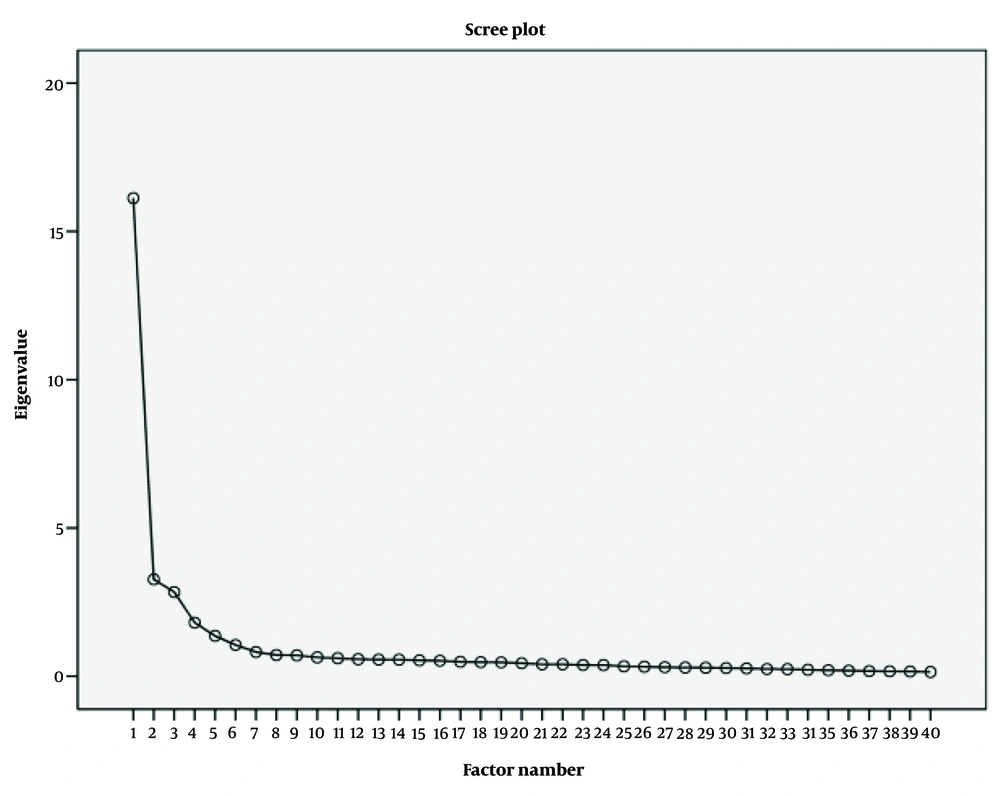
Figure 1.
Scree plot
Table 3.Rotated Component Matrix
| Items | Factors | Impact Factor | |||||
|---|---|---|---|---|---|---|---|
| Internship Stress | Academic Stress | Occupational Stress | Interpersonal Stress | Health-Related Stress | Financial Stress | ||
| i1 | 0.15 | 0.68 | 0.18 | 0.17 | 0.10 | 0.08 | 2.73 |
| i2 | 0.17 | 0.71 | 0.16 | 0.14 | 0.07 | 0.10 | 3.44 |
| i3 | 0.16 | 0.73 | 0.19 | 0.14 | 0.10 | 0.02 | 3.20 |
| i4 | 0.20 | 0.68 | 0.18 | 0.06 | 0.11 | 0.11 | 2.87 |
| i5 | 0.24 | 0.70 | 0.15 | 0.11 | 0.16 | 0.03 | 3.28 |
| i6 | 0.17 | 0.69 | 0.13 | 0.17 | 0.09 | 0.05 | 4.05 |
| i7 | 0.24 | 0.66 | 0.13 | 0.11 | 0.13 | 0.11 | 3.36 |
| i8 | 0.22 | 0.73 | 0.20 | 0.07 | 0.04 | 0.11 | 3.44 |
| i9 | 0.22 | 0.66 | 0.20 | 0.11 | 0.05 | 0.07 | 4.50 |
| i10 | 0.73 | 0.16 | 0.21 | 0.16 | 0.10 | 0.06 | 4.40 |
| i11 | 0.74 | 0.17 | 0.21 | 0.14 | 0.08 | 0.04 | 4.60 |
| i12 | 0.74 | 0.20 | 0.16 | 0.10 | 0.15 | 0.09 | 4.40 |
| i13 | 0.71 | 0.18 | 0.09 | 0.20 | 0.12 | 0.07 | 4.60 |
| i14 | 0.72 | 0.21 | 0.20 | 0.12 | 0.07 | 0.03 | 4.50 |
| i15 | 0.75 | 0.14 | 0.15 | 0.19 | 0.10 | 0.10 | 2.34 |
| i16 | 0.73 | 0.15 | 0.20 | 0.07 | 0.07 | 0.17 | 3.44 |
| i17 | 0.74 | 0.22 | 0.19 | 0.09 | 0.09 | 0.06 | 4.60 |
| i18 | 0.74 | 0.24 | 0.19 | 0.08 | 0.07 | 0.07 | 4.50 |
| i19 | 0.72 | 0.17 | 0.20 | 0.16 | 0.02 | 0.04 | 3.28 |
| i20 | 0.74 | 0.21 | 0.13 | 0.06 | 0.14 | 0.06 | 2.87 |
| i21 | 0.33 | 0.28 | 0.27 | 0.47 | 0.17 | 0.16 | 2.87 |
| i22 | 0.31 | 0.25 | 0.36 | 0.42 | 0.10 | 0.08 | 4.40 |
| i23 | 0.35 | 0.25 | 0.23 | 0.49 | 0.17 | 0.16 | 3.36 |
| i24 | 0.21 | 0.30 | 0.25 | 0.57 | 0.20 | 0.14 | 4.05 |
| i25 | 0.43 | 0.25 | 0.18 | 0.42 | 0.10 | 0.09 | 4.30 |
| i26 | 0.29 | 0.30 | 0.23 | 0.40 | 0.20 | 0.22 | 3.20 |
| i27 | 0.30 | 0.27 | 0.24 | 0.52 | 0.16 | 0.22 | 3.20 |
| i28 | 0.21 | 0.17 | 0.71 | 0.07 | 0.12 | 0.07 | 2.34 |
| i29 | 0.18 | 0.17 | 0.73 | 0.09 | 0.17 | 0.05 | 4.70 |
| i30 | 0.13 | 0.20 | 0.68 | 0.16 | 0.18 | 0.02 | 3.20 |
| i31 | 0.20 | 0.18 | 0.68 | 0.10 | 0.12 | 0.08 | 4.40 |
| i32 | 0.23 | 0.12 | 0.72 | 0.14 | 0.04 | 0.12 | 1.85 |
| i33 | 0.19 | 0.24 | 0.70 | 0.06 | 0.13 | 0.09 | 4.60 |
| i34 | 0.21 | 0.13 | 0.73 | 0.15 | 0.04 | 0.02 | 4.05 |
| i35 | 0.17 | 0.21 | 0.75 | 0.17 | 0.11 | 0.06 | 2.73 |
| i36 | 0.14 | 0.21 | 0.26 | 0.13 | 0.62 | 0.13 | 4.30 |
| i37 | 0.22 | 0.15 | 0.20 | 0.15 | 0.75 | 0.07 | 3.28 |
| i38 | 0.16 | 0.19 | 0.19 | 0.15 | 0.73 | 0.07 | 4.05 |
| i39 | 0.18 | 0.15 | 0.15 | 0.18 | 0.17 | 0.74 | 4.70 |
| i40 | 0.16 | 0.23 | 0.13 | 0.17 | 0.07 | 0.75 | 3.36 |
4.2.4.2. Confirmatory factor analysis
The CFA results supported the six-factor structure of the KMSSQ. The model fit the data well, as indicated by the following fit indices: Chi-square test (1579.79; degrees of freedom = 725, p < 0.01), RMSEA (0.06, < 0.08), CFI (0.98, > 0.95), TLI (0.98, > 0.95), SRMR (0.03, < 0.05), NFI (0.97, > 0.95), NNFI (0.98, > 0.95), IFI (0.98, > 0.95), RFI (0.96, > 0.95), and RMR (0.04, < 0.05). These fit indices suggest that the six-factor model had an acceptable fit and can be used for further analyses. Figure 2 presents the standardized parameter estimates of the model. The data confirmed the six-factor model of the KMSSQ (Figure 2).
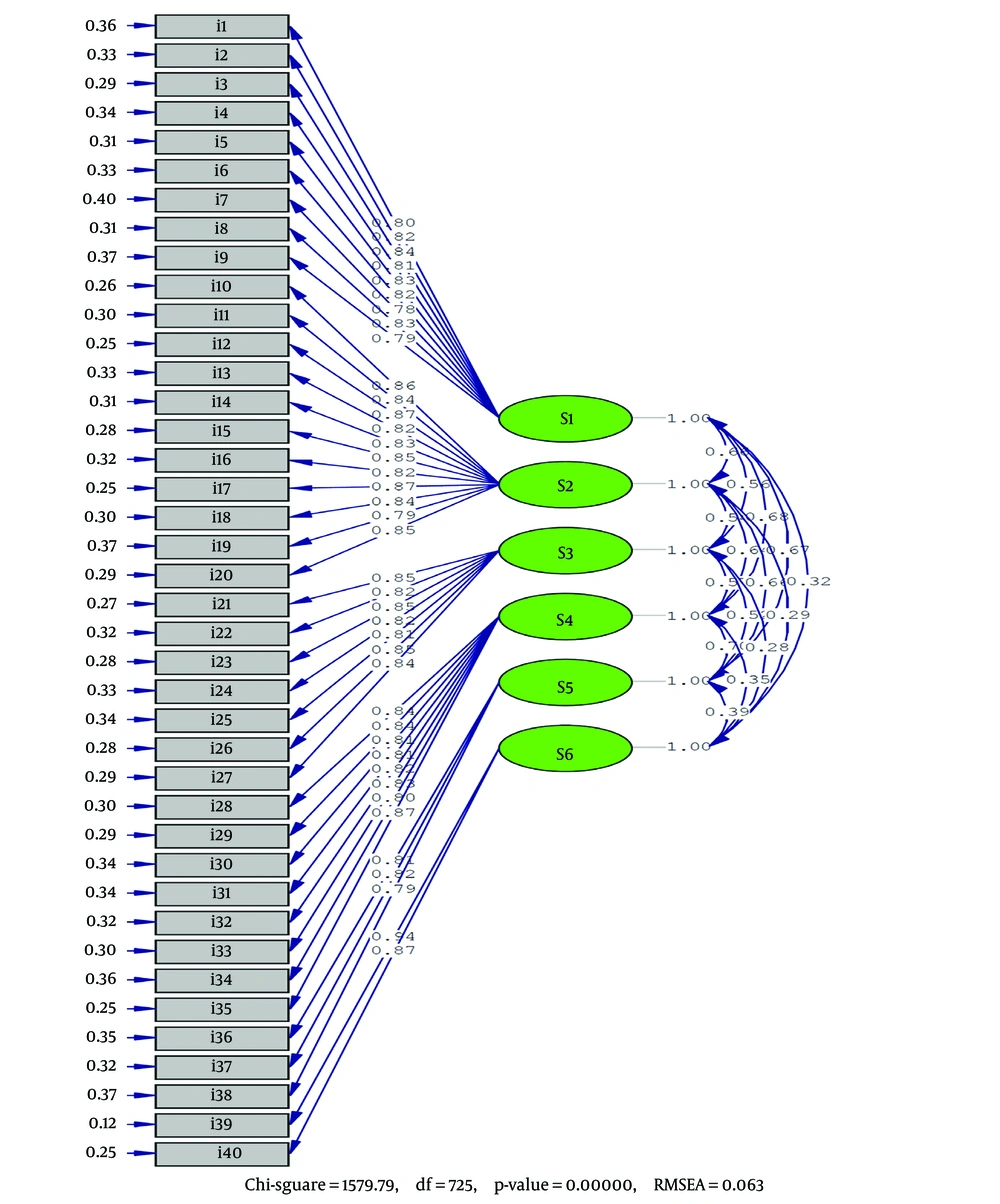
Figure 2.
Confirmatory factor analysis results
4.3. Reliability
The Cronbach's alpha coefficient for the entire questionnaire was 0.93, with individual factor coefficients ranging from 0.72 to 0.94. The Cronbach's alpha coefficients for the two halves of the 20 questions were 0.94 and 0.87, with a correlation between them of 0.48. The item-total correlations ranged from 0.25 to 0.65, and deleting any item did not increase the Cronbach's alpha coefficient or the correlation with the overall questionnaire. The test-retest reliability was 0.91.
4.4. Cut-off Score
The results of the ROC analysis are shown in Table 4. The cut-off point with the highest Youden Index (85.23) was 120, meaning that academicians who scored 120 or higher on the KMSSQ were classified as belonging to the high-stress group. The sensitivity and specificity of this cut-off point were 100% and 85.23%, respectively (46). Additionally, the AUC was calculated to be 0.92, indicating a high level of overall diagnostic performance for the KMSSQ. This comprehensive approach, integrating the Youden Index and AUC, ensures a robust determination of the cut-off point, thereby enhancing the reliability and validity of the questionnaire's diagnostic capability (Figure 3).
Table 4.ROC for Determining the Cut-off Point for Korean Medical Academicians Stress Questionnaire
| Cut-off Point | TP | FN | FP | TN | TPR | FPR | Youden Index |
|---|---|---|---|---|---|---|---|
| 70 | 5 | 70 | 0 | 20 | 22.22 | 0 | 22.22 |
| 80 | 5 | 70 | 0 | 20 | 22.22 | 0 | 22.22 |
| 90 | 10 | 65 | 0 | 20 | 23.53 | 0 | 23.53 |
| 100 | 21 | 54 | 1 | 19 | 26.03 | 4.55 | 21.48 |
| 110 | 72 | 3 | 1 | 19 | 86.36 | 1.37 | 84.99 |
| 120 | 75 | 0 | 13 | 7 | 1000 | 14.77 | 85.23 |
| 130 | 75 | 0 | 15 | 5 | 1000 | 16.67 | 83.33 |
| 140 | 5 | 70 | 0 | 20 | 1000 | 16.67 | 83.33 |
| 150 | 5 | 70 | 0 | 20 | 1000 | 16.67 | 83.33 |
Abbreviations: TP, true positive; FN, false negative; FP, false positive; TN, true negative; TPR, true positive rate; FPR, false positive rate.
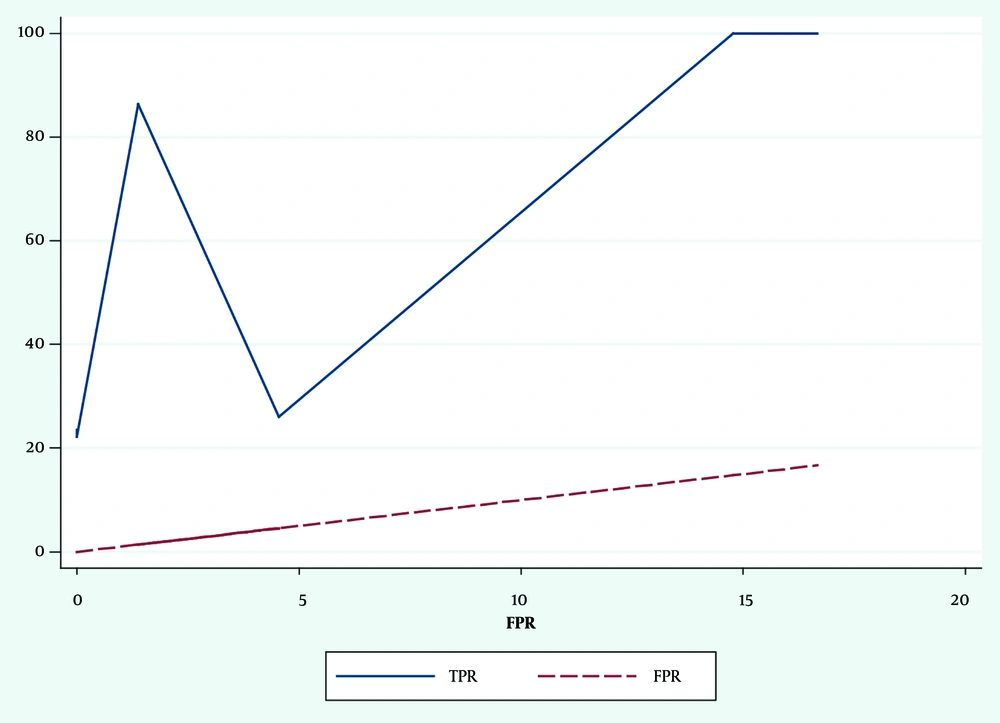
Figure 3.
ROC Curve
5. Discussion
In this study, the KMSSQ was validated for measuring stress levels among medical academicians in Iran. Various methods were employed to assess the face, content, construct, and reliability validity of the questionnaire.
The findings indicate that the KMSSQ exhibits high face validity, meaning the items are relevant, clear, important, and understandable to the sample. This aligns with results from previous research (22). However, it is important to note that while both studies reported high face validity, this could be attributed to different cultural contexts. In the Iranian setting, factors such as hierarchical academic structures and an emphasis on memorization may have enhanced the perceived relevance and clarity of the items. In contrast, in South Korea, other cultural and educational factors could have played a role.
The KMSSQ, adapted for medical academicians in Iran, demonstrated high content validity, as confirmed by CVR and CVI criteria and expert feedback. This is consistent with findings from the original study by Kim et al. (22), which also reported a high CVI. However, when comparing the CVI values, it becomes evident that while both questionnaires were perceived as valid in their respective contexts, the specific stressors addressed differ. In the Iranian version, there was a stronger emphasis on financial pressures and cultural expectations, potentially due to the unique socio-economic conditions in Iran, which were less emphasized in the Korean context. The high CVI in both studies, despite different foci, underscores the importance of context-specific adaptation when developing stress measurement tools.
The KMSSQ showed a high correlation with the OSI questionnaire, indicating its effectiveness in measuring stress among Iranian medical academicians. This confirms the concurrent validity of the KMSSQ. However, compared to the original study, which also reported strong concurrent validity with related stress questionnaires, the strength of correlations in our study varied slightly. This could be due to differences in the stress dimensions highlighted. For example, financial stress was more prominent in our study compared to the Korean context, likely due to Iran's economic instability. This difference may have influenced the concurrent validity values between the two studies.
The six factors extracted from this questionnaire were consistent with the six main dimensions identified by Kim et al. in South Korea (22). While the overall factor structure remained similar, indicating comparable academic demands and pressures, the prominence of certain factors differed between the two studies. For instance, clinical practice stress was found to be more pronounced in the Iranian context. This could reflect differences in healthcare systems, where Iranian medical academicians may face more intense clinical training conditions or specific socio-cultural challenges in managing patient interactions. These nuances suggest that, while factor consistency exists, the weight or emphasis of these factors is context-dependent.
The KMSSQ shows similarities with other existing questionnaires. For example, the academic stress factor parallels the role stress factor of the OSI, the stress factor of the DASS, and the perceived stress factor of the PSS. Clinical practice stress is comparable to the personal strain factor of the OSI. Interpersonal stress resembles the personal resources factor of the OSI. Health-related stress aligns with the depression and anxiety factors of the DASS and the personal strain factor of the OSI. Financial stress is similar to the personal strain factor of the OSI (13, 14, 32, 48). Despite these similarities, the KMSSQ specific content reflects the local context of Iranian students, emphasizing financial and academic stressors that may differ in magnitude from those in other countries. For instance, the financial burden of education and uncertainty about employment prospects are notably higher in Iran, which explains why financial stress emerged as a more dominant factor in this study.
The questionnaire does not measure certain aspects of stress or related constructs assessed by other questionnaires, such as personal resources, personality depersonalization, and reduced personal accomplishment. For instance, the KMSSQ lacks a factor for personal resources like coping skills, social support, self-esteem, or optimism, which are included in the OSI and SSI (15, 32). Additionally, the KMSSQ features factors that are more specific or detailed than those in other questionnaires. For example, clinical performance stress includes items related to living in the hospital, clinical performance, the hospital environment, and patient interactions, while occupational stress covers items about choosing a specialty, hospital, doctor’s status, and occupational information.
A new and notable finding of this study is the specific emphasis on financial and clinical practice stressors in the Iranian context. While previous research focused on general academic and personal stressors, this study uniquely identified financial pressures, including tuition fees, textbooks, and housing costs, as dominant factors. These financial stressors were exacerbated by the economic conditions in Iran, making them more pronounced than in the original study. Furthermore, clinical practice stress, which includes aspects such as living in the hospital and managing patient interactions, was found to be particularly critical for Iranian medical academicians, reflecting the unique demands of clinical education in Iran. These findings provide new insights into the specific stressors faced by Iranian medical students and highlight areas that may require targeted interventions.
The KMSSQ specifically measures constructs such as academic stress, clinical practice stress, interpersonal stress, health-related stress, and financial stress. These constructs are directly related to the stress experienced by medical students, encompassing their academic and clinical responsibilities, relationships with peers and faculty, health concerns, and financial pressures. The differences between this study and the original research may be attributed to the unique challenges faced by Iranian students, such as financial instability and a highly competitive medical residency system, which were less emphasized in the original study.
The consistency observed may be attributed to the KMSSQ being designed based on the real experiences of medical academicians and including components that are common to medical academicians in many countries. For example, stresses related to the curriculum, internship, interpersonal communication, future career, physical health, and finance are likely to be relevant in any country where medical academicians study. Therefore, this questionnaire could serve as a suitable tool for measuring and comparing stress levels among medical academicians across different countries.
The reliability findings of the KMSSQ for the Iranian population demonstrate that this questionnaire is a valid and reliable tool for measuring stress among medical academicians in Iran. However, slight differences in reliability may result from contextual factors, such as socio-economic instability and cultural emphasis on academic success and family expectations, which may contribute to stress levels not captured in other studies. These results align with findings from earlier research (22). The KMSSQ is tailored to the environment and culture of medical education in Iran, incorporating items that may not be relevant in other settings, such as vertical relationships with professors and seniors, memorization-based education, lack of information about choosing a specialty, and financial pressures related to tuition and textbooks.
Regarding the cut-off point, a value of 120, established through ROC analysis, was chosen as the most appropriate threshold to differentiate between varying levels of stress among medical academicians. Notably, this cut-off point was not defined in the original study, representing a new contribution to the literature. The development of a specific cut-off point tailored to the Iranian context highlights the need for local adaptation in stress measurement tools. This cut-off point, derived from the unique stressors and context of Iranian medical academicians, distinguishes it from cut-off points used in other widely used stress questionnaires such as the Perceived Stress Questionnaire (PSS) and the OSI. While these questionnaires often focus on general or occupational stress, the KMSSQ cut-off point addresses the unique blend of academic, financial, and clinical practice stressors relevant to medical education in Iran.
This intermediate cut-off point has practical applications in both clinical and educational settings. In clinical settings, it can identify students at moderate risk of stress-related issues, enabling early intervention before stress escalates into severe psychological or physical health problems. In educational settings, this cut-off can assist administrators and faculty in monitoring and supporting students who are under significant stress but may not yet show signs of burnout, allowing for timely academic or emotional support. Thus, it provides a useful tool for stratifying stress levels and tailoring interventions accordingly.
In addition to the validation and reliability of findings, it is important to consider the broader implications of these results for medical education in Iran. The KMSSQ provides a valuable tool for identifying and quantifying the specific stressors faced by medical academicians in Iran, offering a nuanced understanding of how financial pressures, clinical demands, and academic challenges uniquely affect this population. These insights are especially crucial given the high-stakes nature of medical education in Iran, where economic instability, competitive residency placements, and societal expectations can exacerbate stress. Understanding these stress factors is essential for improving the well-being of medical academicians and informing institutional policies aimed at reducing stress-related burnout and promoting academic success.
As medical education evolves in Iran, the KMSSQ can serve as a valuable resource for educators and policymakers to implement targeted interventions, support services, and curriculum adjustments that address the most pressing stressors identified in this study. The identification of a cut-off point further enhances its practical application by distinguishing between varying stress levels, ensuring timely and effective responses to the needs of medical students.
This study demonstrated key strengths, including the use of stratified sampling and a comprehensive evaluation of the KMSSQ validity and reliability through various methods. The determination of the cut-off point using ROC analysis also enhances the credibility of the results. However, some limitations should be acknowledged. The study was limited to third- and fourth-year medical academicians from universities in Tehran, which may restrict the generalizability of the findings to other academic institutions or medical disciplines, both within Iran and internationally. Expanding the sample to include different universities, regions, and academic levels could help capture a wider array of stress factors that were not identified in this study.
Additionally, the cross-sectional design prevents the establishment of any causal relationships between stressors and their outcomes. Longitudinal studies could provide further insight into how stress levels change over time and in response to varying conditions. Another limitation is the potential for sampling bias, as those who chose to participate may exhibit different stress levels compared to those who declined or were unable to participate, which could influence the results. A further limitation concerns the potential influence of cultural differences on the KMSSQ applicability beyond Iran. Although the questionnaire was adapted to suit the Iranian context, the distinct cultural and academic challenges experienced by medical students in Tehran may not fully align with those in other regions or countries. Factors such as financial strain, the emphasis on memorization in education, and hierarchical academic structures may vary significantly in different cultural settings, which could affect the questionnaire's broader relevance. Future research should aim to compare stressors across diverse cultural and academic environments to improve the questionnaire's cross-cultural validity.
Addressing these limitations in future studies would contribute to a more nuanced understanding of stress among medical academicians, potentially paving the way for more targeted and culturally appropriate interventions.
5.1. Conclusions
The KMSSQ is a valid and reliable instrument for measuring stress levels among medical academicians in Iran. This questionnaire demonstrates high face, content, concurrent, and construct validity, as well as strong internal consistency and test-retest reliability. It also effectively discriminates between academicians with high and low levels of stress, using a cut-off point of 120. Therefore, the KMSSQ can be used for further research on the stress experienced by medical academicians in Iran and holds potential for application in other countries as well.
While the questionnaire was developed specifically for the Iranian context, the core components, such as academic, clinical, interpersonal, and financial stress, are relevant to medical students globally. Future studies could adapt the KMSSQ to explore its application in various cultural and educational environments. By doing so, researchers can assess whether stressors unique to specific settings—such as healthcare system differences, academic expectations, or economic conditions—might affect the questionnaire's validity and reliability in other regions.
This global applicability of the KMSSQ could help in identifying shared and culture-specific stressors, contributing to more refined interventions tailored to different medical academicians' experiences. As a result, the KMSSQ Questionnaire could become a valuable tool not only for research in Iran but also for cross-cultural comparisons of stress levels in medical education systems worldwide.

