
1. Introduction
Mass religious gatherings, such as Arbaeen in Iraq and Iran, attract millions annually, creating significant public health and logistical challenges (1-3). While infectious disease control has traditionally dominated planning, non-infectious risks, particularly transportation-related hazards, remain critically under-addressed (4). The Mehran-Ilam highway, a key route for Iranian pilgrims, experiences extreme congestion, environmental stressors, and infrastructure limitations during peak travel periods (3). This case study underscores the need for integrated safety planning encompassing road safety, emergency response, and psychological support, in alignment with WHO mass gathering guidelines.
2. Case Presentation
On August 16, 2025, at 11:45 PM, a high-impact traffic accident occurred at kilometer 18 of the Mehran-Ilam highway near Konjan Cham village. Two passenger vans transporting pilgrims collided with a freight truck carrying construction materials. The accident occurred in a poorly lit segment of the road lacking hazard signage and was exacerbated by extreme heat (41°C) and low visibility due to dust storms.
Preliminary investigations revealed that one van, operated by a driver fatigued after over nine hours of continuous driving, veered into the opposite lane. The oncoming truck was unable to avoid the collision. The crash resulted in five fatalities — two children, two women, and one elderly man — and 33 injuries, including bone fractures, concussions, and minor burns from fuel leakage. Each van was carrying 22 passengers, exceeding legal capacity.
Emergency responders from the Red Crescent, EMS 115, and traffic police arrived within 15 minutes. Six ambulances transferred victims to Imam Khomeini Hospital in Ilam and Mehran General Hospital. Crisis psychologists were deployed to support survivors and families. Triage was performed using the START protocol. However, due to limited medical infrastructure, some victims waited over 45 minutes for transfer and treatment.
2.1. Contributing Factors
- Driver fatigue after over 9 hours of continuous driving
- Lack of mandatory rest stops on high-traffic pilgrimage routes
- Poor road lighting and absence of hazard signage
- Heavy congestion due to reliance on Mehran as the primary border crossing
- Adverse weather conditions, including heat and dust storms
- Overcrowding in vans (each carrying 22 passengers, exceeding legal capacity)
2.2. Emergency Response and Management
Upon notification by a fellow pilgrim, emergency teams arrived within 15 minutes. Key actions included:
- On-site stabilization of injured individuals by paramedics.
- Transfer of victims to hospitals via six ambulances.
- Deployment of crisis psychologists to support survivors and families.
- Immediate notification of victims’ families via the national disaster alert system.
- Technical inspection of vehicles and official documentation of the incident.
2.3. Health, Psychological, and Social Impacts
Beyond physical injuries, the accident had significant psychological and social consequences:
- Heightened anxiety and fear among pilgrims traveling the same route
- Reduced public confidence in transportation safety during Arbaeen
- Increased demand on local hospitals due to psychological distress
- Strain on healthcare infrastructure already operating near capacity
- Temporary road closures causing delays and congestion at the Mehran border
2.4. Epidemiological Analysis
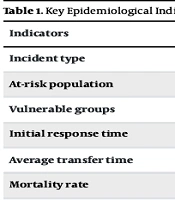
From a disaster epidemiology perspective, this incident highlights non-infectious health threats during mass religious gatherings (Table 1).
Table 1.
Key Epidemiological Indicators
| Indicators | Values |
|---|---|
| Incident type | Non-infectious; traffic-related |
| At-risk population | Pilgrims on Mehran route |
| Vulnerable groups | Children, elderly, and women |
| Initial response time | 15 min |
| Average transfer time | 45 min |
| Mortality rate | 5 deaths (15% of van passengers) |
2.5. Lessons Learned and Recommendations
This incident underscores the need for comprehensive health and safety planning beyond infectious disease control. Recommended actions include:
- Establishing mandatory rest stops for drivers on pilgrimage routes
- Installing warning signs and improving lighting in high-risk road segments
- Distributing travel safety kits and educational materials to pilgrims and drivers
- Expanding and equipping medical facilities in border cities for emergency response
- Implementing smart traffic monitoring and alert systems on pilgrimage highways
- Developing national transportation safety guidelines for mass religious events
- Deploying mobile psychological support units along key pilgrimage routes
3. Discussion
This incident reveals critical gaps in mass gathering preparedness, particularly in transportation safety and emergency response. While infectious disease surveillance has improved, infrastructure and logistical planning have not kept pace with the growing volume of pilgrims (5, 6). The lack of mandatory rest stops, poor road lighting, and overcrowded vehicles are systemic issues that increase the likelihood of accidents (7, 8). Moreover, the psychological impact of such incidents, especially during religious journeys, can be profound (9). Survivors and witnesses may experience trauma, anxiety, and reduced trust in public safety systems. The deployment of crisis psychologists was a positive step, but such support should be integrated into all mass gathering health plans (10).
From a policy perspective, this case underscores the need for multisectoral coordination. Ministries of health, transportation, interior, and religious affairs must collaborate to develop unified safety protocols. Data from incidents like this should inform future planning, including route design, vehicle regulation, and emergency resource allocation.
3.1. Conclusions
The Mehran road accident during Arbaeen 2025 underscores the multifaceted health risks associated with mass gatherings. Transportation safety, infrastructure readiness, and psychological support must be prioritized alongside infectious disease control. Policymakers and health authorities should adopt evidence-based strategies to mitigate future risks and protect vulnerable populations.