
1. Background
International evidence indicates that the frequency and impact of disasters, particularly water-related events, have continued to rise in recent years, posing significant challenges for communities and local authorities (1, 2, 3). In many hazard-prone countries, including Iran, the increasing occurrence of flash floods has intensified the need for localized, community-oriented approaches to disaster preparedness (4, 5).
In this context, the Sendai Framework for Disaster Risk Reduction emphasizes community participation, local resource mobilization, and shared responsibility between authorities and the public (6, 7). Mass gatherings present additional complexities for disaster preparedness. Current literature shows that large assemblies, especially religious events, can substantially increase vulnerability because of high population density, limited evacuation options, and logistical constraints (8, 9).
Unlike other types of gatherings, such as political demonstrations or spontaneous civil unrest, religious mass gatherings are planned, highly structured, culturally rooted events with predictable timing and location. These characteristics make them both an opportunity and a challenge for preparedness efforts. Linking disaster risks to these large, planned events requires specific strategies that integrate community engagement with formal response systems.
Despite growing global attention to community-based disaster management, empirical evidence remains limited regarding how spontaneous community involvement can accelerate preparedness for mass gatherings immediately after a disaster, particularly in low- and middle-income settings. Existing studies describe general principles of community participation but rarely document real-time, community-driven responses that restore critical public spaces within days.
These international experiences illustrate how community participation can substantially accelerate disaster response and preparedness. The Yazd case similarly demonstrates how locally driven action, rooted in community cohesion and cultural motivation, can translate global principles of community-based disaster management into an effective real-world outcome.
The framework emphasizes that, from 2015 to 2030, a more comprehensive, people-centered, and preventive approach to disaster risk reduction is needed (10). According to this framework, governments play the primary role in disaster risk reduction; however, this responsibility should be shared with other stakeholders, including municipal authorities, the private sector, and other involved individuals and groups (11). The document underscores the need to involve the public in disaster management and places particular focus on community-based disaster management (12).
In community-based disaster management, a crucial factor is the level of participation and solidarity among community members in planning, organizing, monitoring, and coordinating with responsible organizations to address issues effectively (13). This approach also fosters the perception that community members themselves are the primary actors in managing the process (14). Community-based, disaster-oriented participation is a process through which community stakeholder groups identify problems based on assessed needs and, by mobilizing resources and seeking expert assistance, develop appropriate solutions to address them (15). In this process, responsible organizations assume a guiding role (16). Within the philosophy of community-based disaster management, awareness raising is conducted in a way that encourages people to perceive themselves as stakeholders in the crisis (17).
A study conducted in Thailand of three communities living near a river, as a successful example of public involvement in flood risk reduction, demonstrated that the more experience people have with flood hazards, the greater their risk perception and the better they are able to manage it (18). Another study conducted in Italy highlighted policies emphasizing the management of spontaneous local volunteers (19). In a qualitative study conducted in Sudan through interviews with spontaneous local volunteers, the role of these volunteers in risk and hazard reduction was reported (20). A study conducted in Iran on the role of the public in managing COVID-19 revealed that the involvement of community forces accelerated response efforts and helped save time and resources in disease management. During the Varzaghan-Tarom earthquake, people directly entered the affected areas and provided assistance to the affected population (21, 22).
2. Objectives
This brief report addresses this gap by examining a successful community-based preparedness effort in Abarkouh, Iran, where a sudden flash flood occurred shortly before a major religious mass gathering. The study describes how community members, volunteers, and local authorities collaborated rapidly to restore the gathering site and highlights key lessons learned to inform future preparedness planning.
3. Methods
3.1. Study Design
This study used a descriptive case-study design to document lessons learned from a community-based disaster preparedness experience following a flash flood in Abarkouh, Iran. This design was selected to capture the perspectives of individuals directly involved in response and preparedness activities.
3.2. Participants and Sampling
Participants included spontaneous community volunteers, local managers involved in site preparation, and provincial government officials from Yazd.
Interviews were conducted with individuals who had relevant knowledge of the event and were actively involved. A total of 14 individuals participated. The volunteers included 8 people aged 25 - 62 years; all were residents of the affected neighborhood, and 3 had prior experience in flood response. The local managers included 4 people with 5 - 18 years of administrative experience. The provincial officials included 2 people responsible for emergency coordination and municipal services.
Inclusion criteria were firsthand involvement in the preparation process, willingness to participate, and the ability to provide detailed information. Exclusion criteria were lack of direct involvement in the flood response or unwillingness to provide consent.
3.3. Data Collection
Data were collected through face-to-face semi-structured interviews with volunteers and local managers and telephone interviews with provincial officials. Interviews were conducted between August and September 2022 and lasted 25 - 45 minutes each.
3.4. Development of Interview Questions
The interview guide was developed based on a preliminary review of the literature on community-based disaster management, expert input from two specialists in disaster preparedness and qualitative research, and the specific operational steps implemented during the Abarkouh flood response (Table 1). Questions addressed the preparation timeline, coordination mechanisms, challenges, and the roles of the public and authorities. The guide was piloted with two individuals and refined for clarity.
Table 1.
Interview Guide
| No. | Interview Questions |
|---|---|
| 1 | The immediate trigger and first actions taken by the community after the disaster. |
| 2 | The on-the-ground coordination mechanisms that emerged spontaneously between the public and local authorities. |
| 3 | The key motivations and critical decision-making processes that enabled the swift restoration. |
| 4 | The main obstacles and success factors encountered during this rapid response. |
3.5. Data Analysis
A six-step thematic analysis based on Braun and Clarke was used. In the first step (familiarization), the researchers independently read all transcripts several times. In the second step (initial coding), line-by-line coding was performed to capture meaningful units. In the third step (collating codes), codes related to community roles, coordination, and preparedness actions were grouped. In the fourth step, themes were developed. In the fifth step (review and validation), themes were compared with the raw data and validated using cross-participant consistency. In the final step, final definitions were agreed upon by both coders.
Inter-rater reliability was ensured by comparing codes; disagreements were discussed until consensus was reached. Member checking was performed with four participants to verify the accuracy of the interpretations.
3.6. Ethical Considerations
This field report did not require formal ethics approval because it did not involve human subjects research as defined by institutional guidelines. The interviews were operational debriefings related to routine community activities and contained no identifiable personal information. Participation was voluntary, and verbal consent was obtained from all contributors. Confidentiality was maintained throughout the preparation of this report.
4. Results
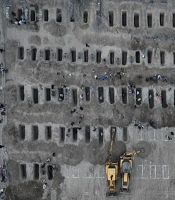
A sudden flash flood in July 2022 inundated the primary site designated for the Muharram mass gatherings in Abarkouh. Despite the unexpected timing and limited resources, the community initiated immediate collective action to restore the area. Three overarching themes emerged from the analysis: 1) rapid local mobilization, 2) coordinated community-authority collaboration, and 3) culturally driven motivation for preparedness (Figures 1 - 4).
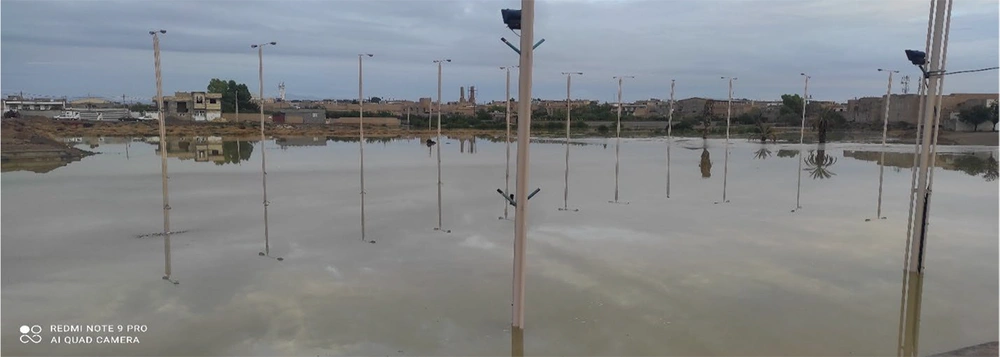
Figure 1.
Initial condition of the mass gathering site in Abarkouh after the flash flood.
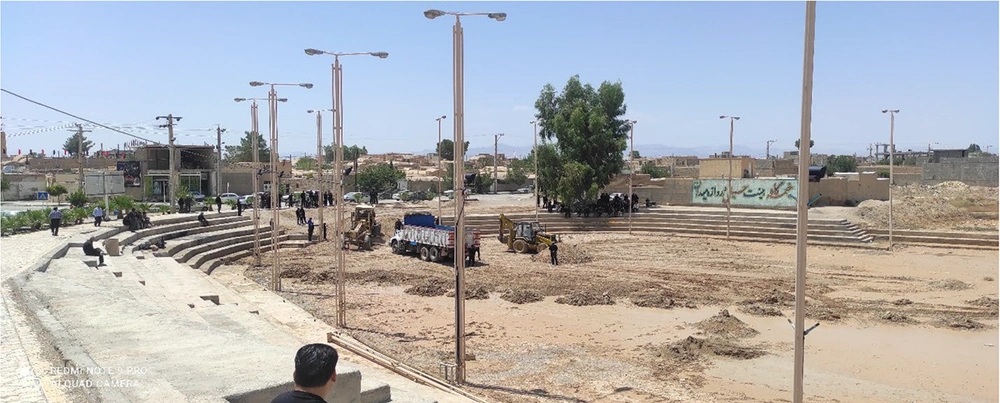
Figure 2.
Drainage operations using fire department equipment and community volunteers.
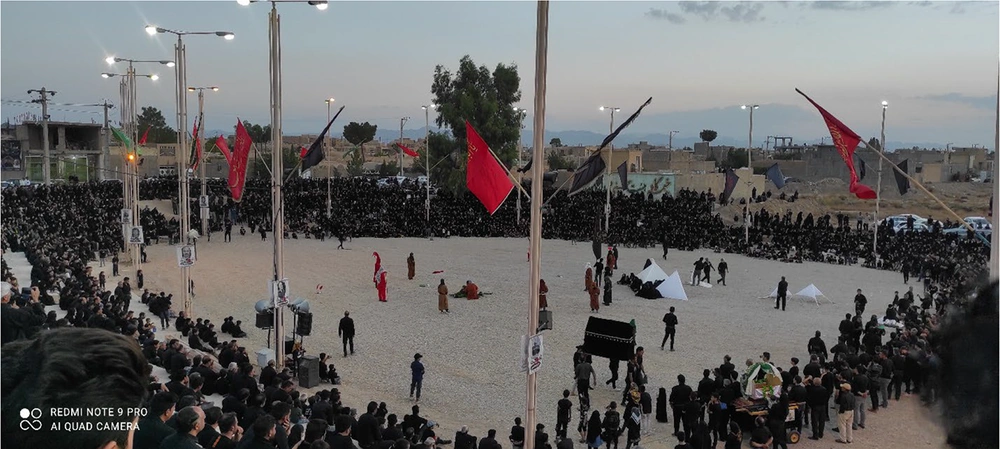
Figure 3.
The final rehabilitated site ready for Muharram ceremonies after community intervention.
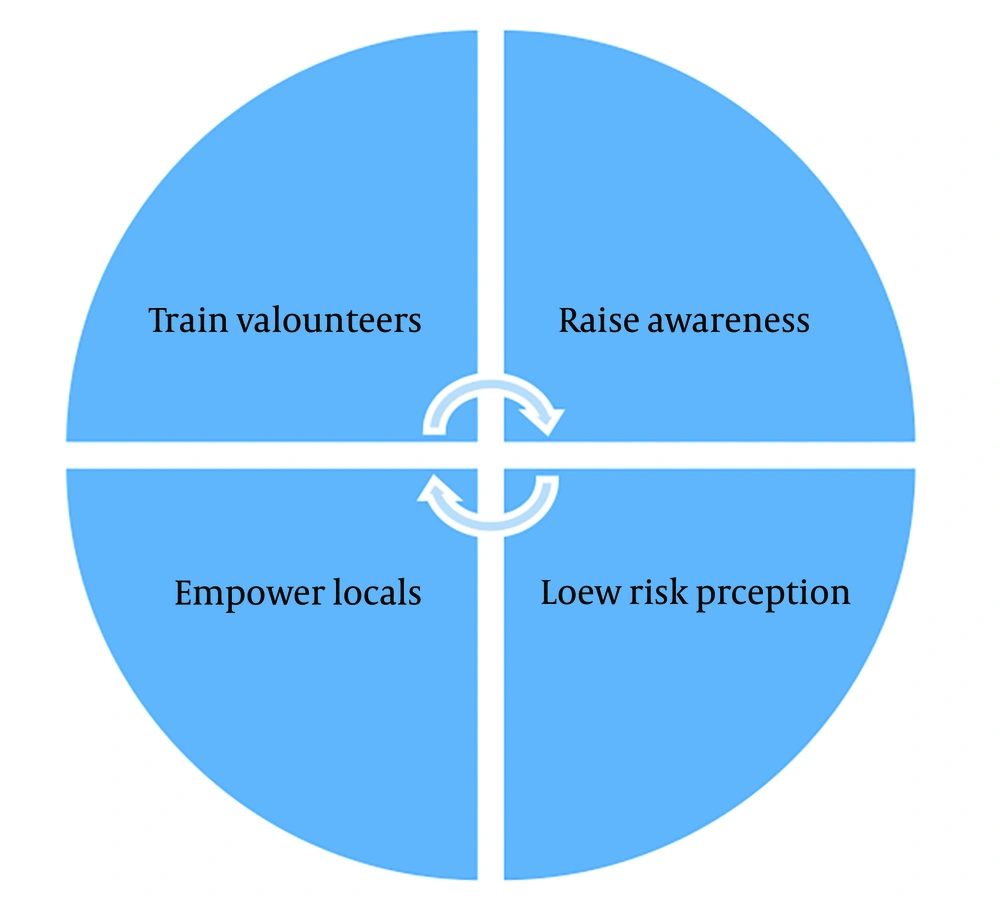
Figure 4.
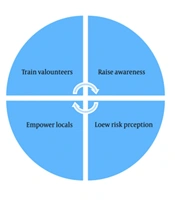
Cyclical framework for community-based disaster preparedness in religious mass gatherings.
4.1. Rapid Local Mobilization
Community volunteers began working within hours of the flood, organizing themselves into shifts to expedite water drainage, ground leveling, and site preparation. Their actions were driven not by instruction but by a sense of collective responsibility. One volunteer explained, “We didn’t wait for anyone to tell us what to do. Everyone just came out and started helping because this place belongs to all of us.”
Fire department resources were integrated into these efforts, and mechanical failures, such as pump breakdowns, were addressed by community members on site. All logistical needs, including equipment repair and ground treatment, were funded entirely through public contributions, demonstrating strong local commitment.
4.2. Coordinated Collaboration Between the Community and Authorities
Coordination among local managers, volunteers, and provincial officials played a central role in accelerating preparedness. Meetings were held daily to set priorities and allocate responsibilities. A local manager noted, “The people knew the area better than anyone. We just aligned their efforts with what needed to be done.”
This shared decision-making enabled rapid identification of obstacles and efficient mobilization of existing resources, including repurposing drained water for agricultural use.
4.3. Cultural and Religious Motivation as a Driving Force
Strong cultural and religious values significantly influenced the speed and intensity of preparedness activities. For many participants, ensuring that the ceremonies could proceed held deep symbolic meaning. As one participant stated, “We felt responsible to prepare the place, not because someone asked, but because the ceremony is part of who we are.”
This sense of ownership transformed the community into a highly skilled and cohesive workforce, enabling the site to become fully operational within three days.
4.4. Topic and Lessons Learned
Abarkouh County is located in central Iran and has a population of approximately 50000. In July 2022, a sudden flood affected the entire Yazd Province, and Abarkouh County, located within the province, was no exception. Floodwaters reached the Darvazeh Meydan neighborhood from northern Abarkouh and inundated the area used for mass gatherings during the Muharram ceremonies.
On Saturday, the first day of Muharram (July 30, 2022), local residents unanimously agreed that using this site for mass gatherings was not feasible that year. The ceremonies officially began eight days later and are considered among the most magnificent religious events in the city. During the first three days, multiple meetings were held with community volunteers and government officials. On the fourth day, the Yazd Fire Department dispatched two fire trucks to the area for water drainage.
All local residents worked around the clock in shifts. The drained water was efficiently used to irrigate nearby gardens and agricultural fields. After the water was removed, the site was plowed, followed by the application of light sand to the ground. Remarkably, within three days, the site was ready for use, and the mass gathering ceremonies could be held. During the process, the drainage pumps of the fire trucks stopped working because of continuous operation and were subsequently repaired. All wiring and lighting at the site were also restored. The entire operation was funded through public contributions.
5. Discussion
Flash floods are among the most dangerous types of disasters because of their rapid onset and short warning times (23). When these events coincide with religious occasions and mass gatherings, such as during Muharram, management becomes more complex, as large crowds at gathering sites may be less willing to evacuate because of deeply held religious beliefs and may not have received adequate prior training (24).
Participatory management and community involvement in disaster management represent a novel perspective on disaster governance worldwide (13). In community-based disaster management, a crucial element is the level of participation and solidarity among community members in planning, organizing, monitoring, and coordinating with responsible organizations to address problems effectively (13). This approach also reflects the view that community members themselves are the primary actors in managing the process (14). Community-based, disaster-oriented participation is a process in which community stakeholder groups identify problems based on assessed needs and, by mobilizing resources and consulting experts, develop appropriate solutions to address them (15). In this process, responsible organizations assume a guiding role (16). Within the philosophy of community-based disaster management, awareness-raising is conducted in a way that encourages people to view themselves as stakeholders in the crisis (17). In this report, the influence of religious beliefs on disaster response is highlighted.
From a religious perspective, disasters may be viewed as either a consequence of sin or a means of punishing wrongdoers. In societies with low risk perception, disasters are often perceived as acts of God, reflecting a fatalistic outlook; it is believed that sinful individuals are subjected to nature’s wrath. Such individuals tend to rely on internal loci of control and perceive their own efforts and abilities as having little impact on negative life events. However, in this experience, religious beliefs acted as a motivator for disaster management, as individuals, driven by strong faith in conducting the ceremonies, were able to confront and manage the disaster. A study conducted in Japan on the influence of religious beliefs during earthquake hazards similarly showed that religion can help focus community efforts on disaster prevention and risk reduction (25).
Risk perception underpins all pre-disaster education and is critically important. A key challenge in this context is that residents of Abarkouh County have low risk perception and have not received adequate training in this area. They selected inappropriately located local sites for conducting ceremonies and mass gatherings, including areas that, after excavation, were lower than the surrounding natural ground level. These sites flooded at the earliest opportunity following a flood. Studies on farmers’ risk perception in Turkey regarding flood hazards have shown that 7 factors, including gender, age, household size, number of children, farm size, insurance, and previous flood experience, significantly influenced farmers’ flood risk perception (26, 27).
Potential spontaneous volunteers are individuals or groups who provide assistance during and after a disaster. Spontaneous volunteers can be categorized into 3 groups: trained and skilled individuals without prior identification, spontaneous volunteers within the affected area, and spontaneous volunteers from outside the affected area (28). In this study, the use of potential spontaneous volunteers is considered a valuable resource and a source of flexibility during flash floods. They represent a readily available workforce that can be mobilized for response and recovery activities. Potential spontaneous volunteers may possess substantial skills, have good knowledge of the affected area, be aware of available resources, and, most importantly, be trusted by the local population. Engaging these volunteers can facilitate coordination with organizations involved in the response and recovery phases. A study conducted in China on volunteer resilience during floods across several provinces showed that the greater the involvement and prior experience of individuals with such events, the better volunteers can manage flood response during future incidents (29, 30).
The results of this study indicated that when people perceive themselves as the primary actors in a crisis, the disaster response phase can be implemented with maximum speed, without resistance or additional cost. In this study, community members acted as highly skilled spontaneous volunteers, had good knowledge of the affected area, were aware of available resources, and were able to prepare the flooded site for the ceremonies within three days.
To support hazard mitigation, preparedness, and capacity building, public education and information dissemination regarding mass gatherings should be delivered through social media networks, city-wide billboards, and the establishment of local radio stations. Public trust and participation should be fostered by living within the community, engaging in daily activities, learning, respecting and valuing local skills, demonstrating humility and patience, and cultivating cultural understanding. Community volunteer groups should be identified during the preparedness phase and trained in self- and peer-assisted response techniques. Communication infrastructure should be strengthened through the influence of local leaders. Programs, resources, and power structures should be enhanced to facilitate the mobilization of local resources. Finally, policymakers in the field of community-based disaster management are encouraged to prioritize community presence and participation at the local level, in both villages and urban neighborhoods (31).
5.1. Conclusions
This brief report demonstrates the effectiveness of community-based disaster management in rapidly restoring a flood-affected mass gathering site. The successful response in Abarkouh was driven by two core factors: strong local social cohesion, amplified by shared religious purpose, and seamless collaboration between spontaneous volunteers and government services. These elements enabled the community to act quickly, self-organize, and complete recovery in just three days without financial expenditure.
Key lessons for policy and practice include: 1) systematically identifying, training, and integrating potential spontaneous volunteers into official disaster plans to harness local knowledge and motivation effectively; 2) establishing clear, pre-event communication protocols between community leaders and municipal authorities to facilitate swift joint action during crises; 3) integrating disaster risk education into the planning of recurring cultural and religious mass gatherings and engaging community and religious leaders to ensure that traditions are upheld safely; and 4) prioritizing future initiatives in these areas to build scalable, resilient community-response models.
Further research is needed to determine how such community mobilization can be sustained over time and adapted to different sociocultural and hazard contexts. In summary, the Abarkouh experience underscores that investing in community preparedness, trust, and coordinated action is not merely supportive but essential for effective disaster management, particularly when protecting culturally significant events.
5.2. Limitations
This study is a single-case, retrospective report based on a small sample of interviews and observations. The findings may not be generalizable to other contexts, and reliance on self-reported data introduces potential recall bias. Furthermore, the researchers’ presence during interviews may have influenced participants’ responses, particularly regarding the role of religious motivation. Future research would benefit from longitudinal, multi-site designs to examine the sustainability and transferability of such community-led response models.