
1. Background
Hospitalization at all ages, especially in childhood, is a stressful experience (1). The experience of fear, anxiety, and despair due to hospitalization are common in hospitalized children’s mothers (2) because of the risks and complications of surgery and financial problems (3, 4).
In addition to the feeling of worry and anxiety about surgery, the feeling of guilt and shame in parents increases anxiety in hospitalized children's mothers (5, 6). Increased stress and anxiety negatively affect the care and supportive roles of mothers (3, 7). Thus, understanding the needs and concerns of hospitalized children’s mothers contributes to reducing confusion and anxiety in this group of mothers (1).
Currently, due to the shortage of hospital staff and the increase in care costs, parents' and attendants' roles in patient care have been highlighted more than before (4).
Previous studies have shown that preparing mothers during hospitalization, during surgery, and at discharge plays an essential role in reducing maternal concerns and stress (8). Therefore, pre-surgery psychological preparation programs and psychological training reduce anxiety and increase self-efficacy in hospitalized children’s mothers (9, 10). Furthermore, nursing models are considered a strategy in education and care (11). Hence, it is expected that nursing theories and models in patient care can improve nursing standards. In addition to increasing the quality of care provided, these models can increase patient and caregiver satisfaction (12, 13). Betty Neuman’s systems model is one of the widely used nursing theories (10), which was developed based on the client-centered theory. In this model, the client refers to the patient, family members, parents, the group, the community, or attendants (14). In Neuman’s model, the individual is considered an open system that interacts with the environment (15). Neuman’s conceptual model is considered a holistic model that considers the individual a general system (14). This model emphasizes the individual’s response to stress and factors affecting the individual’s ability to adapt to stressors and create balance (16). Sengun (2016) showed that Neuman's model reduced stress and increased the quality of care for cancer patients (17). Montano (2021) reported that the implementation of this care model increased clinical performance in nursing (18) because the philosophy of this model is based on identifying and preventing stressors (19). The use of nursing models and theories can increase the quality of clinical care and reduce treatment costs (13). Unfortunately, one of the challenges of nursing theories is that these models are not utilized in nursing research and care (14). Therefore, despite the usefulness of the behavioral model, it has been less used in nursing care (20).
2. Objectives
The current study aimed to determine the effect of the behavioral systems model on the concerns of mothers of children admitted to the surgical ward.
3. Methods
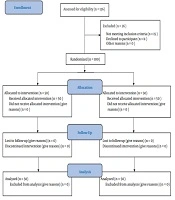
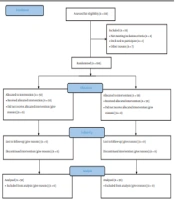
This quasi-experimental study was conducted on two groups of participants in the intervention and control groups in 2020. The research setting was the surgical ward of the Mousavi Hospital in Gorgan, Golestan Province, Iran. The sample size was estimated as 60 people (30 people per group) using the G*Power software based on a similar study (21) with the effect size of 0.76 and the test power of 80% at a significance level of 0.05 (22). People who met the inclusion criteria were selected using convenience sampling and then placed into the intervention and control groups using non-probability quota sampling. It was attempted to assign the participants into two groups so that the groups match each other maximally in terms of the inclusion criteria and demographic characteristics.
The inclusion criterion was having a hospitalized child of age between 3 - 10 years requiring general surgery without genetic diseases and mental retardation. All mothers participating in the study were aware of the time and place of the study and had the minimum level of literacy. The data were collected using the Parental Concerns Scale developed by Seyedamini (2011) (23). The scale contains 15 items based on a Likert scale: (1) never (0), (2) sometimes (1), and (3) frequently (2). Thus, the mean values are calculated separately for each item. The scale's total score ranges from 0 to 30, with higher scores indicating higher levels of parental concerns. Factor analysis revealed five major groups of stressors, including environmental adjustment (0 to 8), lack of staff communication programs (0 to 4), hospital costs (0 to 2), loss of independence (0 to 2), and lack of information (0 to 4) (24).
The face and content validity of the scale were checked and confirmed by ten assistants at the Islamic Azad University and the Golestan University of Medical Sciences. The reliability of the scale was confirmed by Seyedamini (2011) with Cronbach’s alpha coefficient of 0.69 (23). The reliability of the scale in the present study was calculated by administering it to ten mothers using the test-retest method with a correlation coefficient of 0.92.
The research council of the faculty confirmed the research project, and the code of bioethics was obtained from the Islamic Azad University, Chalous Branch (IR.IAU.CHALUS.REC.1399.020). A part of this thesis was published in Annals of the Romanian Society for Cell Biology. The researcher referred to the hospital, explained the study's objectives to the hospital officials and asked their permission to conduct the study. Afterward, the researcher provided the participants with information about the study's objectives and showed them that the research procedure was safe. The participants were also ensured that their information would be kept anonymous and informed written consent was obtained from them. Then, the participants were assigned non-randomly into two homogenous groups in terms of demographic characteristics. The participants in the control group received routine hospital care and training such as education to the patient and parents, medical and pharmaceutical care, and consultation with a physician (P = 0.68). Following Betty Neuman's systems model, the participants in the test groups attended four training sessions, each lasting 30 - 45 minutes per day. The data were collected for three months. The mothers completed the scale in both groups before and after the intervention in the researcher's presence.
The nursing interventions were performed for the participants in the test group following the nursing protocol and Betty Neuman's systems model, with emphasis on three levels of prevention. In the first session, nursing diagnoses were recorded using the North American Nursing Diagnosis Association nursing diagnosis list after interviewing the hospitalized children’s mothers, reviewing the related factors, understanding the needs, assessing the actual and potential stressors, and consulting with nurses working three work shifts. In the second session, after setting goals based on nursing diagnosis priorities, nursing interventions were performed according to the first level of prevention to prevent the penetration of stress into the natural defense line, the second level of prevention to strengthen natural defense lines, and the third level of prevention to control environmental factors. For example, in the first session, the nurse introduced herself to reduce the parents’ anxiety and stated the purpose of the training program. Besides, the first level of prevention was implemented by educating the mothers about the adjustment of the child’s bed, meal times, games, and physical condition of the ward. In the second session before surgery, the second level of prevention was implemented by explaining the surgical procedure, physician skills, type of insurance, payment costs, and child diet. Furthermore, mothers with a nursing diagnosis, such as guilt or loneliness, received nursing interventions such as encouraging the expression of emotions, promoting interpersonal relationships, especially by the husband’s attendance, and strengthening the body’s defenses. Following the third level of prevention, the third session aimed to reduce stressors increasing the mothers’ awareness with the help of rehabilitation services and relaxation techniques or by providing information about drainage, dressings, medications, and postoperative complications. Finally, in the fourth session, the interventions performed in the previous sessions were evaluated, and some education was provided, if necessary, based on re-examination and new diagnoses.
The distribution normality of the data collected before and after the intervention was assessed using the Shapiro-Wilk test, and the results indicated that the data followed a normal distribution. The collected data were analyzed using the SPSS21 software with descriptive statistics, including frequency, mean, and standard deviation, and inferential statistics, including t-test on paired samples, t-test on independent samples, and analysis of covariance (ANCOVA) at a significance level of 0.05 (P = 0.05).
4. Results
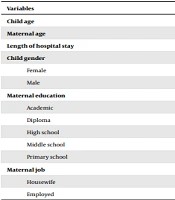
A comparison of the participants’ demographic characteristics using the independent samples t-test showed no significant differences between the two groups in terms of maternal age (P = 0.25), child age (P = 0.54), and length of hospital stay (P = 0.51). Moreover, the chi-square test did not show any significant intergroup differences in terms of child gender (P = 0.76), maternal education (P = 0.33), and maternal job (P = 0.68) (Table 1).
Table 1.
A Comparison of the Participants’ Demographic Data in the Two Groups
| Variables | Test Group | Control Group | P-Value |
|---|---|---|---|
| Child age | 4.16 ± 1.48 | 3.96 ± 1.21 | 0.54 a |
| Maternal age | 29.93 ± 5.92 | 28.4 ± 4.35 | 0.25 a |
| Length of hospital stay | 6.76 ± 2.62 | 6.31 ± 1.99 | 0.51 a |
| Child gender | 0.76 b | ||
| Female | 15 (50) | 19 (63) | |
| Male | 15 (50) | 11 (27) | |
| Maternal education | 0.33 b | ||
| Academic | 8 (27) | 5 (17) | |
| Diploma | 5 (17) | 8 (27) | |
| High school | 7 (23) | 4 (13) | |
| Middle school | 4 (13) | 8 (30) | |
| Primary school | 6 (20) | 4 (13) | |
| Maternal job | 0.68 b | ||
| Housewife | 21 (70) | 19 (63) | |
| Employed | 9 (30) | 11 (27) |
at-test.
b Chi-square test.
The results of the independent samples t-test did not show a significant difference between the two groups in terms of maternal concerns before the intervention (P = 0.11). However, the mean scores of maternal concerns after the intervention showed significant intergroup differences, as indicated by the results of the independent samples t-test (P < 0.01). Also, there was no significant difference between the mean scores of maternal concerns in the control group before and after the intervention (P = 0.92). In contrast, there was a significant difference in the mean scores of maternal concerns in the test group before and after the intervention (P < 0.01) (Table 2). Furthermore, ANCOVA showed a significant difference between the two groups after eliminating the pre-test effects (Eta = 0.50; P < 0.001) so that 50% of the variances in reducing maternal concerns can be attributed to the effect of the intervention program (Table 3).
Table 2.
A Comparison of the Mean Scores of Maternal Concerns in the Two Groups Before and After the Intervention
| Stage | Control Group | Test Group | P-Value |
|---|---|---|---|
| Pre-intervention | 42.6 ± 3.06 | 43.31 ± 2.72 | 0.11 a |
| Post-intervention | 41.76 ± 2.55 | 37.6 ± 2.71 | < 0.01 |
| P-value | 0.92 b | < 0.01 b |
at-test.
b Paired-test.
Table 3.
Results of ANCOVA Regarding Post-intervention Mean Scores of Maternal Concerns
| Source | Sum of Squares | df | Mean Square | F | Sig. | Partial Eta Squared |
|---|---|---|---|---|---|---|
| Pre-test | 109.94 | 1 | 109.94 | 21.41 | < 0.001 | 0.27 |
| Group | 300.49 | 1 | 300.49 | 58.5 | < 0.001 | 0.50 |
| Error | 292.63 | 57 | 5.113 | |||
| Total | 95149.00 | 60 |
5. Discussion
The study results showed that Betty Neuman's nursing model could reduce the concerns of mothers of children hospitalized in the surgical ward. Sengun (2016) acknowledged that the behavioral systems model played a vital role in reducing stress and increasing the adaptability and quality of health care (17). Also, Ahmadi (2020) showed that Betty Neuman's systems model increased the quality of clinical care and patient satisfaction (15), as confirmed by the present study's findings.
Basogul (2020) reported that Neuman’s model increased problem-solving skills, reduced depression, increased self-esteem, and increased social support by contributing to understanding the stress of mentally ill patients and communicating with them. Improving problem-solving skills and increasing self-esteem can reduce negative emotions, such as anxiety and worry (25), as supported in the present study. Moreover, Aronowitz (2016) concluded that Neuman’s model reduced hospitalization complications by contributing to understanding and predicting the needs of patients and caregivers admitted to the intensive care unit since nurses can reduce the anxiety and stress of patients and their attendants by understanding the stress and reducing stressors in the hospital (26), as highlighted in the results of the present study.
The results of previous studies have shown that training and support programs play an essential role in reducing stress, confusion, and anxiety of mothers with hospitalized children (2, 27). Sajadi (2020) considered empowerment programs important in reducing anxiety and adjustment of mothers with hospitalized children (28). These results align with the present study's findings on the role of education with tertiary prevention in reducing surgical complications.
The behavioral systems model was developed based on three levels of prevention, the principle of interpersonal communication, and understanding stress and people’s reactions to these stresses (15). Thus, the model can be considered a low-cost, effective nursing intervention to reduce stress and worries in patients and their caregivers (19). The model is client-centered, focusing on communication and understanding patients’ needs (20). Neuman’s model facilitates understanding the environment and various physiological, psychological, cultural, social, developmental, and spiritual dimensions of individuals, leading to understanding the needs and increasing the quality of nursing care (29). The model also contributes to predicting stressors and enhancing adaptation in patients (30, 31).
Following the present study results, it can be suggested that currently, due to the lack of staff, parents, especially hospitalized children’s mothers, have a vital role in improving the quality of nursing care (1). Nurses understand parents’ needs and thus can increase their awareness and reduce their anxiety and stress, thereby increasing the quality of nursing care and saving nurses’ time (4). As a result, it is hoped that nursing care standards will improve by using nursing theories in patient care. Through nursing models, the quality of care provided increases, treatment costs are reduced, and patients’ quality of life increases (20) because nursing models and theories are a major component of nursing care, and the client is considered a system in Betty Neuman's model (14). Parents and caregivers are also part of this system. Using this model can contribute to understanding and predicting the stresses and worries of mothers, and thus it plays a vital role in providing nursing care (19).
Given the restrictions in pediatric surgery wards, the present study's findings have limited generalizability to other settings and groups. Besides, due to limitations in the space and educational facilities in the surgery ward, the mothers may not have been able to properly express all their personal needs and conditions.
5.1. Conclusion
The study results showed that Betty Neuman’s systems model reduced anxiety in mothers of children admitted to the surgical ward. Therefore, given the effectiveness of the model, nursing theories and models are expected to play an essential role in reducing the concerns of mothers of children in need of surgery. It is necessary for nurses to reduce the stress and worries of caregivers, especially mothers, by understanding the needs of child caregivers during hospitalization. Reducing mothers’ stress and worries, we can expect more cooperation from mothers, which plays a vital role in increasing the quality of nursing care during children’s hospitalization. Generally, it can be argued that nursing models and theories can be used as low-cost, uncomplicated, but effective clinical care to enhance the quality of clinical services provided during hospitalization of children, followed by satisfaction in patients and people accompanying them.