
1. Background
Blood, injury, and injection (BII) phobia is known as one of the most widespread psychiatric disorders (1), with an estimated prevalence of 3% to 4% in the general population (2, 3). People with BII phobia are most likely to faint on seeing blood or physical damage or projecting an injection. These individuals display severe avoidance behaviors and unreasonable fear, which arise in response to seeing blood, injection, and any damage associated with bleeding or confronting other similar medical procedures. Because blood, injury, and injection are the most important reason for this phobia, this condition is often referred to as BII phobia. This type of phobia has two subsets: blood-injection phobia and blood-injury phobia, yet both constitute one diagnosis according to the criteria suggested in the fourth edition of DSM-IV (4). BII phobia has distinct clinical features, and its most psychophysiological characteristic is vasovagal syncope, which is described as a biphasic reaction: while the first phase is sympathetic activation in response to fear and is a type of fight-or-flight response, the second phase is parasympathetic activation and faint that triggers fear (5). Patients with BII phobia typically have a biphasic cardiovascular reaction. This could be followed by tachycardia, bradycardia, hypotension, shock, vertigo, syncope, diaphoresis, and nausea. These individuals might rarely develop asystole and die (6, 7). In 8% - 75% of cases, the phobic response to BII phobia stimuli is associated with syncope or presyncope (3, 5).
Failure to identify BII phobia may lead to undiagnosed or untreated medical conditions and exert significant costs on the individual and society (5). Most patients with BII phobia avoid referring to a clinic or hospital due to the emergence of anxiety symptoms when confronted with BII stimuli. Generally, visiting the hospital itself is a phobic stimulus for these people that aggravates their anxiety. About 11% of people with BII phobia or dental fear tend to refrain from injection-based treatment (4). Costello (2) reported that 4.9% of 449 Canadian women were afraid of injection, blood, injury, physician, dentist, or hospital.
As an annoying mental illness that reduces physician referral rate and treatment, BII phobia seriously affects the health of the community (5). People with this phobia avoid aggressive treatment and do not participate in programs of health promotion, vaccination, early screening, counseling, and preventive care (6, 8). BII may also restrict personal choices such as having a medical and nursing profession. Besides, the willingness of individuals to donate blood decreases due to this type of phobia (7). Developing and validating specific tools for assessing BII phobia are fundamental in identifying this kind of phobia and tackling its possible implications. The blood-injection symptom scale (BISS) and the blood/injection fear scale (BIFS) are two of these scales. Zucoloto and Martinez (7) addressed cultural adaptation and performed a psychometric analysis on BIFS to develop the Portuguese version of this instrument. Similarly, Kose and Mandiracioglu (6) examined the psychometric features of BIFS in Turkey.
2. Objectives
Since there is no Persian tool for studying BII phobia, nor are available any accurate data on this type of phobia in the Iranian population, and considering cultural differences in Iranian people along with the effect of this type of phobia on timely referral to health centers for diagnostic tests, the present study focused on the psychometric properties of BIFS and attempted to provide the Persian version of this instrument.
3. Methods
This paper is the result of a research project approved by the Ethics Committee of Semnan University of Medical Sciences (IR.SEMUMS.REC.1396.201). The study population consisted of patients admitted to Kowsar Hospital, Semnan, Iran. Data were gathered from patients aged ≥ 14 years who had at least secondary school education. Convenience sampling was deployed to choose subjects. An experienced nurse collected the data after explaining the purpose of the study and obtaining patients’ informed consent. It should be noted that a successful factor analysis requires a group of samples at least 3 to 20 times the number of variables included in the correlation matrix (9). Inasmuch as there were 20 questions, the sample size was estimated at 260 by considering an attrition rate and the possible failure of some individuals to filling out the questionnaires. After incomplete questionnaires were removed, 246 questionnaires were eventually evaluated. This number was regarded to be adequate for the analysis. The adequacy criterion of the sample size for performing factor analysis is 0.6 or higher. The Kaiser-Meyer-Olkin (KMO) test was run to ensure the adequacy of the sample size (10).
3.1. Instruments
3.1.1. Blood/Injection Fear Scale
Blood/injection fear scale (BIFS) was adopted by Kose and Mandiracioglu (6) to analyze fear. This 20-item scale was applied to 1,500 patients admitted to a teaching hospital in Turkey. It has two dimensions: the first 12 items constitute the injection subscale and analyze injection fear and the last 8 items form the blood subscale and examine blood fear. The answers are based on a five-point Likert scale (1 = strongly agree; 2 = agree; 3 = neither agree nor disagree; 4 = disagree; 5 = strongly disagree) (7). The final score of this questionnaire varies between 20 and 100, representing the minimum and maximum fear. Scores below the 20th percentile (less than 36) suggest very severe fear or having BII phobia. The reliability of the total scale, injection subscale, and blood subscale was 0.98, 0.97, and 0.96, respectively. Moreover, 84% of the total scale variance is explained by the two factors of blood and injection (6). In this survey, the original designers were contacted to provide the original version of BIFS. After the questionnaire was received and permission was obtained for its validation in Iran, the following measures were taken. First, two independent translators simultaneously translated the original version of the questionnaire from English into Persian using the backward-forward technique. Then, this Persian version was translated back to English by another translator. Eventually, a coordinator reviewed the Persian and English translations and finalized the 20-item BIFS. A total number of 30 qualified patients participated in the preliminary study. It had to be ascertained whether the participants understood various expressions of the questionnaire according to the objectives of the designer and whether there was a single impression for each question among participants. To this end, after the subjects filled out the scale individually, they were asked about the questions and a discussion was held afterward. Based on the results of the preliminary study, some minor changes were made on the items of BIFS. Thus, the face validity of the questionnaire was established. Owing to the fact that content validity is not relevant to translating and validating a standard tool (11), the authors just focused on face validity. The test was repeated at a two-week interval to determine the reliability of the scale. The test-retest reliability coefficients for the entire BIFS, injection subscale, and blood subscale were 0.86, 0.90, and 0.91, respectively.
To study convergent and divergent validity, besides BIFS, the following questionnaires were also employed. The relationship between BIFS score and FSS-III and BISS scores was considered for convergent validity and the relationship between BIFS score and LOT score was used for divergent validity. These measurements were performed simultaneously and the obtained data were analyzed using the Pearson correlation coefficient.
3.1.2. Blood-Injection Symptom Scale
Blood-injection symptom scale (BISS) was devised by Page et al. (12) in Australia. It includes 17 questions related to blood/injection fear that are answered dichotomously (yes and no). The score of the questionnaire ranges from 0 to 17. The lowest score, zero, means having no sign or symptom of fear at the sight of blood or injection. On the other hand, the highest score, 17, suggests the person is extremely afraid of seeing blood or injection. The reliability of the entire scale is reported as 0.86 (12). The validity of BISS was also examined by exploring its correlation with BIFS.
3.1.3. Fear Savory Scale
Fear savory scale (FSS-III) was used for measuring the type and degree of fear. It consists of 87 items, yet two items have two parts (A and B). Thus, there are actually 89 items. The respondent ranks his/her fear in each item based on a five-point Likert scale (0 = no fear at all to 4 = very high fear). The minimum score is zero and the maximum score is 356. It has six subscales including animal phobia (14 items), fear of negative evaluation (13 items), social phobia (10 items), agoraphobia (7 items), blood/injection/injury phobia (10 items), and natural environment phobia (9 items). The rest of the items was omitted. Bakhshipour et al. (13), studying 386 students at Tabriz University, confirmed the reliability of the tool in Iran by considering its internal consistency (Cronbach’s alpha coefficient, 0.95) and test-retest correlation within the one-week interval (0.94). The validity of FSS-III was calculated by examining its correlation with the fear questionnaire (FQ) and its subscales including blood/injection phobia, agoraphobia, and social phobia, which gave the values of 0.47, 0.44, 0.34, and 0.29, respectively. Hence, this questionnaire has concurrent validity. The highest correlation of this scale was found with the blood/injection phobia subscale of FQ (13). Convergent validity of FSS-III was investigated through its correlation with BIFS.
3.1.4. Life Orientation Test
Life orientation test (LOT) was used to evaluate optimism. According to Ho et al. (14) and Carver et al. (15), optimism plays a chief role in adapting to stressful life events. In the study by Carver et al. (16), patients with breast cancer who were more optimistic displayed stronger coping strategies and higher levels of self-esteem, as well as more [disease] acceptance, and were less afraid of aggressive breast cancer treatment. Conroy et al. (17) showed that increased fear has a positive correlation with stress and a negative correlation with optimism. This questionnaire has 10 items. The respondent ranks the answer to each item based on a five-point Likert scale (0 = strongly disagree to 4 = strongly agree). Items 2, 5, 6, and 8 in the questionnaire could be ignored. For items 3, 7, and 9, which have negative connotations, the scoring is reversed. Then, the final scores of the six items are summed up that ranges between 0 and 24. The higher the score is and the closer it is to 25, the more optimistic the person will be. In Iran, Hassanshahi (18) used exploratory factor analysis to study the validity of LOT and reported Cronbach's alpha coefficient and test-retest reliability coefficient of this scale to be 0.74 and 0.65, respectively. In the present study, the divergent validity of LOT was examined by considering its correlation with BIFS.
4. Results
Of the total 246 participants in this study, 131 (53.3%) were male, with an average age of 40.76 ± 14.56. Other demographic information is reported in Table 1. The fear scores of women in BIFS and its injection subscale and blood subscale were significantly higher than those of men (P = 0.0001). The prevalence of BII phobia in the study subjects was 4.1% (10 out of 246) based on BIFS.
Table 1.
Sociodemographic Features of Subjects and Symptoms of Blood Sample Collection Procedures (N = 246)
| Characteristics | No. (%) |
|---|---|
| Gender | |
| Male | 131 (53.3) |
| Female | 115 (46.7) |
| Age, y | |
| ≥ 24 | 33 (13.4) |
| 24 - 34 | 64 (26) |
| 35 - 44 | 59 (24) |
| 45 - 54 | 43 (17.5) |
| 55 - 64 | 27 (11) |
| ≤ 65 | 20 (8.1) |
| Mean ± standard deviation | 40.67 ± 14.56 |
| Education | |
| Postgraduate | 29 (11.8) |
| Undergraduate | 32 (13) |
| High school junior | 92 (37.4) |
| High school | 93 (37.8) |
The results of convergent and divergent validity analysis demonstrated a significant inverse correlation between the scores of BIFS and the scores of BISS and its subscales, as well as between the scores of BIFS and the scores of FSS-III and its subscales of animal phobia and blood/injection/injury phobia (P < 0.05). There was a significant direct correlation between the scores of BIFS and the scores of the optimism questionnaire (P < 0.05) (Table 2).
Table 2.
Correlations of the Scores of BIFS with the Scores of BISS, FSS-III, Their Subscales, and LOT
| Variable | BISS | FSS-III | LOT | ||||
|---|---|---|---|---|---|---|---|
| Injection Subscale | Blood Subscale | Total BISS | Animal Phobia | Blood/Injection/Injury Phobia | Total FSS-III | ||
| BIFS | 0.96a | 0.9a | -0.41a | -0.23b | -0.41a | -0.24b | 0.37a |
aCorrelation is significant at the 0.01 level (2-tailed).
bCorrelation is significant at the 0.05 level (2-tailed).
4.1. Construct Validity
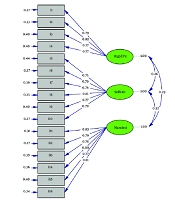
Several indices are commonly used to measure model fitting. Based on McDonald and Ho (19), we used the statistics and indices including chi-square, root mean square error of approximation (RMSEA), non-norm fit index (NNFI), goodness-of-fit index (GFI), and adjusted goodness-of-fit index (AGFI) for factor modeling by IBM SPSS Amos V21. Chi-square conceptually changes based on the sample size and the difference between the observed covariance matrix and the covariance matrix of the model shows that the relationships between variables are zero. RMSEA shows the average remainder of the variance-covariance matrix of the model relative to the variance-covariance matrix of sample data. The cutoff is 0.5 and the lower values are desirable. NNFI is used to compare the model with the independent model (zero model) and it ranges between zero and one. In this case, the acceptable cutoff point for fitting the model and data is over 90%. The closer it is to one, the better the model is. GFI depicts the relationship between variance and covariance, and its range is between zero and one. The closer it is to one, the better the model fitting quality will be. AGFI provides the modified GFI value that needs to be corrected (20). The internal relationships of the variables were investigated by two distinct factors in a measurement model. Table 3 presents the fitting indices of the model and the factor loadings of the questions. As seen, the resulting GFI, AGFI, and RMSEA were 0.83, 0.79, and 0.08, respectively. The findings suggest that the data have a good fitting with the hypothesized theoretical model (Table 3). All of the observed variables had a suitable factor loading in the latent structure. The range of factor loadings varied from 0.65 to 0.87. The lowest and highest factor loadings in the injection factor belonged to questions 11 and 12 (0.74) and questions 6 and 8 (0.87), respectively; in the blood factor, these loadings were related to question 19 (0.65) and question 13 (0.82), respectively. Confirmatory factor analysis showed that 75% of the estimated common variance in each of the variables (questions 6 and 8) is determined via the injection factor by a loading value of 0.87. According to Table 2, the results of the confirmatory factor analysis verified the desirable fitting of the two-factor model of the Persian version of the blood/injection fear scale.
Table 3.
Goodness Indices of Model Fitting (Two-Factor Model) of Blood/Injection Fear Scale Based on Confirmatory Factor Analysis
| Fitting Index | Value |
|---|---|
| χ2 | 498.5 |
| χ2/df | 2.91 |
| P | 0.001 |
| GFI | 0.83 |
| AGFI | 0.79 |
| CFI | 0.98 |
| NFI | 0.97 |
| NNFI | 0.97 |
| RMSE | 0.08 |
| Factor Loading Based on Confirmatory Factor Analysis | |
| Remainder | Factor Loading |
| 1 | 0.81 |
| 2 | 0.82 |
| 3 | 0.76 |
| 4 | 0.86 |
| 5 | 0.85 |
| 6 | 0.87 |
| 7 | 0.8 |
| 8 | 0.87 |
| 9 | 0.81 |
| 10 | 0.84 |
| 11 | 0.74 |
| 12 | 0.74 |
| 13 | 0.82 |
| 14 | 0.79 |
| 15 | 0.76 |
| 16 | 0.8 |
| 17 | 0.79 |
| 18 | 0.79 |
| 19 | 0.65 |
| 20 | 0.74 |
Abbreviations: AGFI, adjusted goodness-of-fit index; CFI, comparative fit index; GFI, goodness-of-fit index; NFI, normed fit index; NNFI, non-normed fit index; RMSEA, root mean square error of approximation.
Cronbach’s alpha coefficient was adopted to measure the reliability of the questionnaire through internal consistency. The values of Cronbach’s alpha for BIFS, injection subscale, and blood subscale were 0.96, 0.95, and 0.91, respectively.
5. Discussion
The aim of this study was to advance a translated version of the blood/injection fear scale. BIFS is a self-report scale for assessing blood-injection fear. Meanwhile, DSM-IV considers these two kinds of fear to be phobic. Examining the psychometric properties of the Persian version of this instrument revealed an excellent internal consistency for the total scale (0.96) and its injection subscale (0.95) and blood subscale (0.91). The test-retest reliability coefficient for the total scale (0.86) and its injection subscale (0.90) and blood subscale (0.91) was satisfactory.
Consistent with the results of previous studies (6, 7, 21), the findings of the present study substantiate that BIFS has an acceptable internal consistency, indicating the desirable validity of the scale. Confirmatory factor analysis of BIFS specified two factors of blood fear and injection fear. This is in line with the results of the designers (6), as well as the suggestion of DSM-IV. For Brazilian society, Zucoloto and Martinez (7) proposed a three-factor model with subscales including “fear of injection in general”, “fainting due to fear of injection”, and “fear of blood in general”.
The relationship between demographic data and blood-injection fear implied that this kind of fear along with its subscales was more noticeable in women than in men, but there was no relationship between education level and BIFS score. Except for the education level variable, the results of the current study are in good agreement with those of Kose and Mandiracioglu (6). In the present study, injection fear was higher in women and people with lower education levels reported higher degrees of BII phobia. Bienvenu and Eaton (22) also reported that BII phobia was more frequent among women and those with lower levels of education. However, Fredrikson et al. (23) did not observe a difference in mutilation phobia between men and women.
In the present study, 4.1% of all participants, most of whom with chronic disease, had BII phobia. Concerning the association between BII phobia and underlying illnesses, it is believed that having anxiety and fear of medical treatment and generally displaying BII phobia sometimes lead patients to avoid timely treatment and participation in screening programs (24). Insofar as harboring this type of fear reduces treatment compliance, it seems that coping with BII phobia has an enormous and critical impact on patients with chronic illnesses, especially those requiring regular injection. Individuals affected by this condition are at increased risk of health problems due to the lack of timely referral to health centers.
In the present study, confirmatory factor analysis suggested a low degree of faintness-related fear among participants, with the lowest weighted regression coefficient in the injection factor being related to question 12 [of BIFS] (“I faint when I see other people have an injection”). On the other hand, 90% of patients with BII phobia (9 out of 10) reported fainting after receiving an injection or watching injection/blood. Similarly, based on BISS, 90% of patients with BII phobia (9 out of 10) reported nausea and fainting. It seems that there is an inherent tendency in BII phobia to induce nausea and fainting (6). BII phobia, due to vasovagal response, could generally trigger fainting when an individual is exposed to its stimuli. This response is specific to BII phobia and is rare in other cases. In fact, fainting differentiates BII phobia from other phobias (3).
5.1. Conclusions
One of the limitations of this study is that the results are based on a single survey and the obtained results might differ if the circumstances of respondents changed. Nevertheless, they could be helpful in detecting BII phobia, which may be a deterrent to early disease diagnosis and treatment initiation/follow-up. Thanks to the advantages such as easy implementation, scoring, and interpretation, the possibility to execute on an individual basis, as well as the feasibility and appropriate validity, it can be concluded that BIFS is suitable for studying BII phobia. The Persian version of this scale is in line with the original version and none of the items was removed.