




1. Background
As a diarrheal disease, gastroenteritis causes more than 0.5 million deaths in cases of less than 5 years of age (1, 2). The higher rate of deaths occurs in the middle- and low-income countries (3), showing the importance of this condition in these countries. The World Health Organization (WHO) defines acute gastroenteritis as defecation of 3 or more liquids or loose stools per day for 3 or more days and less than 14 days (4). In addition, the American Academy of Pediatrics (AAP) describes acute diarrhea as a rapid onset condition with some other signs, such as fever, vomiting, abdominal pain, or nausea (5). However, gastroenteritis is a common diagnosis for pediatric cases presenting to the emergency department (ED). In children less than 5 years of age, diarrhea is a cause of as many as 150 000 hospitalizations and 3.7 million visits by physicians annually in the USA (6, 7).
The most common reason for hospitalization in these cases with acute gastroenteritis is the greater severity of dehydration or mild dehydration with bad social factors (8). These cases with acute gastroenteritis may have increased bowel sounds, abdominal pain, and diffuse abdominal tenderness; thus, these patients need more evaluation to reject other causes (9). After the gastroenteritis diagnosis, the physician should make diagnostic and therapeutic measures such as laboratory evaluation, child rehydration, and administration of an antiemetic agent. These patients with acute dehydration also may develop other complications such as acute renal failure (ARF) and azotemia (10, 11).
The development of azotemia and ARF in children and young children with acute gastroenteritis may lead to a possible detection of azotemia as a pre-renal azotemia condition resulting from diarrhea that leads to dehydration (2). Patients' symptoms depend on the depth of involvement and gastrointestinal tract segment which is involved (12, 13). As a leukotriene receptor antagonist, montelukast may positively influence the inflammatory condition of patients with gastroenteritis and their dehydration, leading to improved renal function in patients, as the effect of montelukast on renal dysfunction has been investigated in some studies (14-16). Accordingly, montelukast as an add-on drug may be effective in improving the condition of patients with azotemia.
2. Objectives
The present study aimed to evaluate montelukast as an add-on drug on induced azotemia in humans following gastroenteritis.
3. Methods
3.1. Study Setting
This study was conducted on patients with induced azotemia following gastroenteritis, who were referred to Amirkabir Hospital.
3.2. Study Population
The study population was patients with induced azotemia following gastroenteritis. Of the 45 cases, 5 cases were excluded from the study because 3 cases did not take montelukast and 2 cases did not sign informed consent; thus, we enrolled 40 patients in 2 groups of intervention (n = 20) and control (n = 20).
3.3. Randomization
Randomization of the study was performed using cards. To hide the cards, they were placed in the envelope and turned over several times so that the order was not clear. Upon arrival, each participant selected a card, and the group was determined. The selected card was discarded, and this was done in the same way for individuals to achieve the desired sample size.
3.4. Intervention
In both groups, normal saline was given at a rate of 20 cc/Kg within 20 minutes until clinical symptoms improved; also, in the intervention group, 5-mg tablets of montelukast were given for 5 days.
3.5. Measurements
This clinical trial study was conducted on 2 groups; routine treatment was given to both groups, and montelukast was only used in the intervention group for 5 days. At the beginning of the study, the study procedure (including randomization of the study) was fully explained to the parents. They were assured that the information would be kept confidential. It was also mentioned that the drugs have minor side effects (including abdominal pain, dizziness, fever, nasal congestion, skin lesions, urticaria, cough, and sinusitis) and may occur at any stage of the study. The participants were able to leave the study at any time.
The glomerular filtration rate (GFR) recovery time (GFR = 0.43 × Height (cm)/creatinine [Cr]), blood urea nitrogen (BUN), Cr, and GFR values were evaluated before and after treatment. We examined patients with daily visits, asking parents questions and performing clinical examinations for signs of dehydration.
3.6. Ethical Considerations
The Ethics Committee of Arak University of Medical Sciences approved this study (code: IR.ARAKMU.REC.1399.204). This study was also registered on the Iranian Registry of Clinical Trials website (code: IRCT20201005048940N1). The present study did not influence patients’ treatment process; the result of the assessment was only reported to patients.
3.7. Statistical Analysis
The results were analyzed using SPSS version 24 (SPSS Inc, Chicago, Ill, USA) at a 95% confidence level. Quantitative variables were compared by the independent t-test; in addition, qualitative variables were compared by the chi-square test.
4. Results
4.1. Clinical Characteristics
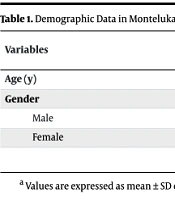
Based on our inclusion and exclusion criteria, 40 cases with induced azotemia following gastroenteritis were enrolled and analyzed based on our aims. Our cases were randomly divided into intervention and control groups. In the intervention and control groups, there were 9 (45.0%) and 13 (65.0%) male members, respectively (P = 0.101). The mean ± SD of age in total and intervention and control groups was 5.34 ± 2.83, 5.15 ± 2.54, and 5.52 ± 3.13 years, respectively (P = 0.761; Table 1).
4.1.1. BUN
The mean ± SD of BUN after treatment was significantly higher in the control group (52.59 ± 8.69 vs. 23.59 ± 8.69; P = 0.0001). Also, this index after treatment was significantly lower in the intervention group than before (22.81 ± 4.97 vs. 92.52 ± 4.17; P = 0.001). Also, the difference between before and after treatment was significant in the overall statistical evaluation (P = 0.395; Table 2).
Table 2.Comparison of Blood Urea Nitrogen Before and After Treatment in the 2 Groups
| BUN | Time | P-Value | |
|---|---|---|---|
| Before | After | ||
| Control | 23.59 ± 8.79 | 52.59 ± 8.69 | 0.001 |
| Intervention | 92.52 ±4.17 | 22.81 ± 4.97 | 0.001 |
4.1.2. Cr
The mean ± SD of Cr was significantly higher in the control group before treatment than after treatment (0.35 ± 0.08 vs. 0.86 ± 0.12; P = 0.001). In addition, it was significantly higher in the intervention group before treatment (0.05 ± 0.08 vs. 0.46 ± 0.14; P = 0.001). However, there was no statistically significant difference between the 2 groups in the overall statistical evaluation before and after treatment (P = 0.293; Table 3).
Table 3.Comparison of Creatinine Before and After Treatment in the 2 Groups
| Creatinine | Time | P-Value (Paired Sample t-test) | P-Value (Independent Sample t-test) | |
|---|---|---|---|---|
| Before | After | |||
| Control | 0.86 ± 0.12 | 0.35 ± 0.08 | 0.001 | 0.293 |
| Intervention | 0.46 ± 0.14 | 0.05 ± 0.10 | 0.001 | |
4.1.3. GFR
GFR after treatment was significantly higher in the control group (72.98 ± 9.87 vs. 60.07 ± 9.83; P = 0.001). Also, GFR after treatment was significantly higher in the intervention group (60.07 ± 17.68 vs. 81.49 ± 10.43; P = 0.001). In addition, there were statistically significant differences between the 2 groups in the overall statistical evaluation before and after treatment (P = 0.002; Table 4). In addition, the mean ± SD of GFR recovery time in children was statistically and significantly higher in the control group than in the intervention group (P = 0.002; Table 5).
Table 4.Mean of the Glomerular Filtration Rate Before and After Treatment in the 2 Groups
| GFR | Time | P-Value (Paired Sample t-test) | P-Value (Independent Sample t-test) | |
|---|---|---|---|---|
| Before | After | |||
| Control | 60.07 ± 9.83 | 72.98 ± 9.87 | 0.001 | 0.002 |
| Intervention | 60.07 ± 17.68 | 81.49 ± 10.43 | 0.001 | |
Table 5.Glomerular Filtration Rate Recovery Time in the 2 Groups
| Groups | Mean ± SD | P-Value |
|---|---|---|
| Control | 3.65 ± 1.03 | 0.002 |
| Intervention | 2.5 ± 0.82 |
5. Discussion
We observed that the GFR of patients significantly increased in the intervention group; in addition, the time of GFR recovery was reduced in this group compared with the control group. Sahib et al. evaluated the efficacy of montelukast in acute renal impairment and observed that montelukast had a protective effect against acute renal damage due to diclofenac (17). This protective effect is also demonstrated in the present study; however, in the present study, we also observed a protective effect against gastroenteritis-induced azotemia. Also, Wan et al. evaluated the effect of montelukast in patients with eosinophilic gastroenteritis, showing that this drug can be used to treat this group of patients (18). Similar to our study, this study referred to an anti-inflammatory effect of montelukast, but in this study, the tissue was the gastrointestinal tract, while in our study, the tissue was the kidney. In the study by Beytur et al., the protective and therapeutic effects of montelukast on cisplatin-induced renal injury in rats were investigated, showing that montelukast had a therapeutic effect on acute renal injury following cisplatin (19). Although this study was also based on an animal model, it was similar to the present study regarding the effectiveness of treatment with montelukast on acute kidney injury.
In a study evaluating the efficacy of montelukast in pyelonephritis, Taherahmadi et al. indicated that montelukast led to a rapid improvement in clinical manifestations of pyelonephritis and could be used as an effective adjunctive therapy in these patients (20). Although Our study had a smaller sample size than Taherahmadi study, but like to Taherahmadi study, it showed that the use of Montelukast has an effective role in improving the clinical symptoms of hospitalized patients. The duration of drug use was shorter in our study, which can be justified given that the duration of treatment is different in gastroenteritis and pyelonephritis. Otunctemur et al. evaluated the efficacy of montelukast in mouse model kidney injury and observed that serum urea and Cr levels were significantly higher in the montelukast group than in the control group (16). However, their mean before and after the intervention was not significantly different between the control and intervention groups, but in the present study, BUN and Cr levels were significantly lower in the intervention group rather than in the control group.
Kose et al. evaluated the efficacy of montelukast in counteracting the effects of amikacin on renal impairment in rats and observed that BUN, Cr, and inflammatory factors significantly increased in the control group than in the treated groups (21). These results are consistent with the present study. In addition, Teslariu et al. evaluated the effect of montelukast on the nephrotoxic effect of gentamicin in a mouse model and indicated that the factors indicating oxidative and inflammatory effects were reduced in the intervention group (22). This indicates the antioxidant effect of montelukast. In the study by Kose et al., the protective and therapeutic effects of montelukast on amikacin-induced renal azotemia in rats were investigated, showing that this drug could be effective in reducing acute renal impairment following amikacin (21). Therefore, the protective role of montelukast on kidney damage was identified in our study, similar to their study. Accordingly, the above studies show that montelukast could be an add-on drug in patients with induced azotemia following gastroenteritis.
5.1. Conclusions
Montelukast could be an effective treatment for induced azotemia following gastroenteritis when used as an add-on drug with routine treatment. It can reduce the time of GFR enhancement. Our study is one of the first studies to evaluate the efficacy of this drug in patients with inflammatory conditions. The majority of studies showed promising and positive efficacy and outcomes. More studies in this field are needed to further investigate the use of montelukast in induced azotemia following gastroenteritis to highlight the duration, dosage, and long-term outcomes of treatment.