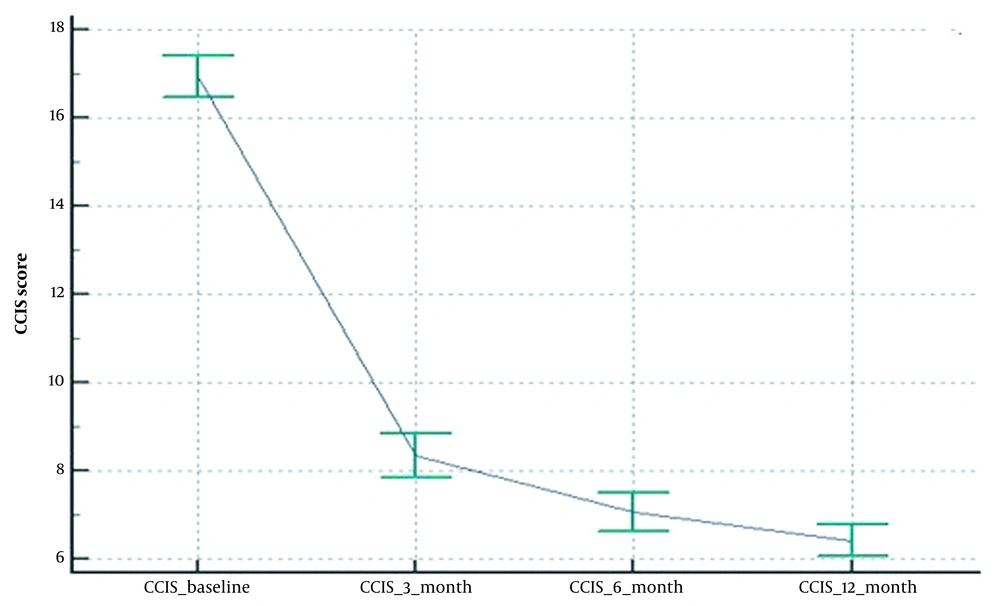
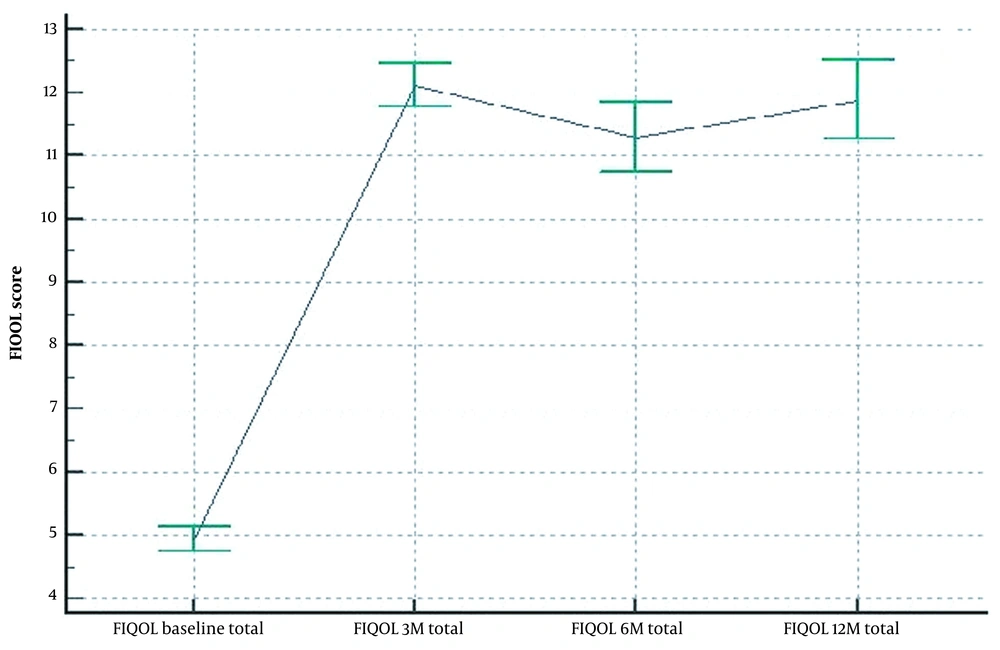
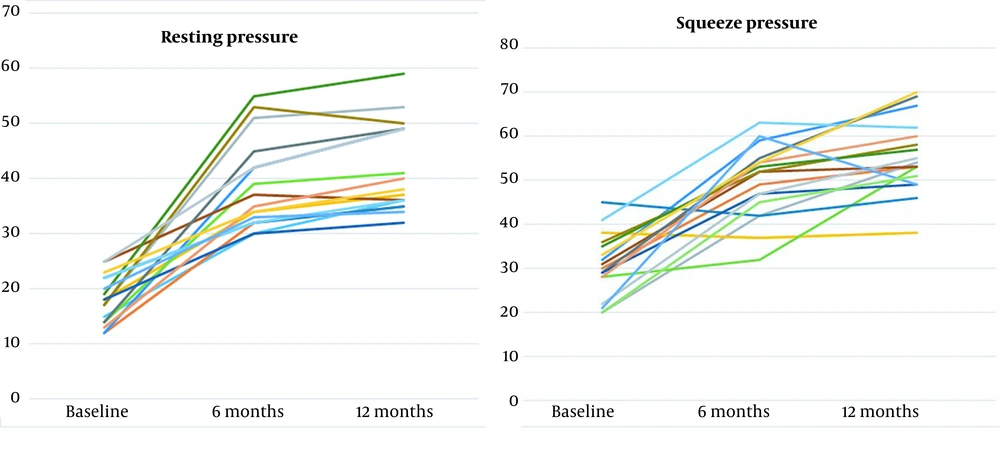
The present study introduced a novel combination of surgical procedures for patients with FI. Although several treatment options are available for FI, non-operative interventions can only alleviate the symptoms without addressing the underlying mechanisms. Surgery is generally the preferred intervention-especially in patients with severe FI- and includes a variety of procedures such as anal sphincter repair, sphincter replacement, SNM, and bulking agents, which are selected according to the pathophysiology of the disease (
6,
8). A network meta-analysis on 37 treatment strategies proposed for patients with (severe) FI showed that SNM and zinc-aluminum had a positive impact on FI and FIQoL scores. Nevertheless, other studied treatment strategies did not alter FI frequency, resting, and squeeze pressures; some (such as radiofrequency) even resulted in more adverse outcomes than the placebo (
9). Therefore, the question arises as to what would be the best decision if a patient has contra-indication for these interventions or does not comply with them or respond to them.
According to the guidelines, the SNM procedure, as the first-line treatment for all FI patients with or without sphincter defects (
10), demonstrated encouraging long-term outcomes, even in patients with refractory FI (
11). Improvement of an impaired sphincter function (targeting the sacral nerve root by implantation of the stimulating electrode) using the SNM procedure has led to encouraging long-term results in several cohort studies (
12,
13). This method has also been validated as an effective procedure in patients with refractory disease and poor response to other treatment options (
11). However, the management of patients who do not respond to SNM remains a significant challenge. In the present study, most patients had received either peripheral nerve evaluation or SNM with no response to either. The rest of the patients had low compliance with these treatments and thus underwent sphincter replacement surgeries such as ABS, dynamic graciloplasty, and MSA. A recent study showed that many patients who underwent ABS required re-operation (due to infection and device failure), and only 35% had achieved continence at the end of the cohort (five years) (
11,
14). Notably, the management of patients with refractory conditions remains a challenge (
15). The results of the present preliminary study showed that the combined procedure might be considered an effective therapeutic method with a significant impact on patients’ FIQoL, CCIS, and rest/squeeze pressures when SNM and other treatments fail to improve patients’ conditions.
Considering the fact that the injury to the anal sphincters is a frequent etiology of FI (as also observed in the present study), other surgical approaches have been proposed for the reconstruction of the pelvic floor integrity and stabilization of the perineal body and anal sphincters/canal. Nevertheless, these procedures (such as sphincteroplasty) have a high long-term relapse rate (
16,
17). Considering the association of relapse with tension, some surgeons have proposed using Prolene mesh in sphincteroplasy as a novel tension-free technique (
18). Total pelvic mesh repair (TPMR), which uses mesh to secure the perineal body to the sacrum, has also been recommended for patients with FI caused by pelvic floor prolapse (
19). The transobturator post-anal sling (TOPAS) has also been utilized to modify the anorectal angle in FI patients by means of insertion of a mesh lateral to the puborectalis muscle and inferior to the anorectum. Besides the common complication of pain and incision site infection (> 5%), no mesh erosions, extrusions, organ perforations, bowel obstructions, or device revisions have been reported in this procedure (
20). In addition, suturing the puborectalis sling between the anorectum and vagina to increase the anorectal angle has been proposed for reconstruction and reinforcement the pelvic floor; however, these procedures are not widely accepted because of the long-term adverse outcomes (
21).
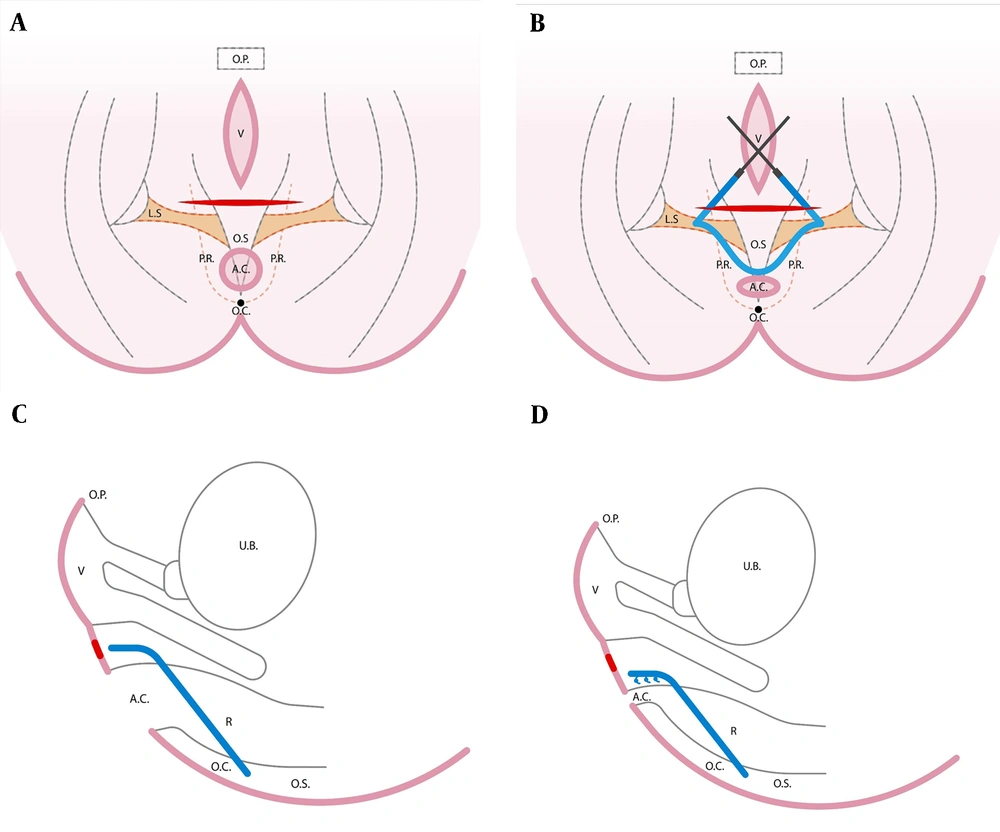
As we incorporated the implant into the perineal body, we anticipated that our technique would result in favorable outcomes, and the preliminary results were satisfactory. From an anatomical perspective, the perineal body is the focal point of attachment of pelvic muscles and fascia that are suspended to the sacrum by the uterosacral ligament. As explained in the TPMR procedure, the mesh can reconstitute the fascial attachments and reinforce the endopelvic fascia. The lateral sutures can also fix the rectocele (
19). The BSC
® mesh was used in the current procedure considering its high porosity, which facilitates ingrowth of the connective tissue and prevents adverse tissue reactions. Moreover, the U-shaped structure of the mesh allows a more secure fixation. Furthermore, i-Stitch
® was used to assist in suturing and fixation of the mesh at the sacrospinous ligaments and minimize the incision while allowing efficient access to the sacrospinal ligaments. The use of mesh in pelvic floor operations is frequent in gynecological surgery, but recent guidelines consider it controversial because of the high risk of complications (
7). In the present approach, unlike gynecological procedures (fixation of the mesh between the ventral wall of the rectum and dorsal wall of the vagina, which might lead to frequent complications), we inserted the mesh between the anterior anal sphincter muscle and the anterior part of perineum body or the delivery scar tissue and anchored the i- stich to the medial sacrospinal ligament. The mesh was fixed bilaterally to the sacrospinous ligaments to support the anterior aspect of the anal canal. If the puborectalis muscle is contracted (in the direction of the implanted mesh), this would compress the anal canal, resulting in a higher anal pressure than the rectum, thereby restoring continence.
Most available guidance on using mesh in colorectal surgery lack high-quality data derived from randomized clinical trials, contains significant heterogeneity in the indications, and failed to report complications (
22). Nevertheless, except for one minor adverse outcome (local inflammation), we observed no complications in the present study. Aware of the controversy surrounding using mesh in pelvic floor surgery, we performed VPAR in patientsat in the final stages of the management (although none had undergone colostomy). Therefore, long-term follow-up is needed to confirm the safety and efficacy of this surgical intervention.
Some notable limitations of the present study were the small number of participants who were not randomly selected, their inclusion only from one medical center, the lack of a control group for comparing the results, and the short duration of follow-up. However, these limitations stem from the fact that what we report is the primary outcomes of a combination of previously-established surgical techniques.
5.1. Conclusions
The findings of his study suggest that ventral pelvio-anal reconstruction (VPAR) can be an effective and safe procedure for treating patients with severe and refractory fecal FI. Our modified, simple, and minimally invasive technique can support the anterior wall of the anal canal, leaving the posterior canal free with intact sphincter and puborectalis action. More studies are required for definite conclusions in this regard.